
As an Amazon Associate, 456 AutoFix earns from qualifying purchases. Product links below go to Amazon, where you can confirm the right part for your vehicle.
An idle that hunts up and down at a stoplight, a pedal that feels sticky for the first inch, or a stall right after a cold start can all trace back to a thin black ring of carbon around the throttle plate. Picking the best throttle body cleaner for that job comes down to a spray made for the air side of a fuel-injected engine, a nozzle that reaches the bore, and a label that says it will not hurt your oxygen sensors.
Below: why deposits form, what to read on the can, five sprays worth a look, and how to clean an electronic throttle body safely. Throttle body cleaner works on the intake air path only. For deposits on injectors and valves fed by fuel, our fuel system cleaner guide covers the in-tank treatments.
Quick answer
Which throttle body cleaner should you buy?
Choose an aerosol labeled for throttle bodies on fuel-injected gasoline engines and safe for oxygen sensors. CRC 05078 is the everyday choice, BG 406 gives a larger can with continuous spray, and WD-40 Specialist adds a precision straw that also suits carburetors and small engines.
Our Quick Picks
Three places to start: a throttle-body-specific can for most cars, a larger continuous-spray can for frequent use and a combined carb and throttle body cleaner with a precision straw. All five sprays are reviewed below.
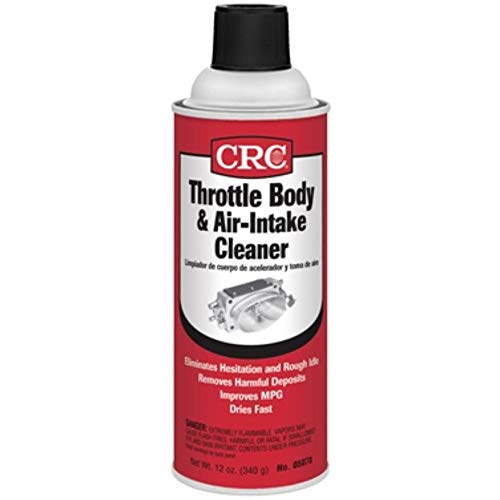
CRC 05078
A throttle-body-specific spray for routine cleaning of the plate and bore.

BG 406
A bigger can with a spray valve that keeps running for longer cleaning passes.
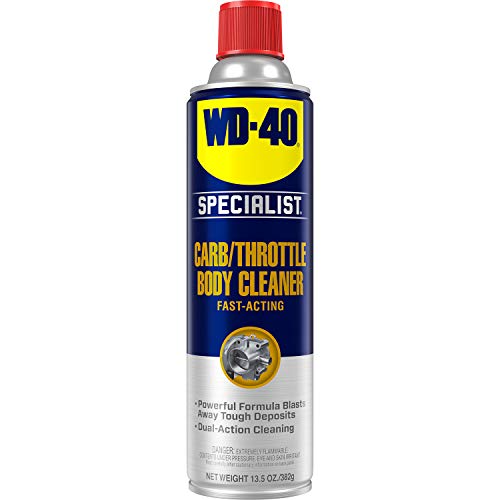
WD-40 Specialist Carb/Throttle Body
One can for a car's throttle body and the carburetor on a mower or old project.
Why a Throttle Body Gets Dirty in the First Place
The throttle body sits between the air filter and the intake manifold. Its grime comes from behind, not outside: crankcase vapor from the PCV system and, on many engines, exhaust gas recirculation push oily mist and soot back toward the plate.
That mist bakes into gum and carbon where the plate closes against the bore. At idle the plate is almost shut, so even a thin ring causes a low or wandering idle and, on some cars, a check engine light.
Short trips in a West Michigan winter make it worse, because the engine rarely gets hot enough to burn moisture and fuel vapor out of the crankcase. Fresh oil on schedule helps keep that vapor cleaner, and our synthetic oil buying guide explains which grades handle cold starts well.
What to Look for in the Best Cleaner for a Throttle Body
The best throttle body cleaner is not always the strongest solvent on the shelf. It is the one made for the parts it touches, with a nozzle that puts the spray where the carbon sits.
- Throttle body on the label: look for “throttle body” or “air intake” in the product name, not only “carb and choke”.
- Sensor and converter safety: the can should say it is safe for oxygen sensors and catalytic converters, since some spray ends up inside the engine.
- Nozzle and straw: a straw or any-angle nozzle helps reach the back of the plate without taking parts off.
- Can size and spray type: a continuous spray valve and a larger can suit anyone who cleans several cars.
- VOC compliance: a 50-state VOC compliant formula can be sold and used anywhere in the US.
Best Throttle Body Cleaner Sprays: Five Cans Reviewed
All five are aerosol cleaners listed on Amazon US for throttle bodies, with details taken from each listing or the maker’s own page.
1. CRC 05078 Throttle Body and Air-Intake Cleaner: 12 oz Spray for Fuel-Injected Gas Engines
- 12 wt oz aerosol can
- Removes carbon, varnish and gum deposits
- For throttle body and multi-port fuel injection
- Aimed at rough idle and hesitation
CRC 05078 is a throttle body and air-intake cleaner sold in a 12 wt oz aerosol can. Unlike a general carburetor spray, it is made specifically for the air side of fuel-injected gasoline engines, and the listing names both throttle body injection and multi-port injection systems. CRC’s own product page adds direct injection engines to that list.
The formula targets the three kinds of buildup that collect around a throttle plate: carbon, varnish and gum. CRC says removing them helps an engine start more easily and run more smoothly, and it points to rough idle and hesitation as the symptoms it is meant to address. The maker also links clean throttle bores to restoring lost fuel economy and avoiding idle-related warning lights, though results depend on how heavy the deposits are and whether anything else is wrong.
In practice this is the can to keep on the shelf for routine cleaning when you change an air filter or see a dark ring on the plate. It suits one or two family cars where you clean the throttle body once in a while. The 12 ounce can is smaller than some rivals, so a garage that services several vehicles may go through it quickly, and very thick carbon may need more than one pass.
2. BG 406 Throttle Body and Intake Cleaner: 14.7 oz Continuous-Spray Aerosol
- 14.7 oz aerosol can
- Continuous spray valve
- Cleans throttle plates and idle air control valves
- Dissolves carbon and grime in the air intake
BG 406 is the throttle body and intake cleaner from BG, a brand many people know from its fuel system service products. It comes in a 14.7 ounce aerosol can, which is a little larger than most of the cans in this list, and the listing calls out a continuous spray feature for steady application.
According to the listing, the formula removes deposits that build up on the butterfly and throttle valve assemblies, and it also cleans the idle air control valve found on many older fuel-injected engines. It is described as a deposit removal product for carbon and grime throughout the air induction system, with the aim of restoring normal airflow and engine efficiency. That broader coverage makes it a sensible pick when you want to clean the throttle bore, the back of the plate and the first part of the intake tube in the same session.
The continuous spray valve is handy when you are working around a plate and need more than a short burst, and the larger can stretches across several cleanings. This makes it a good match for a home mechanic who looks after a few household vehicles. Keep in mind that BG positions it as a professional-grade product, so take care to follow the can directions and avoid soaking electrical connectors or sensors.

3. MAG 1 Air Intake and Throttle Body Cleaner: 12 oz Aerosol with 360 Degree Nozzle

- 12 oz aerosol can
- 360 degree any-angle spray nozzle
- Removes grease, gum, varnish and loose carbon
- Meets US VOC regulations
MAG 1 Air Intake and Throttle Body Cleaner is a 12 ounce aerosol made for fuel-injected engines. The listing describes a blended formula that removes grease, grime, gum and baked-on varnish from intake and throttle body parts, along with loose carbon that can affect airflow and throttle response.
Its stand-out feature is a 360 degree nozzle that sprays in any position. Many throttle bodies sit low or face the firewall, where a normal aerosol can sputter when tipped. Being able to spray at an odd angle lets you reach the back side of the plate with the intake tube removed, without having to unbolt the throttle body. The listing says the formula is safe for component surfaces when used as directed and that it meets US VOC regulations.
This can suits drivers with crowded engine bays, such as compact cars and crossovers where the intake path is tight. It works best on the normal gum and light carbon that build up between cleanings. As with every cleaner here, keep the spray away from the mass air flow sensor, and for an electronic throttle body work with the ignition off rather than holding the plate open by hand.
View MAG 1 Air Intake on Amazon
4. WD-40 Specialist Carb/Throttle Body and Parts Cleaner: 13.5 oz Spray with Precision Straw
- 13.5 oz aerosol can with attachable precision straw
- Cleans carburetors, throttle bodies and unpainted metal
- No effect on O2 sensors or catalytic converters on incidental contact
- 50-state VOC compliant, dries without residue
WD-40 Specialist Carb/Throttle Body and Parts Cleaner is a 13.5 ounce aerosol that covers three jobs: carburetors, throttle bodies and unpainted metal parts. It should not be confused with the classic WD-40 multi-use product, which is a lubricant and water displacer rather than a deposit cleaner.
The maker describes a dual-action system in which solvents break up baked-on carbon while the spray force flushes the loosened material away. An attachable precision straw lets you aim into jets, passages and the gap between plate and bore. WD-40 says the formula dries quickly without leaving residue, is 50-state VOC compliant, and will not affect oxygen sensors or catalytic converters on incidental contact. Its stated uses include cars, trucks, tractors, motorcycles, boats, lawn mowers, weed trimmers and other gas-powered lawn equipment.
That range makes it the can for a garage with more than one kind of engine. You can clean the throttle body on a daily driver and the carburetor on a mower with the same product. Because it is also a carb cleaner, it is a stronger general solvent, so keep it off painted surfaces and plastics it is not labeled for. It is not a mass air flow sensor cleaner.
View WD-40 Specialist Carb/Throttle Body on Amazon

5. Valvoline Carb, Choke and Throttle Body Cleaner: 13 oz Non-Chlorinated Spray

- 13 oz aerosol can
- Breaks down carbon, gum and varnish
- For carburetors, throttle bodies and intakes
- 50-state VOC compliant, no chlorinated solvents
Valvoline Carb, Choke and Throttle Body Cleaner is a 13 ounce aerosol from the motor oil brand. As the name suggests, it is a combined product that covers carburetors, chokes, throttle bodies and intake parts, so it falls between a carb-only spray and a throttle-body-specific can.
The listing describes an extra strength blend of solvents that breaks down carbon, gum and varnish and removes stubborn residue from unpainted metal parts. Valvoline ties that cleaning to easier starts and smoother running by clearing contaminants that restrict airflow and fuel delivery. The formula is VOC compliant in all 50 states and made without chlorinated solvents, which matters if you would rather avoid chlorinated sprays in a closed garage or near an engine that will be started soon after.
This can suits a household where a modern car shares space with a carbureted motorcycle, generator or older project. It gives you one product for both kinds of fuel delivery. Since it is billed as extra strength and is meant for unpainted metal, apply it to the plate and bore rather than spraying it across sensors, wiring or plastic intake parts, and keep it away from the mass air flow sensor. Work with the engine off and the area well ventilated.
View Valvoline Carb, Choke and Throttle Body on Amazon
How the Five Sprays Compare
Match a can to the engines in your driveway.
| Cleaner | Can size | Stand-out feature | Good fit for |
|---|---|---|---|
| CRC 05078 | 12 wt oz | Made for throttle body and multi-port fuel injection | Routine cleaning on most gasoline cars |
| BG 406 | 14.7 oz | Continuous spray valve | Several cars or a full intake tract |
| MAG 1 | 12 oz | 360 degree any-angle nozzle | Cramped engine bays |
| WD-40 Specialist | 13.5 oz | Precision straw, carb and parts use | Cars plus mowers and small engines |
| Valvoline | 13 oz | No chlorinated solvents | Throttle bodies, intakes and carburetors |
For one modern car, a throttle-body-specific can such as CRC or MAG 1 is simplest. A garage with a mower or carbureted project gets more from a combined formula.

Throttle Body Cleaner vs Carb Cleaner, Brake Cleaner and WD-40
Throttle body vs carb cleaner: carburetor cleaner is built to strip heavy varnish from metal jets and passages, and some formulas are rough on plastic parts and coatings. Throttle body cleaner is usually milder and labeled for the sensors and seals found near a modern throttle body. Combined products such as the WD-40 Specialist carb and throttle body cleaner state on the maker’s page which parts they suit, so read that before you spray.
Throttle body vs brake cleaner: brake cleaner is meant to flash off grease and brake fluid quickly, not to soften baked carbon. Chlorinated versions also should not be pulled into a running engine. Keep it for brake work.
Throttle body cleaner vs WD-40: classic WD-40 is a water displacer and light lubricant that leaves an oily film, so use a dedicated cleaner on the plate instead.
Grease on the outside of the engine is a different job again. Our engine degreaser guide covers the foaming sprays meant for valve covers and bay surfaces.
How to Clean an Electronic Throttle Body Safely
Most newer cars use an electronic throttle body, where a small motor moves the plate. Treat it gently and the best throttle body cleaner does its job without side effects.
- Work with the engine off and cool, in a ventilated space, wearing eye protection and gloves. These sprays are flammable, so keep sparks and open flames away.
- Turn the key off, remove the intake tube, and never push the plate open by hand with the ignition on.
- Spray a lint-free rag or the back of the plate lightly rather than flooding the bore, and keep spray off the motor housing and electrical connector.
- Do not spray the mass air flow sensor. It needs its own sensor-safe cleaner.
- Let the cleaner evaporate fully before you reconnect the tube and start the engine.
Some throttle bodies have a coated bore and a no-clean label, so check first. Afterward, many engines idle oddly for a few drives while the computer relearns, and some models need a specific relearn step.

When a Dirty Throttle Body Is Not the Whole Story
Cleaning fixes deposits, not failed parts. If the idle stays rough, the engine drops into a reduced power mode, or a check engine light returns, the throttle position sensor, a vacuum leak or the throttle motor itself may be at fault. Our check engine light diagnostic service in Grand Rapids reads the codes and live data to find the cause.

Heavy, fast-returning carbon often points back to crankcase vapor and old oil. Our oil change service in Creston is a good time to have the PCV system and air filter looked at too.
More Buying Guides
Frequently Asked Questions
What is the best throttle body cleaner brand?
No one brand wins on every engine. CRC, BG, MAG 1, WD-40 Specialist and Valvoline all sell sprays labeled for throttle bodies. Pick by what the label covers, how the nozzle reaches the plate, and whether it is safe for oxygen sensors.
Can I use carb cleaner on a throttle body?
Only if the can lists throttle bodies. Carb-only cleaners can be harsh on plastics, seals and bore coatings found on modern electronic throttle bodies. A combined carb and throttle body formula or a throttle-body-specific spray is the safer choice.
How often should a throttle body be cleaned?
There is no fixed interval. Many owners check it when the air filter is changed and clean it when they see a dark ring around the plate or notice a low, unsteady idle. Engines that make a lot of crankcase vapor may need it more often.
Why does my car idle strangely after cleaning the throttle body?
The engine computer learned to open the plate a little further to make up for the carbon. With the carbon gone, it lets in more air than expected until it relearns. That usually settles after a few drives, but some models need a relearn procedure.
Still chasing an idle problem after a cleaning? Ring 456 AutoFix at 616-279-3832 between 8am and 5pm on weekdays, or reach us through the contact page to set up a time.
Busy during shop hours? Our after-hours drop-off lets you bring the car to 456 Carrier St NE in Grand Rapids whenever it suits you and leave the keys the way the drop-off instructions describe.