As an Amazon Associate, 456 AutoFix earns from qualifying purchases. Product links below go to Amazon, where you can confirm the right part for your vehicle.
Once you settle on Level 2 charging at home, the next fork in the road is how the unit gets its power. The hardwired vs plug in ev charger decision comes down to the circuit behind the wall: one route ties the charger straight into a 240V line, the other uses a heavy outlet and a plug. Both charge the same car, but they differ in top speed, what can wear out and what happens when you move.
This comparison walks through those trade-offs in plain terms and pairs each route with a specific unit. The third pick is the part people forget about on the plug-in side: the outlet itself. Whichever way you go, a licensed electrician should run the circuit to local code.
Quick answer
Should your home charger be hardwired or plugged in?
Hardwire it if you own the home, want up to 48 amps and plan to leave the unit in place, especially outdoors. Choose a plug-in unit on a NEMA 14-50 outlet if 40 amps covers your driving, you rent or might move, and you want to unplug the charger for service.
Our Quick Picks
For the hardwired vs plug-in choice, here is one charger of each type plus a related third pick: the EV-grade NEMA 14-50 outlet a plug-in unit depends on.
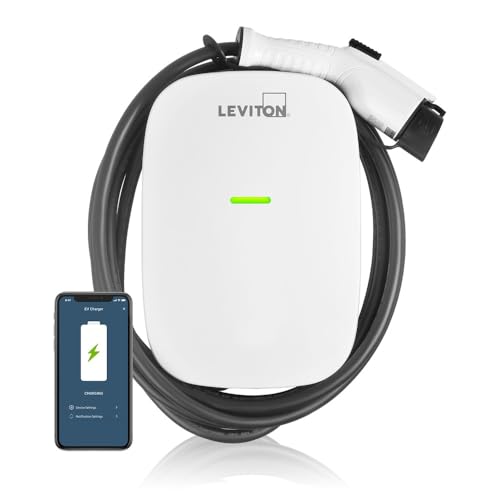
Leviton EV48W Hardwired 48A Charger
A permanent wall unit that runs at the full 48 amps.

EVIQO 40A NEMA 14-50 Plug-In Charger
A wall charger that plugs in and watches its own plug for heat.

Leviton 1450W EV-Grade 14-50 Outlet
The EV-grade outlet a plug-in charger should plug into.
What Really Changes Between the Two Installs
Electrical codes treat EV charging as a continuous load, so the charger may only draw 80 percent of the breaker rating for hours at a time. A NEMA 14-50 outlet sits on a 50 amp breaker, which caps a plug-in charger at 40 amps. A hardwired unit has no outlet in the path, so it can run at 48 amps on a 60 amp breaker, and the Leviton EV48W listing states exactly that breaker size.
Those extra 8 amps only help if your car can take them. Every EV and plug-in hybrid has an onboard charger with its own ceiling, and many plug-in hybrids accept far less than 40 amps. Check the AC charging rate in your owner’s manual before you pay for a bigger circuit.
| Factor | Hardwired | Plug-in (NEMA 14-50) |
|---|---|---|
| Typical top current | Up to 48A on a 60A breaker | Up to 40A on a 50A breaker |
| Weak point | Few; connections are inside the unit | The receptacle and plug can heat up if worn or loose |
| Moving or swapping units | Electrician disconnects it | Unplug and take it |
| Outdoor mounting | Simple, no exposed outlet | Needs a weatherproof in-use cover |
The outlet is where most of the debate lives. A charger pulls high current for hours, night after night, which is a much harder job than a range or welder that cycles on and off. Budget receptacles with loose terminal screws can run hot under that duty, so electricians often steer plug-in buyers toward an industrial or EV-grade receptacle instead of the cheapest one on the shelf.
Breaker, Panel and Permit Questions to Settle First
Before you pick a side in the level 2 ev charger hardwired vs plug in question, find out what your panel can spare. An electrician can run a load calculation and tell you whether a 50 or 60 amp circuit fits without a service upgrade. In many places a permit and inspection come with the job, so ask about that when you get quotes.
Ground-fault protection is the other detail to raise. Newer code editions generally call for GFCI protection on 240V garage and outdoor outlets, and most chargers carry their own built-in ground-fault sensing. Stacking the two can cause nuisance trips on some setups, which is one reason installers sometimes suggest hardwiring instead. Your electrician will know which rules your local inspector applies.
Connector type is a separate choice from the install method. Most non-Tesla EVs and plug-in hybrids use the SAE J1772 plug, an SAE standard connector, while newer Teslas and a growing list of other models use NACS. Check the connector named on each listing; the EVIQO unit below is a J1772 charger. For a wider field of units across both connector types, our Level 2 EV charger buying guide lines up more options.
Hardwired vs Plug In EV Charger: Three Picks Side by Side
Here is one charger built for each install method, plus the EV-grade outlet that the plug-in route depends on. Specs come from each Amazon listing. Have your electrician confirm the breaker size and wire gauge for whichever unit you choose.
Leviton EV48W Smart Level 2: 48A Hardwired EV Charger with Wi-Fi and NEMA 3R Enclosure
- Up to 11.6 kW at 48A Level 2 power
- Hardwired install, requires a 60 amp breaker
- NEMA Type 3R enclosure for indoor or outdoor mounting
- Wi-Fi control through the My Leviton app
The EV48W is part of Leviton’s EV Series and stands for the hardwired side of this comparison. It connects directly to a dedicated 240V circuit with no outlet in between, and the listing states that it needs a 60 amp breaker. On that circuit it can supply up to 48 amps, or about 11.6 kW, which is the highest current a typical home charging circuit allows.
Leviton built the enclosure to NEMA Type 3R, a rating for water resistance, and the listing says the cable is designed to resist freezing and cracking in extreme weather. That makes the unit a reasonable candidate for an outside wall or an unheated garage. A pre-attached input cable and the included mounting hardware are meant to shorten the electrician’s time on site, and the station carries UL and Energy Star certification.
Through the My Leviton app over Wi-Fi, you can manage the charger alongside other Leviton smart devices in the home. RFID access control comes switched off and can be turned on with the supplied admin card if you want to limit who charges. It suits owners staying put, since moving it means an electrician. If your car accepts 40 amps or less, the extra capacity will mostly go unused.
View Leviton EV48W Hardwired 48A Charger on Amazon

EVIQO Level 2 J1772: 40A NEMA 14-50 Plug-In EV Charger with Plug Temperature Sensor
- 40A on a dedicated 50A circuit, NEMA 14-50 plug
- Built-in NTC sensor watches plug temperature
- 25 ft J1772 cable, adjustable 6A to 40A
- IP66 / NEMA 4 housing, UL and ETL certified
This EVIQO unit covers the plug-in route. It uses a NEMA 14-50 plug, the same style as an RV or range outlet, and the listing calls for a dedicated 50 amp circuit. At its top setting it draws 40 amps, the most a plug-in charger can use on that breaker, and the app lets you set current anywhere from 6 to 40 amps.
The feature that sets it apart for this comparison is a temperature sensor built into the plug. You choose a limit between 140 and 176 degrees Fahrenheit in the app, and the charger reduces current or stops if the plug reaches it. Because heat at the receptacle is the main worry with plug-in charging, that sensor addresses the weak spot directly. The housing is rated IP66 and NEMA 4.
The 25 foot J1772 cable is described as thinner and lighter than older cables and flexible in freezing weather, and a glow-in-the-dark holster helps at night. Scheduling, energy tracking and software updates run through the app over 2.4 GHz Wi-Fi only. Tesla owners need their own J1772 adapter. It will not suit a dryer outlet, and it still needs a quality 14-50 receptacle installed by an electrician.
View EVIQO 40A NEMA 14-50 Plug-In Charger on Amazon
Leviton 1450W: 50A NEMA 14-50 EV Charging Receptacle, Heavy Duty and Weather Resistant
- 50 amp NEMA 14-50 receptacle made for EV charging
- Built for long charge sessions and frequent plug-ins
- Weather-resistant, high-impact nylon construction
- Pressure-wire terminals tightened to 75 in-lbs
The third pick is not a charger but the part that decides how well a plug-in charger lives. The 1450W is a 50 amp NEMA 14-50 receptacle that Leviton designed specifically for EV charging, as opposed to the general-purpose outlets sold for ranges and RV hookups. You can find its details on Leviton’s product page for the 1450W.
According to the listing, it is built to handle the long charge times and frequent insertions that charging brings, which is exactly the duty that can wear out a basic receptacle. The body is high-impact nylon, and this W version is the weather-resistant model. Pressure-wire terminals clamp the conductors with full contact, and the listing gives a 75 inch-pound terminal torque, a detail your electrician should follow with a torque screwdriver.
Pair it with any 40 amp plug-in charger, including the EVIQO above, on a dedicated 50 amp circuit. Outdoors it still needs an in-use cover rated for wet locations. It does nothing for a hardwired setup, and it is not a do-it-yourself part: a licensed electrician should install it, check the wire gauge and handle any GFCI requirement your local code sets.
View Leviton 1450W EV-Grade 14-50 Outlet on Amazon
Matching the Install to Your Garage or Driveway
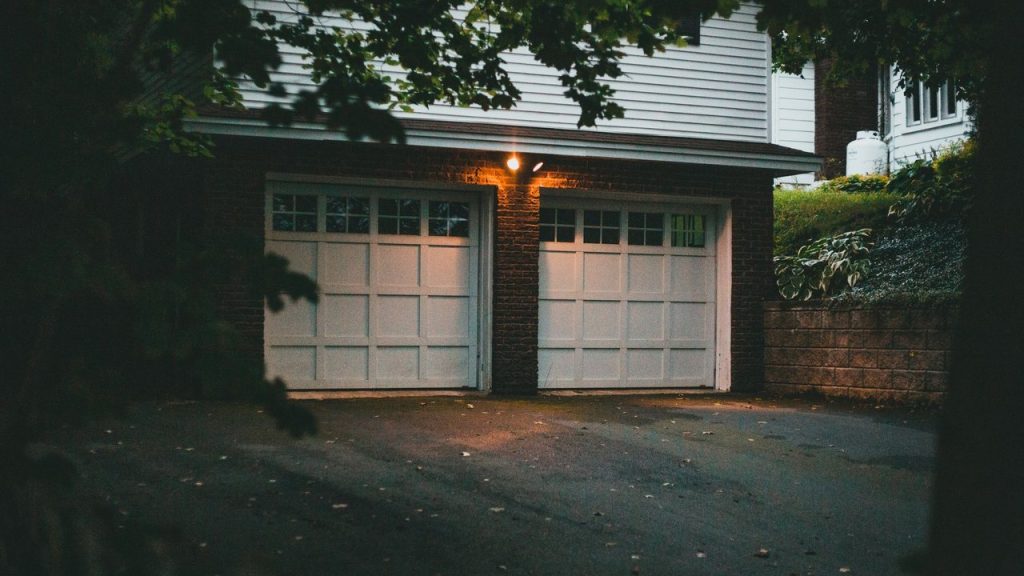
Most households can settle the hardwired vs plug in ev charger choice with three questions: how many miles you add on a typical day, whether you own the home, and where the car sleeps. A commuter who drives 40 miles a day refills overnight at either current. The higher ceiling matters more for big batteries, two EVs sharing one charger, or drivers who often arrive home low and leave again a few hours later.
| Your situation | Closer fit | Why |
|---|---|---|
| Renting, or may move within a few years | Plug-in on a 14-50 | The charger leaves with you |
| Large-battery truck or SUV, long daily miles | Hardwired 48A | Highest current a home circuit commonly allows |
| Charger mounted outside on the house | Hardwired | No exposed outlet to keep dry |
| Plug-in hybrid with a small onboard charger | Either, at a lower setting | The car limits the rate, not the circuit |
Plug-in hybrid owners are a special case. A small onboard charger may take only a fraction of what either unit can supply, so a 40 amp plug-in model turned down in its app is usually plenty. Those cars also rely on a conventional 12V battery to wake up their electronics, and our guide to car batteries for hybrids covers that side of the system.

Keep the charger close to where the charge port ends up when you park. A 25 foot cable reaches across most two-car garages, and stretching a plug-in unit further with an adapter or cord adds connections that can heat up. If the cable truly falls short, read our notes on EV charger extension cords before buying one, and ask whether moving the outlet is the cleaner fix.
Snow, Stiff Cables and Outdoor Outlets in West Michigan
Plenty of Grand Rapids homes have an unheated garage or a driveway with no garage at all. A plug-in unit mounted outdoors leaves a 240V receptacle out in the weather, so it needs a weatherproof cover that stays closed with the plug inserted. Hardwiring removes that exposed connection, which is one reason installers like it for chargers mounted on an outside wall.
Cold also stiffens charging cables. Both chargers below say their cables are made to stay flexible or resist cracking in freezing weather, which helps when you are coiling the cord in January. Knock snow and slush off the connector before you plug in, and keep the holster where meltwater will not drip into it.

Battery chemistry adds one more winter wrinkle. A cold battery accepts charge more slowly until it warms, and many EVs spend part of a winter session heating the pack. Scheduling the charge to finish shortly before you leave lets the car start the morning with a warm battery, and app-connected chargers such as the EVIQO below let you schedule sessions.
Who Handles What: Electrician, Owner and Repair Shop
Running a 240V circuit, mounting a receptacle or connecting a hardwired charger is a job for a licensed electrician working to local code. Leave the panel cover on, and treat the Amazon listings below as a way to choose hardware, not as installation instructions. Your part is choosing the unit, measuring the cable run and keeping the plug, cable and holster clean.
Our shop’s side of the job starts at the car’s charge port and runs inward. If the vehicle refuses to start a session that works for other cars, shows a charging fault, or drains its 12V battery overnight, that points to the vehicle’s own electronics. Our car electrical repair service in Grand Rapids covers body and engine electronics on foreign and domestic vehicles.

One mix-up we hear about: a 12V power inverter in the cabin is a different tool entirely. It turns a car’s battery power into household current for laptops or small tools, and it cannot charge an EV in any useful way. If that is the gear you are shopping for, our roundup of power inverters for cars explains sizes and wiring. Hendrick Hoffman, our owner and head mechanic, holds ASE and State of Michigan certification in electrical work.
More Buying Guides
Frequently Asked Questions
Is a hardwired EV charger faster than a plug-in one?
It can be. A plug-in unit on a 50 amp NEMA 14-50 circuit is limited to 40 amps, while a hardwired unit on a 60 amp breaker can deliver 48 amps. Your car only benefits if its onboard charger accepts more than 40 amps, so check the manual first.
Level 2 EV charger hardwired vs plug in: which is safer?
Both are safe when a licensed electrician installs them to code with certified hardware. The plug-in route adds a receptacle that can overheat if it is low quality or its terminals are loose, which is why an EV-grade outlet and a charger with a plug temperature sensor are worth considering.
Can I plug a Level 2 charger into my dryer outlet?
Usually not. Most dryer outlets are 30 amp NEMA 10-30 or 14-30 receptacles, which do not match a 14-50 plug and cannot carry a 40 amp charger. Ask an electrician to add a dedicated circuit sized for the charger you choose instead of using an adapter.
Can I take a plug-in EV charger with me when I move?
Yes, that is the main advantage of the plug-in route. You unplug the unit, take it down from its wall bracket and leave the outlet behind. A hardwired charger can move too, but an electrician has to disconnect it and wire it in again at the new address.
Car won’t take a charge from a station that works for everyone else, or keeps flagging a charging fault? Reach 456 AutoFix at 616-279-3832 on weekdays between 8am and 5pm, or set up a charging-system diagnosis through our contact page.
Getting home after we close works fine too. Pull into the after-hours drop-off at 456 Carrier St NE, Grand Rapids, and leave a short note on when the charging trouble started.