
As an Amazon Associate, 456 AutoFix earns from qualifying purchases. Product links below go to Amazon, where you can confirm the right product for your engine.
Gasoline starts to break down the day it leaves the pump, and a tank that sits all winter can turn a healthy engine into a hard starter by spring. The best fuel stabilizer for your garage depends on how long the fuel will sit, what engine it feeds and how much ethanol is in your gas.
Below: what a stabilizer does, six products compared by listed storage life and dose, and the Sea Foam question.
Quick answer
Which fuel stabilizer should you buy?
For a car, boat or mower parked over winter, a storage formula like STA-BIL Storage is the simple pick, listed for up to 24 months. If ethanol problems are your main worry, STA-BIL 360 Protection or Star Tron Enzyme suit regular use. Dose by the label and run the engine afterward.
Our Quick Picks
Three picks that cover most storage jobs: a long-life storage formula, an every-tank ethanol treatment and an enzyme concentrate for big tanks. All six products are reviewed below.

STA-BIL Storage
A dedicated storage formula with a simple dose by tank size.

STA-BIL 360 Protection
An ethanol treatment meant for regular use, with a year of storage protection.
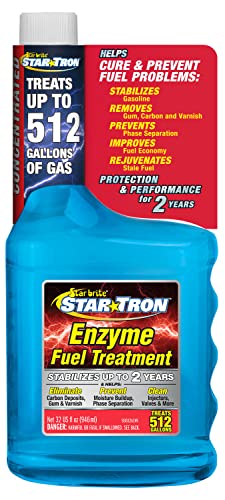
Star Tron Enzyme
A concentrated enzyme treatment that stretches a bottle across big tanks.
Why Stored Gasoline Goes Stale
Some compounds in gasoline react with oxygen over time, leaving gum and varnish behind. Those deposits coat carburetor jets and injectors, which is why a stored engine may crank without catching.
Ethanol adds a second problem. The Department of Energy’s Alternative Fuels Data Center notes that E10 is sold in every state and most gasoline in the country contains up to 10% ethanol. Ethanol attracts moisture, and enough water can make the ethanol and water separate and settle at the bottom of the tank.
A stabilizer slows that aging and may add corrosion and water control. It works on fresh fuel, so treat the tank before storage, not after the engine starts running poorly.
How to Pick the Best Fuel Stabilizer for Your Engine
Sort the options by the job:
- Storage time: a car parked from November to April needs a product listed for at least six months.
- Storage formula or every-tank treatment: some go in once before storage, others at each fill-up.
- Concentration: doses range from 1 ounce per 2.5 gallons to 1 part per 2,000, so measure carefully in small tanks.
- Engine type: each label lists the engines it is meant for, so read it first.
- Diesel: diesel needs its own products; see our guide to the best fuel system cleaner for diesel trucks.
Best Fuel Stabilizer Picks, Reviewed One by One
All six products below are for gasoline engines. Storage life, dose and engine compatibility are quoted as each maker lists them on Amazon.
1. STA-BIL Storage Fuel Stabilizer: 32 oz, Treats 80 Gallons for Up to 24 Months
- Keeps gasoline fresh up to 24 months (listed)
- 1 oz treats 2.5 gallons of gas
- Helps protect against corrosion and ethanol damage
- Run the engine 5 minutes after dosing
STA-BIL Storage is the classic red-bottle stabilizer, made for fuel that will sit unused for a season or longer. The 32 ounce bottle treats 80 gallons, and the listing says it keeps gasoline fresh for up to 24 months in vehicles, boats and outdoor power equipment that are put away for the winter. It also suits gas cans kept on hand for a generator or snow blower.
The formula combines antioxidants, corrosion inhibitors and detergents, and the maker says it helps protect fuel system parts from the effects of both ethanol and non-ethanol gasoline. Dosing is easy to remember: 1 ounce for every 2.5 gallons. STA-BIL asks you to pour it in before adding gas, then run the engine for 5 minutes so treated fuel reaches the whole system. The bottle carries a production code, and the listing gives a shelf life of 2 years once opened or 5 years from production.
This is a storage product rather than a cleaner, so it won’t clear varnish that is already in a carburetor or injector. The 32 ounce size makes sense for several machines or a car with a large tank. For one mower, a smaller bottle avoids leftover product going past its date.
View STA-BIL Storage on Amazon
2. STA-BIL 360 Protection 22284: Ethanol Fuel Treatment and Stabilizer, 12 oz
- Stabilizes fuel up to 12 months (listed)
- Made for use at every fill-up
- Cleans the fuel system
- Corrosion protection above and below the fuel line
STA-BIL 360 Protection is the brand’s answer to ethanol-blended gasoline in engines that are used regularly but sit between trips. Instead of being a one-time storage dose, it is meant to go in at every fill-up, and the listing says it stabilizes fuel for up to 12 months. That makes it a natural fit for a weekend car, a boat or a side-by-side that runs all summer and then gets parked.
The headline feature is what STA-BIL calls protection above and below the fuel line. The maker says its vapor corrosion technology reaches the parts of the tank and fuel system that liquid fuel does not touch, an area where moisture and ethanol vapor can cause rust. The formula also includes cleaning agents for the fuel system, and the listing claims improved power and fuel efficiency.
Because it is aimed at regular use, its listed storage period is shorter than STA-BIL Storage. If a vehicle will sit for more than a year, a dedicated storage formula is the safer choice. The Amazon listing does not state the dose per gallon, so follow the label on the 12 ounce bottle rather than guessing.
View STA-BIL 360 Protection on Amazon

3. Star brite Star Tron Enzyme Fuel Treatment: Gasoline Formula, 1 oz per 16 Gallons
- Stabilizes fuel up to 2 years (listed)
- 1 oz treats 16 gallons
- Disperses water to help prevent phase separation
- For cars, boats, RVs and small engines
Star Tron comes from Star brite, a marine care brand, and it takes a different approach from the classic antioxidant stabilizers. It uses what the maker calls enzyme technology to keep fuel stable and to deal with the moisture that ethanol gasoline attracts. The listing says it stabilizes fuel for up to 2 years and works in all engines and fuel types, from cars to boats, RVs and lawn mowers.
Its water handling is the main reason boaters and RV owners use it. Rather than letting water collect at the bottom of the tank, Star Tron is listed as breaking it into tiny droplets spread through the fuel, which then pass out of the engine as it runs. The maker also says it helps remove gum, carbon and varnish deposits and can help bring old, sub-spec fuel back into use.
The dose is 1 ounce for every 16 gallons, so a single bottle goes a long way in a large tank. In a 1 gallon mower can, that small amount takes careful measuring, so a marked cup or syringe helps. Star Tron is made in the USA.
View Star Tron Enzyme on Amazon
4. PRI-G Fuel Stabilizer PRI-16-G: 16 oz Gasoline Treatment at a 1:2000 Ratio

- Super concentrated, 1:2000 treat ratio
- Keeps stored gasoline fresh for months or years
- Listed as improving ignition quality
- Maker says it restores degraded fuel
PRI-G is a gasoline treatment known among people who keep fuel in reserve for generators, farms and emergency use. It is extremely concentrated, treating fuel at a ratio of 1 part to 2,000, so a little goes a long way. The listing notes that a quart treats 512 gallons, which puts this 16 ounce bottle in the range of a home fuel supply rather than a single mower.
According to the maker, properly treated gasoline stays fresh in storage for months and even years. PRI also says the product improves ignition quality and can restore fuel that has already degraded, which sets it apart from stabilizers that only work on fresh fuel. The listing adds claims of more power and better fuel economy, which are the maker’s own.
The high concentration is also its main drawback for small tanks. Treating a 2 gallon can at 1:2000 takes only a few milliliters, so you will need a small measuring syringe or cup marked in milliliters. For a car or a large storage tank, the ratio is easy to scale up. Check the label for the engines and fuel types it covers.

5. Lucas Oil 10576 Safeguard: Ethanol Fuel Conditioner with Stabilizer, Treats 80 Gallons
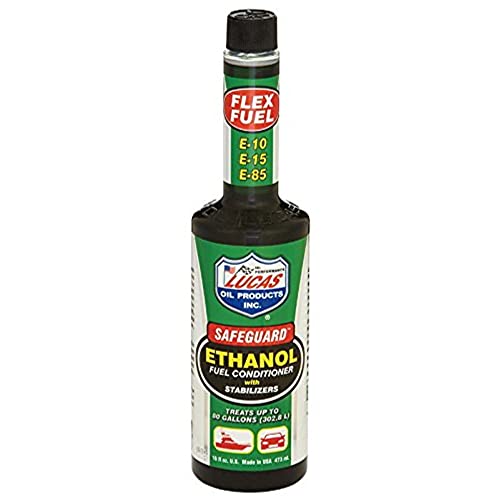
- Treats up to 80 gallons of ethanol fuel
- Stabilizes fuel and prevents varnish and gum
- Rust and corrosion inhibitors for ethanol blends
- For 2-cycle and 4-cycle gas engines
Lucas Oil is better known for its oil and fuel treatments, and Safeguard is the brand’s ethanol-focused conditioner with a stabilizer built in. The listing describes it as protection for all gas-powered 2-cycle and 4-cycle engines against the harmful effects of ethanol, which makes it a good match for trimmers, chainsaws, mowers and ATVs that sit between uses.
The formula stabilizes fuel and is listed as preventing the varnish and gum that form as gasoline ages. It also carries additives meant to prevent the rust and corrosion linked to ethanol fuel, and Lucas says it helps protect engine oil from the effects of alcohol combustion. The maker adds that it cleans injectors, valve seats and combustion chambers.
One bottle treats up to 80 gallons of ethanol fuel. The Amazon listing does not give a storage period in months, so if you plan to park something for a long time, check the label or choose a product with a stated shelf life. It fits owners who want one bottle for both everyday ethanol protection and short seasonal storage of their outdoor equipment and small vehicles.
View Lucas Safeguard on Amazon
6. Ethanol Shield Fuel Stabilizer: 24 oz 2-Pack with Phase Separation Inhibitor

- Antioxidants and corrosion inhibitors
- Phase separation inhibitor
- Helps bond 2-cycle oil to gas and ethanol mix
- Rubber and plastic protection
Ethanol Shield is made by B3C Fuel Solutions and sold in this listing as a pair of 24 ounce bottles. As the name suggests, it targets the problems ethanol causes in stored gasoline. The maker lists a combination of antioxidants and anticorrosives, a phase separation inhibitor and a detergent, along with protection for rubber and plastic fuel system parts.
One feature stands out for small engine owners: the listing says it helps bond 2-cycle oil to the gasoline and ethanol mix. That matters in premixed fuel for chainsaws, string trimmers, leaf blowers and older outboards, where separation can leave a can with uneven oil content. The maker also mentions upper cylinder lubrication and a cooling combustion technology it calls CCT.
The Amazon listing for this 2-pack does not state a storage period or dose per gallon, so read the label before treating a tank. Two bottles cover several machines or a full season of gas cans. For a car that only needs one winter dose, a single bottle of a storage formula may be enough, and it leaves less product sitting on the shelf.
Fuel Stabilizer Comparison at a Glance
The table puts the listed figures side by side. Where a listing does not state a storage period or dose, check the bottle label before you pour.
| Product | Listed storage life | Listed dose | Good fit |
|---|---|---|---|
| STA-BIL Storage | Up to 24 months | 1 oz per 2.5 gallons | Seasonal cars, mowers, gas cans |
| STA-BIL 360 Protection | Up to 12 months | See label | Every fill-up on ethanol gas |
| Star Tron Enzyme | Up to 2 years | 1 oz per 16 gallons | Boats, RVs, large tanks |
| PRI-G | Months to years | 1 part per 2,000 | Long-term fuel reserves |
| Lucas Safeguard | See label | Bottle treats up to 80 gallons | 2-cycle and 4-cycle gas engines |
| Ethanol Shield | See label | See label | Small engines and mixed 2-cycle fuel |
Listed storage life is the maker’s claim. A sealed, nearly full tank kept out of the sun holds up better than a half-empty can in a hot shed.
How to Use Fuel Stabilizer the Right Way
Timing matters more than brand: the stabilizer must be mixed into fresh fuel and pushed through the lines.
- Measure for the full tank: dose from the label for a full tank.
- Add it before the gas: the incoming fuel mixes it.
- Fill with fresh fuel: less air space means less condensation.
- Run the engine: idle or drive several minutes so treated fuel reaches the injectors or carburetor.
- Label your gas cans: note the date and product.

Changing the oil before a long rest means the engine sits in clean oil; our guide to the best synthetic oil covers what to put in. For the battery, see the best car battery charger for winter.
Fuel Stabilizer vs Sea Foam: Which Do You Need?
Sea Foam Motor Treatment is sold as a cleaner that also stabilizes stored fuel and treats oil. A dedicated stabilizer is built around storage, with a listed shelf life and set dose.
For winter storage, a stated storage period is easier to dose. For a rough-running engine, a cleaner fits better, and our guide to the best fuel system cleaner reviews Sea Foam alongside other cleaners.

Storage Season in West Michigan
Around Grand Rapids, plenty of convertibles, project cars, boats and side-by-sides spend five months or more under a cover. Freeze-thaw swings and damp springs bring condensation inside tanks and cans, which is exactly the moisture ethanol fuel draws in. Choosing the best fuel stabilizer for that kind of storage comes down to a listed shelf life that covers the whole winter.
In summer, heat in a closed shed speeds aging in the mower can, so buy only what you will use soon and treat the rest.
When Old Fuel Needs More Than an Additive
No additive replaces a repair. If a stored car now stumbles, misfires or lights the check engine lamp, the cause may be varnish, a weak battery or a vacuum leak. More product can mask symptoms without fixing them.

A warning light after storage is worth reading with a scan tool, which our check engine light diagnostic in Grand Rapids does. Bringing a car out of storage is also a good time for fresh oil, and our oil change service in Creston includes a look under the hood while it is on the lift.
More Buying Guides
Frequently Asked Questions
Is fuel stabilizer worth it?
For any engine that will sit more than a month or two, yes. Treating fresh fuel is far simpler than cleaning varnish out of a carburetor or injectors later, and it helps the engine start easily after storage. For a daily driver that burns a tank every week, it is not needed.
Should I use fuel stabilizer or Sea Foam?
For storage, a dedicated stabilizer with a listed shelf life and dose is easier to get right. Sea Foam is mainly a cleaner that also stabilizes fuel, so it suits an engine in regular use that needs deposits cleaned. One or the other is usually enough.
What is the best fuel stabilizer for a car?
For a car stored over winter, a storage formula such as STA-BIL Storage is easy to dose by tank size. If you want an additive at every fill-up to deal with ethanol, STA-BIL 360 Protection is made for that.
What is the best fuel stabilizer for an RV or ATV?
RVs and boats with large tanks benefit from a concentrate such as Star Tron Enzyme, listed at 1 ounce per 16 gallons. For ATVs and side-by-sides, STA-BIL Storage lists vehicles and outdoor power equipment, while Lucas Safeguard lists 2-cycle and 4-cycle gas engines.
Can I use fuel stabilizer with E15 or E20 gas?
The products here list use with ethanol-blended gasoline, and the ethanol-focused formulas target water and corrosion problems. Higher blends are another matter for the vehicle itself, so check the owner’s manual for the highest ethanol blend it allows before filling up.
Car came out of storage running rough? Talk to 456 AutoFix at 616-279-3832, open weekdays from 8am to 5pm, or ask for a spring check through our contact page.
Busy while the shop is open? Our after-hours drop-off at 456 Carrier St NE, Grand Rapids lets you leave the keys on your way home.