As an Amazon Associate, 456 AutoFix earns from qualifying purchases. Product links below go to Amazon, where you can confirm the right part for your vehicle.
Direct injection engines make more power from less fuel, but they collect carbon in a place a bottle in the tank never touches. Finding the best fuel system cleaner for GDI engines starts with knowing where the deposits sit: on the injector tips, in the combustion chamber or on the backs of the intake valves.
This guide covers that split, then five products that suit a GDI engine. For tank additives in general, including port injected cars, see our guide to the best fuel system cleaner for any gas engine.
Quick answer
What cleans a GDI engine, a tank additive or an intake spray?
Usually both. A PEA tank additive such as Molecure keeps the high-pressure injectors and combustion chambers clean. Intake valve carbon needs a spray fed through the air intake, such as the Gunk GDI Intake Valve Cleaner or Gumout’s foaming cleaner, because fuel never washes those valves on a direct injection engine.
Our Quick Picks
Three quick picks: a one-person valve spray, a foaming intake and turbo cleaner, and a PEA tank dose. All five are reviewed below.

Gunk GDI Intake Valve Cleaner
A long straw lets you spray from the driver's seat while holding 2,000 rpm.

Gumout Intake Valve & Turbo Cleaner Bundle
Foaming intake and turbo cleaner paired with a mass airflow sensor spray.

Molecure PEA Fuel Injector Cleaner
A PEA tank additive aimed at direct injector and combustion chamber deposits.
Where Carbon Builds Up in a Direct Injection Engine
On an older port injected engine, fuel sprays onto the back of each intake valve, and the detergent in the gasoline keeps the valve fairly clean. A GDI engine moves the injector into the cylinder. As fueleconomy.gov explains in its engine technology overview, fuel goes directly into the cylinder instead of the intake port, which cools the mixture and lets the engine run more efficiently.
The trade-off is that nothing rinses the intake valves anymore. Oil vapor from the crankcase ventilation system and exhaust gas recirculation still flows past them, and it bakes into a crust over time. Three areas need attention:
- Injector tips: they sit in the combustion chamber, so heat cooks fuel residue onto the nozzle and spoils the spray pattern.
- Combustion chamber and piston crowns: deposits here raise the chance of knock, which a turbo engine responds to by pulling timing and power.
- Intake valve backs: carbon restricts airflow and upsets idle, and only a cleaner that travels with the intake air can reach it.
Some engines use dual injection, with both port and direct injectors. On those, fuel does reach the valves part of the time, so a tank dose helps more. Your owner’s manual or a parts lookup will tell you which system your engine has.
Spray, Pour-In or Both?
A pour-in additive is the easy habit. You add it before a fill-up and drive, and it works on the injectors and chambers every tank it is in. Look for polyether-amine (PEA) on the label, since that is the detergent built for hardened carbon.
An intake spray takes more care. You warm the engine, feed the cleaner into the intake past the mass airflow sensor while the engine runs at a set speed, then let it heat-soak before a drive. Read every line of the can’s directions, because spraying too fast or into the wrong spot can damage a sensor or flood a cylinder.
Fuel quality also plays a part. The TOP TIER fuel program, sponsored by several automakers, sets a higher deposit-control standard for gasoline, and steady use of an approved brand gives an additive less work to do.
Best Fuel System Cleaner for GDI: Five Products Reviewed
The first two and the fourth are intake sprays; the other two go in the tank.
1. Gunk GDI-11 Intake Valve Cleaner: 11 oz PEA Spray with 10 ft MaxReach Straw
- 10 ft MaxReach Straw for one-person use
- PEA formula for intake valve carbon
- For GDI, PFI, turbo and supercharged gas engines
- Safe for oxygen sensors and catalytic converters
Gunk’s GDI Intake Valve Cleaner (SKU GDI-11) is an 11 oz aerosol that goes into the air intake of a running engine, so the cleaner reaches the backs of the intake valves that fuel never touches on a direct injection engine. Gunk lists it for GDI and port injected gasoline engines, including turbocharged, supercharged and twin-turbo setups, in compact cars, SUVs and trucks. The formula is PEA based, and the maker says it is safe for oxygen sensors and catalytic converters.
The feature that sets it apart is a 10 ft MaxReach Straw. Instead of needing a helper on the throttle, you clip the tube into the intake pipe past the mass airflow sensor, sit in the driver’s seat and hold the engine at a steady 2,000 rpm while spraying in short bursts. Gunk’s GDI-11 directions say never to go above 3,500 rpm, then to let the engine heat-soak for an hour and finish with at least 10 minutes of highway driving.
Gunk suggests using it every 10,000 miles or at each oil change, and a QR code on the can links to a how-to video. It is not for diesel engines. Like any intake spray, it softens light to moderate deposits, and it will not remove thick, hardened carbon that is already causing a misfire.
View Gunk GDI Intake Valve Cleaner on Amazon
2. Gumout Foaming Intake Valve & Turbo Cleaner: 11 oz CarbonClear Foam plus MAF Cleaner
- Foaming intake valve and turbo cleaner, 11 oz
- CarbonClear PEA cleaning agent
- Cleans GDI and PFI intake valves and ports
- Bundled with an 11 oz MAF sensor cleaner
This Amazon listing pairs two Gumout Professional Formula cans: the Foaming Intake Valve & Turbo Cleaner (US item 540028) and a Mass Air Flow Sensor Cleaner, both in 11 oz sizes. Gumout describes the foaming cleaner as a deep cleaner for GDI and PFI intake valves, and also for the throttle body, intake ports, fuel injectors, combustion chambers and the turbo compressor and turbine. Its active cleaning agent is CarbonClear, Gumout’s PEA formula.
The foam is the point of difference. Gumout says its patented high-foaming formula atomizes better than a typical liquid cleaner and coats the full air intake and turbo path, which also lowers the risk of hydro-locking the engine. That matters on a turbocharged GDI engine, where carbon can collect on the valves and on the compressor side of the turbo.
The MAF sensor spray is a useful extra, because an intake service often means unplugging or removing the airflow sensor, and Gumout rates that cleaner for both gas and diesel MAF sensors. Follow the directions on each can and keep the foaming cleaner away from the sensor itself. The foaming cleaner is made for gasoline engine intakes, so it does not suit a diesel.
View Gumout Intake Valve & Turbo Cleaner Bundle on Amazon

3. Molecure PEA Fuel Injector Cleaner: 12 oz Pour-In Treatment for GDI, Turbo and Hybrid
- PEA detergent for injectors and combustion chambers
- Labeled for GDI, PFI, turbo and hybrid gas engines
- 12 oz bottle treats up to 20 gallons
- Safe for O2 sensors, catalysts and capless fillers
Molecure’s PEA Fuel Injector Cleaner is the simplest option here: one 12 oz bottle goes into a near-empty tank and treats up to 20 gallons. Its detergent is polyether-amine (PEA), the chemistry most strong fuel system cleaners use for hardened carbon on injector tips and in combustion chambers. The listing names it safe for port injection, gasoline direct injection, turbocharged and hybrid engines, as well as oxygen sensors, catalytic converters and capless fuel fillers.
On a direct injection engine, a tank dose works where the fuel actually travels: through the high-pressure injectors and into the cylinder. Clean injectors spray a finer, more even pattern, which helps idle quality, throttle response and fuel economy. The listing also says it targets intake valve deposits in GDI engines, but fuel never washes over those valves on a pure direct injection design, so treat that claim with care.
Molecure’s directions are simple: add the bottle, fill up and drive 15 to 20 minutes at highway speed, then repeat every 3,000 miles or sooner with heavy short-trip use. It is not for diesel engines. Think of it as injector maintenance, paired with an intake spray when the valves need attention.
View Molecure PEA Fuel Injector Cleaner on Amazon
4. JLM Direct Injection Valve Cleaner J03190: 500 ml Aerosol for Valves and Combustion Chambers

- 500 ml aerosol fed through the air intake
- Targets valve stems, seats and piston crowns
- Listed for petrol, hybrid and diesel engines
- Harmless to particulate filters and catalysts
JLM’s Direct Injection Valve Cleaner (part J03190) is a 500 ml aerosol aimed at the baked-on carbon that collects behind intake valves and on valve seats. It goes in through the air intake of a warm, running engine, so nothing needs to be taken apart. JLM lists it for petrol, hybrid and diesel engines, which makes it the one valve spray here that also covers a diesel.
Beyond the valves, the listing says its cleaning surfactants work on the combustion chamber and piston crowns, restoring airflow and lowering exhaust emissions. JLM describes the formula as harmless to particulate filters and catalytic converters, a useful point on newer engines fitted with a particulate filter. For a fuller clean, JLM pairs it with its GDI Injector Cleaner fuel additive on petrol engines and its EGR and Air Intake Cleaner aerosol.
One point to take seriously: the listing marks this product for professional use only. It suits a technician or an experienced owner who has cleaned an intake before, and it is less suited to a first attempt in a driveway. If you have never sprayed cleaner into a running engine, the Gunk can’s step-by-step directions are a gentler starting point.
View JLM Direct Injection Valve Cleaner on Amazon

5. ATS Chemical 505 CRF Fuel System Treatment: 16 oz Carbon Cleaner for Gas and Diesel
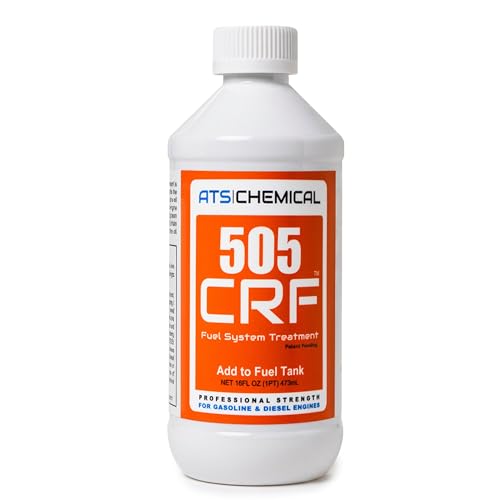
- 16 oz easy-pour bottle
- Treats 5 to 20 gallons of fuel
- For port and direct style injectors
- Works in gasoline or diesel fuel
ATS Chemical’s 505 CRF Fuel System Treatment is a 16 oz pour-in cleaner sold for both gasoline and diesel fuel. The listing says the 505 CRF formula removes tough carbon deposits from port style and direct style injectors, plus deposits on induction ports and valves. One bottle treats between 5 and 20 gallons, so the concentration is up to you.
That flexible dose is the practical feature. A stronger first treatment puts the bottle in less fuel, while a full fill spreads it out for routine upkeep. ATS positions it as preventive maintenance that helps restore factory fuel economy and performance, rather than a one-time rescue for an injector that has already failed.
Because it works in both fuels, it suits a household with a GDI car and a diesel truck in the same driveway. As with any tank additive on a direct injection engine, its cleaning reaches the injectors and combustion chamber, while the valve claim applies to engines where fuel passes the valves, such as port or dual injection designs. Check your owner’s manual before adding anything to a newer vehicle still under warranty.
View ATS Chemical 505 CRF on Amazon
Matching the Cleaner to the Deposit
Use this table to pick the product type for the problem in front of you. If more than one row fits, a spray plus a tank dose is a sensible pairing.
| Where the carbon is | Product type | Examples here |
|---|---|---|
| Direct injector tips | PEA tank additive | Molecure, ATS 505 CRF |
| Combustion chamber and pistons | Tank additive or intake spray | Molecure, JLM J03190 |
| Intake valve backs, light to moderate | Intake spray through the air intake | Gunk GDI-11, Gumout foaming cleaner |
| Turbo compressor side | Foaming intake and turbo cleaner | Gumout foaming cleaner |
| Thick, hard valve carbon with misfires | Mechanical cleaning after diagnosis | Not a job for a can |

Picking the best fuel system cleaner for GDI cars comes down to this match. A tank additive used on a schedule keeps the injectors in shape, while an intake spray every so often, at the interval the maker suggests, slows the build on the valves.
Short Trips and West Michigan Winters
Cold weather speeds up carbon on a GDI engine. A five-minute drive to work in January often ends before the oil is fully warm, so moisture and unburned fuel stay in the crankcase and feed more vapor into the intake. Turbocharged engines add blow-by under boost on top of that.
If your driving is mostly short hops, take a longer highway drive now and then, keep up with oil changes, and use a tank additive more often than a highway commuter would. Plan an intake spray in milder weather, since the can’s heat-soak step and the drive afterwards are easier when the engine reaches full temperature quickly.

Hesitation on a cold morning is not always carbon, though. Our guide to why a car hesitates when accelerating covers the other usual causes, from ignition coils to a dirty airflow sensor, and Audi drivers can compare notes in our post on Audi carbon buildup symptoms.
When Carbon Needs More Than a Can
Sprays and additives are maintenance. Once a GDI engine throws misfire codes, idles roughly from a cold start or shows a flashing check engine light, stop adding chemicals and find the cause. A flashing light means a misfire bad enough to harm the catalytic converter.

Our check engine light diagnostic in Grand Rapids reads the codes and live data to separate carbon from a failing coil, plug or injector. If the car is also near its belt interval, ask about our timing belt replacement in Grand Rapids so both jobs are planned together. Our rundown of timing belt kit brands worth buying explains what a complete kit should include.
More Buying Guides
Frequently Asked Questions
Do fuel additives clean intake valves on a GDI engine?
Not on a pure direct injection engine, because the fuel enters the cylinder and never touches the valve backs. Additives still clean the injectors and combustion chambers. Engines with dual injection get some valve cleaning from the port injectors.
How often should I use an intake valve spray?
Follow the can. Gunk, for example, suggests every 10,000 miles or at each oil change. Heavy short-trip driving builds carbon faster, so lean toward the shorter end of the range.
Is an intake cleaner safe for my turbo and catalytic converter?
The products here are labeled safe for oxygen sensors and catalytic converters, and Gumout’s foam is made to clean the turbo path. Spray only at the rate and engine speed the directions give, and always past the mass airflow sensor.
What is the best fuel system cleaner for GDI engines with high mileage?
Pair a PEA tank additive such as Molecure with an intake spray such as the Gunk GDI-11. If the engine already misfires or idles roughly, get a diagnosis first, since heavy carbon may be past what a spray can soften.
Rough idle or a misfire code on your direct injection car? Call 456 AutoFix at 616-279-3832, Monday to Friday 8am to 5pm, or set up an engine check through our contact page.
Working all day? Bring the keys to 456 Carrier St NE in Creston and use the after-hours drop-off when it suits you.