As an Amazon Associate, 456 AutoFix earns from qualifying purchases. Product links below go to Amazon, where you can confirm the right part for your vehicle.
A car that sits in a cold garage or driveway for days at a time loses charge faster than most owners expect. The best car battery charger for winter is a smart, temperature-compensated unit that charges correctly in the cold, then drops to a gentle maintenance mode so the battery stays full until you need it.
Below: how cold affects a battery, which tool does what, five chargers worth a look and safe use.
Quick answer
What is the best car battery charger for winter?
For most drivers, a smart charger with a temperature sensor and an AGM mode, such as the NOCO GENIUS10 or GENIUS5. If the car sits all season, a low-amp maintainer like the Battery Tender Plus or CTEK MUS 4.3 Polar keeps it topped up. A battery that keeps going flat needs testing, not just charging.
Our Quick Picks
Three quick picks for the main winter jobs: everyday charging, deep cold and storage. All five are reviewed below.

NOCO GENIUS10
Thermal sensor and Force Mode in a charger that also maintains.
CTEK MUS 4.3 Polar
Rated to charge down to -22°F, with cold-adapted cables.

Battery Tender Plus
A simple float maintainer with a quick-disconnect lead.
Why Cold Weather Drains a Car Battery
A lead-acid battery makes power through a chemical reaction, and that reaction slows down as the temperature drops. Cold, thick engine oil also makes the starter work harder, so weak batteries give up on the first cold morning.
A low battery is also at more risk of damage. Battery University’s guide to charging at low temperatures notes that a discharged lead-acid battery freezes at a much higher temperature than a full one, and that freezing causes permanent damage. It also explains that the charge voltage should rise as the battery gets colder, which a temperature-compensated charger does for you.
Short winter trips with the heater and defrosters running rarely put back what a cold start took out. Our guide to why a car is not starting in cold weather covers the other common causes.
Charger vs Maintainer vs Jump Starter
Many smart chargers also work as maintainers, while a jump starter only gets you started.
| Tool | What it does | Typical output | Good fit for |
|---|---|---|---|
| Smart charger | Recharges a low battery, then maintains it | About 4 to 15 amps | A battery run down by cold starts |
| Maintainer (tender) | Holds a healthy battery full for months | About 1 to 2 amps | A car stored for the winter or driven once a week |
| Jump starter | Cranks the engine without recharging the battery | Short high-current burst | Starting away from an outlet |
Best Car Battery Charger for Winter: Our Picks
We chose these on the makers’ published specifications: output, battery types and cold-weather features. Match the charger to the voltage and chemistry on your battery label.
1. NOCO GENIUS10: 10A Smart Charger with Temperature Compensation
- 10A output for 6V and 12V batteries
- Lead-acid, AGM, gel and LiFePO4 support
- Thermal sensor adjusts charge to temperature
- Force Mode for batteries down to zero volts
The NOCO GENIUS10 is a 10-amp smart charger and maintainer for 6V and 12V batteries. It handles lead-acid types, including flooded, AGM and gel, plus lithium (LiFePO4) batteries, so one unit covers most vehicles in the driveway. The 10-amp output is enough to bring a large truck or SUV battery back up after a run of hard cold starts in a reasonable time.
For winter use, the key feature is the integrated thermal sensor. It adjusts the charge to the surrounding temperature, which helps prevent undercharging in a cold garage, and NOCO’s published operating range runs from -4°F to 104°F. The charger works on batteries from as low as 1 volt, and Force Mode lets you manually charge a completely dead battery. Once the battery is full, it switches to maintenance and can stay connected through the season.
It comes with battery clamps and eyelet terminals, so you can clip on for a weekend or leave a permanent lead on a stored car. It is more charger than you need if the only goal is to hold a healthy battery through a Michigan winter, where a smaller maintainer does the job. It is also not a jump starter: a battery that is completely flat on a cold morning still needs time on the charger before the engine will crank.
2. NOCO GENIUS5: 5A Smart Charger with AGM and Lithium Modes

- 5A output for 6V and 12V batteries
- Modes for AGM and LiFePO4 lithium
- Integrated thermal sensor
- Compact, with clamps and eyelet terminals
The NOCO GENIUS5 is the 5-amp version of the GENIUS10, with the same battery support and the same thermal sensor in a smaller body. It charges and maintains 6V and 12V lead-acid batteries, including AGM and gel, as well as lithium (LiFePO4) batteries. For a typical car or small truck, 5 amps is a practical rate for recharging a battery that cold starts and short trips have run down.
The thermal sensor adjusts the charge to the surrounding temperature, so the charger compensates for a cold garage without any setting on your part. Like the larger model, it charges batteries from as low as 1 volt and has a Force Mode for a battery too flat for the charger to detect. After charging it monitors and maintains the battery, so it can stay connected while the car sits.
Its small size makes it easy to keep on a garage shelf, or to mount on a wall with the included bracket. It is slower on large truck batteries or on a battery that has gone completely flat, where the GENIUS10 finishes sooner. It also cannot start the engine for you, so a car that has to leave in ten minutes is better served by a jump starter or a charger with an engine start mode.

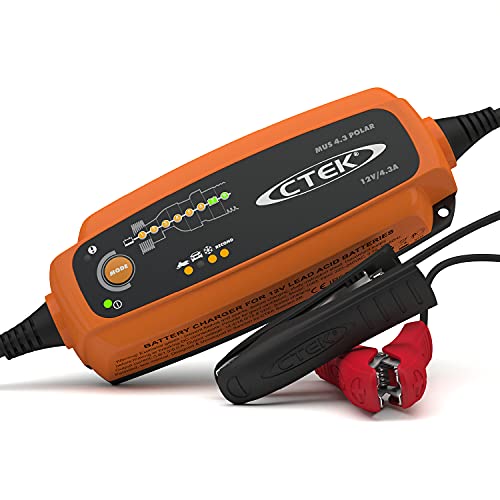
3. CTEK MUS 4.3 Polar: 4.3A Extreme Cold Charger for Lead-Acid Batteries
- Rated to charge down to -22°F (-30°C)
- Cables adapted for low temperatures
- Snowflake mode for cold and AGM
- 8-step program with Recond mode
The CTEK MUS 4.3 Polar (model 56-958) is a 12V charger built for extreme cold. CTEK rates it to charge down to -22°F (-30°C), and it uses Nordic-standard cables adapted for low temperatures, so the leads stay workable in an unheated garage or outbuilding in January. The safety-orange case is also easy to spot on a dark garage floor.
It runs a fully automatic 8-step program for lead-acid batteries, including AGM, with 0.8-amp and 4.3-amp settings. The Snowflake mode is meant for a faster charge in very cold temperatures and is also the setting for AGM batteries. A Recond mode and a desulphation function aim to recover batteries that have sat unused, and the charger moves to maintenance once the battery is full.
It is splash and dust proof, non-sparking, reverse polarity protected and short-circuit proof, and it is designed so you do not need to disconnect the battery from the car. That suits drivers who park outside or in a cold pole barn through a West Michigan winter. It is a 12V lead-acid charger only, with no lithium mode, so it is not the choice for a lithium starter battery.
View CTEK MUS 4.3 Polar on Amazon
4. Battery Tender Plus: 1.25A Float Maintainer with Quick-Disconnect Lead
- 1.25A output for 12V batteries
- 4-step charging program
- Quick-disconnect harness
- Two-color charge status LED
The Battery Tender Plus is a 12V, 1.25-amp maintainer made for batteries that sit for weeks or months. It uses a four-step program that charges the battery and then holds it at float, so it stays full without being overcharged. That makes it a natural fit for a classic car, a summer car or a second vehicle that stays in the garage until spring.
Battery Tender’s specifications list a temperature-compensated charge voltage, which matters in a garage that swings between freezing nights and milder days. It works with 12V lead-acid batteries, including AGM and gel, but the standard model has no lithium mode; Battery Tender sells a separate lithium version. A two-color LED shows the charge state, and if the battery voltage drops too far under load, the charger returns to full output.
The kit includes a fused ring-terminal harness and alligator clips. Many owners leave the ring terminals on the battery, so hooking up for the winter is a single plug at the quick-disconnect lead. At 1.25 amps it is too slow to recharge a dead or deeply drained battery in a useful time, so pair it with a larger charger, or have the battery tested if it is already flat.
View Battery Tender Plus on Amazon

5. Schumacher SC1281: 6A Charger with 100A Engine Start and 30A Boost

- 100A engine start from a wall outlet
- 12A to 30A boost charge
- 2A to 6A charge with smart maintain mode
- Built-in battery and alternator tester
The Schumacher SC1281 is a plug-in charger for 6V and 12V batteries that combines five jobs: it starts, charges, maintains, tests and restores. Its 100-amp engine start mode can crank a car with a dead battery while the unit is plugged into a wall outlet. A 12-amp to 30-amp boost charge puts energy back quickly before you try to start the engine.
For everyday charging it uses a microprocessor-controlled 2-amp to 6-amp charge with multi-stage algorithms, then switches to a smart trickle charge that maintains voltage so it can stay connected. It detects 6V or 12V batteries automatically and adds a desulfation mode plus a battery and alternator tester. The tester is a useful first check when a battery keeps going flat, though a full charging-system diagnosis takes more than that.
It suits a home garage where the car is parked near an outlet and a dead battery on a cold morning has to be dealt with on the spot. It is a bulkier unit than the compact smart chargers above. The listing does not mention a lithium mode or a temperature sensor, so it is not the pick for a lithium battery or for a charger left on a car stored in deep cold.
View Schumacher SC1281 on Amazon
AGM, Lithium and Cold-Weather Modes
Many newer cars, especially those with start-stop systems and many European models, use AGM batteries. An AGM mode uses the charge voltage that battery type expects, so pick it whenever the label says AGM. Some cars need a new battery registered with a scan tool, as our guide to Audi battery replacement explains.
Lithium starter batteries are still rare in cars and need a charger with a lithium mode. Battery University warns that consumer lithium-ion cells should not be charged below freezing.
How to Use a Charger Safely in a Cold Garage
Lead-acid batteries can release hydrogen gas while charging, so a few habits matter:
- Ventilate: charge with the garage door cracked, away from flames, heaters and sparks.
- Connect in order: clamps on first, then plug the charger in. Unplug before removing the clamps.
- Never charge a frozen battery: a swollen or cracked case, or ice inside, means replace it.
- Protect your eyes: wear safety glasses.
Add a charger check to your winter car maintenance checklist, along with the right oil from our guide to the best motor oil for cold weather.
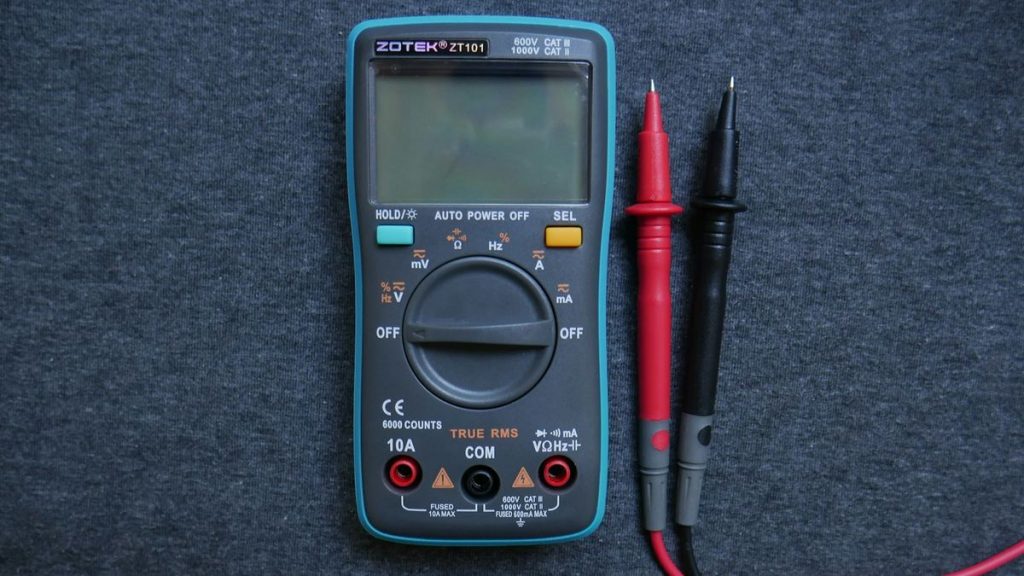
When a Battery Keeps Dying, Test It
If you need it every few days, something is draining the battery or not recharging it. Common causes are a battery near the end of its life, a parasitic drain, explained in our guide to why a car battery dies overnight, or one of the bad alternator symptoms.
Tracing a drain takes meters and wiring diagrams, beyond most driveway jobs. Our car electrical repair in Grand Rapids tests the battery, charging system and drains on foreign and domestic vehicles.
More Buying Guides
Frequently Asked Questions
Can I leave a battery maintainer on all winter?
Yes, if it is a smart maintainer that switches to float or maintenance mode. That is what they are designed for. Check the connections now and then.
How many amps do I need to charge a car battery in winter?
For maintaining a healthy battery, 1 to 2 amps is plenty. To recharge a battery drained by cold starts, 4 to 10 amps finishes the job in a reasonable time without stressing the battery.
Do I need a special charger for an AGM battery?
You need a charger with an AGM mode or one that lists AGM support. AGM batteries expect a specific charge voltage, and a basic charger can get it wrong.
Battery still going flat in the cold in Grand Rapids? Call 456 AutoFix at 616-279-3832, Monday to Friday 8am to 5pm, or book a battery and charging system test through our contact page.
Can’t make it during the day? Use our after-hours drop-off. We’re at 456 Carrier St NE in Creston.