
As an Amazon Associate, 456 AutoFix earns from qualifying purchases. Product links below go to Amazon, where you can confirm the bulb size and beam position for your vehicle before you order.
LED vs halogen headlight bulbs is usually a question that starts with one dim or dead lamp. You can buy the same type of halogen the car left the factory with, or you can try a plug-in LED that promises whiter light and a much longer life. Both choices fit the same socket, but they do not behave the same way once they are inside the headlight.
This guide explains how each bulb makes light, where each one works well and where it causes trouble. Then it looks at three H11 options: a plug-in LED, an OE-grade halogen and an upgraded halogen that sits between them.
Quick answer
Should you replace a halogen headlight bulb with an LED?
If your headlight was designed for halogen, a matching halogen bulb is the simple, DOT-compliant fix. A plug-in LED can last longer and look whiter, but many are not DOT approved for halogen housings and some scatter glare. If you switch, check the beam pattern and aim the lights afterward.
Our Quick Picks
One plug-in LED, one OE-grade halogen, and an upgraded halogen as a third option for more down-road light without leaving the halogen design.
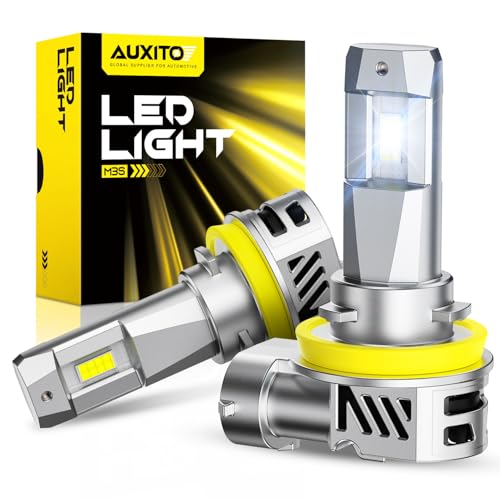
AUXITO H11 LED Bulbs
A compact plug-in LED pair for drivers who want whiter light.

Philips H11 Standard Halogen
A like-for-like halogen that keeps the headlight as designed.

SYLVANIA H11 XtraVision
A middle path with more reach while keeping halogen fitment.
How Each Bulb Turns Power Into Light
A halogen bulb is a refined version of the old incandescent lamp. Current heats a tungsten filament until it glows, and the halogen gas inside the glass capsule helps the filament last longer at that temperature. Most of the energy leaves as heat, which is why a halogen bulb is far too hot to touch after a few minutes.
An LED has no filament at all. Small semiconductor chips emit light when current passes through them, and a driver circuit keeps that current steady. The U.S. Department of Energy’s LED basics page lists long life, resistance to vibration, instant-on response and good performance in cold temperatures among the traits that make LEDs useful.
The chips themselves still make heat, though, and it collects at the base instead of radiating forward. That is why LED bulbs carry aluminum bodies, braided heat straps or small cooling fans behind the headlight. A bulb that cannot shed that heat dims early or fails.
The other key difference is shape. A headlight reflector or projector lens is designed around a tiny glowing filament in one exact spot. An LED replacement has to place its chips in nearly that same spot, or the light lands in the wrong place on the road.
LED Headlight Bulbs vs Halogen Side by Side
The table below sums up the practical trade-offs for a driver replacing bulbs in an existing headlight. It describes how each type is built and sold, not lab measurements.
| Question | Halogen bulb | Plug-in LED bulb |
|---|---|---|
| Light color | Warm white to slightly yellow | Cool white, often listed near 6000K to 6500K |
| Expected life | Shorter; filaments wear and dim | Longer life claims from makers |
| Fit in a halogen housing | Designed for it | Depends on chip placement and housing type |
| DOT status in a halogen headlight | Compliant bulbs are common | Many retrofits are not DOT approved |
| Bulb-out warnings on some cars | No issue | May need CANbus support or a decoder |
| Heat at the lens | Warm lens front | Cooler lens, heat moves to the base |
None of this applies to a car that came with factory LED headlamps. Those are sealed units engineered around their own light source, and the bulbs are usually not replaceable on their own.
LED vs Halogen Headlight Bulbs: Three H11 Options Reviewed
All three picks use the H11 size, a common low beam and fog light fitting, so the comparison stays like for like. Your car may use a different size, so check your owner’s manual or the old bulb’s base first.
AUXITO H11 LED Bulbs: 6500K Cool White, 1:1 Mini Size with Built-In CANbus Driver
- 6500K cool white output
- 1:1 mini size for the H11 socket
- Built-in CANbus driver
- Aluminum heat dissipation design
This AUXITO pair represents the LED side of the comparison. The bulbs are sold for H11 sockets and are also listed for H8 and H9, with a cool white color temperature of 6500K. The listing describes a 1:1 mini size body, meaning the bulb is built close to the footprint of the halogen it replaces, which helps when space behind the headlight is tight.
AUXITO says the chips sit close together in an ultra-thin layout, aiming for a focused beam with a sharp cut-off line and fewer dark spots. A built-in CANbus driver is listed as tuned for sensitive vehicles, which may help avoid bulb-out warnings or flicker. Heat is handled by the housing materials rather than a large fan, and the maker quotes a long service life. Installation is described as a by-hand, plug and play swap with no changes to the fixture.
In practice, this suits a driver whose housing keeps a clean cutoff with a retrofit, such as many projector low beams and fog lights. Check the pattern against a wall and aim the lights after fitting them. The listing does not state DOT approval, so treat road use in a halogen headlight with that in mind, and confirm your bulb size and position on Amazon before ordering.
View AUXITO H11 LED Bulbs on Amazon

Philips 12362B1 H11 Standard Halogen: OE-Grade, DOT-Compliant Replacement Bulb
- OE-grade H11 halogen
- DOT compliant per the listing
- Replaces 79180 and BP1255H11
- Sold as a single bulb
The Philips 12362B1 is the halogen side of this comparison, a standard H11 bulb built as an original-equipment-grade replacement. The listing states that Philips Vision bulbs meet Department of Transportation requirements, and it cross-references part numbers 79180 and BP1255H11. It is sold as a single bulb, so order two if you plan to change both sides at once.
Because it uses a filament in the position the headlight designer planned for, the beam pattern should match what the car had from the factory. Philips describes the light as noticeably whiter than older halogens, while keeping the warm character of the type. The listing also gives two sensible reminders: replace bulbs in pairs, since an aging bulb puts out less light, and never touch the glass with bare fingers, since skin oil can shorten its life.
This is the bulb to choose if the old one simply burned out and you want the headlight to work as designed without aim changes, decoders or warning lights. It will not match an LED’s color or claimed lifespan. Use the Amazon part finder and read the position and notes fields, because an H11 may fit the low beam on one vehicle and only the fog light on another.
View Philips H11 Standard Halogen on Amazon
SYLVANIA H11 XtraVision Halogen: Brighter High, Low Beam and Fog Light Replacement
- Performance halogen for H11 sockets
- More down-road visibility, per Sylvania
- Robust filament and gas mixture
- Fits high, low or fog positions
The SYLVANIA XtraVision is the related third pick: still a halogen, but tuned for more light than a basic replacement. Sylvania lists it for high beam, low beam and fog light positions, and the range is also sold in 9003, 9004, 9005, 9006, 9007, 9008, H1, H3, H7 and H13 sizes. This listing is a single H11 bulb.
According to the listing, XtraVision improves down-road visibility with no added glare. Sylvania credits a robust filament design and a proprietary gas mixture for that performance and for its durability. Because the light still comes from a filament in the standard position, the beam fits the optics of a halogen headlight the same way the original did, with no driver, fan or decoder to find room for.
For many readers this is the practical compromise in the LED and halogen debate. You keep a bulb the housing was designed for, avoid CANbus questions, and still gain some reach on dark rural roads. Like any halogen, it runs hot and will not match an LED’s claimed life. Sylvania advises changing bulbs in pairs, and you should confirm the position and notes in the Amazon part finder before buying.
View SYLVANIA H11 XtraVision on Amazon
Best LED Headlight Bulbs for Halogen Housing: Fit, Glare and the Law
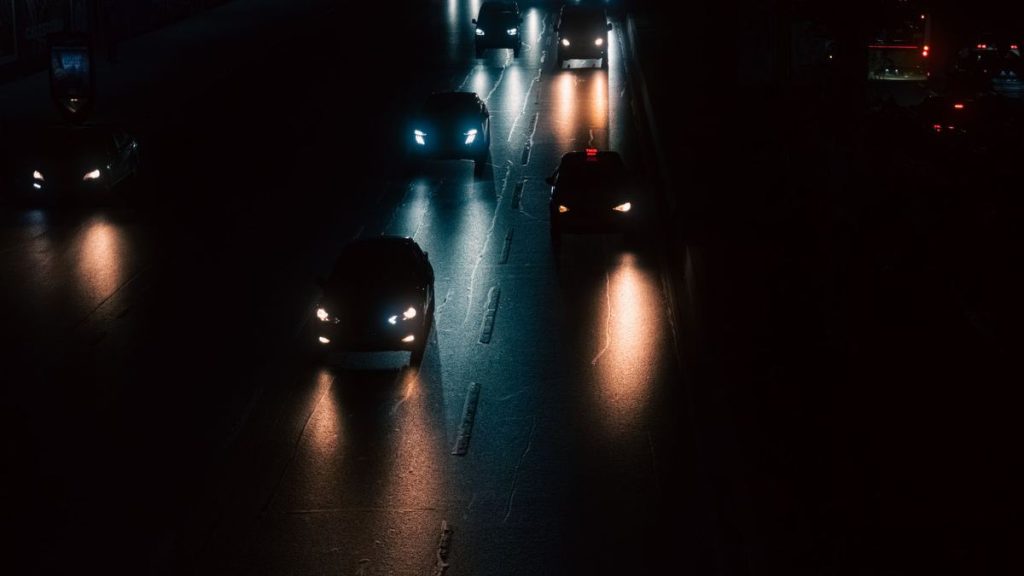
Shoppers searching for the best LED headlight bulbs for halogen housing are really asking two questions. Will the beam be safe for other drivers, and is it legal? The honest answer to both is that it depends on the bulb, the housing and how carefully you check the result.
Projector housings put a lens and a cutoff shield in front of the bulb, so they tend to control a retrofit’s light more tightly. Open reflector housings are less forgiving, because any chip that sits in the wrong spot sends light upward into oncoming eyes. Our guides to LED bulbs for projector headlights and LED bulbs for reflector housings go deeper on each style.
Legality is the part most listings skip. Headlights sold for road use in the US have to meet federal lighting rules, and many plug-in LED retrofits are not DOT approved for use in a housing built for halogen. Treat any listing that does not state compliance as off-road or show use until the maker says otherwise.
If you do install LEDs, a short check list keeps the beam usable:
- Park on level ground facing a wall or garage door, about 25 feet away, and switch on the low beams.
- Look for a clear, flat cutoff line with no bright patches above it.
- Compare both sides; they should sit at the same height.
- If the bulb allows it, rotate the chips so they face the sides of the housing.
- Aim the headlights afterward, or have them aimed, rather than trusting the old setting.
Some vehicles monitor bulb current and will flag an LED as burned out, flicker it or shut it off. A bulb with a built-in CANbus driver may avoid that, but no listing can promise it for every car. For the wider market of plug-in options, see our roundup of the best LED headlight bulbs.
Winter Night Driving Around Grand Rapids
Michigan winters add a factor most comparisons leave out. A halogen bulb sends a fair amount of heat into the lens, which can help soften a thin layer of ice or packed snow. An LED pushes most of its heat out the back, so the front of the lens can stay colder and keep a crust longer.
That does not rule out LEDs, but it does mean a quick brush of the headlights becomes part of every snowy morning. Road salt spray dries into a film on the lens as well, and it cuts output on either bulb type. A wipe at each fuel stop does more for night vision than many bulb upgrades.
Yellowed or hazy plastic lenses matter just as much. Years of sun and grit cloud the outer cover, and no bulb can shine cleanly through that. If your lenses look foggy, a headlight restoration kit may give you more usable light than a bulb swap.

Cold also tests the electrical side. A tired battery or a weak charging system can make any headlight look dim at idle, and an LED driver may flicker when voltage sags. If the car struggles to start as well, read our guide on why a car battery dies overnight before blaming the bulbs.
When a Headlight Problem Is Really Electrical
A new bulb fixes a burned-out filament, but it will not fix a wiring fault. If a fresh bulb fails within weeks, one side flickers over bumps, or both lamps go out together, the cause is usually upstream. Corroded connectors, a melted socket, a failing relay or a short to ground are common culprits.
Look at the connector when you change a bulb. Green corrosion or browned plastic means heat has been building at the contact, and a new bulb will only stress it further. A thin film of dielectric grease on a clean, healthy connector helps keep moisture out of the terminals.

Repeated fuse failures point to a short somewhere in the circuit, and our article on what to do when a car fuse keeps blowing walks through the usual causes. When the fault hides in a harness or a body control module, our car electrical repair in Grand Rapids can trace it with proper testing instead of guesswork.
More Buying Guides
Frequently Asked Questions
Which are the best headlight bulbs, LED or halogen?
It depends on the headlight. In a housing built for halogen, a quality halogen bulb is the straightforward, compliant choice, and an upgraded halogen adds down-road light. A plug-in LED offers whiter light and a longer claimed life, but only if the beam pattern stays clean and you aim it after installing.
Are LED vs halogen headlight bulbs the same size?
They share the same base code, such as H11 or 9005, so they plug into the same socket. The body is often different, though. LED bulbs carry a heat sink or fan behind the base, so check that the dust cap still fits and that nothing presses on the cooling parts.
Do LED headlight bulbs need a CANbus decoder?
Some cars do and many do not. Vehicles that monitor bulb current may show a warning, flicker or shut off an LED because it draws less power than a halogen. Bulbs with a built-in CANbus driver reduce that risk, and a separate decoder is the fallback if a warning still appears.
Should I replace headlight bulbs in pairs?
Yes. Both Philips and Sylvania advise it on their halogen listings, because a bulb that has been in service for years puts out less light than a new one. Changing both keeps the beams even, and with LEDs it keeps the color matched side to side.
Lights still dim, flickering or blowing fuses after a bulb change? Phone 456 AutoFix at 616-279-3832 on any weekday from 8am to 5pm, or send us a note through the contact page to set up a visit.
Evenings are no problem: our after-hours drop-off lets you leave the car whenever suits you. You will find the shop at 456 Carrier St NE, Grand Rapids, MI 49505.