As an Amazon Associate, 456 AutoFix earns from qualifying purchases. Product links below go to Amazon, where you can confirm the right part for your vehicle.
Most cars spend their lives commuting, running errands and sitting in traffic. The best brake pads for daily driving are not the most aggressive ones on the shelf. They are the pads that stop smoothly, stay quiet, keep dust down and last a long time without chewing up your rotors.
Below are six dependable pad lines, how to choose, and what to replace while the wheels are off.
Quick answer
Which brake pads are best for daily driving?
For most commuters, a quality ceramic pad is the right choice: quiet, low dust and gentle on rotors. Akebono ProACT and Bosch QuietCast are reliable starting points. Heavier SUVs and trucks often do better with Wagner OEX, and many European cars need a pad that matches their original friction type.
Our Quick Picks
Three starting points among the best brake pads for daily driving, by vehicle and driving style. Part numbers vary by vehicle, so confirm the fit on Amazon before you buy.

Akebono ProACT
Low dust and smooth, quiet stops from cold.

Bosch QuietCast
Matches the friction type your car came with.

Wagner OEX
Heavier vehicles, light towing, cooler running.
What Makes a Good Daily Driving Brake Pad
A commuter pad works cold most of the time, makes hundreds of gentle stops a week and has to behave the same in July and January. These are the qualities worth paying for:
- Quiet operation: shims, chamfers and slots that keep squeal down.
- Low visible dust: so your wheels stay clean between washes.
- Predictable pedal feel: good bite from cold, without grabbing.
- Rotor friendliness: a compound that wears the pad, not the rotor.
- Correct fitment: a part number made for your exact vehicle and axle.
Best Brake Pads for Daily Driving: Our Picks
We chose these lines on friction type, manufacturer specifications, vehicle coverage and long-running owner feedback. Each link goes to one common part number from the line, as an example. Part numbers vary by vehicle and axle, so use Amazon’s fit checker with your year, make, model and trim before you buy.
1. Akebono ProACT ACT1222A: Ultra-Premium Ceramic Front Pads with No Break-In
- Ultra-premium ceramic friction
- No break-in period required
- Made in the USA
- Front set of 4 for select Lexus and Toyota
Akebono supplies brakes to automakers, and ProACT is its ultra-premium ceramic replacement line for late-model domestic and Asian vehicles. Akebono’s ProACT specifications highlight control of noise, vibration and harshness, ultra-low dust and no break-in period. The pads are made in the USA. For a commuter, that adds up to smooth, quiet stops and cleaner wheels between washes.
The listing linked here is the ACT1222A front set of four, which fits select 2007-2018 Lexus and Toyota models. It is one example of the line, not a universal part, and the same ceramic compound is sold under many other ACT numbers for front and rear axles. ProACT part numbers vary by vehicle and axle, so enter your year, make, model and trim in Amazon’s fit checker before you buy.
ProACT suits sedans, minivans and crossovers that spend their days in stop-and-go traffic and on the highway. The ceramic compound gives a gentle, predictable pedal rather than the sharpest initial bite, and it works from the first stop without a bedding procedure. It is not the line for European cars, which Akebono covers with its separate EURO range, and drivers who tow often or brake hard on a heavy truck may prefer a heavy-duty pad.
2. Bosch QuietCast BC1324: Premium Ceramic Front Pads with Rubber-Core Shims
- Pre-attached multilayer rubber-core shims
- Powder-coated backing plate
- Slots and chamfers
- Hardware kit (where available) and lubricant
Bosch QuietCast Premium pads use the friction type your car came with from the factory, so a car built with ceramic pads gets ceramic and a car built with semi-metallic gets semi-metallic. The linked BC1324 is a ceramic front set. Each pad carries a pre-attached multilayer rubber-core shim, plus slots and chamfers, all aimed at lower noise and a solid, factory-style fit in the caliper bracket.
The backing plate is powder coated to resist rust and corrosion, a useful detail on roads that are salted all winter. Bosch includes synthetic lubricant for the sliding contact points, and a hardware kit where one is available for that part number. The BC1324 fits select Lexus NX and RX models plus the Toyota Camry, Highlander and Sienna across various years.
Part numbers vary by vehicle, trim and axle, and Bosch’s own listing tells buyers to verify fitment with Amazon’s fit checker. QuietCast is a sensible all-rounder for a driver who wants braking that feels close to the original. It is not a performance or track pad, since the compound is tuned for quiet, low dust everyday stops, and a car that tows regularly may be better served by a heavy-duty line.
View Bosch QuietCast on Amazon
3. Wagner ThermoQuiet QC1293: Ceramic Disc Pads with Zero-Copper Formula

- Laser-shaped friction to reduce noise
- CeramicNXT application-specific formula
- Wagner OE25 zero-copper friction
- Installation hardware included
ThermoQuiet is Wagner’s ceramic pad line for everyday passenger cars and crossovers. Wagner says its laser-shaped friction spreads out heat, sound and vibration to cut noise, and the formula dissipates heat to limit brake fade. It is also designed to reduce rotor wear and brake dust. The pads use Wagner’s OE25 zero-copper friction formulation and an application-specific CeramicNXT compound.
On select applications, Wagner’s IMI design integrates the friction material, backing plate and insulator into one piece. The QC1293 linked here fits the 2007-2017 Toyota Camry, 2008-2018 Toyota Avalon and several Lexus ES models, and this listing includes installation hardware. Other vehicles, and the rear axle of the same car, use different QC part numbers, so enter your year, make, model and trim in Amazon’s fit checker first.
ThermoQuiet suits a sedan or small crossover used for commuting, school runs and highway trips. Owner reports on dust vary more than with Akebono, and individual sets have drawn mixed comments on forums, so fresh hardware, lubricated slide pins and true rotors matter as much as the pad itself. Heavier SUVs, pickups and vehicles that tow are better matched to Wagner’s OEX line below.
View Wagner ThermoQuiet on Amazon
4. Wagner OEX OEX2087: Premium Ceramic Pads for Trucks and SUVs
- Designed for trucks, SUVs and CUVs
- Galvanized steel backing plates
- Five shim layers for quiet operation
- Stainless-steel hardware included
Wagner OEX is a premium ceramic pad engineered for trucks, SUVs and CUVs, where pads run hotter and wear faster than on a small car. Wagner uses a patented pad shape and custom slot design to reduce rotor wear and residue, and the design increases airflow for cooler operation. Five shim layers help deaden noise, vibration and harshness.
The backing plates are galvanized steel with mechanical retention, and premium stainless-steel hardware is included for all applications, which helps with corrosion where roads are heavily salted. The OEX2087 linked here fits the 2010-2020 Ford F-150 and 2010-2021 Ford Expedition, among others. Wagner’s listing asks buyers to enter year, make, model, engine and trim in the Amazon Confirmed Fit bar, since part numbers vary by vehicle.
OEX is the logical pick for a pickup or large SUV that doubles as a daily driver and occasionally pulls a trailer. The line covers domestic, European and Asian trucks, SUVs and CUVs from 2005 on. It is more pad than a compact sedan needs, and OEX part numbers are not offered for every small car, and owners of smaller cars will usually be happier with ThermoQuiet.

5. Raybestos Element3 EHT1539H: Hybrid Front Pads with Multi-Layer Shims

- Enhanced Hybrid Technology (EHT) friction
- Blend of ceramic and semi-metallic traits
- Multi-layer noise-damping shims
- Application-specific formulas
Raybestos Element3 pads use a hybrid friction material that combines traits of ceramic and semi-metallic compounds in one pad. The EHT (Enhanced Hybrid Technology) formulations aim for strong stopping power, improved pad wear and quiet operation. Raybestos describes Element3 as premium friction and coated-rotor technology built for strong control, quieter operation and lasting protection.
Premium multi-layer shims on EHT pads are designed to keep stops quiet across a wide range of temperatures, which matters when the same car sees humid summers and January cold. The EHT1539H linked here is a front set for select Subaru Forester, Impreza, Crosstrek, Legacy and Outback years, plus the Scion FR-S. Other vehicles use different EHT part numbers, so confirm yours with Amazon’s fit checker.
Element3 suits a driver who splits time between city traffic and highway miles and wants a slightly firmer bite than a pure ceramic, especially in a loaded crossover or wagon. Raybestos also sells matching coated rotors if yours are due. A hybrid pad may leave a little more dust on the wheels than a pure ceramic, so owners who care most about clean wheels may lean toward Akebono.
View Raybestos Element3 on Amazon
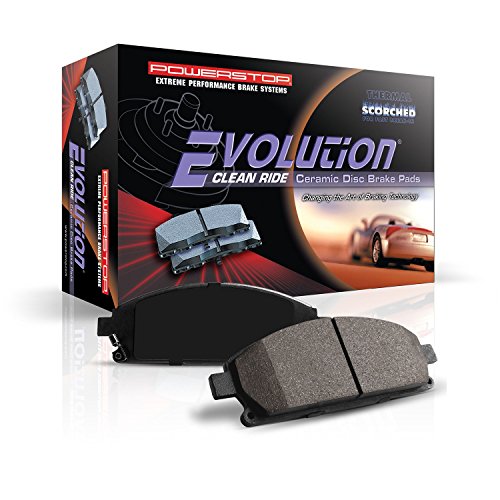
6. Power Stop Z16 16-1521: Low-Dust Ceramic Front Pads with Rubberized Shims
- Low-dust ceramic formula
- Multi-layer rubberized shims
- Thermal scorched, chamfered and slotted
- 12 month / 12,000 mile limited warranty
Z16 is Power Stop’s everyday ceramic replacement pad, made for drivers who want quiet stops and clean wheels without a performance compound. The pads are thermal scorched, chamfered and slotted for a quick break-in and consistent feel. Multi-layer rubberized shims are there to keep noise down, and the low-dust ceramic formula reduces buildup on the wheels.
The 16-1521 linked here is a front set listed for the Honda CR-V and Odyssey and some Subaru Legacy models. Each box holds two front pads, and installation hardware is not included, so plan to reuse good clips or buy a new hardware kit at the same time. Power Stop asks buyers to confirm fitment with the Amazon Confirmed Fit bar, because part numbers vary by vehicle and axle.
Z16 is a sensible choice for an older commuter that needs fresh, quiet pads and no more, such as a high-mileage crossover or minivan. Power Stop covers it with a 12 month or 12,000 mile limited warranty. Pad life tends to trail the premium lines, and drivers who brake harder or want a sportier feel can step up to Power Stop’s Z23 carbon-fiber ceramic line instead.
Ceramic vs Semi-Metallic for a Daily Driver
Most commuters are happiest with ceramic. Semi-metallic still makes sense when a vehicle is heavy, tows or came from the factory with it.
| Pad type | Strengths | Trade-offs | Typical daily use |
|---|---|---|---|
| Ceramic | Quiet, low visible dust, gentle on rotors | Less bite under repeated hard stops | Sedans, crossovers, commuting |
| Semi-metallic | Strong bite, handles heat well | More dust and noise, more rotor wear | Trucks, towing, many European cars |
| Hybrid | Balance of bite and quiet | Varies by brand | Mixed city and highway driving |
Brake pads have also changed underneath. The EPA’s Copper-Free Brake Initiative cut copper in pads to under 5 percent by weight in 2021 and 0.5 percent by 2025. Reputable pad boxes carry a marking that shows compliance.
What to Replace Along With Your Pads
New pads on tired parts rarely feel new. Plan for these at the same time:
- Hardware: fresh abutment clips and lubricated slide pins keep pads from dragging.
- Rotors: measure them. Grooved, thin or warped rotors cause the pulsing described in our guide to why a car shakes when braking.
- Wear sensors: many Audis and other European cars need a new sensor with every pad set, or the Audi brake pad warning light stays on.
- Brake fluid: if it is due, follow our advice on how often to change brake fluid.
Road Salt and Brake Pads in West Michigan
Salt is hard on brakes here. It rusts pad backing plates, seizes caliper slide pins and lets one pad wear far faster than its partner, often the inner pad you cannot see. A seized pin can also leave a pad dragging, one of the classic sticking brake caliper symptoms.
Pads with coated backing plates and coated rotors hold up better through a Michigan winter. Clean, lubricated hardware matters as much as the brand.

When to Leave the Brake Job to a Mechanic
Brakes are a safety system, so only do the job yourself if you are confident. Have a professional look if you notice grinding, a soft or sinking pedal, pulling to one side or a warning light. Our guide to the signs you need new brakes explains each one, and how long brake pads last covers typical wear.
Cars with electronic parking brakes, common on European models, need a scan tool to service the rear calipers. Our brake repair in Grand Rapids covers foreign and domestic vehicles, and foreign and European car repair handles the model-specific steps.
More Buying Guides
Frequently Asked Questions
Are ceramic brake pads better for daily driving?
For most cars, yes. Ceramic pads are quiet, produce little visible dust and are gentle on rotors. Heavy trucks, tow vehicles and cars that came with semi-metallic pads may be better served by semi-metallic or heavy-duty pads.
Do I need new rotors when I replace brake pads?
Not always. Rotors that are above minimum thickness, smooth and true can be reused. Grooved, thin or warped rotors should be replaced, or new pads will wear unevenly and may vibrate.
Are premium brake pads worth it over store brands?
For a car you drive every day, usually yes. Premium lines generally add better shims, coated backing plates and vehicle-specific compounds, which means less noise, less dust and longer life.
Do new brake pads need to be bedded in?
Most do. Bedding in transfers an even layer of pad material onto the rotor for smooth, quiet stops. Follow the procedure printed on the box, since some pads, such as Akebono ProACT, need no break-in.
Want daily driving brake pads fitted properly in Grand Rapids? Call 456 AutoFix at 616-279-3832, Monday to Friday 8am to 5pm, or book a brake inspection through our contact page.
Can’t make it during the day? Use our after-hours drop-off. We’re at 456 Carrier St NE in Creston.