
As an Amazon Associate, 456 AutoFix earns from qualifying purchases. Product links below go to Amazon, where you can confirm the right part for your vehicle.
A hydraulic steering system only needs a few cups of fluid, but the wrong kind can swell seals, starve the pump or leave the wheel stiff on a cold morning. The best power steering fluid for your car is the one that matches the spec printed on the reservoir cap or in the owner’s manual.
This guide sorts out the main fluid families, shows you how to read the spec, and reviews six specific bottles on Amazon, from multi-vehicle fluids to a factory Honda fluid and a seal conditioner. If the pump is already groaning, our article on a power steering whining noise covers the likely causes first.
Quick answer
Which power steering fluid should you buy?
Start with the spec on the cap or in the manual. For most domestic cars that call for power steering fluid, Valvoline MaxLife or Red Line 30404 meets the common GM, Chrysler and Ford specs. Hondas need Genuine Honda fluid, and a car with electric power steering needs no fluid at all.
Our Quick Picks
Three quick picks for the most common cases: a multi-vehicle fluid with seal conditioners, a synthetic for hot and cold extremes, and a factory fluid for Honda systems. All six bottles are reviewed below.

Valvoline MaxLife Power Steering Fluid
A spec-listed fluid that also conditions older seals.

Red Line 30404 Power Steering Fluid
Holds viscosity when hot and eases steering effort when cold.
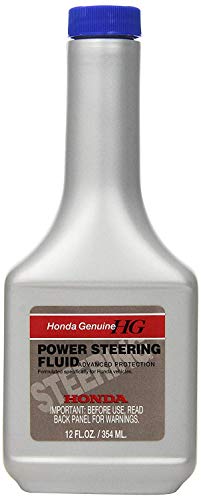
Genuine Honda Power Steering Fluid
The fluid Honda specifies for its hydraulic steering pumps.
Three Families of Steering Fluid
Power steering fluid is a hydraulic oil that the pump pressurizes to help you turn the wheels. Makers use three broad types, and they are not interchangeable.
- ATF-type systems: many older Ford, GM and Asian cars simply use automatic transmission fluid in the steering. The cap or manual names a type such as Dexron or Mercon, and a matching ATF is the right fill.
- Conventional power steering fluid: a dedicated mineral or blended fluid written to GM, Chrysler or Ford steering specs. Most multi-vehicle bottles on the shelf sit here, and some add seal conditioners.
- Synthetic hydraulic fluid (CHF): a thin, fully synthetic fluid used by many European and some Asian makers. It flows well in the cold and suits tight tolerances, but it should not be mixed with the other two types.
A fourth case is the car with no fluid at all. Many vehicles built in the last decade use an electric power steering rack driven by a motor, so there is no pump, hose or reservoir to fill. Electro-hydraulic units, with an electric pump and a real reservoir, still need fluid.
Reading the Spec Before You Pour
Picking the best power steering fluid starts at the reservoir cap, which often carries a fluid name, an ATF type or a part number, and the owner’s manual lists the same spec under fluids and capacities.
- Check the spec numbers: look for codes such as GM 1050017, Chrysler MS-5931 or Ford M2C33-F on the bottle and match them to your manual.
- Don’t mix families: topping up a CHF system with conventional fluid, or an ATF system with synthetic hydraulic fluid, can upset the seals. If you change type, flush the system fully.
- Respect maker-only fluids: Honda and Acura warn that other fluids can damage their pumps, and several European makers want their own approved fluid.
If the steering feels heavy even with a full reservoir, the fluid may not be the problem. Our guide to a steering wheel that’s hard to turn walks through belts, pumps, tires and suspension causes.
Best Power Steering Fluid Picks, One by One
Each product below is a specific listing on Amazon US. Read the spec list on the listing and compare it with your manual before you order, since no single bottle suits every steering system.
1. Valvoline MaxLife Power Steering Fluid: 32 oz Multi-Vehicle Formula with Seal Conditioners
- Seal conditioners for aging systems
- Anti-foam and oxidation control
- Meets GM 1050017, Chrysler 5931, Ford M2C195-A
- 32 oz bottle
MaxLife is Valvoline’s line for higher-mileage vehicles, and this 32 oz bottle brings that idea to the steering system. It is a dedicated power steering fluid rather than an ATF, and the listing names three common specs it meets: GM 1050017, Chrysler 5931 and Ford M2C195-A. If one of those numbers appears in your owner’s manual, this bottle is a direct fit for top-ups or a full change.
The main difference from a basic fluid is the seal conditioner package. Valvoline says it helps rejuvenate aged seals, restore some flexibility and slow the small seeps that come with years of heat cycles. The formula also resists foaming and oxidation, which keeps pressure steady and helps the fluid hold up between changes. A quart is enough for most reservoir top-ups and for many drain-and-fill jobs on a car or light truck.
It is not the right fill for a system that calls for CHF, a maker-only fluid such as Honda’s, or a specific ATF. Conditioners also have limits: they can help with a mild seep, but they won’t seal a split hose or a leaking rack. Treat it as maintenance for an aging system, and have a steady leak inspected.
View Valvoline MaxLife Power Steering Fluid on Amazon
2. Red Line 30404 Power Steering Fluid: 1 Quart Synthetic with High-Temp Stability
- Synthetic formula resists thermal breakdown
- 50% greater high-temp viscosity
- One fifth the high-temp evaporation
- GM, Chrysler and Ford specs listed
Red Line has made synthetic lubricants since 1979, and 30404 is its power steering fluid in a one-quart bottle. The listing ties it to a long list of specs: GM part numbers 1050017 and 1052884, Chrysler 5931, MS-11655 and MS-90030, and Ford M2C33-F. It also meets several industrial hydraulic pump specs, which says something about the base fluid’s durability.
Red Line’s pitch is heat and cold. The company lists 50% greater high-temperature viscosity and one fifth of the high-temperature evaporation compared with typical fluids, and says it helps prevent steering fade when the system is hot and heavy effort when it is cold. That combination suits pickups that tow, vehicles that do a lot of slow parking-lot steering and cars that sit outside on winter nights. It is also designed to resist foaming and help prevent leaks and squeals.
The trade-off is that it’s a synthetic PSF, not a CHF-type hydraulic fluid and not an ATF, so it only belongs in systems that list one of its specs. It costs more than a basic conventional bottle. For an everyday commuter with no heavy work, a conventional fluid that meets the same spec will also do the job.
View Red Line 30404 Power Steering Fluid on Amazon

3. Genuine Honda 08206-9002 Power Steering Fluid: 12 oz Factory Fluid for Honda Systems
- Honda part number 08206-9002
- Made for Honda power steering systems
- Fits Honda models per the listing
- 12 oz bottle
Honda is one of the makers that insists on its own steering fluid, and 08206-9002 is the factory part in a 12 oz bottle. The listing says it is made for Honda power steering systems and warns that other makers’ fluids may damage them. Acura shares much of the same hardware, so check your Acura owner’s manual or cap to confirm the same fluid is listed.
The value here is certainty. Honda pumps and racks are built around this fluid’s viscosity and seal compatibility, so a top-up or change with the factory bottle avoids guesswork. That matters most on older models with a belt-driven hydraulic pump, which are the ones most likely to need a top-up. A 12 oz bottle covers a typical top-up, and a full drain-and-fill on most models takes a little more.
It’s a narrow product by design. It is not meant for non-Honda vehicles, and many recent Hondas use electric power steering with no fluid at all, so look for a reservoir before you buy. If a Honda system has already been filled with the wrong fluid, a full flush with this fluid is better than mixing more in.
View Genuine Honda Power Steering Fluid on Amazon
4. Lubegard 23232 Complete Synthetic Power Steering Fluid: 32 oz with Anti-Wear Additives

- Synergol TMS and LXE additive technologies
- For European, North American and Asian vehicles
- Cold and high-temperature performance
- Suits electro-hydraulic systems
Lubegard is a specialty additive and fluid brand from Industrial Lubricants, and 23232 is its full synthetic power steering fluid in a 32 oz bottle. On its COMPLETE Synthetic Power Steering Fluid page, Lubegard describes it as a service fluid for European, North American and Asian vehicles, and points Honda and Acura owners to its separate 24242 formula instead.
The formula uses two patented technologies, Synergol TMS and a liquid wax ester called LXE, which Lubegard says reduce friction, improve heat stability and protect seals and hoses. The maker also claims it eases the stiff steering some cars show on cold mornings, quiets pump whine and frees sticky pumps. The listing adds that it suits electric hydraulic systems, the type with an electric pump and a real reservoir.
Broad coverage is the appeal for someone who looks after several different vehicles. Still, a maker that names its own fluid, or a CHF-only system, deserves that fluid rather than a general one, so check your manual before you pour. It won’t help a car with a fully electric rack, and noise from a worn pump or a slipping belt needs a repair, not a new fluid.
View Lubegard 23232 Complete Synthetic PSF on Amazon
5. Prestone AS260 Power Steering Fluid: 12 oz Conventional Formula with 50,000-Mile Life

- Conventional formula
- 50,000-mile fluid life
- Anti-wear and corrosion protection
- 12 oz bottle
Prestone AS260 is the brand’s plain conventional power steering fluid in a 12 oz bottle. It has no stop-leak package, which some owners prefer when the system is healthy and only needs a small top-up. Prestone rates it for 50,000 miles of fluid life and labels it for use across manufacturers that call for a standard power steering fluid.
The listing highlights anti-wear protection that helps guard the pump against failure, squeals and clogs, along with corrosion protection for metal parts, rubber and gaskets. Those are the basics any hydraulic steering fluid should cover, which makes it a simple maintenance fluid for a healthy system. The small bottle is handy to keep in the garage or trunk of an older car that drinks a little fluid between oil changes.
The broad label needs a careful read. Systems that call for ATF, CHF or a maker-only fluid such as Honda’s are not the place for a generic conventional fluid, whatever the bottle says. A 12 oz size also suits top-ups more than a full flush. If your manual lists a GM, Chrysler or Ford steering spec, compare it with the bottle before you buy.
View Prestone AS260 Power Steering Fluid on Amazon
6. Lucas Oil Power Steering Leak-Stopper: 12 oz Solvent-Free Seal Conditioner

- Blend of oils and petroleum additives
- Solvent-free formula
- Conditions worn seals
- Compatible with power steering fluids
Lucas Oil Power Steering Leak-Stopper is an additive and fluid blend for systems that have started to seep. The 12 oz bottle is a mix of special oils and petroleum-extracted additives, and the listing stresses that it is solvent free. Lucas says it renews and conditions worn seals and is compatible with all power steering fluids, so it can go into a system that already holds fluid.
Seals in a pump or rack harden with age and heat, and a hardened seal lets fluid creep past. A conditioner softens and swells those seals slightly, which can slow a minor seep and quiet some pump noise. Lucas also pitches it as preventive maintenance for newer steering units. For an older car that leaves a small spot on the garage floor, it is a low-effort first step before a repair.
It is not a cure for every leak. A cracked hose, a crushed or rusted line, a loose fitting or a rack with failed internal seals needs parts, not an additive. Since many makers specify one fluid, check your manual before adding anything to a CHF or Honda system. If the level keeps dropping after a few weeks, have the leak located.
View Lucas Oil Power Steering Leak-Stopper on Amazon
Match the Bottle to the Cap
The table pairs common cap and manual markings with the type of fluid to look for. It’s a short way to narrow the best power steering fluid for your car down to two or three bottles that suit it.
| Cap or manual says | Fluid type | Example bottles | Keep in mind |
|---|---|---|---|
| Power steering fluid, GM, Chrysler or Ford spec | Conventional or synthetic PSF | Valvoline MaxLife, Red Line 30404, Prestone AS260 | Check the spec numbers on the label |
| Honda PSF or Acura PSF | Maker fluid | Genuine Honda 08206-9002 | Other fluids may harm the pump |
| Dexron or Mercon ATF | Matching ATF | An ATF that lists that spec | Don’t use PSF unless the maker allows it |
| CHF or synthetic hydraulic fluid | Synthetic hydraulic fluid | The fluid your maker approves | Never mix it with ATF or mineral PSF |
| No reservoir, electric steering | None | None | Steering faults need a scan, not fluid |
Brand matters less than the spec. Two bottles that list the same GM or Chrysler number will both do the job. If the cap names a maker part number instead of a spec, that maker’s own fluid is the safe choice.

Cold Mornings, Whines and Seeps in West Michigan
On a January morning in Grand Rapids, steering fluid is at its thickest, and an old or contaminated fill makes the wheel feel heavy for the first few turns. A groan that only appears in the cold can also mean a slipping belt or a pump drawing air.
Road salt and spray also attack the steel lines and rubber hoses that carry the fluid. A crusty line can weep slowly for months before it drips. Have the hoses near the rack and pump checked whenever the car is on a lift.

Dark, burnt-smelling or gritty fluid is worn out. Many manuals list no change interval, so have it checked at routine service and replaced when it darkens.
When a Steering Leak Needs a Mechanic
Even the best power steering fluid with seal conditioners is only a first step for a slow seep from an older pump or rack. It’s not a fix for a split hose, a corroded line or a rack that’s dripping on the driveway. Running a pump low on fluid also damages it quickly, so a leak that needs topping up every week should be found and repaired.

Our suspension and steering repair in Grand Rapids covers pumps, hoses, racks and the parts around them on foreign and domestic vehicles. Hendrick Hoffman, our owner and head mechanic, is ASE and State of Michigan certified in steering and suspension.
More Buying Guides
Frequently Asked Questions
Is power steering fluid the same as transmission fluid?
Not always. Some systems are designed to run on a specific ATF, and the cap or manual will say so. Others need a dedicated power steering fluid or a synthetic hydraulic fluid, and ATF is the wrong choice there.
Can I mix two brands of power steering fluid?
Two bottles that meet the same spec can usually share a reservoir for a top-up. Mixing different families, such as CHF with ATF or mineral PSF, is a bad idea. If you switch types, flush the old fluid out.
Does my car even use power steering fluid?
Open the hood and look for a small reservoir marked with a steering wheel symbol. Many newer cars use electric power steering with no reservoir at all. Your owner’s manual will confirm which system you have.
Does power steering stop leak really work?
A seal conditioner can slow a small seep from hardened seals in an older pump or rack. It won’t seal a cracked hose, a rusted line or a badly worn rack. If you still need to add fluid often, have the leak found.
Steering groaning, stiff or leaving drips on the driveway? Call 456 AutoFix at 616-279-3832, Monday to Friday 8am to 5pm, or set up a steering check through our contact page.
Can’t make it during the day? Use our after-hours drop-off. We’re at 456 Carrier St NE in Creston.