As an Amazon Associate, 456 AutoFix earns from qualifying purchases. Product links below go to Amazon, where you can confirm the right part for your vehicle.
Old brake fluid leaves the system one wheel at a time, and the tool in your hand decides whether that job needs a helper on the pedal, a compressor or just patience. The best brake bleeder kit for your garage depends on three things: how the tool is powered, whether it can seal onto your car’s reservoir, and how often you plan to use it.
Below are the four bleeding methods, what to check before you buy, and six kits that cover each style. If you are not sure the fluid is due, our guide on how often to change brake fluid explains the intervals and the warning signs.
Quick answer
Which brake bleeder kit should a home mechanic buy?
If an adapter fits your reservoir, a pressure bleeder such as the Motive Products Power Bleeder is the simplest one-person setup. The Mityvac MV8500 hand pump suits small jobs and clutches, an air-powered vacuum kit suits garages with a compressor, and a check-valve bottle like the OEMTOOLS 25036 is the low-cost start.
Our Quick Picks
Three starting points: a pressure tank for full flushes, a hand pump for small jobs, and a low-cost bottle for pedal bleeding on your own.

Motive Products 0100 Power Bleeder
A pressurized tank that feeds fresh fluid while you work the bleeder screws.
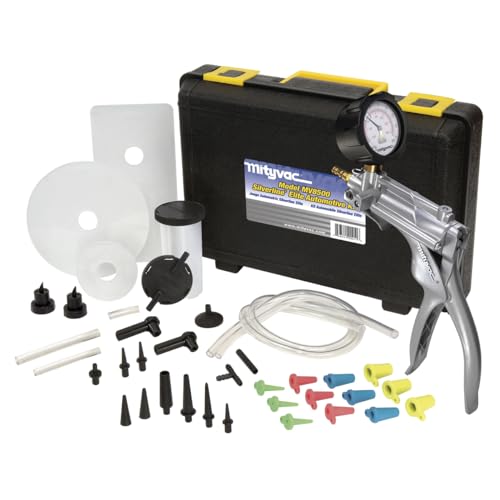
Mityvac MV8500
A die-cast hand pump kit for vacuum bleeding and system testing.

OEMTOOLS 25036 Bleed-O-Matic
A catch bottle and clear hose that let you bleed with the pedal on your own.
Four Ways to Get Air Out of a Brake Line
Every bleeder moves fresh fluid through the lines and out of each bleeder screw until no bubbles remain. Only the force doing the work changes.
- Pressure bleeding: a sealed cap on the master cylinder reservoir feeds fluid from a pressurized tank, so you only open and close the bleeder screws.
- Vacuum bleeding: a hand pump or an air-powered venturi pulls fluid out at the wheel into a catch jar.
- Reverse bleeding: fresh fluid is pushed in at the caliper and travels up to the reservoir, the direction air bubbles naturally want to go.
- Pedal bleeding with a bottle: you pump the brake pedal yourself while a one-way valve or a submerged hose stops air from being drawn back in.
Anti-lock systems add a wrinkle. Many ABS units hold fluid in the hydraulic modulator that a normal bleed doesn’t fully flush, and some makers call for a scan tool that cycles the ABS pump and valves during the procedure. Our guide to the OBD2 scanner for ABS and airbag codes covers tools with that function, and if the warning lamp is already lit, start with what an ABS light on the dash means.
What to Check Before Buying a Bleeder
- Reservoir fit: a pressure bleeder only works if its cap or adapter seals on your reservoir. Threaded European caps, Ford and GM styles and older rectangular reservoirs all take different adapters.
- Power source: hand pumps need nothing but your grip, while pneumatic vacuum kits need a shop air compressor and hose.
- Fluid type: under the federal brake fluid standard, FMVSS 116, glycol-based DOT 3, DOT 4 and DOT 5.1 are colorless to amber and silicone DOT 5 is dyed purple. Never mix silicone with glycol fluid, and keep one bleeder for each type.
- Hose and fittings: look for clear tubing so you can watch for bubbles, and tapered or stepped fittings that grip several bleeder screw sizes.
One vacuum quirk: air drawn in around the threads of an open bleeder screw shows up as tiny bubbles in the hose. PTFE tape or bleeder screw grease on the threads makes the hose easier to read.
Best Brake Bleeder Kit Options: Six Tools in Detail
The list runs from a pressure tank to two vacuum styles, a reverse bleeder and a simple one-person bottle. Capacities, fittings and included parts come from each Amazon listing.
1. Motive Products 0100 European Power Bleeder: 2-Quart Pressure Tank with 45mm Cap Adapter
- 2-quart pressure tank with hose
- 45mm threaded 1100 reservoir adapter
- One-person pressure bleeding
- Rust-proof build, made in the USA
The Motive Products Power Bleeder is a pressure bleeder built around a 2-quart tank, a supply hose and a cap that seals onto the master cylinder reservoir. This 0100 version comes with the 1100 adapter, a 45mm threaded cap that the listing says fits most European cars. Motive sells the same tank with other caps for Ford, GM, Chrysler and older American reservoirs, so the right kit depends on the cap your car actually has.
In use, you pour clean fluid into the tank, thread the cap onto the reservoir and pump the tank up with its built-in hand pump. The pressure pushes fresh fluid through the lines, and you move from wheel to wheel opening each bleeder screw until the fluid runs clear and free of bubbles. Because nothing is pulled through the bleeder threads, the hose gives an honest picture of what is coming out.
Motive lists a rust-proof design and US production, and it reminds buyers to check that every seal is in place and undamaged, since a worn seal can stop the tank from holding pressure or cause a leak. It suits owners who flush fluid on schedule. It does not suit a car whose reservoir doesn’t match the included adapter, so confirm the cap style for your vehicle before buying.
View Motive Products 0100 Power Bleeder on Amazon
2. Mityvac MV8500 Silverline Elite: Hand Vacuum and Pressure Pump Brake Bleeding Kit
- MV8510 die-cast hand pump
- Vacuum and pressure functions
- 4.5 oz fluid reservoir
- Brake, clutch and fuel priming use
The Mityvac MV8500 Silverline Elite is a hand-operated kit built around the MV8510 pump, which has a zinc-aluminum die-cast body that the listing says resists corrosion. Squeeze the handle and the pump draws a vacuum on a small reservoir connected by hose to the bleeder screw, pulling old fluid and air out at the wheel. The kit can also push pressure, which widens what it can do in a home garage.
For brake work, the 4.5 oz reservoir collects fluid as you bleed one caliper or wheel cylinder at a time, and the same setup handles hydraulic clutches. Mityvac also lists it for diesel fuel priming and for vacuum and pressure testing on fuel, coolant, hydraulic and differential components. That makes it a tool that earns its place in the drawer between brake jobs rather than sitting unused for years.
The hand pump needs no air supply or power, so it works in a driveway or a cramped garage. The tradeoff is pace: a full four-wheel flush means many strokes and several trips to empty the small jar. Like any vacuum tool, it can draw air around loose bleeder threads, so a little thread sealant helps you read the hose clearly while you work.
3. Mityvac MV6835: Air-Operated Vacuum Bleeder with 1.9-Quart Reservoir and Clamp-On Refill

- Air operated, up to 2 quarts per minute
- 1.9 quart (1.8 L) reservoir
- Automatic shutoff valve
- Clamp-on refill bottle
The MV6835 is Mityvac’s air-operated brake and clutch bleeder. Compressed air runs through the tool to create a vacuum, which pulls fluid from the bleeder screw into a 1.9-quart (1.8 liter) reservoir. Mityvac lists a flow of up to 2 quarts per minute, far quicker than squeezing a hand pump, which matters most when you are flushing all four corners.
The kit’s main extra is a clamp-on refill bottle. It feeds fresh fluid into the master cylinder reservoir as you draw old fluid out, which helps prevent the reservoir from running low and letting air into the system. A variable thumb throttle sets the strength of the pull, the air inlet swivels a full 360 degrees for tight wheel wells, and an automatic shutoff valve guards against overfilling the collection tank.
The listing names cars, trucks, motorcycles and ATVs, and the tool works on calipers, wheel cylinders, master cylinders and clutches. It needs an air compressor and hose, so it is not a choice for a garage without shop air. As with any vacuum bleeder, sealing the bleeder screw threads keeps air drawn past them from looking like air still trapped in the line.
4. Phoenix Systems V-12: Medium-Duty Reverse, Vacuum and Pressure Brake Bleeder Kit

- Reverse, vacuum, pressure and bench bleeding
- Hand powered, no air or electricity
- Rebuildable Zytel nylon injector
- Molded hard case included
Phoenix Systems built its name on reverse bleeding, and the V-12 is its medium-duty kit. Instead of pushing fluid down from the reservoir or pulling it out at the wheel, a reverse bleeder injects fresh fluid at the caliper or wheel cylinder. The fluid travels upward toward the master cylinder, and trapped air rises with it rather than having to be forced down and out against its natural direction.
The same hand-powered tool can also work as a vacuum pump, a pressure bleeder and a bench bleeder for a new master cylinder, though the listing notes that pressure and bench procedures may need vehicle-specific adapters. It needs no electricity or shop air. The injector is made from Zytel nylon and is rebuildable, the kit ships in a molded hard case, and Phoenix states a one-year maker warranty.
Phoenix lists the V-12 for DOT 3, DOT 4 and DOT 5.1 fluid only, never petroleum-based fluids, and its attachments fit bleeder screws and clutch weep holes. With reverse bleeding you need to draw fluid out of the reservoir as it rises, or it will overflow. The listing also notes that some ABS and hybrid bleeding procedures still require a scan tool.
View Phoenix Systems V-12 on Amazon
5. Capri Tools CP21029: Pneumatic Vacuum Brake Bleeder with Built-In Silencer
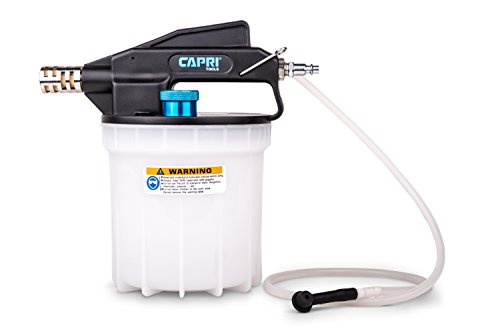
- Vacuum bleeds brakes and clutches
- For standard and ABS brake systems
- Integrated silencer
- 40-inch silicone hose with universal adapter
The Capri Tools CP21029 is a compact vacuum bleeder that runs on shop air, a simpler alternative to larger pneumatic kits. Connected to a compressor, it creates suction that draws fluid and air out through the bleeder screw and into its collection container. Capri lists it for bleeding and flushing hydraulic brakes and clutches, and describes it as designed to drain most standard and ABS brake systems.
Air-driven venturi tools can be loud in a closed garage, so Capri builds a silencer into the body to cut the hiss while you work. The set includes a 40-inch silicone hose with a universal rubber adapter that slips over the bleeder screw, giving enough reach to move around a wheel without repositioning the tool every few seconds. The design also aims to keep spills and drips off the floor and brake parts.
The listing is short on detail such as reservoir size or a refill bottle, so plan on watching the master cylinder level yourself and topping it up often. Draining an ABS system through the wheels does not replace any scan tool procedure the maker calls for. It suits owners who already have a compressor and want an uncomplicated vacuum bleeder without extra parts.
View Capri Tools CP21029 on Amazon
6. OEMTOOLS 25036 Bleed-O-Matic: One-Person Bleeder Bottle with Magnet and Clear Hose
- Magnet mount for one-person use
- Transparent bleeder hoses
- Tapered fittings for most vehicles
- Opaque catch bottle for easy disposal
The OEMTOOLS 25036 Bleed-O-Matic is the simplest kit here: a catch bottle, clear hoses and tapered fittings. It uses the traditional pedal method, so the brake pedal does the pumping, but the bottle removes the need for a second person. A strong magnet holds the bottle to the rotor or another steel surface near the wheel, keeping it upright and close while you work.
Push a tapered fitting onto the bleeder screw, run the hose into the bottle, crack the screw open and press the pedal. With the hose end held below the fluid level in the bottle, air has a hard time being drawn back in on the return stroke. The transparent tubing lets you see when the fluid runs clear and bubble-free, and the listing says the fittings suit calipers, wheel cylinders and master cylinders on most vehicles.
There are no pumps, tanks or air lines to maintain, and the reservoir makes it easy to pour old fluid into a container for recycling. The tradeoff is time and walking: you will be in and out of the driver’s seat to pump the pedal and check the reservoir level. It suits occasional bleeds rather than frequent full flushes on several cars.
View OEMTOOLS 25036 Bleed-O-Matic on Amazon
Matching the Bleeder to Your Car and Garage
| Method | Kits above | Suits | Watch for |
|---|---|---|---|
| Pressure | Motive Products 0100 | Full flushes, one person, threaded European caps | Needs the right cap adapter for your reservoir |
| Hand vacuum | Mityvac MV8500 | Single calipers, clutches, small top-ups | Slow on a full flush, small catch jar |
| Air vacuum | Mityvac MV6835, Capri CP21029 | Garages with a compressor, frequent use | Air past the bleeder threads looks like bubbles |
| Reverse | Phoenix Systems V-12 | Stubborn air, clutch slave cylinders | Reservoir can overflow if you don’t draw it down |
| Pedal and bottle | OEMTOOLS 25036 | Occasional bleeds on a tight budget | Slower, lots of pedal strokes |
Whichever method you choose, follow the wheel order in your service information, usually farthest from the master cylinder first, and never let the reservoir run dry. A dry reservoir lets air into the master cylinder and the job starts over.
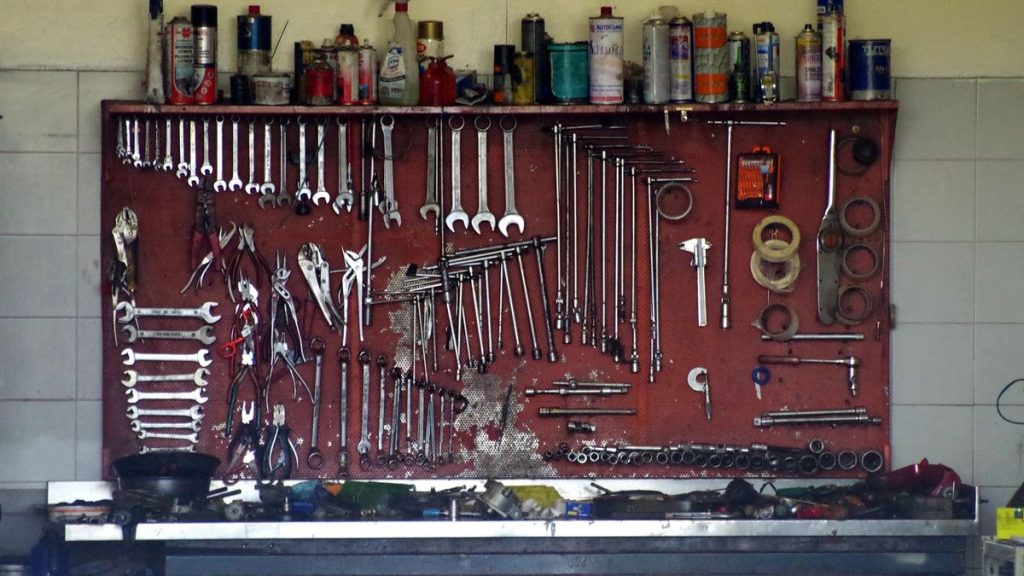
Seized Bleeder Screws and West Michigan Winters
Around Grand Rapids, road salt causes more trouble on a brake bleed than any choice of tool. Bleeder screws sit in the spray behind each wheel, and after a few winters many are rusted solid.
Soak each screw with penetrating oil the day before, use a six-point wrench, and stop if it won’t move. A snapped screw turns a flush into a caliper job. Salt also attacks the steel lines themselves, which our article on brake line rust from road salt explains.
When a Brake Bleed Belongs at the Shop
A soft pedal that stays soft after a careful bleed points to something a bleeder can’t fix, such as a worn master cylinder, a leaking line or air trapped in the ABS unit. If the pedal sinks with steady pressure, read our guide on why a brake pedal goes to the floor before you drive the car again.
Brakes are safety work, and plenty of newer cars need a scan tool procedure or special adapters for a complete bleed. Our head mechanic is ASE and State of Michigan certified in brakes, and our shop handles fluid service as part of brake repair in Grand Rapids, checking pads, lines and calipers along the way.
A flush pairs well with a pad change, since the wheels are already off. Our guide to brake pads for daily driving covers quiet, low-dust options.
More Buying Guides
Frequently Asked Questions
Is a vacuum or a pressure brake bleeder better?
Neither is better for every car. A pressure bleeder gives a steady, clean flush once the adapter seals on your reservoir. A vacuum bleeder fits almost any car without an adapter, but air drawn past the bleeder threads can make the hose harder to read.
Can one person bleed brakes without a helper?
Yes. Pressure, vacuum and reverse bleeders are all one-person tools, and a bottle with a one-way check valve lets you pump the pedal yourself while the valve stops air from being drawn back into the caliper.
Do I need a scan tool to bleed ABS brakes?
Sometimes. A routine flush at the wheels is often enough, but if air reaches the ABS modulator, many makers call for a scan tool that cycles the ABS pump and valves. Check the service information for your exact car.
What is the best brake bleeder kit for a beginner?
A check-valve bottle like the OEMTOOLS 25036 is the gentlest start, because it adds little cost and few steps. If you plan to flush fluid on schedule every few years, a pressure bleeder with the right adapter for your car saves the most effort.
Rather leave the bleeder screws and the ABS procedure to someone else? Call 456 AutoFix at 616-279-3832, Monday to Friday 8am to 5pm, or set up a visit on our contact page.
Working all day? Bring the car by after hours to our drop-off at 456 Carrier St NE, in the Creston neighborhood on the northeast side of Grand Rapids.