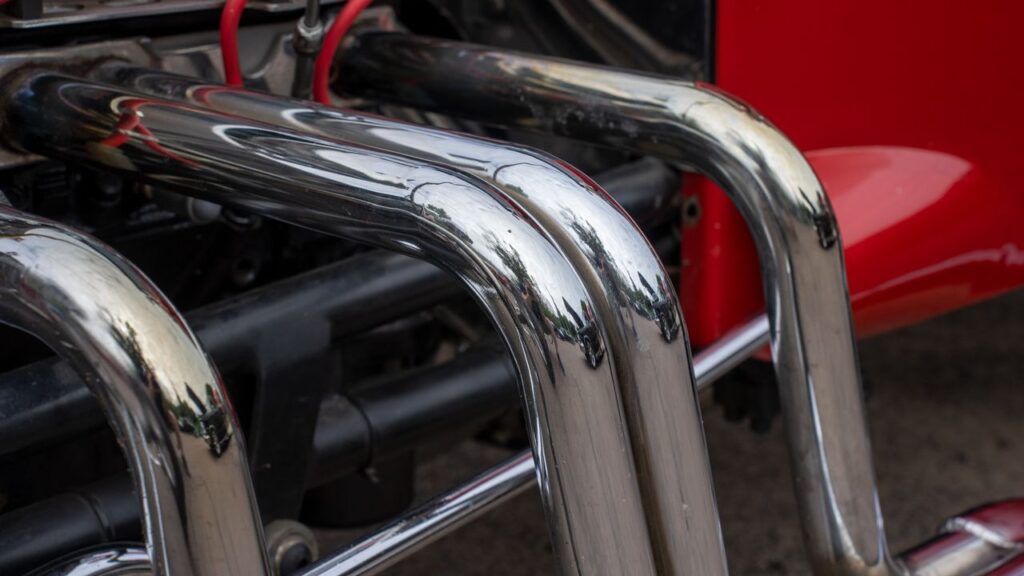
A broken exhaust hanger is one of the most common reasons an exhaust starts to sag, rattle or bang under the car. These small parts carry the whole pipe, muffler and tailpipe.
When one lets go, the others take extra weight. Here is why they fail in West Michigan and how urgent each sign is.
Quick answer
What happens when an exhaust hanger breaks?
The exhaust loses support, so it sags, clunks or bangs against the underside over bumps, and may scrape the road. The extra stress can crack pipes and joints and cause leaks. A sagging pipe should be checked soon, and a dragging pipe means you should stop driving and get it secured right away.

What Exhaust Hangers and Rubber Isolators Do
Your exhaust is bolted solidly only at the engine. The rest hangs from steel rods welded to the pipe, which push into rubber isolators bolted to the body.
The rubber matters as much as the steel. It lets the pipe grow and shrink as it heats up and cools down, and it keeps engine vibration from buzzing through the floor. It also keeps the pipe clear of the fuel tank and suspension.
Why Exhaust Hangers Break
Rubber That Ages, Cooks and Freezes
Years of heat from the pipe bake the rubber until it loses its stretch, cracks and tears through. Cold makes it worse: hard winter rubber can’t flex, so a jolt can split it.

Rusted Rods and Brackets
In a salt-belt winter, the steel side fails too. Brine sprays the underside for months, and the thin hanger rods and the brackets they bolt to rust until they snap off.
Rust on the pipe itself can also overload good hangers. A heavy, corroded muffler or a pipe out of line pulls harder on its supports, so new hangers can break again if the cause isn’t fixed.
Potholes, Snow Ruts and Snowbanks
Freeze-thaw potholes, frozen ruts and plowed ridges hit the lowest point of the car, often the exhaust. One hard strike can tear an aged isolator. If the trouble started after a big hit, look over our guide to pothole damage signs to check after a hard hit as well.

Signs of a Broken Exhaust Hanger
- Sagging pipe or tailpipe: the muffler or tailpipe sits lower than before or hangs crooked.
- Clunk or thunk over bumps: a dull knock as the pipe swings into the body.
- Banging or rattling: the pipe taps the floor or a crossmember, often worst at idle.
- Dragging or scraping: a grinding sound on driveways, speed bumps or snowbanks.
A hanger clunk is easy to mistake for a worn suspension part. If the knock follows the wheels rather than the exhaust, our post on a clunking noise over bumps and its suspension causes covers the other suspects. A loose heat shield usually makes a lighter, tinny buzz instead of a heavy thunk.

Why You Shouldn’t Ignore a Sagging Exhaust
An unsupported pipe twists at every bump, working on the clamps, flex joint and gaskets. Walker Exhaust’s guide to the symptoms of an exhaust leak notes that when a hanger falls off or its rubber isolator wears out, other parts take more vibration and can weaken or break.
Our guide to exhaust leak symptoms and the carbon monoxide risk explains what to watch for. If the muffler itself has rusted through, read about driving with a hole in your muffler.
A pipe that drags is the most serious case. It can catch on a pothole edge or ice ridge and tear the system apart, throw sparks on the pavement, or get pushed up against a fuel or brake line.

Broken Exhaust Hanger Signs Compared
Use this table to judge how soon to act. Only a look under the raised car confirms which hanger or bracket has failed.
| Sign | Likely cause | How urgent |
|---|---|---|
| Pipe dragging, scraping or hanging near the road | Two or more hangers gone, or a snapped rod or bracket | High Stop driving on it and get it secured right away |
| Sag plus hissing, ticking or exhaust smell | Hanger failure that has cracked a pipe or joint | High Book an inspection right away |
| Tailpipe sitting low or crooked | One torn isolator or a rusted-off rod | Soon Get it checked within days |
| Clunk or bang under the car over bumps | Stretched or broken isolator letting the pipe swing | Soon Get it checked within days |
| Floor buzz, pipe still at normal height | Hardened or cracked rubber isolators | Moderate Plan a repair in the next few weeks |
| Cracks in the rubber, no noise yet | Aging isolators found during a service visit | Low Replace at your next service visit |
A Quick Check You Can Do Safely
Wait until the engine has been off for a few hours, because exhaust parts stay hot long after you park. Then try these steps on level ground:
- Look from behind: the tailpipe should sit level and centered.
- Gently move the cold tailpipe up, down and sideways. It should give a little and spring back, not swing or knock.
- Listen for metal hitting metal, and look for shiny rub marks on the pipe or the body above it.
- Use a flashlight to look for torn rubber, empty rods or a hanger dangling loose.
Never crawl under a car held up only by a jack. Leave the rest to a shop with a lift.
Temporary Fixes vs a Proper Repair
If the pipe is hanging low and you need to move the car, a short length of bare steel mechanic’s wire tied to a solid point can hold it up for a careful drive to a shop. MotorWeek’s Goss’ Garage, in its list of DIY repair mistakes to avoid, warns that coated wire, tie wraps, cords and tape can catch fire, and that wire is only meant to get you to the shop.
- No zip ties, tape, bungee cords or coated wire anywhere near the pipe.
- No wire on the hot front section near the engine or catalytic converter.
- Keep wire clear of fuel lines, brake lines and moving parts.
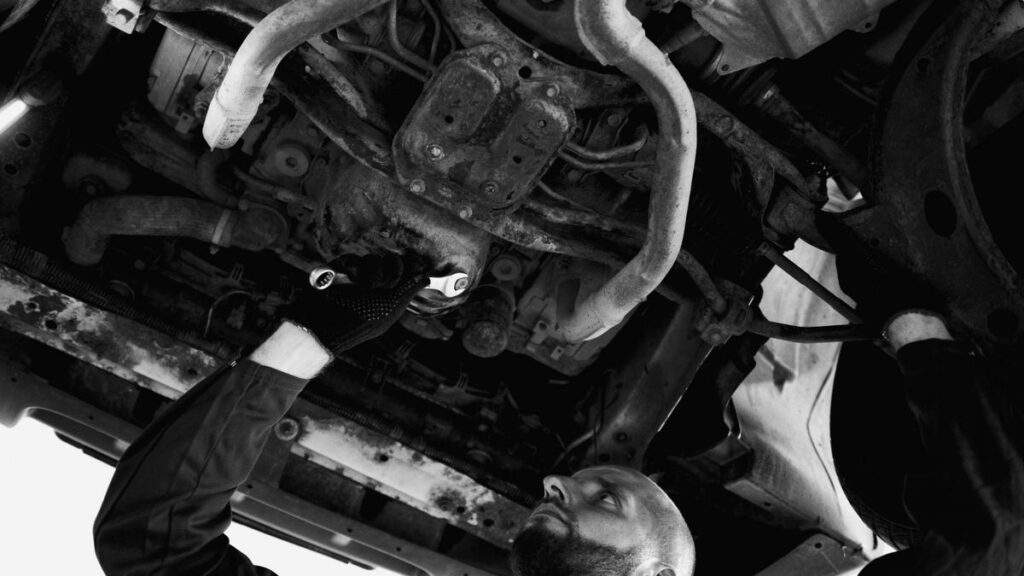
Wire has no give and can saw through a pipe. A proper repair replaces the torn isolators, any rusted rods or brackets, and checks that the pipe sits in its natural position without strain.
When to Have a Mechanic Look at It
Have the car checked as soon as you notice a sag, a new clunk or a scrape. Catching a broken exhaust hanger early often means replacing the hanger alone, before a joint cracks. If the pipe is already dragging, don’t keep driving on it; call us.
Our exhaust and muffler repair in Grand Rapids covers hangers, isolators, pipes and leaks on foreign and domestic vehicles. We find out why the hanger failed and fix the cause.
Frequently Asked Questions
Can I drive with a broken exhaust hanger?
For a short time, if only one hanger is broken and the pipe still sits clear of the road. The other hangers carry extra weight, so get it checked within days. If the pipe drags or scrapes, stop driving on it and have it secured.
Can a broken exhaust hanger cause a clunk over bumps?
Yes. Without support, the pipe swings into the floor, a crossmember or a heat shield over bumps and makes a dull clunk. It often sounds like a suspension problem, so a quick shake of the cold tailpipe helps tell them apart.
Can I use zip ties or a coat hanger to hold up my exhaust?
Never zip ties, tape or coated wire, because they melt or can catch fire. Bare steel wire can hold the pipe up long enough to drive carefully to a shop, but it is not a repair.
Can a broken hanger cause an exhaust leak?
It can. A sagging pipe flexes and twists at every bump, which strains the joints, clamps and gaskets until something cracks. Fixing the hanger early helps prevent that leak.
Need exhaust repair in Grand Rapids? Call 456 AutoFix at 616-279-3832, Monday to Friday 8am to 5pm, or book through our contact page.
Can’t make it during the day? Use our after-hours drop-off. We’re at 456 Carrier St NE in Creston.