As an Amazon Associate, 456 AutoFix earns from qualifying purchases. Product links below go to Amazon, where you can confirm the right part for your vehicle.
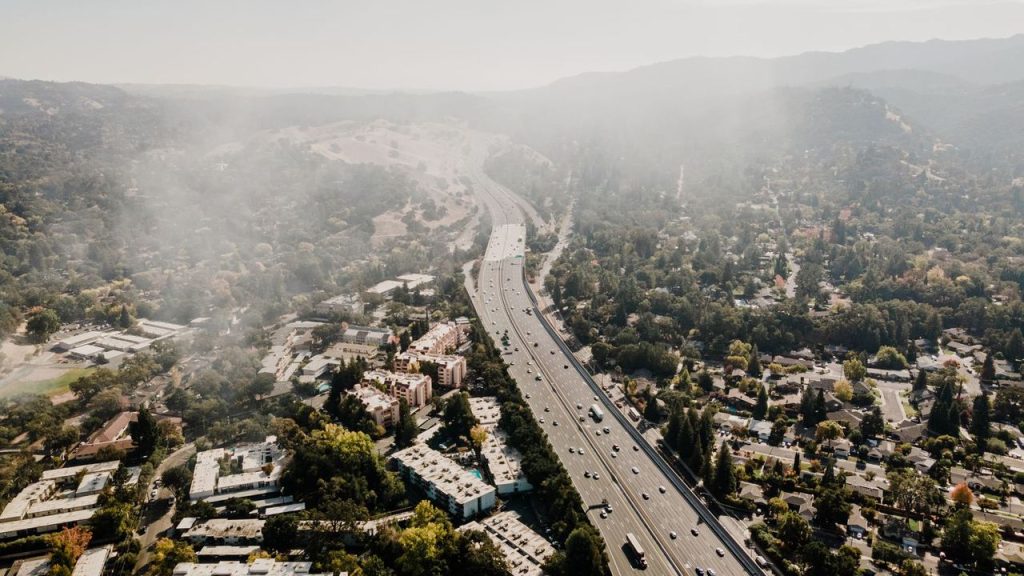
When smoke from distant wildfires settles over Grand Rapids, the sky turns hazy and the inside of the car can smell like a campfire within minutes. The best ac filter for wildfire smoke pairs a fine-particle layer with activated carbon, and it has to be the exact size your vehicle takes. In a car, the “AC filter” is the cabin air filter, the same part that feeds the heater and defroster.
Below we explain what each filter layer does against smoke, where a car filter falls short, and six listings for specific vehicles.
Quick answer
Which cabin filter cuts wildfire smoke the most?
Look for a HEPA-rated or PM2.5-rated particle layer plus activated carbon, in the size your car takes. The PureFlow HEPA combines both for Jeep Wrangler and Gladiator, Bosch 6081C HEPA suits Ford F-150s, and AirTechnik’s PM2.5 carbon filter fits many Hyundai and Kia models. Keep the system on recirculate in heavy smoke.
Our Quick Picks
Three listings that cover the main smoke needs: HEPA particle capture, a HEPA and carbon combination, and a PM2.5 carbon filter.

PureFlow HEPA PC99454HX
HEPA particle media and a charcoal layer for smoke odor in one filter.
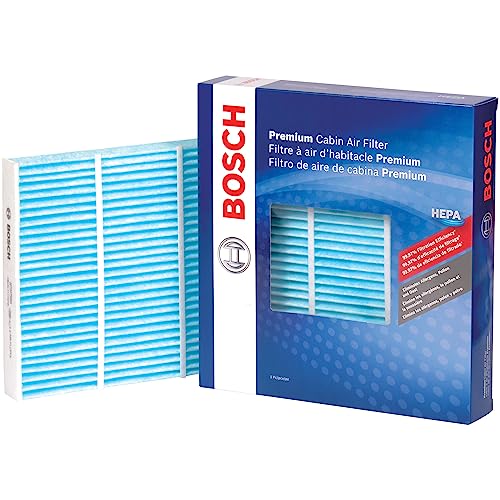
Bosch 6081C HEPA
HEPA-rated media aimed at the fine soot in wildfire smoke.

AirTechnik CF10728 PM2.5
A stated PM2.5 rating plus carbon for smoke smell.
How a Cabin Filter Handles Smoke Particles and Smell
Smoke gives a filter two separate jobs. The first is particles: soot and ash so small that the EPA’s particulate matter basics describe PM2.5 as particles generally 2.5 micrometers and smaller, roughly 30 times thinner than a human hair. The EPA also says these fine particles pose the greatest risk to health among particle pollution.
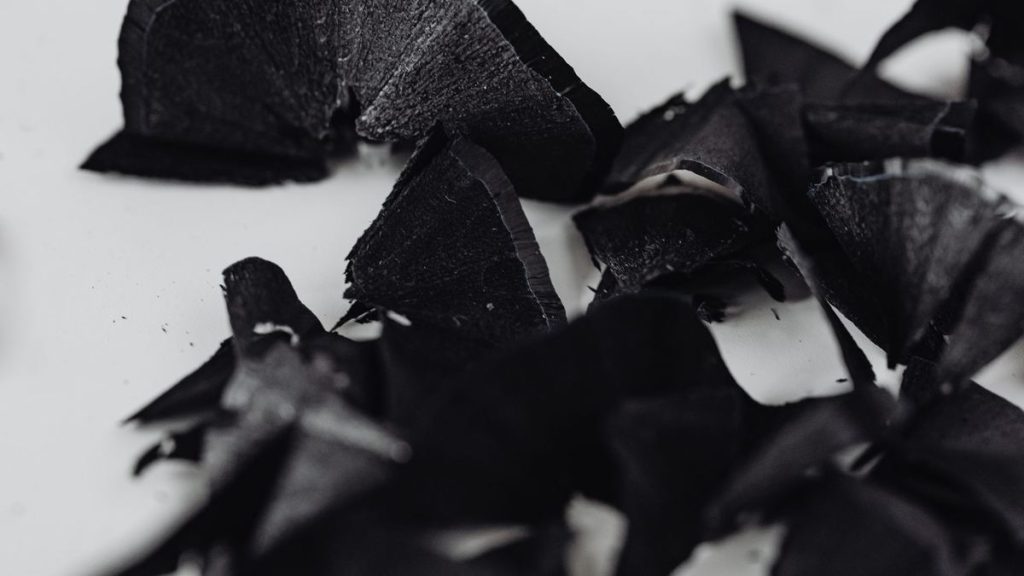
The second job is gases and odor, which slip through ordinary paper media. That is where an activated carbon or charcoal layer comes in, since it adsorbs smoky smells and some fumes. A filter with only one of these layers does half the work.
- Fine-particle layer: look for a maker’s HEPA, PM2.5 or MERV 13 claim, or at least an electrostatic layer.
- Activated carbon: the dark layer that targets smoke odor; baking soda additions help with stale smells.
- Fit and seal: air that leaks around a loose filter never passes through either layer.
- Airflow: denser media can slightly reduce fan output, and makers like Premium Guard say so on the listing.
What a Car Filter Can’t Do in Heavy Smoke
A cabin filter is not a respirator, and no listing below claims to make smoky air safe to breathe. It cleans the air the blower pulls in, but door seals, open windows and fresh-air mode all let smoke past it. If you have asthma, heart or lung disease, follow your doctor’s advice and local air quality alerts rather than relying on a filter.
The American Lung Association’s wildfire guidance tells drivers in smoky areas to keep windows and vents closed and run the system on recirculate, including with the A/C on. That one button often matters as much as the filter you choose.
Best AC Filter for Wildfire Smoke: Six Filters by Vehicle
Each pick is one listing for the vehicles it names, with filtration claims quoted as the maker states them. Enter your year, model and engine in Amazon’s fit checker or the maker’s catalog before you order, because no single listing fits every version of a vehicle.
1. PureFlow HEPA PC99454HX: HEPA Cabin Filter with Activated Charcoal for Wrangler and Gladiator
- HEPA media rated at 99.97% efficiency by the maker
- Activated charcoal layer infused with baking soda
- Four filtration levels in one filter
- Listed for 2018-2023 Jeep Wrangler and 2020-2023 Gladiator
The PureFlow HEPA PC99454HX comes from Premium Guard and is listed for the 2018-2023 Jeep Wrangler and 2020-2023 Gladiator. It replaces Mopar part numbers 68301863AA and 68535621AA, and the listing asks you to confirm fit with its vehicle filter lookup before you order. Because smoke brings both fine soot and a lingering smell, this filter’s two-part design lines up well with what a smoky week throws at the cabin.
Premium Guard describes four filtration levels. The HEPA layer is rated by the maker at 99.97% efficiency and is aimed at microscopic pollutants such as pollen and other allergens. Behind it sits an activated charcoal layer that the maker says can trap gases like carbon monoxide and sulfur dioxide, and that layer is also infused with baking soda to absorb odors.
The listing is honest that the dense HEPA media may cause a minor restriction to airflow. On a healthy blower that is rarely noticeable, but it is a reason to replace the filter on time rather than stretch it. A Wrangler’s soft top and removable doors let more outside air in than a sedan, so recirculation and closed panels still matter. If you only need basic dust filtering, a simpler filter will do the job.
View PureFlow HEPA PC99454HX on Amazon
2. Bosch 6081C HEPA: 99.97% at 0.3 Micron Cabin Filter for F-150 and Expedition
- Designed and tested to HEPA standards based on ISO 29463-3:2011
- Maker states 99.97% efficiency at 0.3 microns
- Melt-blown electrostatic layer plus static cotton layer
- Listed for Ford F-150, Expedition, Super Duty and Lincoln Navigator
Bosch lists the 6081C HEPA for select Ford Expedition, F-150, F-150 Lightning and F-250 through F-550 Super Duty models, plus the Lincoln Navigator. Like every cabin filter here, it is shaped for those vehicles only, so check the year and trim in the fit checker first. For a pickup that sits in traffic or travels gravel roads, the filter works hard even before any smoke arrives.
Bosch says this line is designed and tested to meet HEPA standards based on ISO 29463-3:2011, with filtration efficiency of 99.97% at 0.3 microns. A melt-blown electrostatic layer and very dense media do the trapping, and an added static cotton layer gives the media more capacity. Structural ribs keep the pleats stable so the filter holds its shape through its service life.
The trade-off for smoke is smell. Bosch states that these HEPA filters work without an added chemical odor neutralizer, and the listing does not mention an activated carbon layer. That makes the 6081C a strong choice for haze and fine soot, while drivers bothered mostly by a campfire smell may lean toward a carbon filter instead. Bosch advises a change at least every 12 months or 12,000 miles.
View Bosch 6081C HEPA on Amazon
3. AirTechnik CF10728: PM2.5 Cabin Air Filter with Activated Carbon for Hyundai and Kia
- Electrostatic layer blocks particles as small as PM2.5, per the maker
- Activated carbon stage for exhaust gas and odors
- Four-stage filtration with reinforcement layer
- Listed for Hyundai Elantra, Accent, Elantra GT and Kia Forte
The AirTechnik CF10728 is listed for the 2008-2011 Hyundai Accent, 2007-2016 Elantra, 2013-2017 Elantra GT, 2014-2020 Kia Forte and several related models. It replaces FRAM CF10728 and Hyundai part 97133-2H000, and AirTechnik tells buyers to verify fit with Amazon’s part finder. Compact cars like these spend plenty of time in stop-and-go traffic, where exhaust smell and road dust add to any smoke outside.
AirTechnik calls its design four-stage filtration: a particulate filter, an activated carbon layer, an electrostatic layer and a reinforcement layer. The maker says the electrostatic layer blocks fine particulate matter as small as PM2.5, which is the size range that matters most in wildfire smoke. The carbon stage targets exhaust gas and odors that a plain paper filter lets through.
That combination makes this one of the more complete smoke options for a small car, since it addresses both haze and smell in a single part. The reinforcement layer helps the pleats keep their shape. AirTechnik recommends a replacement at least once every 12 months, and each filter comes with installation instructions. It is not listed for newer Elantra generations, so owners of those cars should look up a different size.
View AirTechnik CF10728 PM2.5 on Amazon
4. Femota CF11809: MERV 13 Cabin Air Filter with Activated Carbon for GM Trucks and SUVs

- MERV 13 filter media tested to ASHRAE 52.2:2017
- Over 99% average arrestance, per the maker
- Four layers including activated carbon
- Listed for 2015-2020 Tahoe, Suburban, Yukon and Escalade
Femota lists the CF11809 for the 2015-2020 Chevrolet Tahoe and Suburban, 2015-2019 Silverado 2500HD and 3500HD, 2014-2018 GMC Sierra 1500, 2015-2020 Yukon and Yukon XL, and 2015-2020 Cadillac Escalade. GM used more than one filter size across these years, so use Amazon’s fit tool to confirm yours. Big SUVs move a lot of air through the cabin, which makes the filter a busy part on a smoky day.
The filter has four layers that combine MERV 13 media with premium activated carbon. Femota says the media was tested as MERV 13 under ASHRAE 52.2:2017 and that the filter reaches more than 99% average arrestance under the same standard’s test method, with a test report included in the package. MERV 13 is the rating the EPA’s home guidance often points to for smoke, though it applies here only as Femota states it.
The carbon layer gives this filter a role against smoke odor as well as particles. Femota points out that the airflow direction arrow matters during installation, since a reversed filter works poorly. The maker suggests replacement every 12 months or 12,000 miles, or on your vehicle maker’s schedule, and sooner after heavy smoke is a sensible habit.
View Femota MERV 13 CF11809 on Amazon
5. Puroma 1 CP157: Activated Carbon Cabin Air Filter for Toyota Camry, RAV4 and Lexus

- Soda and activated carbon combined layer for odors
- Close-meshed non-woven particle layer
- Listed for 2018-2026 Camry and 2019-2025 RAV4
- Airflow arrow printed on the side
The Puroma 1 CP157 is listed for a wide spread of Toyota and Lexus models, including the 2018-2026 Camry, 2019-2025 RAV4, 2019-2026 Corolla, 2020-2026 Highlander, the Prius family and Lexus ES, NX and RX models in the years the listing names. It replaces Toyota 87139-0E040 and FRAM CF12157 among others. Puroma asks buyers to confirm the match with the fit checker before purchase.
This filter leans on odor control. Puroma describes a soda-woven and activated carbon combined filter that captures the contaminants behind foul smells, which is the part of smoke many drivers notice first. A close-meshed non-woven layer handles particles, though the listing does not quote a HEPA or PM2.5 rating.
That makes it a fit for drivers whose main complaint is the smell of smoke or exhaust rather than visible haze. Puroma says installation takes about ten minutes, with an airflow arrow on the side to get it facing the right way. The maker recommends a change every year or 12,000 miles, and every 5,000 miles for drivers in heavily polluted areas or on dirt roads, which is a reasonable guide after a smoky summer.
View Puroma 1 Activated Carbon CP157 on Amazon
6. CYBERBEANS Model 3/Y: H11 HEPA Cabin Air Filter with Coconut Shell Carbon, 2-Pack

- H11 grade HEPA fiber, 99.5% stated capture
- Coconut shell activated carbon layer
- Five-layer design with melt-blown electrostatic layer
- Listed for Tesla Model 3 2017-2027 and Model Y 2020-2027
CYBERBEANS lists this two-filter set for the Tesla Model 3 from 2017 to 2027 and the Model Y from 2020 to 2027, including the Highland and Juniper updates and standard, long range and performance trims. The listing makes clear that this is the in-cabin filter, not the exterior frunk filter, and that it does not fit the Model S or X. Check your build year against the listing before ordering.
The maker describes a five-layer design that includes a melt-blown electrostatic layer, HEPA filter media made of H11 grade fiber and coconut shell activated carbon. CYBERBEANS states the HEPA layer can remove 99.5% of harmful particles and capture particles as small as 0.3 microns, and that the combination blocks PM2.5 and dust. Note that H11 is a lower HEPA grade than the 99.97% figure quoted by Bosch and PureFlow.
With no engine to cover up cabin smells, an electric car makes smoke odor easy to notice, so the carbon layer is useful here. The listing sells the filters as a two-piece replacement set. CYBERBEANS recommends a change every 8 to 12 months or 12,000 miles, depending on driving conditions and the local environment.
View CYBERBEANS Model 3/Y HEPA Carbon on Amazon
Matching Filter Media to Your Smoke Problem
Start with the filters that fit your vehicle, then decide whether haze or smell bothers you more. Most smoke complaints call for both layers.
| Filter | Vehicles named | Particle claim | Carbon layer |
|---|---|---|---|
| Bosch 6081C HEPA | Ford F-150, Expedition, Super Duty; Lincoln Navigator | HEPA, 99.97% at 0.3 microns | No |
| PureFlow HEPA PC99454HX | Jeep Wrangler, Gladiator | HEPA, 99.97% | Yes, with baking soda |
| AirTechnik CF10728 | Hyundai Elantra, Accent; Kia Forte | Electrostatic layer to PM2.5 | Yes |
| Femota CF11809 | GM full-size trucks and SUVs | MERV 13 media | Yes |
| Puroma 1 CP157 | Toyota Camry, RAV4, Corolla; Lexus | Close-meshed non-woven layer | Yes, with soda |
| CYBERBEANS Model 3/Y | Tesla Model 3, Model Y | H11 HEPA, 99.5% | Yes, coconut shell |
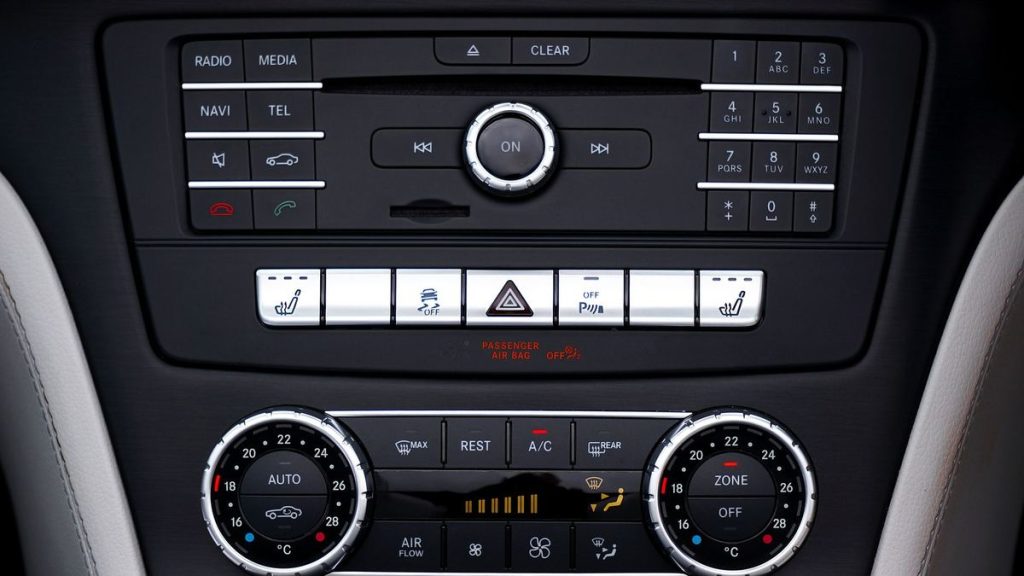
Fine-particle media also catches pollen and pet dander, so a smoke filter doubles as a strong option if you are hunting for the best ac filter for pets and allergies. For a dust-focused comparison, see our guide to the AC filter for dust and allergens.
Driving Through a Smoky Week in West Michigan
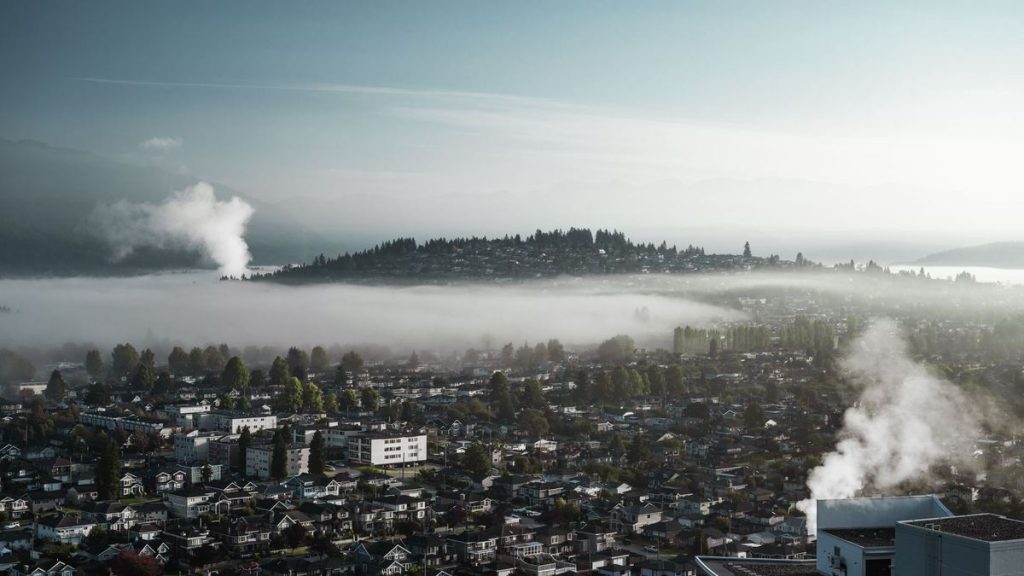
Smoke from Canadian and western fires has drifted over the Great Lakes in recent summers, often during the humid stretch when the A/C runs all day. Those are the weeks to plan ahead rather than wait for the smell.
- Fit a fresh filter early: a clogged filter moves less air and holds less smoke.
- Switch to recirculate: close the windows and keep outside air out while the haze lasts.
- Watch the glass: recirculation can fog windows on a muggy day, so use the defroster briefly when needed.
- Check the filter afterward: a grey or black face after a smoky spell means it is time for a new one.
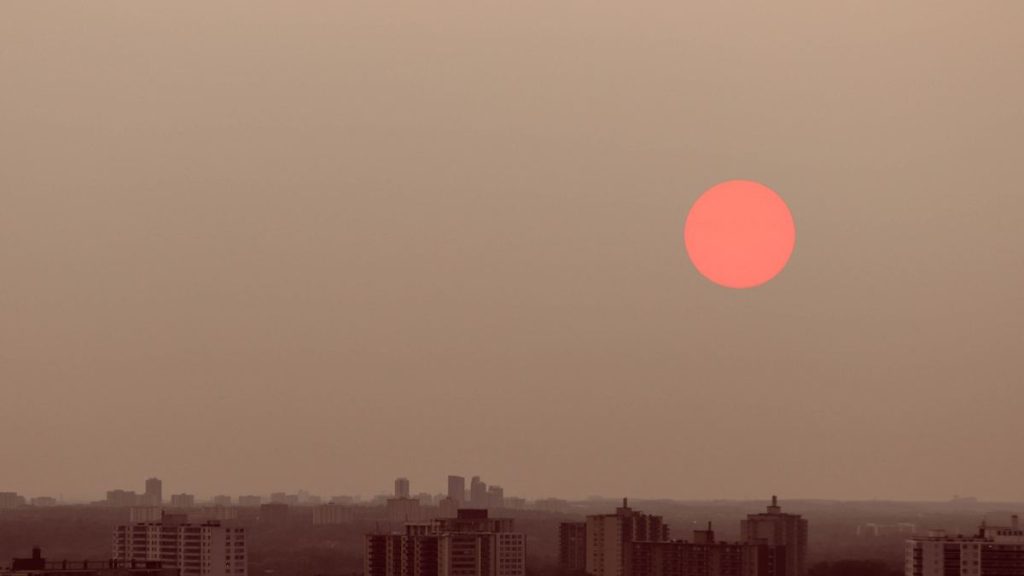
Most makers suggest a change every 12 months or about 12,000 miles, and Puroma advises much sooner in heavily polluted conditions. Our guide on how often to change a cabin air filter lists the signs that one is overdue, such as weak airflow and musty smells.
When the A/C Itself Needs Attention
Recirculating with the windows up only works if the A/C keeps the cabin cool. If the vents blow warm air even with a clean filter, our article on a car AC blowing warm air walks through the likely causes. A low charge is one of them, and our car AC recharge kit guide explains when a top-up is reasonable and when it just masks a leak.
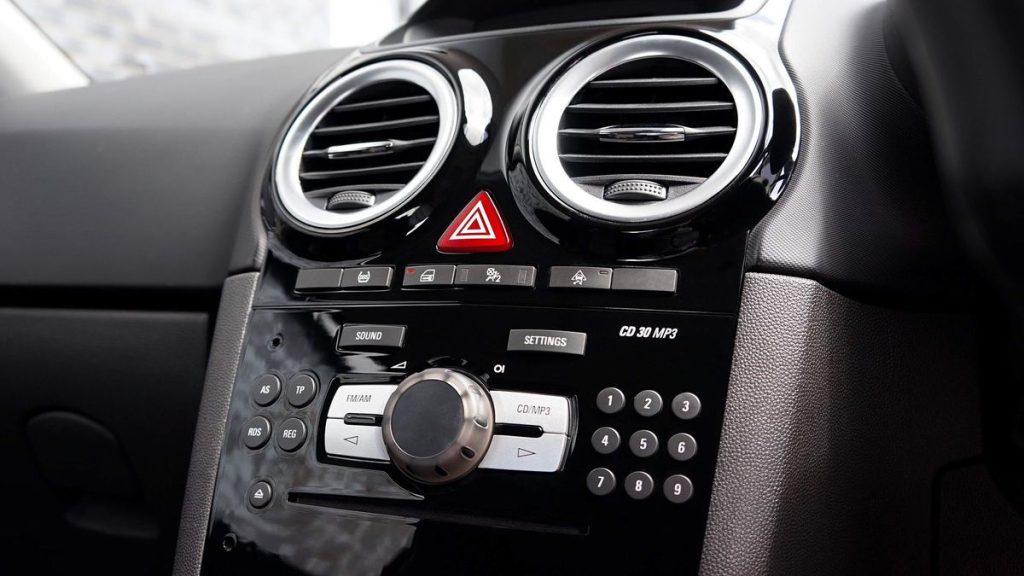
Weak airflow after a new filter, a blower that only works on some speeds, or a smoky smell that never clears are worth a proper look. Our heating and A/C repair in Grand Rapids covers blowers, blend doors, controls and the refrigerant side of the system.
More Buying Guides
Frequently Asked Questions
Does a cabin air filter keep wildfire smoke out of the car?
It reduces smoke rather than stopping it. A fine-particle layer traps much of the soot the blower draws in, and carbon cuts the smell. Closed windows and recirculate mode do the rest, but a filter is not a substitute for a respirator.
Is HEPA or activated carbon more important for smoke?
They handle different parts of smoke. The particle layer, whether HEPA, PM2.5 or MERV 13 rated, deals with the fine soot, while carbon deals with odor and some gases. For smoke, a filter with both is the better choice.
Should I replace my cabin filter after a smoky summer?
Check it. If the face looks grey or black, the airflow has dropped, or the car still smells of smoke, fit a new one. Otherwise, follow the maker’s normal interval.
How do I choose the best ac filter for wildfire smoke for my car?
Start with fit by entering your year, model and engine in the fit checker. Then pick a listing that names both a fine-particle rating and an activated carbon layer.
Smoky air inside the car even on recirculate, or vents that barely push air? Call 456 AutoFix at 616-279-3832, Monday to Friday 8am to 5pm, or set up an A/C check through our contact page.
Busy during shop hours? After-hours drop-off makes it easy to leave the car during a smoky week. Bring it to 456 Carrier St NE in Creston, Grand Rapids.