As an Amazon Associate, 456 AutoFix earns from qualifying purchases. Product links below go to Amazon, where you can confirm the right part for your vehicle.
If your air conditioning goes cold after a recharge and fades again a few weeks later, the refrigerant is escaping somewhere. The best AC leak detection kit is the one that finds that spot on your car, whether it sits on a hose fitting under the hood or deep inside the dash.
Below, we explain UV dye kits and electronic sniffers, then review six kits. If you still need to top the system up first, start with our car AC recharge kit guide.
Quick answer
Which AC leak detection kit should you buy for a car?
For most drivers, a UV dye kit with an injector, a violet flashlight and yellow glasses is the place to start, such as the LEAKFINDER LF016. Add an electronic sniffer like the Elitech ILD-200 when the leak is hidden, for example in the evaporator behind the dash, where dye is hard to see.
Our Quick Picks
Three quick picks: a full dye kit, an infrared sniffer and a low-cost sniffer. All six kits are reviewed below.

LEAKFINDER LF016 BigEZ
Caulking-gun injector, multi-dose dye cartridge and a UV flashlight in one kit.
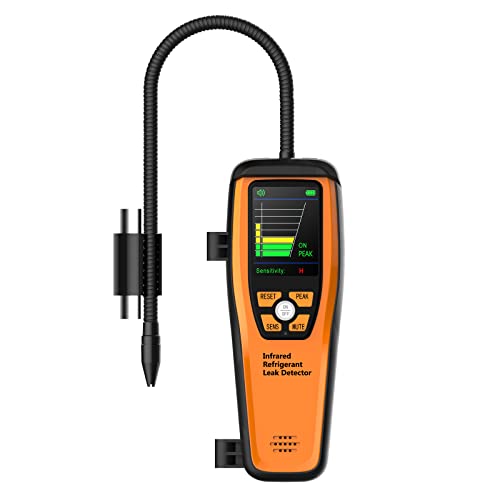
Elitech ILD-200
Long-life infrared sensor with a screen that shows leak strength.

Elitech CLD-100
Simple sniffer with a long flexible probe and a quick warm-up.
Two Ways to Chase a Refrigerant Leak
Car A/C systems lose refrigerant through tired O-rings, cracked hoses, a weeping compressor seal or a stone-damaged condenser. Refrigerant is invisible, so you need a tool that shows the escape point.
- UV dye: a small dose of fluorescent dye goes in through the low-side service port and travels with the oil. Wherever refrigerant and oil seep out, the dye leaves a stain that glows bright yellow-green under a UV or violet light.
- Electronic sniffer: a handheld detector draws air through a probe tip and alarms when it senses refrigerant. You move it slowly along lines and joints and listen for the tone to speed up.
The EPA notes that topping off a leaking system improves cooling but does not fix the leak, and that a few ounces of refrigerant, about 10 percent of a normal charge, is enough to run a leak check.
What Matters When You Compare Leak Kits
- Refrigerant type: most cars before the late 2010s use R-134a, while many newer ones use R-1234yf. The under-hood label tells you which, and the injector coupler has to fit that port.
- Dye chemistry: a universal ester dye mixes with both PAG and POE oils. Some carmakers add dye at the factory, so look for a dye label before you add more.
- Light quality: a true UV or violet LED with yellow glasses shows faint stains best.
- Sniffer sensor: infrared sensors last years and resist false alarms; heated diode sensors are sensitive but wear out; corona sensors are the low-cost option.
Sniffer sensitivity is listed in ounces per year; a smaller number means it can pick up a slower leak.
Best AC Leak Detection Kit Options: The Six in Detail
The list covers two dye kits, three electronic sniffers and a light-only kit for systems that already carry dye.
1. LEAKFINDER LF016 BigEZ: Universal A/C Dye Kit with Injector and UV Flashlight
- 8 oz universal ester dye cartridge
- Treats up to 64 systems
- R-134a hose, coupler and purge fitting
- Cordless UV LED flashlight
The LEAKFINDER LF016 BigEZ is a complete dye-based kit for car A/C systems. It pairs an 8 oz cartridge of universal ester dye with a caulking-gun style injector, an R-134a hose and coupler, a purge fitting and a cordless UV LED flashlight. The listing says the dye works in R-134a, R-1234yf and PAG oil systems, which covers most cars on the road, and that one cartridge treats up to 64 systems.
In use, you connect the injector to the low-side service port with the engine running and the A/C on, then meter in a small dose. The dye rides around with the refrigerant oil, and anywhere oil seeps out it leaves a stain that glows under the flashlight. That makes it well suited to leaks at hose crimps, O-ring joints, the compressor and the condenser, where you can get the light close.
The large cartridge is more than a single car needs, so it makes most sense for a household with several vehicles or someone who helps friends with their cars. The included coupler is for R-134a ports, so check the listing for an R-1234yf adapter if your car uses the newer refrigerant. Look for factory dye before adding more, and wipe spills so they don’t give false clues later.
View LEAKFINDER LF016 BigEZ on Amazon
2. Mastercool 53351: UV Leak Detection Kit with 50W 12V Light and Dyes

- 50-watt 12V UV inspection light
- 1 oz A/C dye plus 1 oz coolant dye
- R134a hose and coupler, R12 adapter
- Dye remover, labels, glasses and case
The Mastercool 53351 is a long-running UV kit built around a 50-watt UV inspection light that runs from 12 volts. A corded lamp of this kind throws a strong beam, which helps when you are looking for a faint stain deep in a crowded engine bay or under the car. The kit packs everything into a molded carry case, so it stays organized between jobs.
For the A/C side, Mastercool includes a 1 oz cartridge of fluorescent dye for oil-based systems, rated for about 10 applications, along with an R134a hose and coupler. There is also an R12 adapter for older systems that still use the original refrigerant. A separate 1 oz bottle of engine coolant dye lets you use the same light to trace radiator, hose and heater core leaks, which adds value beyond the A/C.
The rest of the kit covers the details that matter after a test: a 4 oz bottle of dye remover to clean up stains once a repair is done, 25 service labels to mark that a system contains dye, and UV-enhancing safety glasses. It does not include an R-1234yf coupler, so owners of newer cars should confirm the right adapter separately. For a driveway mechanic who works on several fluid systems, it is a well-rounded option.
View Mastercool 53351 on Amazon
3. Elitech ILD-200: Infrared Refrigerant Leak Detector with 10-Year Sensor
- Infrared sensor, 10-year life per listing
- High, medium and low sensitivity
- Detects R-134a, R-1234yf and other halogen refrigerants
- 2.8-inch screen with peak display
The Elitech ILD-200 is an electronic leak detector that uses an infrared sensor. Elitech says this type of sensor resists false alarms better than a heated diode, responds quickly and lasts longer, and the listing quotes a sensor life of 10 years. That long life is useful for a tool that may sit in a drawer between summers.
It has three sensitivity settings, and the listing gives the highest as 0.14 oz per year. The detector senses halogen refrigerants including R-1234yf, along with the R-134a found in most older cars, so one tool covers both generations. A 2.8-inch screen shows a peak reading, which helps you narrow down the exact spot as the tip moves past a joint, and you can work with the screen alone if you prefer a quiet bench.
A sniffer like this earns its place on leaks dye struggles to reveal. Holding the probe at a center dash vent or near the evaporator drain with the blower on low can show an evaporator leak without pulling the dash apart. It needs the same careful technique as any sniffer: engine off, no wind, slow movement and the probe just below the line. It does not show you a stain to photograph, so some owners pair it with a UV light.
View Elitech ILD-200 on Amazon
4. Inficon TEK-Mate 705-202-G1: Heated Diode Leak Detector, 0.25 oz/yr
- Heated diode sensor
- 0.25 oz/yr (7 g/yr) sensitivity
- Detects CFCs, HCFCs, HFCs and HFOs
- Automatic zeroing, runs on two D cells
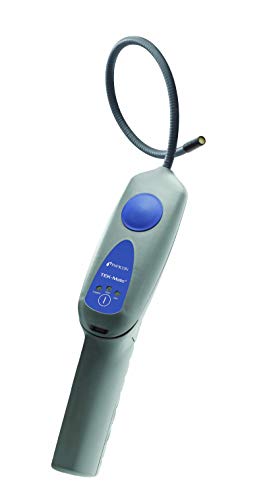
The Inficon TEK-Mate is a compact electronic leak detector from a company that has made refrigerant detectors for many years. It uses a heated diode sensor, a proven design that reacts well to the refrigerants used in cars. Inficon rates its sensitivity at 0.25 oz per year, or 7 grams per year, and says it detects all CFCs, HCFCs, HFCs and HFOs, so it covers both R-134a and R-1234yf.
Several features make it easy to live with. It adjusts to the background level automatically, a process often called zeroing, so you can start in an area that already has a trace of refrigerant and still find the strongest point. Inficon also notes that it does not false alarm on soap solutions, which matters if you confirm a suspect joint with bubbles afterward. It runs on two D-cell alkaline batteries and comes with a rugged carrying case.
The trade-off with a heated diode is sensor life, which Inficon lists at 100 hours of use, so heavy users will replace the sensor over time. For a home mechanic checking a car or two each summer, that goes a long way. The listing also states it is A2L certified and made in the United States. It is a simple, no-screen tool that relies on an audible tone and lights.
View Inficon TEK-Mate on Amazon
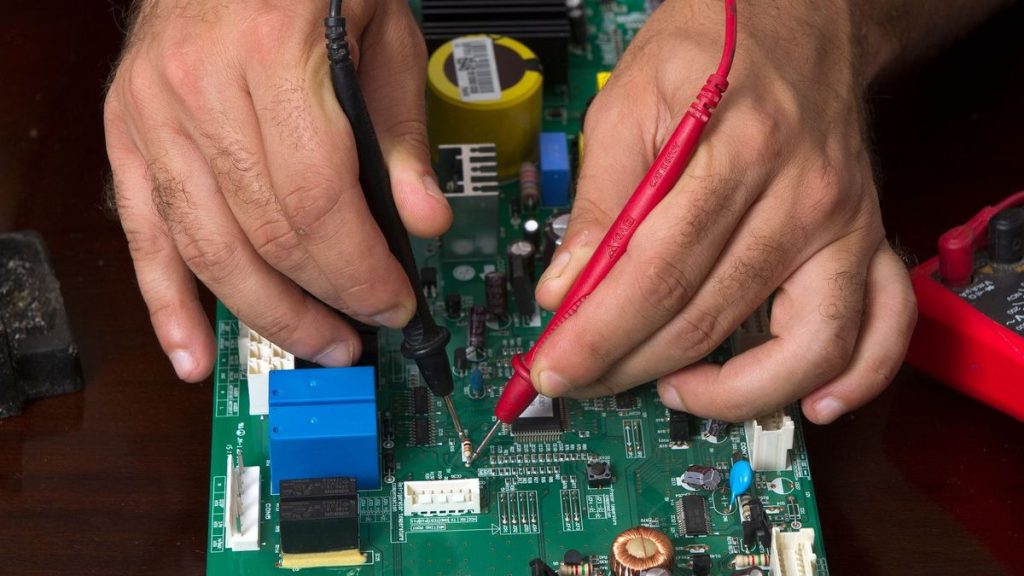
5. Elitech CLD-100: Corona Sensor Freon Leak Detector with Flexible Probe
- Corona sensor, 6-second preheat
- Six sensitivity levels, to 0.21 oz/yr
- 8.26-inch flexible probe
- Audible and visual alarm, 4 AAA batteries
The Elitech CLD-100 is an entry-level electronic leak detector and the upgraded version of Elitech’s older WJL-6000. It uses a traditional corona sensor with an updated analog circuit, and the listing says it reacts quickly to R-134a and other halogenated refrigerants. Warm-up takes about six seconds, so you can switch it on and start checking almost straight away.
Sensitivity adjusts across six levels, with the most sensitive rated at 0.21 oz per year. A flexible probe of roughly 8.26 inches bends into tight spots around the compressor, behind the condenser and along lines near the firewall. It gives both an audible and a visual alarm, and a two-color battery indicator shows when it is time for fresh cells. It runs on four AAA batteries, which are not included, so pick some up with it.
Corona sensors are the most affordable sniffer design, but they are more prone to false alarms from cleaners, moisture or engine fumes than infrared models. Start at a higher sensitivity to find the general area, then step it down to pinpoint the joint, and recheck any alarm a second time. For a driver who wants a basic electronic check alongside a dye kit, it is a sensible starting tool.
View Elitech CLD-100 on Amazon
6. A/C Pro Leak Detector Kit: UV Penlight and Yellow Glasses for Dyed Systems

- High-intensity UV penlight
- AAA batteries included
- Works with all types of UV leak dye
- Yellow-tinted protective glasses
The A/C Pro leak detector kit is the simplest product here: a high-intensity ultraviolet penlight, the AAA batteries to run it and a pair of yellow-tinted protective glasses. There is no dye and no injector in the box. The listing says the light works with all types of UV leak detection dye, which makes it a companion for systems that already have dye inside rather than a full test kit.
That situation is more common than many drivers expect. Some cars leave the factory with dye in the A/C system, and shops often add it during service. In those cases you only need a light and glasses to look for glowing residue at the service ports, hose fittings, compressor and condenser. The yellow lenses filter out much of the visible light, so the dye stands out more clearly against a dirty engine bay.
The small penlight is easy to slip into a glove box or toolbox, and it is handy for checking other dyed fluids too. Its beam is narrower and less powerful than a corded shop lamp, so work in the shade or in a garage, and move slowly. If you are not sure the system holds dye, a kit with its own dye and injector is the better buy.
View A/C Pro Leak Detector Kit on Amazon
Dye Kit or Sniffer? Matching the Tool to the Leak
Many technicians keep both. If you are buying only one, the best AC leak detection kit for you depends on where the leak most likely sits.
| Situation | Better first tool | Why |
|---|---|---|
| Oily residue at a hose crimp, fitting or service port | UV dye kit | The stain shows the exact joint once dye has circulated |
| Musty smell or weak cooling with nothing visible under the hood | Electronic sniffer | A probe at the dash vent or drain can pick up an evaporator leak |
| Very slow loss over a whole season | UV dye kit | Dye builds up over days of driving, making small leaks visible |
| Car already has factory or shop dye | UV light and glasses only | No need to add more dye; just look |
With dye, give it time: run the A/C over two or three days of driving, then check every joint, the compressor and the condenser. With a sniffer, keep the engine off, hold the probe tip just under each line and joint and move about an inch per second, because refrigerant is heavier than air and drifts downward from a leak.
Skip the stop-leak cans. Many shops test for sealant before connecting their machines, because it can clog recovery equipment. Even the best AC leak detection kit only points you to the leak; the fix is still a proper repair.
Where A/C Leaks Hide on West Michigan Cars
Our humid summers keep A/C systems busy, and the winters do the damage. Road salt hits the condenser and aluminum lines at the front of the car, and corroded fittings are a common source of slow leaks.
- Condenser: in front of the radiator, exposed to salt spray and stones. Check the fins and lower corners.
- Line fittings and O-rings: joints at the compressor, condenser and firewall, especially where white corrosion has formed.
- Service port valves: the Schrader cores can leak; check them with the caps off.
- Compressor shaft seal: dye spray on the clutch area points here.
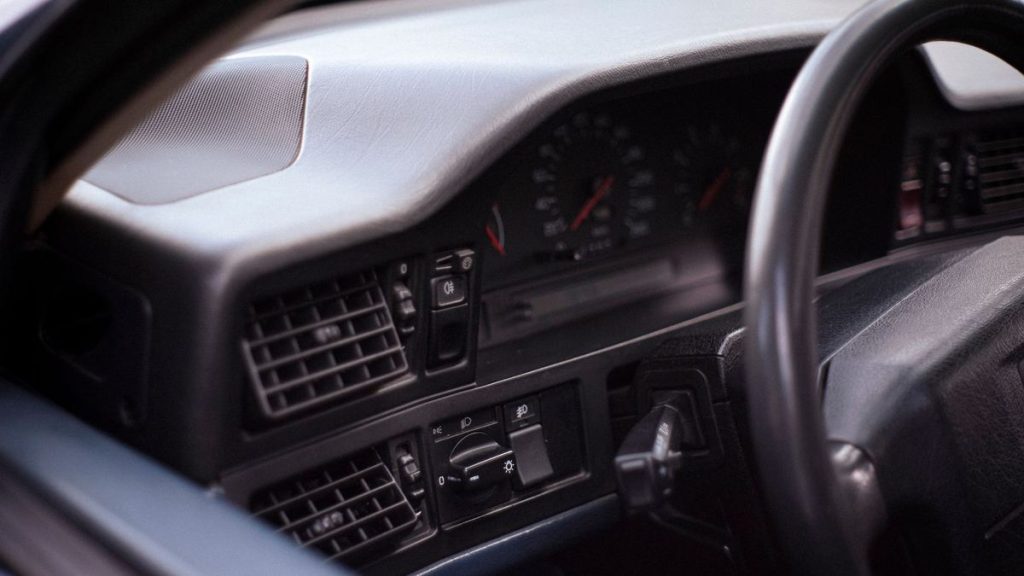
- Evaporator: inside the dash, best checked with a sniffer at the vents or the drain.

If the system has plenty of refrigerant but still blows warm, the problem may not be a leak at all. Our guide to a car AC blowing warm air covers blend doors, compressor clutches, fans and other causes.
When the Leak Becomes a Shop Job
Finding the leak is often the easy half. Replacing a condenser, an evaporator or a compressor means opening the system, and that requires recovering the refrigerant with certified equipment first, which is work for a certified technician, not a driveway.
Our shop is ASE and State of Michigan certified in heating and air conditioning. Our car heating and A/C repair in Grand Rapids covers leak checks, repairs and recharging, and if you want to read pressures yourself first, see our guide to AC manifold gauge sets for cars.
More Buying Guides
Frequently Asked Questions
Is UV dye or an electronic leak detector better for a car?
Dye is better for leaks you can reach and see, such as fittings, hoses and the condenser. A sniffer is better for hidden spots like the evaporator. Many technicians use both, letting one confirm what the other finds.
How long does A/C dye take to show a leak?
A fast leak can show within minutes of running the A/C. A slow one may need two or three days of normal driving with the A/C on before enough dye builds up to glow.
Can I add dye if my car already has some?
Check first. Some cars leave the factory with dye, and a shop may have added it during an earlier service. Shine a UV light at the service ports and look for a dye label under the hood before adding more.
Do I need a full charge to find an A/C leak?
No. The EPA says a few ounces, about 10 percent of the normal charge, is enough for a leak check. A completely empty system needs some refrigerant added before either tool can work.
Found the leak but don’t want to open the system yourself? Call 456 AutoFix at 616-279-3832, Monday to Friday 8am to 5pm, or set up an A/C check through our contact page.
Can’t make it during the day? Use our after-hours drop-off. We’re at 456 Carrier St NE in Creston.