As an Amazon Associate, 456 AutoFix earns from qualifying purchases. Product links below go to Amazon, where you can confirm the right part for your vehicle.
A single gauge on a recharge can shows one number from one side of the system. The best AC manifold gauge set for cars shows both the low and high side at once, matches the refrigerant your car uses and has hoses that reach the service ports without strain.
This guide covers how to pick a set, then six established-brand sets for R-134a and R-1234yf systems. If your A/C has already gone warm, start with our rundown of why a car A/C is blowing warm air, since low refrigerant is only one of several causes.
Quick answer
Which A/C gauge set should you buy for your car?
Check the refrigerant label under the hood first. For an R-134a car, the Mastercool 86972 4-way or Robinair 48510 are solid choices. For R-1234yf, look at the Mastercool 83272 or FJC 6850. If you work on both kinds, the CPS BlackMax MAID8QDL or the OMT 4-way set include couplers for each refrigerant.
Our Quick Picks
Three sets that cover the main cases: regular R-134a work, newer R-1234yf cars and a kit for both. All six are reviewed below.

Mastercool 86972
A 4-way block that keeps the vacuum pump and charge source connected.

Mastercool 83272
A dedicated R-1234yf manifold with large gauges and matching couplers.

OMT 4-Way AC Gauge Set
A 4-way kit with couplers and can taps for both car refrigerants.
Why Two Gauges Beat the Dial on a Recharge Can
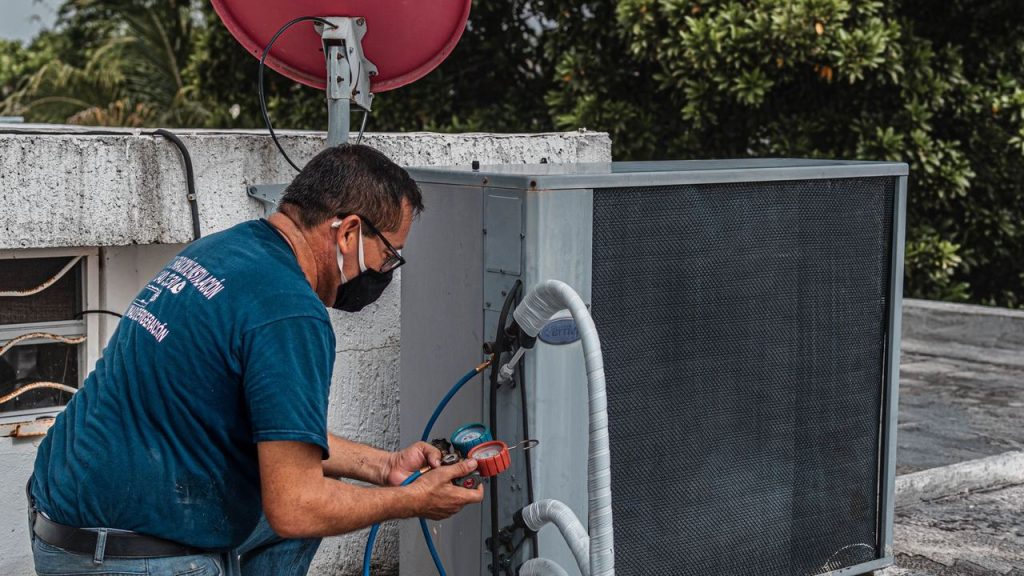
A car A/C system has a low side, between the evaporator and the compressor, and a high side, between the compressor and the expansion device. The blue gauge reads the low side and the red gauge reads the high side. Seeing both together is what lets you tell an undercharge from a blockage, a weak compressor or a condenser that is not shedding heat.
A recharge can’s dial only reads the low side, so it can make an overcharged or restricted system look normal. That is why our car AC recharge kit guide treats cans as a quick top-up and not a diagnosis. A manifold set also connects to a vacuum pump, which is how air and moisture are pulled out after a repair.
How to Choose a Set: Refrigerant, Valves and Hoses
Most of the choice comes down to five details. Get the first one right and the rest is about how often you plan to use the set.
- Refrigerant: the label on the radiator support or hood names it. Many older cars use R-134a and many newer ones use R-1234yf. Under EPA rules each car refrigerant has its own service port fittings, and an adapter may not be used to convert one.
- Valve count: a 2-way manifold has low and high valves with one center hose. A 3-way or 4-way adds a dedicated port, so the vacuum pump and refrigerant can stay connected without swapping hoses and letting air in.
- Hoses: 72-inch or longer hoses reach across a wide engine bay. Barrier hoses resist refrigerant seeping through the hose wall.
- Gauges: larger faces are easier to read, and silicone-dampened or oil-filled gauges calm needle flutter. A recalibration screw lets you zero the needle again.
- Couplers: quick couplers snap on, while manual couplers have a knob that opens the port valve once connected, which limits loss when you disconnect.
Gauges made only for home heat pumps often read R-410A and use 1/4-inch flare fittings. Without the right automotive couplers they will not fit a car’s ports, so check the included parts list before you order.
Best AC Manifold Gauge Set for Cars: Six Sets Reviewed
Each set below lists its refrigerant on Amazon. Match it to your under-hood label before buying.
1. Mastercool 86972: R-134a 4-Way Aluminum Manifold with 72-Inch Hoses
- 4-way extruded aluminum block
- Quarter-turn stainless ball valves
- 3-1/8 inch recalibrateable dampened gauges
- Four 72-inch hoses and manual couplers
The Mastercool 86972 is a 4-way manifold gauge set made for R-134a automotive A/C work. Mastercool lists it as designed, assembled and tested in the US, and the body is a solid block of extruded aluminum rather than a cast housing. It suits an owner who services R-134a cars more than once a season and wants equipment that holds up to repeated hookups. Mastercool’s 86972 product page adds that the gauges read in psi, kPa and °F.
The four valves use stainless steel balls that open and close with a quarter turn, which gives quick, positive control over flow. Two 3-1/8 inch gauges are silicone dampened to reduce needle flutter and can be recalibrated, so the readings stay steady while the compressor cycles. The kit includes four 72-inch hoses: red and blue with 14 mm connections, a yellow 1/2 inch ACME hose with an automatic shut-off valve, and a black hose for the fourth port.
That fourth port is the reason to choose this set over a 2-way. You can keep a vacuum pump on one hose and the refrigerant source on another, then switch between evacuating and charging without disconnecting anything. Manual couplers attach to the service ports. It is an R-134a set only, so it does not suit a car labeled for R-1234yf.
View Mastercool 86972 on Amazon
2. Mastercool 83272: R-1234yf 2-Way Aluminum Manifold with Barrier Hoses
- Built for R-1234yf systems
- 3.5 inch anti-flutter gauges
- Three 72-inch barrier hoses
- SAE J2888 certified, large sight glass
The Mastercool 83272 is a 2-way manifold built only for R-1234yf, the refrigerant used in many newer cars. Like the 86972, it is designed, assembled and tested in the US, with an extruded aluminum block. The listing states SAE J2888 certification, an SAE standard for R-1234yf service equipment, which is a useful sign the parts are made for that refrigerant.
Its 3.5-inch gauges are larger than those on many sets, and they are silicone dampened and recalibrateable, which makes them easier to read across the engine bay. Three 72-inch nylon barrier hoses come with the set, and Mastercool lists them as meeting EPA, SAE and UL standards. The R-1234yf high and low side couplers include extended disconnect protection, and there are storage fittings on the block to keep them clean between jobs.
A large sight glass in the block lets you see refrigerant moving through the manifold during charging. With two valves and one center hose, it handles pressure checks, evacuation and charging, but you swap the center hose between the vacuum pump and the refrigerant source. It will not connect to an R-134a car, so it fits an owner whose cars all use R-1234yf.
View Mastercool 83272 on Amazon
3. CPS BlackMax MAID8QDL: 2-Valve R-134a and R-1234yf Manifold with 8 ft Hoses

- R-134a and R-1234yf on one block
- Triple-sealed piston valves
- 8 ft hoses with manual couplers
- Tin carrying case
The CPS BlackMax MAID8QDL is a 2-valve manifold gauge set listed for both R-134a and R-1234yf. CPS Products describes itself as a toolmaker built by technicians, in business since 1989, and this set is part of its BlackMax line of professional tools. The body is a black anodized aluminum block, and the gauges are 2.5 inches (68 mm) with a listed accuracy rating of 1.6.
The valves are triple-sealed pistons, a design meant to resist leaking at the stems after repeated use. The hoses are 8 feet long, longer than the 72-inch hoses common on many sets, which helps on trucks, vans and front-engine cars where the low and high side ports sit far apart. Manual couplers are included, and the set packs into a tin carrying case that keeps the gauges protected in a toolbox or trunk.
This set suits a driveway with a mix of vehicles, such as an older car on R-134a and a newer one on R-1234yf. Confirm in the included parts list which couplers come with your version before you start a job. With two valves, the center hose moves between the vacuum pump and the refrigerant source.
View CPS BlackMax MAID8QDL on Amazon
4. OMT 4-Way AC Manifold Gauge Set: R-1234yf and R-134a Couplers with 5 ft Hoses
- Quick couplers for R-1234yf and R-134a
- Self-sealing can tap for each refrigerant
- 1.6% accuracy with calibration screws
- Hoses rated 800 psi working pressure
The Orion Motor Tech (OMT) 4-way set is a complete kit for owners who need to work on both R-1234yf and R-134a cars. It includes the 4-way manifold, four hoses of 5 feet each, two quick couplers for R-1234yf, two for R-134a, a self-sealing can tap for each refrigerant and two 1/4-inch male to 1/2-inch female adapters, one with left-hand and one with right-hand threads.
The high and low side gauges have an oil-filled core to resist wear and shock, and OMT notes a dry dial for better winter performance. Calibration screws let you reset the needles, and the listed accuracy is within 1.6%. The color-coded PVC hoses have four reinforced layers and are rated for 800 psi working pressure, with a 4000 psi burst rating. The body is aluminum with copper fittings to resist corrosion.
The 4-way layout lets you leave the vacuum pump and the can connected and switch between evacuating and charging with the valves. It suits a DIYer who wants one kit for every car in the driveway. The 5-foot hoses are shorter than some pro sets, so check that they reach both ports on larger vehicles.
View OMT 4-Way AC Gauge Set on Amazon
5. Robinair 48510: R-134a Aluminum Manifold Kit with Sight Glass and Carrying Case

- Aluminum manifold with sight glass
- Gauges read psi and °F
- 72-inch red and blue hose set
- 90° manual couplers and molded case
The Robinair 48510 is an R-134a manifold hose kit from a long-established name in automotive A/C service equipment. It pairs an aluminum manifold with a sight glass, a set of gauges, two 90-degree manual couplers and a red and blue 72-inch hose set with 1/2-inch ACME and 14 mm ends. Everything stores in a blow-molded carrying case.
The gauges read in pounds per square inch and also show Fahrenheit temperature scales for R-134a. That saves looking up a pressure-temperature chart when you want to know the saturation temperature on the low side, which helps when judging how well the evaporator is cooling. Rear fittings on the manifold hold the hose ends when the set is not in use, which keeps dirt out of the couplers between jobs.
The 90-degree couplers make it easier to reach service ports that sit close to other parts in a crowded engine bay. As listed, the kit includes the red and blue hoses, so plan on a separate yellow center hose for a vacuum pump or refrigerant can. It is an R-134a set and does not suit cars that use R-1234yf. It fits an owner who mainly wants to check pressures on an older car.
6. FJC 6850: R-1234yf Aluminum Manifold Gauge Set with Manual Couplers

- Aluminum R-1234yf manifold
- Color-coded front handles
- Manual high and low side couplers
- Anti-flutter recalibrateable gauges
The FJC 6850 is an R-1234yf manifold gauge set from FJC, a maker of automotive A/C service tools and parts. It is built around an aluminum manifold with color-coded handles on the front, so the blue low side and red high side valves are easy to tell apart when you reach in. Hose hangers on the sides give the couplers a place to rest between readings.
The kit includes manual couplers for the R-1234yf high side and low side service ports. Manual couplers attach first and then open the port valve with a knob, which keeps refrigerant loss down when you connect and disconnect. The gauges are an anti-flutter design with recalibration adjustment, so you can bring the needles back to zero if they drift after a drop or a season in storage.
With two valves, it covers pressure checks, evacuation with a vacuum pump and charging, with the center hose moved between tasks. It is listed for R-1234yf only and will not connect to an R-134a car. It suits an owner who wants a simple, dedicated R-1234yf set rather than a combined kit with parts for refrigerants they do not use.
The Six Sets Side by Side
The table sums up which refrigerant each set covers and the kind of owner it fits. Valve count is the main split between a basic pressure check and full evacuation and charging work.
| Gauge set | Refrigerant | Valves | Good fit for |
|---|---|---|---|
| Mastercool 86972 | R-134a | 4-way | Regular R-134a work with a vacuum pump |
| Mastercool 83272 | R-1234yf | 2-way | Newer cars on R-1234yf |
| CPS BlackMax MAID8QDL | R-134a and R-1234yf | 2-way | Mixed household fleets |
| OMT 4-Way | R-134a, R-1234yf, R-404A | 4-way | DIYers who want couplers for both |
| Robinair 48510 | R-134a | 2-way | Pressure checks on older cars |
| FJC 6850 | R-1234yf | 2-way | A dedicated R-1234yf set |
If you only want a cheaper set for an occasional pressure check, our budget AC gauge set roundup covers entry-level and low-side options. The sets above are built for repeated use and for connecting a vacuum pump.
Reading Pressures in a Humid West Michigan Summer
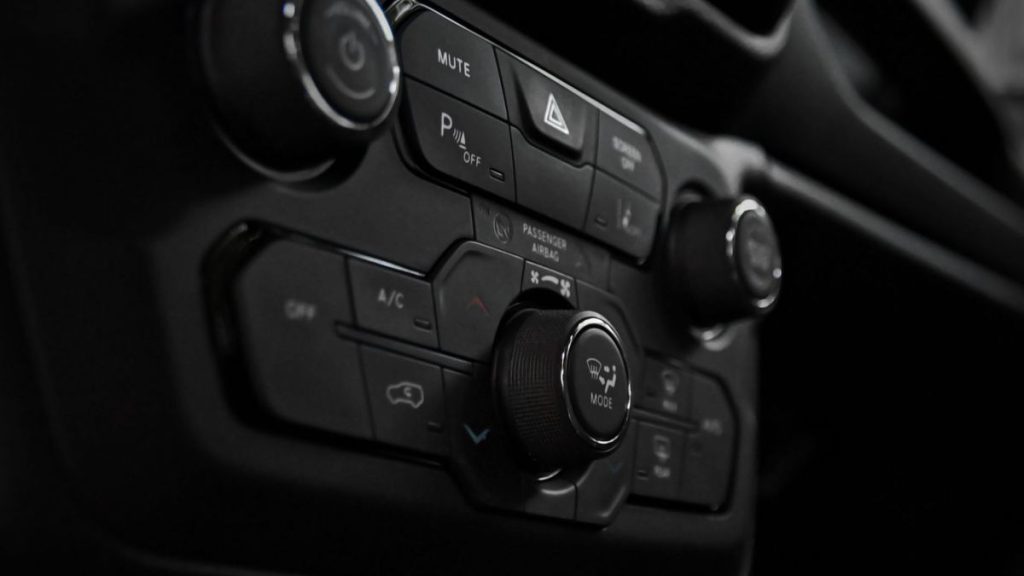
A/C pressures rise and fall with the outside temperature and humidity, so there is no single correct number. A muggy July afternoon in Grand Rapids pushes high-side pressure well above what the same car shows on a mild spring day. Compare your readings with the pressure chart in the vehicle’s service information for that ambient temperature.
- Engine off: connect the blue coupler to the low-side port and the red coupler to the high-side port, with both manifold valves closed.
- Run the A/C: start the engine, set the A/C to max with the blower on high, and let it settle for a few minutes.
- Read, don’t open: note both gauges with the valves still closed. Opening the high-side valve while a can is connected is a safety hazard.
- Watch the compressor: a clutch that cycles on and off rapidly often points to a low charge, while very high readings can mean a dirty condenser or a cooling fan fault.
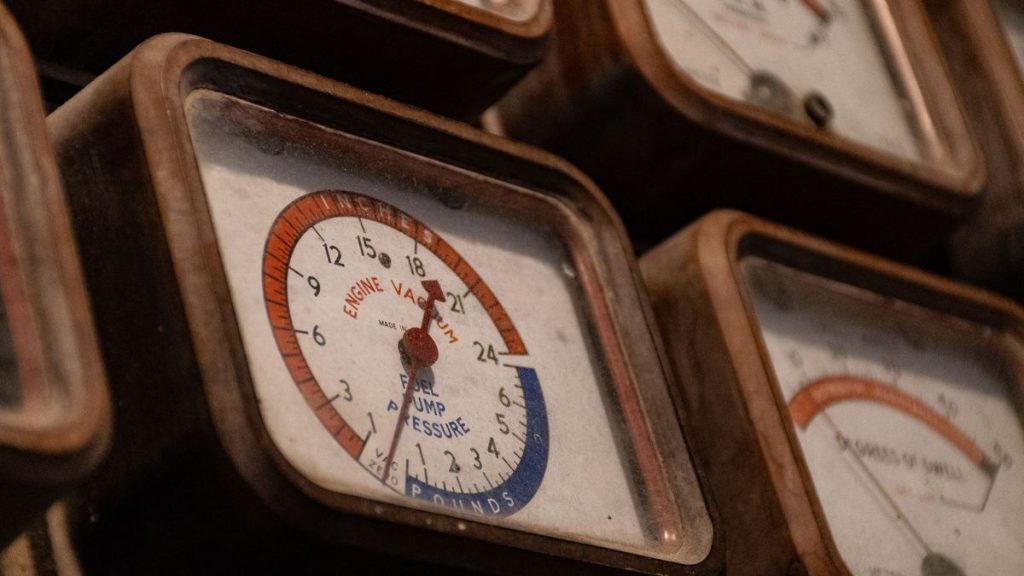
Road salt and grime packed into the condenser over a Michigan winter can raise high-side pressure on the first hot day. If the gauges point to a leak instead, our AC leak detection kit guide covers dye and electronic options for tracking it down.
When the Gauges Say It’s a Shop Job
A gauge set diagnoses and charges, but it can’t recover refrigerant. Opening a system for a compressor, condenser or hose replacement means recovering the charge first, and federal rules prohibit venting refrigerant to the air. That work calls for certified recovery equipment and a trained technician.

Bring the car in if both gauges read the same with the compressor running, the system won’t hold a vacuum, or the readings look right but the vents still blow warm. Our heating and A/C repair in Grand Rapids covers diagnosis, leak repair and recharging, and a weak fan on low speeds may be the issue we explain in blower motor only works on high.
More Buying Guides
Frequently Asked Questions
Can I use R-134a gauges on an R-1234yf car?
Not with R-134a couplers. EPA requires unique service fittings for each refrigerant and says an adapter may not be used to convert one. Use a set that comes with R-1234yf couplers, such as a dedicated R-1234yf manifold or a dual-refrigerant kit.
Is a 4-way manifold worth it over a 2-way?
If you plan to pull a vacuum and then charge, yes. The extra port lets the vacuum pump and the refrigerant source stay connected, so you don’t swap hoses and let air back in. For pressure checks only, a 2-way set is enough.
What should the low and high side read on a car A/C?
It depends on the outside temperature, humidity and the vehicle. Use the pressure chart in the service information for your car at the current ambient temperature, rather than one number from a forum.
Do I need a vacuum pump with the best AC manifold gauge set for cars?
Only if the system has been opened or ran completely empty. Pulling a vacuum removes air and moisture before charging. Topping up a system that still holds some refrigerant does not need one.
Gauges pointing to a leak or a tired compressor? Call 456 AutoFix at 616-279-3832, Monday to Friday 8am to 5pm, or set up an A/C check through our contact page.
Can’t make it during the day? Use our after-hours drop-off. We’re at 456 Carrier St NE in Creston.