
As an Amazon Associate, 456 AutoFix earns from qualifying purchases. Product links below go to Amazon, where you can confirm the right part for your vehicle.
An absorbed glass mat battery costs more than a flooded one, so you want a clear answer before you replace it. Finding the best AGM battery load tester comes down to one thing: a tool that knows it is looking at an AGM and reads it on those terms. Pick the wrong setting, or the wrong kind of tester, and a healthy battery can fail the test while a tired one passes.
Below we explain the two kinds of tester, how to get an honest reading, and six tools whose listings name AGM support. Several also read lithium starter batteries. For a wider look at testers of every type, see our car battery tester buying guide.
Quick answer
Which tester gives a reliable result on an AGM battery?
Use a digital conductance tester with separate AGM flat plate and AGM spiral settings, such as the ANCEL BT410 or KONNWEI KW341, and enter the CCA printed on the label. Charge the battery first. A fixed-load tester like the TOPDC 3181 Pro adds a real-current check for anyone who wants one.
Our Quick Picks
Three quick picks: an all-rounder for AGM and lithium, a true load tester, and a simple 12V tool. All six are reviewed below.

ANCEL BT410
Digital tester that covers lead-acid types and lithium-ion in one tool.
TOPDC 3181 Pro
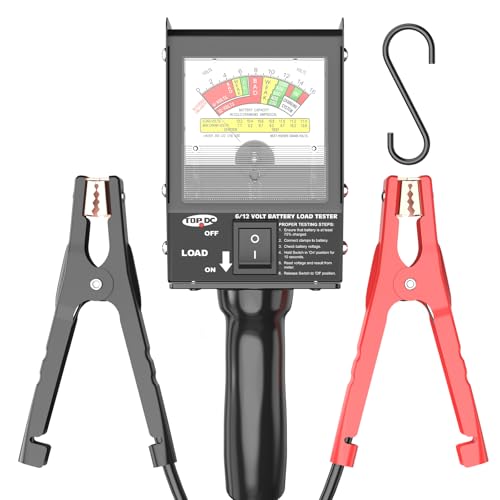
Resistor-based tester that shows voltage while the battery carries real current.

KONNWEI KW208
Straightforward glove-box tester for 12V AGM and flooded batteries.
Two Ways a Tester Judges an AGM
Most handheld testers sold today are conductance testers. They send a small signal through the battery, measure its internal resistance, and compare the result with the cold cranking amp rating you type in. The test takes seconds, draws almost nothing from the battery, and works on a battery that is still in the car.
A classic load tester works the other way round. It pulls a heavy current through a resistor for a few seconds and shows how far the voltage sags. That is closer to what a starter motor asks of the battery, but the unit gets hot, the battery must be charged first, and you have to let it cool before testing again.
AGM batteries have lower internal resistance than flooded batteries of the same size, so a conductance tester set to “flooded” can misread one. That is why the battery-type menu matters so much.
Getting an Honest Reading From an AGM
Midtronics, a maker of professional battery testing equipment, notes in its guide to start-stop battery testing that AGM, EFB and flooded batteries don’t share identical characteristics. It adds that choosing the wrong battery type on the tester can undermine the result before the test begins. That point matters on any AGM, not only in start-stop cars.
- Match the type: AGM flat plate and AGM spiral wound are different settings on most of these tools. Spiral cells are the round, six-pack style.
- Match the rating: enter the CCA, or the EN or DIN figure, exactly as printed on the label, using the same standard.
- Charge, then rest: a battery that just came off a charger carries a surface charge that flatters the result. Let it sit, or switch on the headlights for a minute, before you test.
- Clean contact: scrape the posts or terminal bolts so the clamps bite bare metal.
If your AGM keeps reading “charge and retest”, a proper charge cycle with an AGM mode is the next step. Our guide to the best car battery charger for winter covers chargers with AGM and lithium programs.
Best AGM Battery Load Tester: Six Tools Reviewed
Five digital testers and one fixed-load unit, each listing AGM support. Read the battery-type notes in each review if you also own a lithium starter battery.
1. ANCEL BT410: 12V/24V Battery Tester for AGM, EFB and Lithium
- 12V and 24V systems, 100-2000 CCA
- Flooded, AGM, GEL, EFB and lithium-ion
- Battery, cranking and charging tests
- 2.4-inch color screen with QR report
The ANCEL BT410 is a handheld digital tester for 12V and 24V systems. ANCEL lists support for flooded, AGM, GEL and EFB lead-acid batteries as well as lithium-ion, across a 100 to 2000 CCA range. It draws its power from the battery under test, so there is nothing to charge and no internal battery to replace.
A battery test reports state of charge, state of health, voltage and internal resistance, then gives a plain verdict such as good battery, good-recharge or replace battery. Separate cranking and charging tests look at starting voltage, alternator output and ripple, which helps separate a worn battery from a weak starter or alternator. Results can be shared as a QR code report, and the 2.4-inch color screen has day and night modes.
The listing also names short-circuit and reverse-polarity protection, 800 mm cables and an operating range of -4F to 158F. For an AGM owner who also keeps a lithium battery in a motorcycle, boat or project car, it saves buying two tools. It is a conductance tester rather than a resistor-based load unit, so it doesn’t show voltage sag under a heavy draw the way a fixed-load tester does.
2. KONNWEI KW341: 6V/12V/24V Tester with AGM Spiral and Lithium Modes

- 6V, 12V and 24V, 10-2000 CCA
- AGM flat plate and spiral, Gel, EFB, lithium
- Cranking and charging tests with ripple
- Real-time voltage waveform display
The KONNWEI KW341 covers 6V, 12V and 24V starting batteries with a 10 to 2000 CCA range. Its listing names flooded, AGM flat plate, AGM spiral, Gel, EFB and lithium batteries, and it accepts ratings in CCA, JIS, EN, DIN, SAE, IEC and GB, so you can enter the figure exactly as your label prints it.
A battery test shows state of health, state of charge, measured CCA, internal resistance and voltage, and ends with one of five results, from good battery to bad cell-replace. The cranking test records minimum starting voltage and duration, while the charging test checks alternator output at idle and under load, including ripple. A real-time voltage waveform display adds a visual check during cranking.
KONNWEI says the tester runs from the battery being tested, has a backlit LCD with 12 languages, and takes software updates through a Windows PC. Copper clamps, reverse-polarity and overload protection are listed too. It suits a household with a mix of vehicles, such as an AGM car, a diesel pickup on 24V equipment and a mower or motorcycle on 6V. Keep in mind that it is a conductance tool and doesn’t apply a heavy resistive load.

3. TOPDC 3181 Pro: 130 Amp Load Tester for 6V and 12V AGM and Gel
- 130 A fixed-load test
- 6V and 12V flooded, AGM and gel
- LCD voltage readout, 0-16 V
- Clamps fit top-post and side-post
The TOPDC 3181 Pro is a classic fixed-load tester rather than a conductance tool. It places a 130 amp load across the battery and shows the voltage on a large LCD with a 0 to 16 volt range, so you can watch how well the battery holds up while it delivers real current. TOPDC lists it for 6V and 12V lead-acid batteries, including standard flooded, AGM and gel cell types.
Upgraded anti-slip clamps are designed to grip both top-post and side-post terminals, which matters on many domestic vehicles with side-post batteries. A slot on the side lets it ride on a tool belt, and a hook on the back keeps it hanging on a garage wall. There are no menus, ratings to enter or state-of-health percentages, only voltage under load.
That simplicity is the point. A load test is closest to what a starter asks of a battery, and it can confirm a doubtful conductance result. The battery should be charged before testing, and resistor-based testers get warm, so short tests with a cool-down between them make sense. It does not list lithium or 24V support, and it gives no cranking analysis, so many owners pair it with a digital tester.
4. VDIAGTOOL BT500: 6V/12V/24V Tester for AGM Flat Plate, Spiral and EFB

- 6V, 12V and 24V, 5-3000 CCA
- Flooded, AGM flat plate, AGM spiral, GEL, EFB
- Cranking and charging system tests
- 5-in-1 protection, 12 languages
The VDIAGTOOL BT500 is a digital tester for 6V, 12V and 24V batteries with a wide 5 to 3000 CCA range. The listing names regular flooded, AGM flat plate, AGM spiral, GEL and EFB batteries, which covers the start-stop types found in many newer cars. It reports voltage, internal resistance, state of health and state of charge.
Beyond the battery itself, the BT500 runs cranking and charging system tests, so you can see whether the alternator is recharging properly after a week of short trips or whether a no-start comes from the battery. Six-volt motorcycle and small batteries are tested through a dedicated Motorcycle menu. VDIAGTOOL lists 5-in-1 protection, including reverse polarity and short circuit, an ABS body with an anti-slip grip and 12 menu languages.
The maker is clear about limits: the BT500 is not for lithium, deep-cycle or golf cart batteries. That makes it a focused AGM and lead-acid tool rather than an all-rounder. It suits an owner whose car, truck and motorcycle all run lead-acid starting batteries. As with any conductance tester, choosing the correct battery type and entering the labeled rating is what keeps the result accurate.
View VDIAGTOOL BT500 on Amazon
5. Lancol Micro 500: 12V Conductance Tester for AGM and Lithium Batteries

- 12V, 40-3000 CCA
- Flooded, AGM flat and spiral, EFB, gel, lithium
- Kelvin clips, conductance testing
- Charging and cranking tests
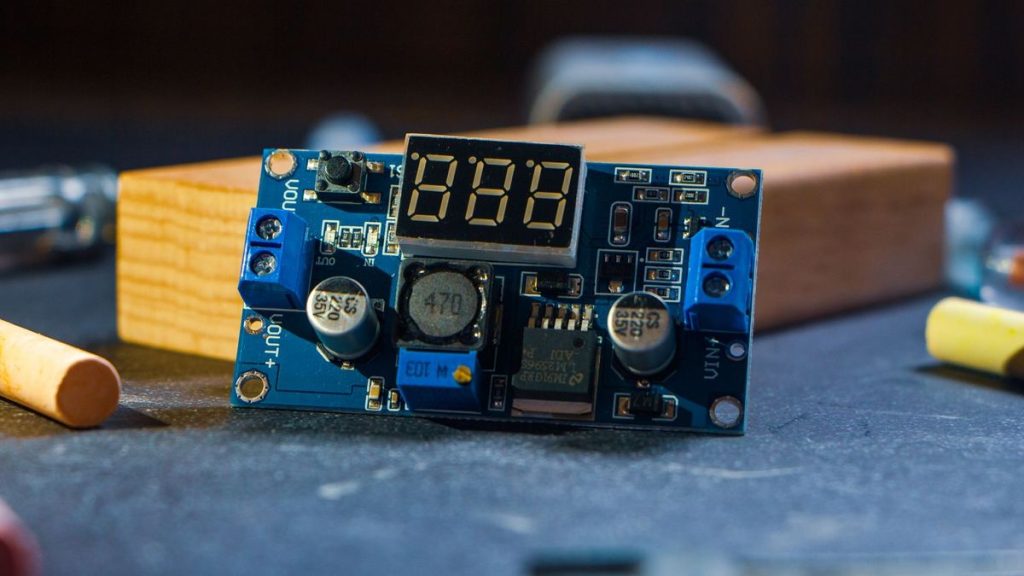
The Lancol Micro 500 is a 12V conductance tester with a 40 to 3000 CCA and CA range. Lancol lists lead-acid batteries including traditional flooded, AGM flat, AGM spiral, EFB and gel, plus a separate lithium battery test. That makes it one of the more direct answers here for anyone who needs a battery tester for lithium batteries as well as AGM.
The tool reports voltage, state of charge, state of health and measured CCA, then gives a result analysis. Charging and cranking tests extend the check to the alternator and starting system. Lancol describes double-conductor Kelvin clips, which use separate contacts for the test signal and the measurement, a design meant to reduce the effect of clamp resistance on the reading.
The listing mentions use on cars, recreational vehicles, boats, lawn mowers and similar equipment, and multiple menu languages with written instructions. It uses an LED display rather than a color screen, so readouts are simpler than on the ANCEL or KONNWEI tools. It is a 12V-only tool, so it doesn’t suit 24V trucks, and like the other digital testers here it does not place a heavy resistive load on the battery.
View Lancol Micro 500 on Amazon
6. KONNWEI KW208: 12V Battery Tester with AGM Flat Plate and Spiral Modes
- 12V batteries, 100-2000 CCA
- Flooded, AGM flat plate, AGM spiral, gel
- Replace or recharge advice
- Cranking and charging tests
The KONNWEI KW208 is a straightforward 12V tester with a 100 to 2000 CCA range. Its listing covers regular flooded, AGM flat plate, AGM spiral and gel batteries, so it handles the common AGM types found in passenger cars. It is small enough to keep in a glove box or a drawer in the garage.
Connect the clips and it powers up from the battery, ready to test in or out of the vehicle. Results include voltage, internal resistance, cold cranking amps, Ah capacity, battery health and charge status, followed by advice to replace or recharge. KONNWEI also lists cranking and charging system tests for the starter and alternator, and eight menu languages. The clips were updated to galvanized alloy, which the maker says improves contact and durability.
The trade-off is range. The KW208 reads 12V batteries only and does not list lithium support, so it is a poor fit for a 24V truck or a LiFePO4 starter battery. For a single car or SUV with a 12V AGM, it covers the questions most owners ask before winter: is the battery healthy, does it need a charge, and is the alternator doing its job.
Matching the Tester to Your Battery and Job
The best AGM battery load tester for you depends on what is under your hood. A single-car owner with a 12V AGM needs less than someone who also checks a diesel truck, a motorcycle and a lithium battery. Some owners pair a fixed-load tester with a digital one for the fullest picture.
| Your situation | Tester type | Fits from this list |
|---|---|---|
| 12V AGM car, occasional checks | 12V conductance tester | KONNWEI KW208 |
| AGM plus a lithium starter battery | Conductance with lithium mode | ANCEL BT410, KONNWEI KW341, Lancol Micro 500 |
| 6V, 12V and 24V AGM, no lithium | Multi-voltage conductance | VDIAGTOOL BT500 |
| Want to see voltage under a real load | Fixed-load tester | TOPDC 3181 Pro |

For lithium, check the menu, not just the box. A lithium starter battery has a built-in management system and a different voltage curve, so trust only a tester that lists lithium support. The VDIAGTOOL listing says plainly that it does not test lithium.
Cold Mornings and AGM Batteries in West Michigan
A Grand Rapids January is when a weak battery finally shows itself. Cold slows the chemistry inside every lead-acid battery, so a frosty morning asks more of it than July does. Testing in October leaves time to act before the first hard freeze.
Try to test the battery when it is near room temperature, or at least note the temperature, because a frozen battery reads poorly on any tester. Short winter trips also leave AGMs undercharged, and a battery that sits low for weeks loses capacity. If yours tests “good-recharge” again and again, our guide to a car battery that dies overnight walks through drains and charging habits.

When the Battery Isn’t the Problem
Even the best AGM battery load tester often clears the battery and points somewhere else. Low or uneven charging voltage, heavy ripple, or a battery that passes and then goes flat again usually means the alternator, a wiring fault or a parasitic drain. Our list of bad alternator symptoms helps you tell the difference.

Some newer vehicles also need a replacement AGM registered with the car’s computer so the charging system treats it as new. If your tester shows a charging fault, or you would rather not chase a drain yourself, our car electrical repair in Grand Rapids covers charging system checks and electrical fault tracing.
More Buying Guides
Frequently Asked Questions
Can you load test an AGM battery?
Yes. Charge it fully first, then use either a conductance tester set to AGM or a fixed-load tester whose listing names AGM, such as the TOPDC 3181 Pro. Keep a fixed-load test to a few seconds and let the tester cool before repeating it.
Do I need a special tester for AGM batteries?
You need a tester with an AGM setting, ideally separate flat plate and spiral options. Every tool on this list has one. Testing an AGM on a flooded setting can give a misleading result.
What is the best battery tester for lithium batteries in a car?
Choose one whose listing names lithium support. Here that means the ANCEL BT410, KONNWEI KW341 and Lancol Micro 500. The VDIAGTOOL BT500 and TOPDC 3181 Pro are for lead-acid types only.
Why does my AGM test good but still struggle to start?
A surface charge, a wrong rating entry or a loose clamp can flatter the result. Retest after the battery rests, then run the cranking and charging tests. A slow crank with a good battery can point to the starter, cables or alternator.
Tester flagging a charging fault you can’t pin down? Give our shop a call at 616-279-3832, open 8am to 5pm Monday through Friday, or request an electrical check on our contact page.
If weekday hours are tight, our after-hours drop-off at 456 Carrier St NE, Grand Rapids, lets you leave the car whenever it suits you.