As an Amazon Associate, 456 AutoFix earns from qualifying purchases. Product links below go to Amazon, where you can confirm the right part for your vehicle.
A Starlink Mini is small enough to ride in a glovebox, but it still needs steady power once you leave the outlet behind. The best battery for Starlink Mini setups is one that delivers the right voltage, holds enough watt-hours for your trip and fits how you travel, whether that is a carry-on bag, a camper or the back seat of a car.
Below is what the dish asks for, then six batteries that meet it. If your real worry is the car’s own battery after a weekend of running gear, our guide to car battery brands covers the starting side.
Quick answer
What battery will run a Starlink Mini?
Look for a battery that supplies USB-C Power Delivery at 100W (20V, 5A) or a direct DC output made for the Mini. A 99Wh clip-on pack like the PeakDo LinkPower 1 suits flights and short sessions, while a power station such as the Anker SOLIX C300 DC covers a full day at camp.
Our Quick Picks
Three quick picks for flights, everyday travel and a full day at camp. All six are reviewed below.
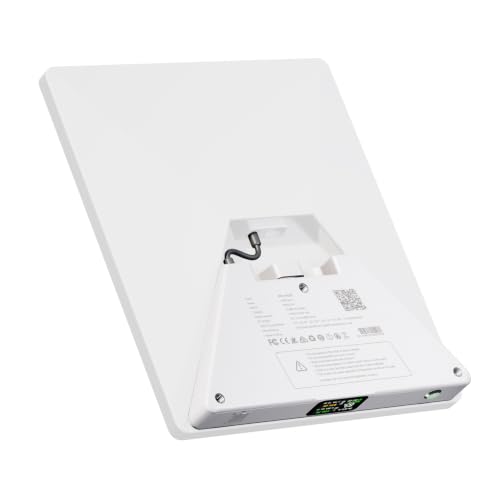
PeakDo LinkPower 1
Snaps onto the dish and stays under the 100Wh carry-on limit.

Anker Laptop Power Bank 25K
A laptop power bank whose 100W ports meet Starlink's USB-C rating.

Anker SOLIX C300 DC
A compact power station with room for a full day of dish time.
How Much Power the Dish Actually Pulls
According to Starlink’s support guidance on powering the Mini, the dish typically uses about 20 to 40 watts on average and around 15 watts when idle. For USB-C power, Starlink asks for a Power Delivery source rated at 100W (20V at 5A) so the Mini runs properly. Lower-rated chargers may start it but are not what Starlink recommends.
The voltage matters as much as the wattage. A USB-C pack has to offer a 20-volt profile, and a source that only gives 12 volts over USB-C cannot deliver enough power. The Mini ships with a DC barrel cable, so a USB-C battery also needs a USB-C to DC cable made for the dish.
Runtime is simple math: divide the battery’s watt-hours by the dish’s draw, then knock off some for conversion losses. A 99Wh pack at 30 watts gives roughly three hours, and cold weather or heavy use shortens that.
Clip-On Pack, Laptop Power Bank or Power Station?
Three kinds of battery can run the Mini, and each suits a different trip:
- Dedicated Mini packs: built for the dish, often clip onto its back and feed it through DC. They are the simplest, but most do little else.
- 100W laptop power banks: general chargers with a 100W or stronger USB-C port. They double as a laptop charger but need a USB-C to DC cable for the dish.
- Power stations: larger batteries with many ports and far more capacity. They suit a car, camper or cabin, not a flight.
Best Battery for Starlink Mini: Six Options Reviewed
The first three are made for the Mini; the last three are general batteries whose USB-C output meets Starlink’s 100W rating.
1. PeakDo LinkPower 1: 99Wh Clip-On Starlink Mini Battery with USB-C PD
- 99Wh (27,500mAh), up to 4.5 hours listed
- Snap-on mount and 1/4-inch tripod hole
- 100W USB-C input, 65W USB-C output
- IP65 housing, app control and DC cutoff switch
The PeakDo LinkPower 1 is a battery pack built for the Starlink Mini, and the listing says it fits the Mini only. It snaps onto the back of the dish with a buckle, so the antenna and its power source travel as one unit, and it has a standard 1/4-inch screw hole for a tripod. Inside is a 27,500mAh cell rated at 99Wh, which PeakDo says gives up to 4.5 hours of runtime depending on conditions.
A short DC cable and a USB-C charging cable come in the box, so no extra adapter is needed. The USB-C port works both ways: it recharges the pack at up to 100W and can charge a laptop or phone at up to 65W. Pass-through charging lets the pack refill itself while it keeps the dish running. Note that the USB-C input defaults to 65W and has to be raised to 100W in the PeakDo app.
The app shows battery status from your phone, and a physical switch cuts the DC port to stop idle drain. The housing carries an IP65 rating against rain and dust. Because it stays at 99Wh, it sits under the 100Wh line the FAA sets for spare batteries in carry-on bags. It does not suit a full day of connection on one charge.
View PeakDo LinkPower 1 on Amazon
2. XTAR-Link MP158: 158Wh Direct-DC Power Bank for Starlink Mini
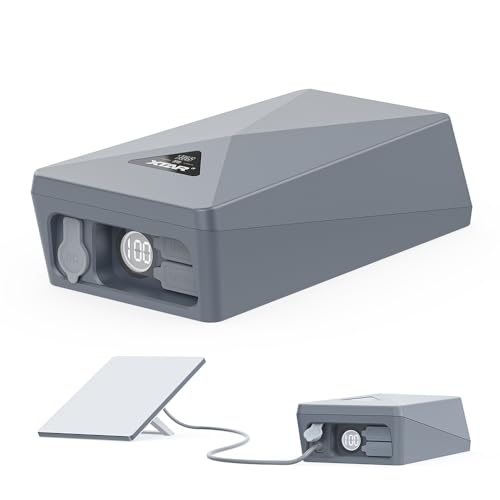
- 158Wh, up to 8 hours of Mini runtime listed
- 15-21V direct DC output to the dish
- Battery stays inside, dish stays outside
- 100W USB-C PD input and output, 18W USB-A
The XTAR-Link MP158 is a 158Wh power bank designed around the Starlink Mini, and XTAR says it can run the dish for up to 8 hours on a charge. Rather than routing power through USB-C, it feeds the Mini a direct DC supply of 15 to 21 volts. XTAR says this avoids the reboots some USB-C banks cause and the losses of an AC inverter. XTAR claims 10 percent or more extra runtime as a result.
The design keeps the battery apart from the antenna. You can leave the pack inside a camper, cabin or car while the dish sits outside, which keeps the cells away from the worst heat and cold. Recharging takes about 2.3 hours from a 100W USB-C PD charger, according to the listing. The same pack has a 100W USB-C output and an 18W USB-A port for a laptop, phone or drone.
Capacity is the main trade-off to understand. At 158Wh it is above the 100Wh carry-on limit, and the FAA allows batteries from 101 to 160Wh only with airline approval and no more than two spares per person. XTAR describes it as the largest airline-friendly size, so check with your carrier first. It suits RV trips, cabin weekends and long remote work sessions better than a quick day hike.
View XTAR-Link MP158 on Amazon
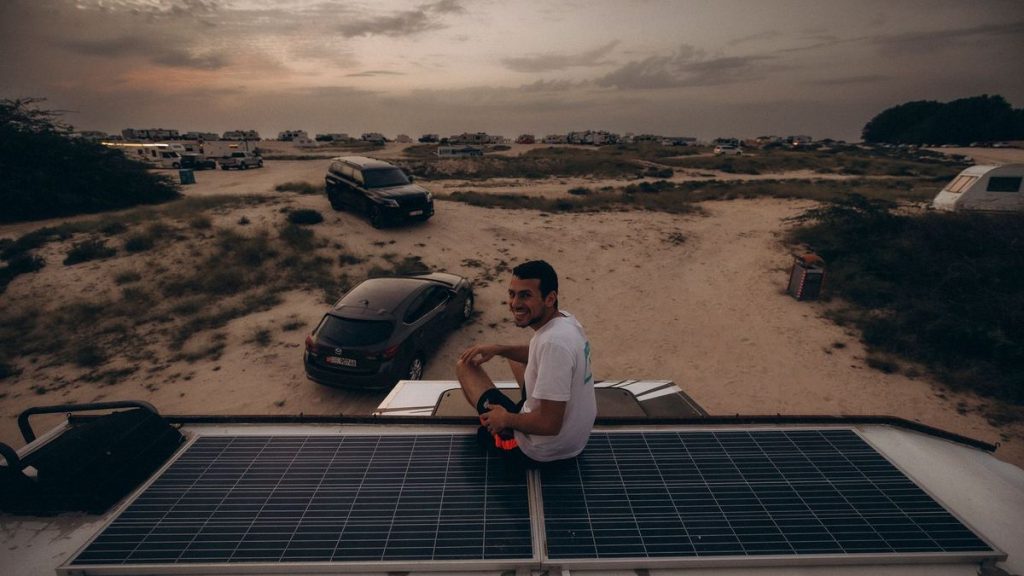
3. LiFirst Starlink Mini Battery Pack: 200Wh Clip-On with Solar Input

- 200Wh, up to 10+ hours listed
- Clips onto the back of the dish, about 2.4 lb
- 24-40V solar input up to 100W
- Rated for hot and cold field use
The LiFirst Starlink Mini Battery Pack clips straight onto the back of the dish and holds 200Wh, roughly double a flight-size pack. LiFirst lists up to 10 hours or more of network uptime depending on signal load. It weighs about 2.4 pounds and needs no separate brackets. Power goes to the Mini through a direct DC output.
LiFirst builds the pack around a direct DC design and a battery management system that regulates voltage and current. The listing says it keeps working at up to 140°F and still delivers around 70 percent of its capacity at -4°F, which matters on a cold West Michigan morning. It also accepts 24 to 40 volt solar input at up to 100W, so a suitable panel can stretch runtime at a campsite. A pressure relief valve is built in.
Charging options are flexible. The pack can be charged from the original Starlink Mini adapter when the dish is not in use, while pass-through operation needs an adapter rated above 22V at 3 to 5A, with LiFirst recommending 25.2V at 4A. At 200Wh it is over the 160Wh ceiling the FAA allows in the cabin even with airline approval, so it is a road and camp battery rather than a carry-on. Plan on about 3.5 hours for a full charge.
View LiFirst 200Wh Pack on Amazon
4. Anker Laptop Power Bank 25K: 165W with Three 100W USB-C Ports
- 25,000mAh capacity
- Three USB-C outputs, 100W max each
- Two built-in USB-C cables
- Meets the 100Wh airline limit
The Anker Laptop Power Bank is a general-purpose 25,000mAh battery, not a Starlink accessory, and Anker’s listing does not mention the Mini. What makes it relevant is its three USB-C outputs, each rated at up to 100W, with 165W available in total. That matches the 100W USB Power Delivery rating Starlink asks for. Paired with a USB-C to DC cable made for the Mini, it can run the dish.
Two USB-C cables are built in: one retracts and extends to about 2.3 feet, and a shorter one doubles as a carrying strap. There is also a separate USB-C port and a USB-A port, so a phone and a laptop can charge alongside the dish. Anker states that it complies with the 100Wh airline limit and is carry-on friendly, and it recharges quickly from a 100W or stronger charger. A pouch and an 18-month warranty are included.
The strength here is versatility. Without the dish it is simply a laptop and phone charger. The trade-off is capacity, since a pack under the 100Wh line gives a few hours of dish time at most and the USB-C to DC conversion costs a little more. It suits travelers and remote workers who need a few hours of connection between outlets.
View Anker Laptop Power Bank 25K on Amazon
5. UGREEN Nexode 25000mAh: 200W Power Bank with 140W USB-C Port

- 25,000mAh, 90Wh
- 140W and 100W USB-C ports, 200W combined
- TFT display shows live watts and volts
- Keeps over 80% capacity after 1,000 cycles
The UGREEN Nexode 25000mAh is a 90Wh power bank aimed at laptops, and like the Anker it is a general-purpose charger rather than a Starlink product. Its first USB-C port delivers up to 140W and the second up to 100W, with a combined 200W when both are in use. Either port covers the 100W USB Power Delivery rating Starlink asks for when paired with a USB-C to DC cable for the Mini. UGREEN does not list Starlink compatibility.
The standout feature is the TFT display, which shows battery level, remaining time, input and output power, voltage and current in real time. That readout is handy with a Starlink Mini, because you can watch how much the dish is actually pulling and judge how long the pack will last. A third port lets a phone charge at the same time. UGREEN rates the battery to keep more than 80 percent of its capacity after 1,000 cycles.
At 90Wh the pack sits under the FAA’s 100Wh carry-on limit, so it can ride in a backpack on a flight. Capacity is similar to other flight-size packs, which means a few hours of dish time rather than a full day. It suits a user who wants to see exact power numbers and also needs a strong laptop charger.
View UGREEN Nexode 25000mAh on Amazon
6. Anker SOLIX C300 DC: 288Wh LiFePO4 Power Station with 140W USB-C
- 288Wh LiFePO4 battery, 300W output
- Two 140W two-way USB-C ports
- 120W car socket plus four more ports
- Solar, car or USB-C recharging
The Anker SOLIX C300 DC is a compact power station rather than a power bank, with a 288Wh LiFePO4 battery and 300W of output. It has no AC outlet, and Anker says it is about 30 percent smaller than similar power stations. For a Starlink Mini the useful outputs are two 140W two-way USB-C ports and a 100W USB-C port. Anker does not list the Mini, so you would use a USB-C to DC cable.
Seven outputs in total include a 120W car socket, a 15W USB-C port and two USB-A ports,, so several devices can run at once. Recharging is flexible: the dual PD 3.1 USB-C ports reach 80 percent in about an hour, and it also accepts a 100W solar panel or a charge from your car. The LiFePO4 cells carry a three-year guarantee. The box includes a 140W USB-C cable but no wall charger.
At 288Wh it holds roughly three times what a flight-size pack does, enough to keep the dish running through a long day. It is well over the airline cabin limit, so treat it as a car, RV or cabin battery. Before first use it has to be activated with an 18W or stronger USB-C wall charger on the USB-C2 or USB-C3 port. It does not clip onto the dish.
View Anker SOLIX C300 DC on Amazon
Capacity and Runtime Side by Side
To size the best battery for Starlink Mini trips, the table sets rough runtimes against capacity at the 20 to 40 watt draw Starlink gives. Treat the hours as estimates before conversion losses, not promises.
| Battery size | Examples here | Rough dish time | Flying with it |
|---|---|---|---|
| Up to 100Wh | PeakDo LinkPower 1, Anker 25K, UGREEN Nexode | About 2.5 to 5 hours | Carry-on allowed |
| 101 to 160Wh | XTAR-Link MP158 | About 4 to 8 hours | Airline approval needed, two spares max |
| Over 160Wh | LiFirst 200Wh, Anker SOLIX C300 DC | About 5 to 14 hours | Not allowed in the cabin |
The flight column follows the FAA’s PackSafe rules for lithium batteries, which keep spare packs and power banks out of checked bags. Airlines can set stricter limits on how many power banks you carry, so check with yours before a trip.

Running the Mini From a Car Through a Michigan Winter
Plenty of owners run the dish off the car itself, and that works while the engine runs. With the engine off, a dish pulling 30 watts for eight hours takes about 240 watt-hours from the starting battery, which is a big share of a typical car battery. Do that on a cold West Michigan night and the car may not start in the morning, the same pattern we describe in why a car battery dies overnight.
Choosing the best battery for Starlink Mini use at camp means one that keeps the starting battery out of it. Cold also cuts the capacity of any lithium pack, so keep the battery inside the car or cabin and run the cable out to the dish. If the car sits between trips, a maintainer from our winter car battery charger guide keeps the starter healthy.
Repeated deep drains shorten a starting battery’s life. On many newer cars a replacement also has to be registered to the car’s computer, as our Audi battery replacement guide explains.
When the Car Is the Real Problem
If the car’s battery keeps going flat even when nothing is plugged in, or the 12V socket stops working, the fault is in the vehicle rather than your Starlink setup. A blown fuse, a parasitic drain or a weak alternator can all show up first as trouble powering accessories.
Our car electrical repair in Grand Rapids covers drain tests, charging system checks and socket faults on foreign and domestic vehicles.

More Buying Guides
Frequently Asked Questions
How long will a power bank run a Starlink Mini?
Divide the pack’s watt-hours by the dish’s draw. Starlink gives an average of about 20 to 40 watts, so a 99Wh pack gives roughly 2.5 to 5 hours before conversion losses, and a 288Wh power station can last most of a day.
Will a 65W power bank work with a Starlink Mini?
Starlink asks for a USB-C Power Delivery source rated at 100W (20V, 5A) for proper operation. A 65W pack may start the dish but can cause reboots under load, so pick a 100W port or a pack made for the Mini.
Can I take a Starlink Mini battery on a plane?
Packs up to 100Wh can go in carry-on bags. Packs from 101 to 160Wh need airline approval, with a limit of two spares, and larger batteries are not allowed in the cabin. Spare batteries never go in checked bags.
Can I power a Starlink Mini from my car’s 12V socket?
Many owners do, using an adapter that raises the voltage for the dish. With the engine off, though, it drains the starting battery, so a separate portable battery is the safer choice for overnight use.
Car battery keeps dying after a night of running gear? Call 456 AutoFix at 616-279-3832, Monday to Friday 8am to 5pm, or set up a battery and charging check on our contact page.
Busy during shop hours? Our after-hours drop-off lets you bring the car to 456 Carrier St NE whenever it suits you.