
As an Amazon Associate, 456 AutoFix earns from qualifying purchases. Product links below go to Amazon, where you can confirm the right part for your vehicle.
A convertible, a motorcycle or a boat that sits from November to April comes out of storage with a weak battery more often than not. The best battery maintainer charger fixes that with one box: it brings a low battery back to full, then drops into a gentle maintenance mode and holds it there for months.
Below we sort out the confusing names, explain how to size a unit for what you store and review six combination units sold on Amazon. If your main concern is a daily driver in the cold, our winter car battery charger guide covers that job.
Quick answer
What should you buy to keep a stored battery healthy?
Pick a smart unit that charges and then switches to float or maintenance mode on its own. The NOCO GENIUS1 suits most stored cars, the Battery Tender Junior Selectable suits motorcycles with lead-acid or lithium batteries, and the OptiMate 6 AmpMatic suits a car battery that also needs real recharging.
Our Quick Picks
Three units that cover the main storage jobs: a parked car, a motorcycle with a lead-acid or lithium battery, and a car battery that needs real recharging first.

NOCO GENIUS1
Compact unit that charges, then holds a parked battery full for months.
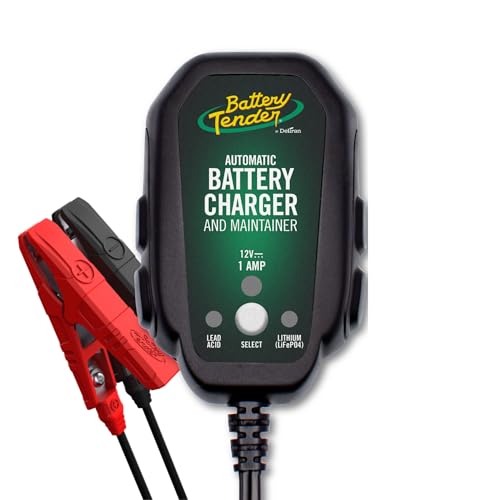
Battery Tender Junior Selectable
Light maintainer that switches between lead-acid and lithium at a button press.

OptiMate 6 AmpMatic
More output for a low car battery, then automatic long-term maintenance.
Charger, Maintainer, Tender or Trickle Charger?
These words get used as if they mean the same thing, and they don’t quite. A battery charger is built to refill a battery that is low, usually at several amps. CTEK’s explainer on car battery maintainers notes that a standard charger pushes higher current and can do damage if it stays connected too long.
A maintainer works at low current and only supplies what the battery needs to stay full. An old-style trickle charger also runs at low current, but it never stops, which is how a forgotten one can boil a battery dry over a season. “Tender” is mostly a brand name, Battery Tender, that people now use for any maintainer.
Every unit in this guide is a combination: it charges first, then switches to a float, pulse or maintenance stage by itself. That automatic switch is the feature that makes it safe to leave plugged in until spring.
How to Size a Maintainer for What You Store
Amps decide how fast a unit can refill a battery, not how well it maintains one. A few points narrow the choice quickly:
- Output: under 1A suits motorcycle, ATV and mower batteries. Around 1 to 2A suits a car on storage that goes in full. Pick 5A or more if you also want to recover a flat car battery in a reasonable time.
- Battery chemistry: many powersport bikes now ship with lithium (LiFePO4) batteries, which need a charger with a lithium mode. Lead-acid only units are the wrong match.
- Voltage: some classic cars, older tractors and vintage bikes run 6V systems, so check for a 6V setting.
- Leads and banks: a ring terminal harness left on the battery makes reconnecting easy, and a two-bank unit looks after two vehicles from one outlet.
Temperature compensation is worth having in an unheated garage, because a cold battery needs a little more voltage to reach full. Owners storing a sports car can also read our Porsche battery tender guide for socket and lithium details.
Best Battery Maintainer Charger: The Units in Detail
Each unit below charges and then maintains automatically, according to its Amazon listing. Confirm your battery type and voltage before you connect anything, and follow the manual for any recovery mode.
1. NOCO GENIUS1: 1A 6V/12V Smart Charger and Maintainer for Lead-Acid and Lithium
- 1A output for 6V and 12V batteries
- Lead-acid (AGM, gel, flooded) and LiFePO4 support
- Thermal sensor adjusts charge to garage temperature
- Safe to leave connected for ongoing maintenance
The NOCO GENIUS1 is a small 1-amp unit that NOCO describes as a battery charger, maintainer, trickle charger and desulfator in one. It works with 6-volt and 12-volt batteries, and the listing names lead-acid types (AGM, gel, SLA, VRLA, flooded) plus lithium-ion LiFePO4. That range covers most cars, classic cars, motorcycles, mowers and small boats that spend the winter parked.
An integrated thermal sensor adjusts the charge to the ambient temperature, which helps in an unheated Michigan garage. The unit charges batteries from as low as 1 volt, and a manual Force Mode lets you start charging a battery that reads close to zero. Once the battery is full, NOCO says the charger keeps monitoring it, so it can stay connected indefinitely without overcharging. Pulse charging is listed for treating sulfation and acid stratification.
In the box are the charger with a direct wall plug, a 110-inch DC cable, battery clamps and integrated eyelet terminals, plus a 3-year warranty. The eyelet lead can stay bolted to the battery for quick hookups each season. At 1 amp, it is a maintainer first. Recovering a fully flat car battery takes a long time, so start storage with a charged battery or pick a higher-output unit for that job.
2. Battery Tender Junior 12V 800mA: Selectable Lead-Acid and Lithium Maintainer
- 12V, 800mA output for powersport batteries
- Push-button choice of lead-acid or LiFePO4
- ISM microcontroller manages the charge sequence
- Spark-proof leads with reverse polarity detection
The Battery Tender Junior Selectable is the 800mA version of the brand’s familiar small maintainer, with one important difference: a button that switches between lead-acid and lithium. The listing names AGM, flooded and gel lead-acid batteries as well as LiFePO4. That matters for riders, because many newer motorcycles and powersport machines leave the factory with a lithium battery that a lead-acid only maintainer should not handle.
Battery Tender says an ISM microcontroller keeps updating the charge sequence, so the battery receives the right level throughout storage rather than a constant trickle. The leads are spark-proof during connection, and the unit detects reverse polarity before it sends any power. The listing notes ETL US/CSA and FCC certification and a 5-year warranty, and the compact body fits on a shelf or bench beside the bike.
Its low output is the point here. At 800mA it is built to keep a small battery full through a long winter, not to recover a car battery that has gone flat. It suits a motorcycle, ATV, UTV, personal watercraft or scooter. It runs on 12V only, so it is not the answer for a 6V vintage bike or classic car, and a large car battery is better served by a unit with more output.
View Battery Tender Junior Selectable on Amazon

3. Schumacher SC1355: 1.5A 6V/12V Charger, Maintainer and Reconditioner

- 1.5A output with automatic 6V/12V detection
- Charges, maintains and reconditions batteries
- Works with standard, AGM and deep-cycle batteries
- Quick-connect clamps and ring connectors included
The Schumacher SC1355 is a 1.5-amp, three-in-one unit that charges, maintains and reconditions 6-volt and 12-volt batteries. Schumacher pitches it at seasonal and infrequently used vehicles, and the listing names cars, motorcycles, ATVs, trucks, SUVs and boats. It handles standard flooded, AGM and deep-cycle batteries, and it detects the battery voltage automatically, so you don’t have to choose 6V or 12V yourself.
Charging runs through a multi-stage algorithm, after which a smart trickle stage keeps the battery topped up without overcharging. There is an advanced desulfation mode for batteries that have sat low, and reverse hook-up protection guards against crossed clamps. The automatic restart noted in the listing title helps in storage, because the unit picks up again after a power interruption instead of sitting idle until someone notices.
Both quick-connect battery clamps and quick-connect ring connectors come in the box. Bolt the rings to a battery you visit often and the clamps stay free for other vehicles. At 1.5 amps it sits a step above the smallest maintainers, which suits a car or boat battery on storage. The listing doesn’t name a lithium mode, so treat it as a lead-acid unit, and use the desulfation mode only as the manual describes.
View Schumacher SC1355 on Amazon
4. OptiMate 6 AmpMatic TM-361: 12V 6A 9-Step Charger with Long-Term Maintenance
- 12V, 6A output with AmpMatic charge control
- Built-in temperature compensation
- Recovers deeply discharged batteries from 0.5V
- Tests charge retention and keeps 24-7 maintenance
The OptiMate 6 AmpMatic (TM-361) is the strongest unit in this guide, with 6 amps of 12-volt output. OptiMate aims it at car, pickup, marine and industrial batteries, and the listing names premium AGM and deep-cycle types. That extra output makes it the better fit when a stored car battery is already low and needs a real recharge before maintenance takes over.
Its AmpMatic charge control, with built-in temperature compensation, sets the charge rate to suit the battery size, its condition and the air temperature. The 9-step program can recover a deeply discharged battery from as low as 0.5 volts, and the listing says it tells a discharged battery apart from a sulfated one that needs saving. After charging it tests whether the battery holds its charge and shows the final state of charge, which is useful before a car goes into storage.
Once the battery is full, a long-term maintenance mode keeps it at its optimal level around the clock. The listing describes the unit as safe for vehicle electronics, with suppressed sparks and automatic shutdown if it is short-circuited or the battery is disconnected. It is a 12V lead-acid unit with no lithium program named, so look elsewhere for a lithium powersport battery or a 6V classic.
View OptiMate 6 AmpMatic on Amazon
5. NOCO GENIUS2X2: 2-Bank 6V/12V Charger and Maintainer for Two Batteries

- Charges and maintains two batteries at once
- 6V and 12V lead-acid and LiFePO4 support
- Thermal sensor for cold and hot garages
- Two 10-foot DC extension cables included
The NOCO GENIUS2X2 is a two-bank unit, so one charger looks after two batteries at the same time. Each bank is a charger, maintainer, trickle charger and desulfator, and the listing names 6-volt and 12-volt lead-acid batteries (AGM, gel, SLA, VRLA, flooded) plus lithium LiFePO4. For a garage holding a summer car and a motorcycle, or a boat and a mower, that saves a second charger and a second outlet.
Like the smaller GENIUS models, it uses an integrated thermal sensor to adjust the charge to the ambient temperature. It charges from as low as 1 volt, offers Force Mode for batteries near zero, and keeps monitoring once the batteries are full so it can stay connected through the season. Precision pulse charging is listed for sulfation and acid stratification.
The package lists a 4A two-bank charger with battery clamps, integrated eyelet terminals and two 10-foot DC extension cables, which help when the vehicles are parked a few feet apart. NOCO backs it with a 3-year warranty. Set the right mode for each bank, since a car and a lithium powersport battery need different settings. It is a storage and maintenance tool, not a fast way to revive a flat car battery.
6. CTEK US 0.8: 12V 6-Step Maintainer with Desulphation for Small Batteries

- 12V, 6-step fully automatic charging
- Patented desulphation function
- Splash and dustproof, non-sparking design
- Clamps, eyelet connector and storage bag included
The CTEK US 0.8 is a compact 12-volt unit with a fully automatic 6-step charging program. CTEK aims it at smaller lead-acid batteries in motorcycles, jet skis, ATVs and lawn mowers, and the listing says it also suits maintenance charging of normal-sized batteries, including those in classic cars. It is the plainest unit here: connect it, plug it in and leave it.
A patented desulphation function analyzes the battery and, where possible, recovers capacity lost to sulfation, which is a common problem for batteries left unused. The case is splash and dustproof, and the unit is non-sparking, reverse polarity protected and short-circuit proof. CTEK says it delivers clean voltage without surges, so there is no need to disconnect the battery from the vehicle’s electronics before charging.
Clamps and an eyelet connector come in the box, along with a storage bag, and the listing notes a 5-year warranty. Leaving the eyelet connector fitted makes winter hookups quick, especially on a bike with a tucked-away battery. The listing covers 12V lead-acid batteries only, so it is not for a LiFePO4 powersport battery or a 6V system, and its low output is meant for maintenance rather than recovering a deeply drained car battery.
Matching a Unit to What Sits in Your Garage
Use this table to narrow the best battery maintainer charger for the vehicles you actually park for the season.
| What you store | Units that fit | Check first |
|---|---|---|
| Summer car or classic car | NOCO GENIUS1, Schumacher SC1355, CTEK US 0.8 | 6V or 12V system; go in with a full battery |
| Motorcycle, ATV or snowmobile | Battery Tender Junior Selectable, CTEK US 0.8 | Lithium battery needs the lithium setting |
| Car battery that is already low | OptiMate 6 AmpMatic | A battery that won’t hold charge needs testing |
| Two vehicles in one garage | NOCO GENIUS2X2 | Match the mode to each battery |
| Boat, RV or deep-cycle battery | OptiMate 6 AmpMatic, Schumacher SC1355 | Battery size and the maker’s charge limits |
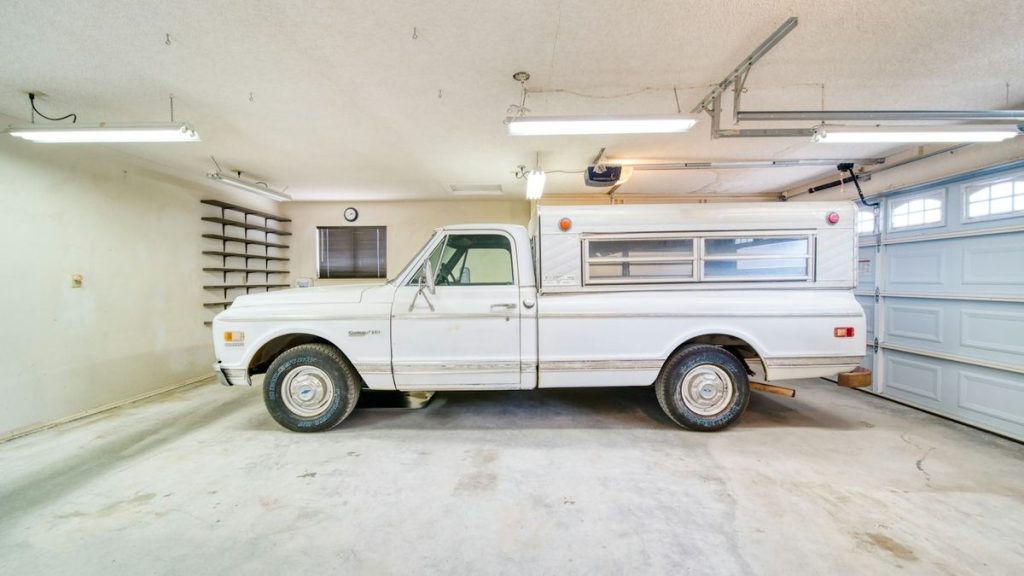
Laying Up a Vehicle for a Michigan Winter
A parked battery doesn’t stay full. CTEK points out that an idle car slowly loses charge, and modern cars add a small constant draw for alarms, clocks and modules. Leave a lead-acid battery low through a West Michigan cold snap and it can sulfate, or even freeze.
Charge the battery fully before the vehicle goes into storage, then connect the maintainer and let it take over. Mount the unit on a wall hook or shelf, not on the floor where meltwater and road salt collect. Once a month, check that the clamps or ring terminals are tight and the status light still shows maintenance.

Never charge a battery that is frozen, cracked, swollen or leaking. If you own an AGM battery, our AGM battery charger roundup explains why the charge profile matters for sealed batteries. In spring, let the unit finish its cycle before you start the engine.
If the Stored Battery Still Goes Flat
Even the best battery maintainer charger only tops up a battery. It won’t hide a fault that drains one. If your car is flat after a weekend without a maintainer, something is probably drawing current with the key off, and our article on why a car battery dies overnight lists the common culprits.
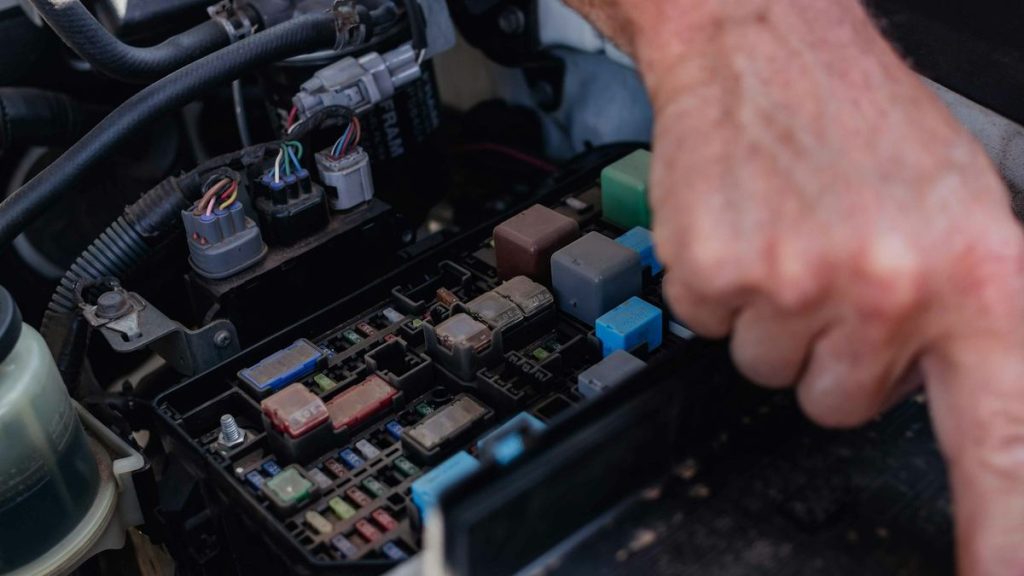
Watch for a unit that never reaches its maintenance stage or a battery that cranks slowly right after a full charge. Both usually mean the battery has lost capacity. Our team handles car electrical repair in Grand Rapids, testing the battery, alternator and key-off draw before anything is replaced.
More Buying Guides
Frequently Asked Questions
What is the difference between a battery charger and a battery maintainer?
A charger refills a low battery, usually at higher current. A maintainer holds a full battery at the right level with a low current and stops when it isn’t needed. The units in this guide do both, switching from charging to maintenance automatically.
Is a battery tender the same as a trickle charger?
Not exactly. Battery Tender is a brand of smart maintainer that adjusts its output and drops to float. A basic trickle charger feeds a constant small current and keeps going even when the battery is full, so it can overcharge over a long storage period.
Can I leave a battery maintainer connected all winter?
Yes, a smart unit with an automatic maintenance stage is made for that. Keep it dry and off the floor, check the connections every few weeks and unplug it if the battery case looks swollen or the unit shows a fault.
How many amps does a battery maintainer need?
For holding a full battery, under 1A is plenty for powersport batteries and 1 to 2A suits most cars. If you also want to recharge a flat car battery overnight, look at a unit rated around 5 or 6A.
Stored car won’t start this spring in Grand Rapids? Reach 456 AutoFix at 616-279-3832, Monday to Friday 8am to 5pm, or schedule a battery and charging test online.
Working days yourself? Our after-hours drop-off lets you leave the car whenever suits you. You’ll find us at 456 Carrier St NE in Creston.