
As an Amazon Associate, 456 AutoFix earns from qualifying purchases. Product links below go to Amazon, where you can confirm the right part for your vehicle.
A seller can wash a car, top up the fluids and clear a warning light the morning you arrive. The best tools for used car inspection are the small ones that see past that prep: a code reader, a paint gauge, a good light, a camera on a cable, a tread gauge and a battery tester.
None of them needs a lift or a garage, and together they fit in a backpack. Below we explain what each one tells you, then review one specific product per category. Pair the kit with our used car buying checklist for Michigan buyers so you look at the paperwork as carefully as the car.
Quick answer
What tools should you take to look at a used car?
Bring an OBD2 code reader that shows readiness monitors, a paint thickness gauge, a bright inspection light, a borescope for hidden spots, a tread depth gauge and a 12V battery tester. Those six cover cleared codes, hidden bodywork, leaks, rust, worn tires and a tired battery in about half an hour.
Our Quick Picks
Three tools that catch the problems sellers most often miss or hide: cleared codes, repainted panels and hidden leaks or rust.
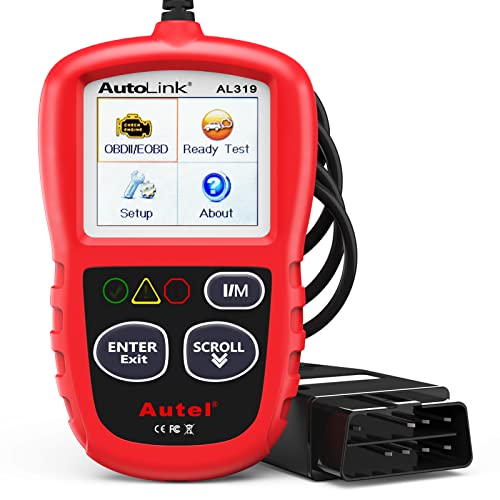
Autel AL319
Plug-in reader that shows codes and whether they were cleared recently.
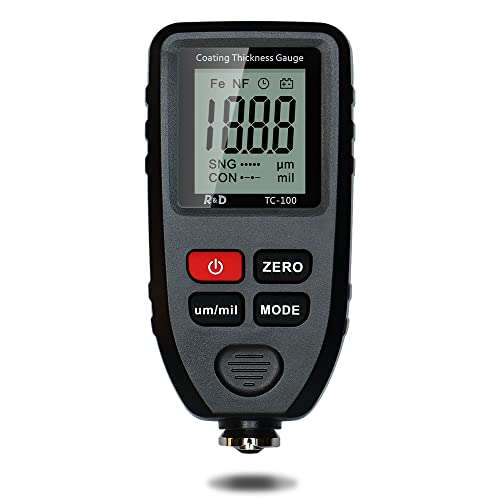
RDINSCOS Paint Gauge
Measures paint depth panel by panel to show repainted or filled areas.

Teslong Articulating Borescope
Steerable camera for rocker panels, frame rails and tight engine areas.
What Each Tool Reveals on a Test Drive
- Code reader: are there stored or pending fault codes, and were codes cleared recently? Incomplete readiness monitors on a car that has supposedly been driven daily are a classic sign of a fresh reset.
- Paint thickness gauge: has a panel been refinished? Factory paint tends to read evenly across a car, so one door or fender that reads much thicker points to bodywork.
- Inspection light: where are the leaks, cracked hoses and rust? Daylight doesn’t reach under the engine or into wheel wells.
- Borescope: what is behind the bumper, inside the rocker panel or under the intake? A camera on a cable reaches places a light can’t.
- Tread depth gauge: how much life is left in the tires, and is the wear even? The U.S. Tire Manufacturers Association says tread should be at least 2/32 inch, and uneven wear can hint at alignment or suspension trouble.
- Battery tester: will the battery last the winter, and is the charging system doing its job?
Ground Rules Before You Unpack the Kit
Tell the seller ahead of time that you plan to plug in a scanner and look underneath with a light. Most honest sellers agree, and one who refuses has told you something useful. Ask for the engine to be cold when you arrive, because a cold start shows rough idle, smoke and noises that a warm engine hides.
Look in daylight on dry ground, since rain hides paint flaws and drips. Take photos of anything odd, including the VIN plate and the tire sidewall date codes, so you can compare notes later.
Best Tools for Used Car Inspection, Reviewed One by One
One product per job keeps the kit small, and all six work on foreign and domestic cars alike.
1. Autel AL319: OBD2 Code Reader with One-Click I/M Readiness
- Reads and clears engine codes with DTC lookup
- One-click I/M readiness check
- Live data and freeze frame
- Powered by the OBD2 port, no batteries
The Autel AL319 is a corded OBD2 code reader for cars and light trucks built for the 1996 model year onward. It plugs into the diagnostic port under the dash, draws power from the car, and shows results on a small color screen. Autel lists reading and clearing codes, a built-in code lookup, live data, freeze frame and vehicle information among its functions.
For a used car check, the most useful feature is the one-click I/M readiness button. Readiness monitors are self-tests the engine computer runs over normal driving, and clearing codes resets them to incomplete. If a seller says the car is driven every day but several monitors show incomplete, the codes may have been wiped shortly before you arrived. An LED indicator and a built-in speaker give a quick pass or problem signal, so you don’t have to dig through menus at the curb.
The AL319 also shows freeze frame data, but it covers the engine side of OBD2 only, so it won’t read ABS, airbag or transmission modules on most cars. If you want those systems or Bluetooth live data on a phone, look at a more capable scanner, but for a quick pre-purchase scan this reader does the main job.
2. RDINSCOS Car Coating Thickness Meter: Paint Gauge with Steel and Aluminum Detection
- Auto-detects steel and aluminum panels
- Made for checking used car paint
- Reads coatings on metal surfaces only
- Three-year replacement warranty from the maker
The RDINSCOS coating thickness meter is a handheld paint gauge marketed directly at used car buyers. You press the probe flat against a panel and it shows how thick the paint and clear coat are at that spot. The maker says it automatically recognizes steel and aluminum underneath, so you don’t need to switch modes when you move from a steel door to an aluminum hood.
The point of the tool is comparison. Factory paint tends to read fairly evenly across a car, while a panel that has been refinished, or filled with body filler and painted, usually reads much thicker. Take several readings on each panel, write them down, and look for one door, fender or quarter panel that stands out from the rest. A thicker reading doesn’t always mean a crash, since some cars get a respray after a minor scrape, but it tells you which areas deserve a closer look.
RDINSCOS is clear that the meter works on metal surfaces only. It can’t measure plastic bumpers, fiberglass or carbon parts, which many modern cars use at the front and rear. For those, rely on color match, overspray on trim and uneven panel gaps.
View RDINSCOS Paint Gauge on Amazon

3. NEBO Inspector 500+: 500 Lumen Pen Light with Pop-Out Area Light and Magnetic Base

- 500 lumen Turbo, 250 High, 25 Low, Strobe
- Pen beam extends into a wide area light
- Rechargeable battery or 2 AAA batteries
- Magnetic base, steel clip, IPX7 rating
The NEBO Inspector 500+ is a slim aluminum pen light built for inspection work. In its pen form it throws a focused beam, and pulling it open turns it into a wider area light, which suits a car inspection well. You can aim a tight spot at a single wet fitting, then switch to a broad glow to look over the whole underside of the engine.
NEBO lists four modes: Turbo at 500 lumens for 30-second bursts, High at 250, Low at 25 and Strobe. It runs on the included rechargeable battery or on two AAA cells, so a flat battery in a parking lot doesn’t end your inspection. The magnetic base sticks to a strut tower, fender lip or subframe and keeps your hands free while you wipe a dipstick or photograph a leak.
A light like this is also handy when checking for leaks, oily residue on the transmission pan and rust on brake lines, which daylight rarely shows clearly. It is not a work light for long repair jobs, since Turbo steps down after 30 seconds, but for an inspection it covers the job neatly.
View NEBO Inspector 500+ on Amazon
4. Teslong Articulating Borescope: 2.0MP Camera with Two-Way 210 Degree Tip and 4.5″ Screen
- Two-way 210 degree articulating tip
- 2.0MP camera with 8 LED lights
- 4.5" IPS screen, no app needed
- 5 ft semi-rigid cable, IP67, 32GB card
The Teslong articulating borescope is a handheld inspection camera with its own screen, so there’s no phone app to set up at the seller’s driveway. A 2.0MP camera sits at the end of a 5 ft semi-rigid cable with eight LEDs around the lens, and a joystick on the handle bends the tip up to 210 degrees in two directions.
Articulation is the feature that makes a borescope useful on a car. A fixed camera only looks straight ahead, while a steerable tip can look back at the inside of a rocker panel, the top of a frame rail or the back of an engine where oil tends to collect. The semi-rigid cable holds its shape, which helps you feed it through a drain hole or behind a bumper cover. Photos and video save to the card, so you can show a mechanic exactly what you saw.
The probe is rated IP67, which matters when you are poking into wet wheel wells or salty underbodies. It is not meant for looking inside cylinders on an unfamiliar car, which is a job best left to a mechanic. For outside checks, though, it reaches places no flashlight can.
View Teslong Articulating Borescope on Amazon

5. JACO TreadPro: Dial Tire Tread Depth Gauge in 1/32″ Increments

- Reads in 1/32" increments up to 14/32"
- Color-coded green, yellow and red scale
- Holds the reading on the dial
- Storage pouch, lifetime warranty
The JACO TreadPro is a dial-type tread depth gauge that reads in 1/32 inch steps, the units US tire shops use. Press the base against the tread blocks, push the probe into a groove, and the needle shows the depth on a 32nds scale that runs to 14/32 inch. JACO adds a color band: green for good tread, yellow for wear and red for replacement.
The dial holds the reading after you lift the gauge, which helps when you are crouched beside a wheel in poor light. Take three readings across each tire, at the inner, center and outer grooves. A tire that is much lower on one edge suggests an alignment or suspension problem, and that is a cost to add to your offer along with any tires that are close to the limit.
JACO says the gauge is calibrated to industry standards and backs it with a lifetime warranty, and it comes with a small storage pouch. It suits passenger cars, trucks and SUVs, though the maker says it isn’t for ATV or aggressive mud tires. Compared with a penny, it gives an actual number you can write down and compare between tires.
6. TOPDON BT100: 12V Battery Tester with Cranking and Charging System Tests

- Tests 12V batteries from 100 to 2000 CCA
- Battery, cranking and charging tests
- Flooded, AGM, EFB and GEL batteries
- Spark-proof clamps with reverse polarity protection
The TOPDON BT100 is a compact 12V battery tester that clamps onto the battery terminals and powers itself from the battery. It doesn’t need charging before use, which suits a tool that lives in a glove box. TOPDON lists support for flooded, AGM flat plate and spiral, EFB and GEL batteries rated from 100 to 2000 CCA.
It runs three tests. The battery test reports state of health, state of charge, voltage and measured cold cranking amps against the rating you enter. The cranking test checks whether the system holds up while the engine starts, and the charging test looks at the alternator output and its rectifier diodes once the engine is running. A three-color LED gives a quick verdict alongside the readings on the screen.
On a used car, a weak battery is not a deal breaker, but it is a cost and sometimes a clue. A new battery in an older car can hide a charging fault, and the charging test helps sort that out. The copper clamps have spark-proof and reverse polarity protection. The BT100 is for 12V lead-acid types, so it doesn’t suit lithium batteries or the high-voltage pack of a hybrid or electric car.
A 30-Minute Inspection Routine
Work in the same order every time, so nothing gets skipped when the seller starts talking. The table pairs each step with the tool and the reading that should make you pause.
| Step | Tool | What you check | Red flag |
|---|---|---|---|
| 1. Engine off, cold | Battery tester | Resting voltage and battery health | Low health or a replace result |
| 2. Walk around | Paint thickness gauge | Readings on every steel or aluminum panel | One panel far thicker than its neighbors |
| 3. Wheels | Tread depth gauge | Inner, center and outer tread on all four tires | Near 2/32 inch, or uneven edges |
| 4. Underneath | Light and borescope | Leaks, rust, frame and subframe, exhaust | Flaking rust, fresh wet oil, crushed jack points |
| 5. Key on, then start | Code reader | Codes, pending codes, readiness monitors | Several monitors incomplete |
| 6. Engine running | Battery tester | Cranking and charging tests | Charging voltage out of range |
Scan the car again after the test drive. Some pending codes only show up after a proper drive. If a light is already glowing, read our guide on a check engine light that is on while the car runs fine before you write the car off.
West Michigan Cars: Salt, Rust and Cold Batteries
Cars that have lived through Grand Rapids winters carry years of road salt. Spend extra time with the light and borescope on rocker panels, brake and fuel lines, subframe mounts and the rear wheel arches. Surface rust on bolts is normal, but flaking metal or a soft spot on a structural part is not, and our article on brake line rust shows what to look for on the lines themselves.
Shopping in December or January? A battery that tests weak in October rarely gets better once the freeze-thaw cycles start. Our guide to buying a used car in winter covers what snow and cold can hide, and humid summers bring their own risk, so check carpets and trunk wells using our tips on how to tell if a car has flood damage.

When the Kit Isn’t Enough: Book a Professional Look
Your own tools catch a lot, but they can’t put the car on a lift, read maker-specific modules or measure brake and suspension wear the way a shop can. If the car passes your checks and you are serious about buying, that is the moment for a pre-purchase car inspection in Grand Rapids. Our guide to what a pre-purchase inspection includes explains what we look at.
The best tools for used car inspection narrow the field, and a professional inspection is the last step before you pay. For an older car with high miles, our notes on buying a high-mileage car list the extra questions worth asking.
More Buying Guides
Frequently Asked Questions
What are the best tools for used car inspection on a budget?
If you can only carry two, take a basic OBD2 code reader and a bright flashlight. The reader shows codes and readiness monitors, and the light finds leaks and rust. A simple tread depth gauge is a cheap third tool worth adding.
Can a seller hide a check engine light by clearing the codes?
Clearing codes turns the light off for a while, but it also resets the readiness monitors. A code reader that shows I/M readiness will list several monitors as incomplete, which is a strong hint that the codes were cleared recently.
Does a paint thickness gauge work on every panel?
No. Most gauges read paint over steel or aluminum only. Plastic bumpers, fiberglass and carbon panels need a different method, so check those for color match, overspray and uneven gaps instead.
Do I still need a pre-purchase inspection if I bring my own tools?
For a car you plan to buy, yes. Your tools rule out obvious problems, while a shop inspection adds a lift, a road test by a mechanic and a closer look at brakes, suspension and leaks you can’t see from the ground.
Found a car you like in Grand Rapids and want a second opinion before you pay? Call 456 AutoFix at 616-279-3832, Monday to Friday 8am to 5pm, or set up a pre-purchase inspection through our contact page.
Seller only free in the evening? The car can be left at our after-hours drop-off, 456 Carrier St NE in the Creston neighborhood, and looked over once we open.