
As an Amazon Associate, 456 AutoFix earns from qualifying purchases. Product links below go to Amazon, where you can confirm the right part for your vehicle.
After a Michigan winter, most engine bays carry a film of salt, road dust and old oil. The best engine degreaser for your car depends on what is under the hood: a modern engine with plastic covers and packed wiring needs a gentler product than an older, leaky one coated in sludge.
This guide explains the difference between cleaners and degreasers, then reviews five products that suit home garages. If you are also chasing rough running rather than grime, our guide to the best fuel system cleaner covers what goes in the tank.
Quick answer
Which engine degreaser should you buy?
For an older engine caked in oil, GUNK Original Engine Degreaser is the classic spray-on, hose-off choice. For a newer engine with plastic covers, GUNK Foamy Engine Cleaner is a gentler, cover-safe foam, and Griot’s Garage Engine Cleaner suits a hand detail. Cover electrical parts, rinse at low pressure and wear eye protection.
Our Quick Picks
Three quick picks for the most common engine bays: an old, oily engine, a modern engine with plastic covers and a careful hand detail. All five products are reviewed below.

GUNK Original Engine Degreaser
The long-running spray-on, hose-off formula for oil-soaked engines.

GUNK Foamy Engine Cleaner
GUNK's gentler foam for newer engine bays with plastic trim.

Griot's Garage Engine Cleaner
An engine cleaner for a careful, hands-on detail of the bay.
Engine Cleaner vs Degreaser: Know What You Need
The two names overlap, but makers use them for a reason. A degreaser is built to dissolve heavy oil and grease, often with stronger solvents. An engine cleaner is usually milder, aimed at dust, road film and light oil on plastic, rubber and painted parts.
- Older or leaky engines: thick, dark buildup around the valve cover, oil pan or timing cover calls for a true degreaser and a soak time.
- Modern engines: plastic covers, foam insulation and dense connectors favor a cleaner or a water-based foam that the label says is safe on plastics.
- Mixed jobs: a dilutable concentrate lets you go mild on covers and stronger on a greasy bracket.
Whatever you pick, read the label and the safety data sheet. Under OSHA’s Hazard Communication Standard, chemical makers must supply both, and they list the gloves, eye protection and ventilation the product needs.
Foam, Spray or Concentrate?
Aerosol foams cling to vertical surfaces and stay wet longer, which helps on the sides of an engine block. Straight aerosol sprays reach into tight gaps but run off faster. Trigger bottles and gallon concentrates cost less per job and can be diluted, but they need a brush for heavy grime.
Formula rules also vary by state. California’s Consumer Products Program limits volatile organic compounds in products like these, which is why some degreasers come in a separate “50 State Compliant” version.
Best Engine Degreaser Picks, Product by Product
Each pick below is a product the maker sells for engine bays. Check the label for surfaces to avoid before spraying anything near sensors or painted trim.
1. GUNK Original Engine Degreaser: 15 oz Spray-On, Hose-Off Aerosol for Greasy Engines
- Formulated for older, greasy, leaky engines
- Spray on, wait 10-15 minutes, hose off
- Rinses away with water, no scrubbing needed
- Two 15 oz aerosol cans
GUNK Original Engine Degreaser is the aerosol many owners picture when they think of cleaning an engine. GUNK describes it as formulated for older, greasy and leaky engines, and the listing says it cuts through years of baked-on oil and grease. This listing is a pack of two 15 oz cans, which is usually enough for one very dirty engine bay or a couple of lighter ones.
The method is simple. You saturate the dirty areas, wait 10 to 15 minutes while the formula softens the buildup, then rinse it away with water. GUNK says no scrubbing is needed, although a soft brush still helps on thick deposits around a valve cover or oil filter housing. The maker lists cars, trucks, mowers, RVs, ATVs and farm equipment as suitable uses, so one pack can cover several machines in a garage.
This standard version is not sold in California, and GUNK offers a separate 50-state compliant formula for buyers who want it. Because it is a heavy duty formula aimed at older engines, it is better suited to bare metal and older engines than to a modern bay full of plastic covers and foam insulation. Wear eye protection, work in fresh air and keep the can away from sparks or open flames.
View GUNK Original Engine Degreaser on Amazon
2. GUNK Foamy Engine Cleaner: 17 oz Expanding Foam Safe on Plastic Engine Covers
- Made for engines with plastic covers
- Safe on plastic, under-hood rubber and paint
- Expanding foam clings to vertical surfaces
- Two 17 oz aerosol cans
GUNK Foamy Engine Cleaner is the brand’s answer for newer engines, where plastic covers and rubber parts sit over much of the block. The listing says the formula is safe on plastic covers, under-hood rubber and paint, which makes it a more cautious choice than the original degreaser for most cars built in the last couple of decades. This listing contains two 17 oz aerosol cans.
The foam expands as it leaves the nozzle and clings to vertical surfaces, so it stays in place on the sides of an engine instead of running straight off. That longer contact time helps it work into gaps where oil, dust and road grime collect. After 10 to 15 minutes you rinse it away with a hose, following the same simple routine as the original. GUNK lists cars, trucks, boats, RVs, motorcycles and mowers among its uses.
Being a cleaner rather than GUNK’s heavy duty degreaser, it is meant for regular dirt and light to moderate oil film. A badly oil-soaked engine may need a second application or a stronger product on the worst spots. As with any aerosol, protect electrical parts before you spray, wear safety glasses and rinse at low pressure instead of blasting connectors.
View GUNK Foamy Engine Cleaner on Amazon

3. Griot’s Garage Engine Cleaner 11158: 1 Gallon Spray, Agitate and Wipe Engine Bay Cleaner
- Breaks down oil, grease and grime
- Spray on, agitate with a brush, wipe away
- For engines, wheel wells and undercarriages
- One-gallon jug
Griot’s Garage Engine Cleaner (part 11158) comes from a car-care brand that sells mainly to detailers and enthusiasts, and it is sold here in a one-gallon jug. The listing describes a cleaner that breaks down oil, grease and grime in the engine bay, and Griot’s markets it for cars, trucks, motorcycles, boats and RVs. It is labeled an engine cleaner rather than a heavy solvent degreaser, which fits its more hands-on method.
The routine is to spray it on, agitate with a brush and wipe the area clean. Griot’s says no heavy scrubbing is required, but the brush step gives you control around wiring looms, sensors and plastic trim that a hose-off aerosol does not. That method also uses less water, which helps when you would rather not soak connectors. The listing adds wheel wells and undercarriages as uses, and Griot’s suggests pairing it with its Citrus Multi-Surface Cleaner on badly neglected engines.
A gallon covers many cleanings, so it suits owners who detail their engine bay a few times a year. You will need your own chemical-resistant sprayer, since the jug is not made for spraying. On an older engine thick with baked-on oil, a stronger soak-and-rinse product may get through the worst of it faster, and this cleaner can then handle the finishing work.
View Griot's Garage Engine Cleaner on Amazon
4. Chemical Guys Signature Series Orange Degreaser: 16 oz Dilutable Citrus Spray
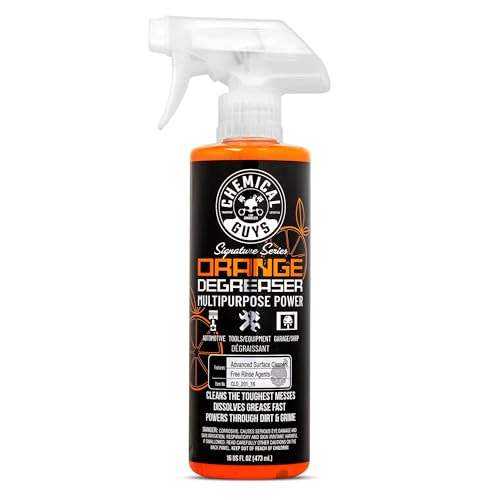
- Citrus-based heavy duty degreaser
- Use full strength or dilute for light jobs
- For engines, tires, undercarriages and tools
- 16 oz trigger spray bottle
Chemical Guys Signature Series Orange Degreaser is a citrus-based product in a 16 oz trigger bottle, aimed at detailers and enthusiasts. The listing describes a heavy duty formula that breaks down grease, oil, grime and dirt on engines, tires, undercarriages and tools. It is a trigger spray rather than an aerosol, so you control exactly how much goes on and where.
Its main strength is flexibility. You can dilute the concentrate for light cleaning, such as dust and road film on plastic covers, or use it full strength on oily brackets and lower engine areas. The maker’s directions call for spraying, scrubbing and rinsing, so plan on a detailing brush rather than a hands-off soak. That extra effort pays off with more control on delicate trim, and the same bottle can move on to wheel wells, tires and garage tools afterward.
Because it relies on scrubbing, it is a slower choice than an aerosol foam on a heavily caked engine. The 16 oz size also runs out quickly on a large truck engine at full strength. For owners who clean their engine bay a few times a year and like to work by hand, it fits well; for a single heavy cleanup, a stronger aerosol may save time.
View Chemical Guys Signature Series Orange Degreaser on Amazon

5. Meguiar’s Professional D108 Super Degreaser: 1 Gallon Fast-Acting Detailer Degreaser
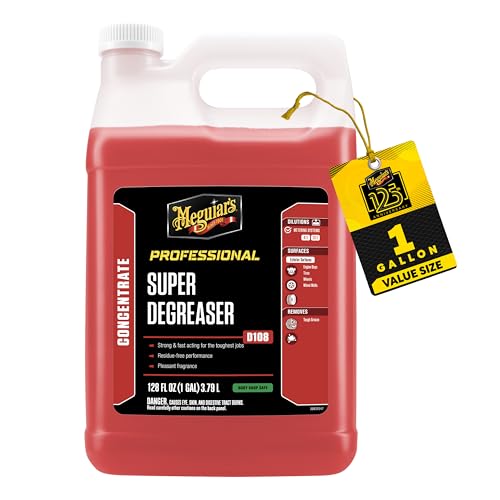
- Strong, fast-acting formula
- Residue-free performance
- For engines, tires, wheels and interior surfaces
- One-gallon professional jug
Meguiar’s Professional D108 Super Degreaser belongs to the brand’s Detailer line, the bulk products sold to professional detail shops. It comes in a one-gallon jug, and the listing describes a strong, fast-acting cleaner that breaks down grease, grime and dirt on engines, tires and wheels. That makes it a product you buy once and use across many jobs rather than a single can for one engine bay.
The listing highlights residue-free performance, which matters under the hood because leftover film tends to attract fresh dust. A pleasant fragrance also makes it easier to live with in a garage than some solvent aerosols. Meguiar’s lists engines, tires, wheels and interior surfaces in the title, so the same jug can clean a greasy engine cover in the morning and a set of tires in the afternoon. Read the label for how to apply or mix it on each surface before you start.
Like other gallon products, it needs a chemical-resistant trigger sprayer, and it calls for a brush and a rinse or wipe rather than a hands-off soak. Owners with one car who clean the engine once a year may find the jug more than they need. For anyone who details several vehicles, mowers or a boat, the bulk size is the practical advantage.
View Meguiar's D108 Super Degreaser on Amazon
Matching the Product to the Engine
Use this table to find the best engine degreaser for the job in front of you.
| Your engine bay | Product type | Picks that fit |
|---|---|---|
| Old, oily engine with little plastic | Solvent aerosol with a soak time | GUNK Original |
| Newer engine with plastic covers | Cover-safe foam or brush-on cleaner | GUNK Foamy, Griot’s Garage |
| Light film and post-winter salt | Diluted citrus or detailer degreaser | Chemical Guys Orange, Meguiar’s D108 |
| Several vehicles, mowers or tools | Gallon jug | Meguiar’s D108, Griot’s Garage |
If the label and the table disagree, follow the label, since the maker knows which plastics and rubber its formula can touch. Light salt film after winter rarely needs the strongest can on the shelf.

How to Degrease an Engine at Home
Even with the best engine degreaser, a careful DIY clean takes about an hour, most of it waiting. Work outdoors or with the garage door open, and keep aerosols away from pilot lights, heaters and sparks.
- Check the temperature: follow the can’s directions, and never spray a hot exhaust manifold or turbo.
- Protect the electrics: cover the alternator, fuse box, air intake and any open connectors with plastic bags.
- Gear up: wear safety glasses and chemical-resistant gloves.
- Apply bottom to top: this keeps streaks from forming as the product runs down.
- Let it work: give it the soak time on the label, then agitate stubborn spots with a soft brush.
- Rinse gently: use a garden hose at low pressure, not a pressure washer aimed at connectors.
- Dry it out: remove the covers, blow off standing water and let the engine idle to warm up.
Rinse water carries oil, so do the job where runoff will not go straight into a storm drain, and use a drip pan under very greasy spots. Spring, once the salt season ends, is a sensible time to clean, since salt left on brackets and hose clamps speeds up corrosion. A stuck fastener found while cleaning may need the best penetrating oil rather than more force.

For small parts off the car, a fast-drying brake cleaner spray often beats a rinse-off product.
When Oil Keeps Coming Back
The best engine degreaser removes the mess, but it does not stop the source. If a clean engine is wet again within a few weeks, something is leaking: often a valve cover gasket, an oil pan gasket, a filter that was not seated or an overfilled crankcase. Cleaning first actually helps, because fresh oil on a clean surface points straight at the leak.

Track how fast the level drops on the dipstick and top up with the right grade. Our page on the best synthetic oil explains what to look for on the bottle. When it is time for fresh oil, our oil change service in Creston is a good moment to have us look at where the oil is coming from. Small gasket leaks can sometimes be sealed with the right RTV gasket maker, but a leak onto exhaust parts should be checked promptly.
More Buying Guides
Frequently Asked Questions
What is the safest engine degreaser for a modern car?
Look for a product whose label says it is safe on plastic, rubber and paint, such as GUNK Foamy Engine Cleaner, or a brush-on cleaner like Griot’s Garage Engine Cleaner. Cover electrical parts and rinse gently, since water forced into connectors causes more trouble than the chemical.
Engine degreaser vs Dawn: can dish soap clean an engine?
Dish soap in warm water can lift light dust and fresh film, and it is gentle on plastics. It struggles with thick, baked-on oil, which is what a degreaser is formulated to break down. For a lightly dirty bay, soap and a soft brush may be enough.
Is there a best engine degreaser brand?
No single brand fits every job. GUNK is the long-standing name for heavy grime and plastic-safe foam, while Griot’s Garage, Chemical Guys and Meguiar’s make products popular with detailers. Pick by engine condition and surface safety first.
Can I pressure wash my engine after degreasing?
A garden hose at low pressure is the safer choice. A pressure washer can push water past seals into connectors, the alternator and the fuse box. If you do use one, keep the wand well back and never aim it at electrical parts.
Spotted fresh oil on a newly cleaned engine? Call 456 AutoFix at 616-279-3832 between 8am and 5pm on weekdays, or set up a visit through our contact page.
Busy until evening? Our after-hours drop-off lets you leave the car whenever suits you, and you will find us at 456 Carrier St NE, Grand Rapids.