
Most common Audi fault codes fall into a handful of families: misfires, lean mixture, cam timing, boost, catalyst, evaporative emissions and coolant temperature. Each code names the system that flagged a problem, rarely the exact failed part.
Here is what each one commonly points to and how soon it needs attention.
Quick answer
What do the most common Audi fault codes usually mean?
On Audis, misfire codes (P0300 to P0304) often point to coils, plugs or carbon buildup. Lean codes (P0171) usually mean a vacuum or PCV leak. P0016 can signal a timing chain problem, P0299 a boost leak, P0420 a tired catalytic converter, EVAP codes a vapor leak and P0128 a thermostat that opens too early.
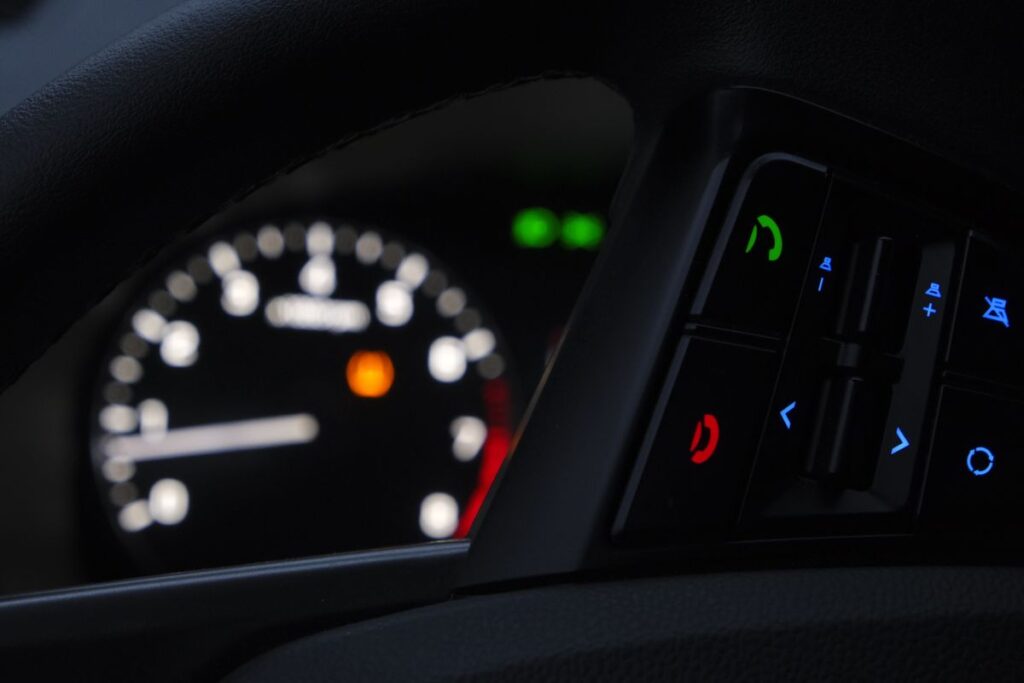
Common Audi Fault Codes and What They Usually Point To
When a sensor reading stays outside its expected range, the engine computer stores a code and turns on the check engine light. These families come up most on turbocharged Audi engines.
Misfire Codes: P0300 to P0304
P0300 means random or multiple misfires, while P0301 to P0304 name a single cylinder on a four-cylinder engine (V6 and V8 engines go higher). Common causes are a failing ignition coil, worn spark plugs or a leaking injector. On direct injection engines, intake valve carbon can also cause misfires.
Our guide to Audi carbon buildup symptoms on direct injection engines explains that last cause. If the light is blinking rather than steady, read what a flashing check engine light means before you drive further.
Lean Codes: P0171 and P0174
A lean code means unmetered air is getting in, so the computer keeps adding fuel. On Audis, the usual suspects are a failed PCV valve or diaphragm, a cracked vacuum hose or a leaking intake boot. A dirty mass airflow sensor or low fuel pressure can set the same code.
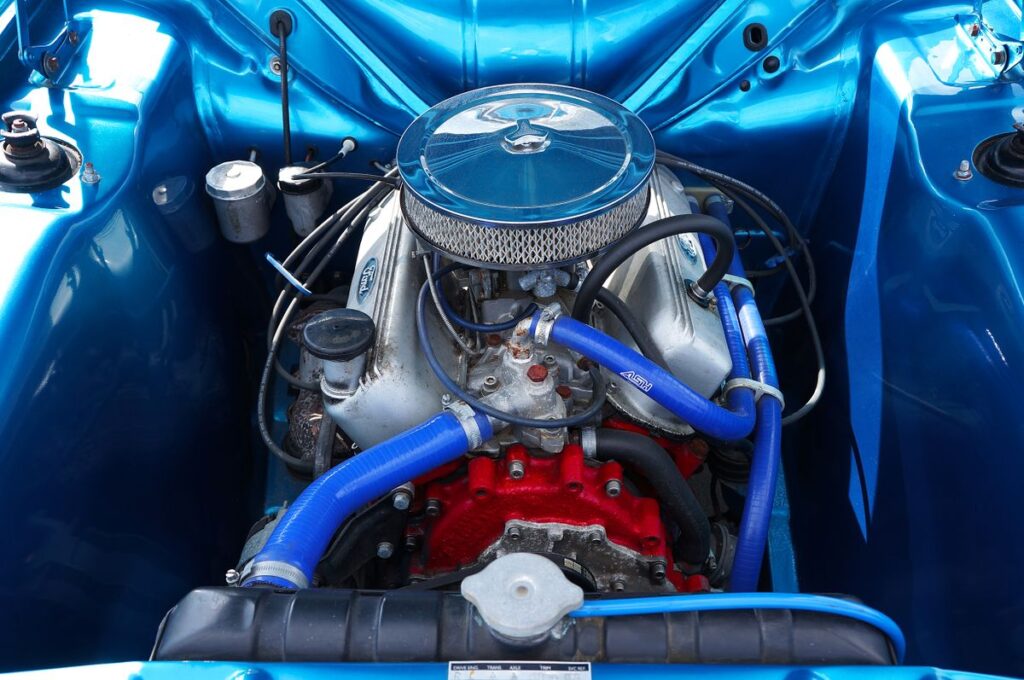
A smoke test, which fills the intake with visible vapor, is a common way to find the leak. Replacing an oxygen sensor for a lean code rarely fixes it.
Cam and Crank Correlation: P0016 and P0011
P0016 means the camshaft and crankshaft sensors disagree about engine timing. The Ross-Tech wiki entry for P0016 lists a timing issue or a camshaft adjuster problem as the possible causes. On many timing chain engines, a stretched chain or a worn tensioner is a common reason.
P0011 points to intake cam timing that is off target, often from low or dirty oil, a sticking adjuster valve or chain wear. See our guide to Audi timing chain tensioner symptoms for the warning signs.
Boost Codes: P0299
P0299 is an underboost code: the turbo is not making the pressure the computer asked for. On many Audi turbo engines, a torn diverter valve diaphragm, a split boost hose or intercooler pipe, or a worn wastegate linkage is often to blame. Rule out leaks before suspecting the turbo.
Catalyst Efficiency: P0420
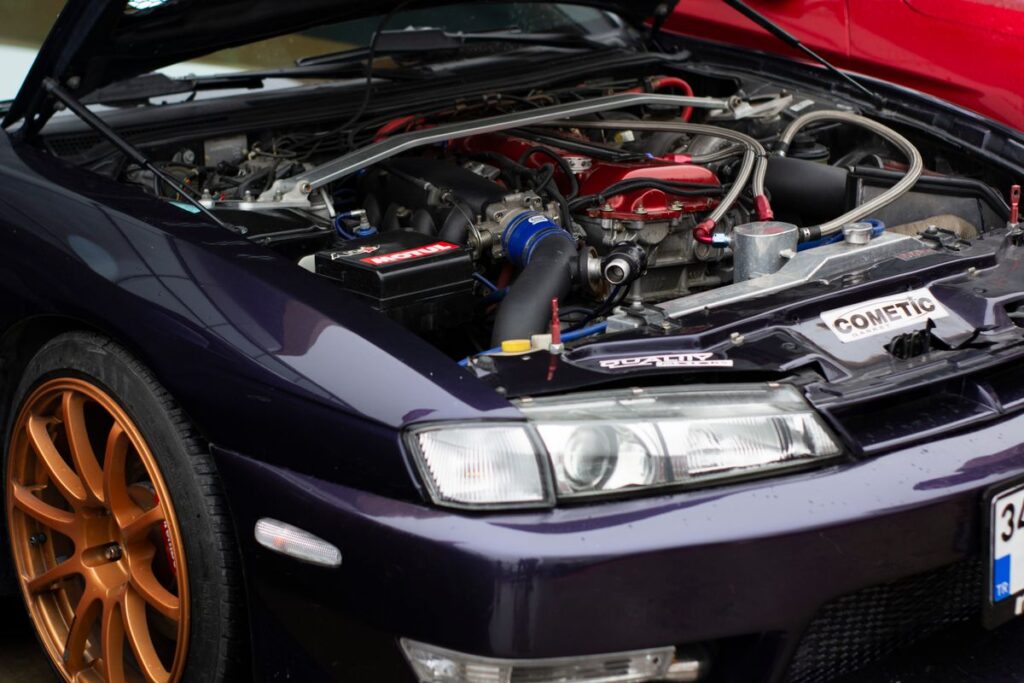
P0420 means the rear oxygen sensor sees the catalytic converter cleaning less than it should. Sometimes the converter is worn out, but often an earlier misfire damaged it, or a sensor or exhaust leak gives a false reading.
Our post on bad catalytic converter symptoms covers the other clues.
EVAP Codes: P0441, P0455 and P0456
The evaporative emissions system traps fuel vapor from the tank. P0455 and P0456 flag a large or small leak, and a loose or worn gas cap is the first thing to check. P0441 flags incorrect purge flow, commonly from a sticking purge valve or cracked line.
Coolant Temperature: P0128
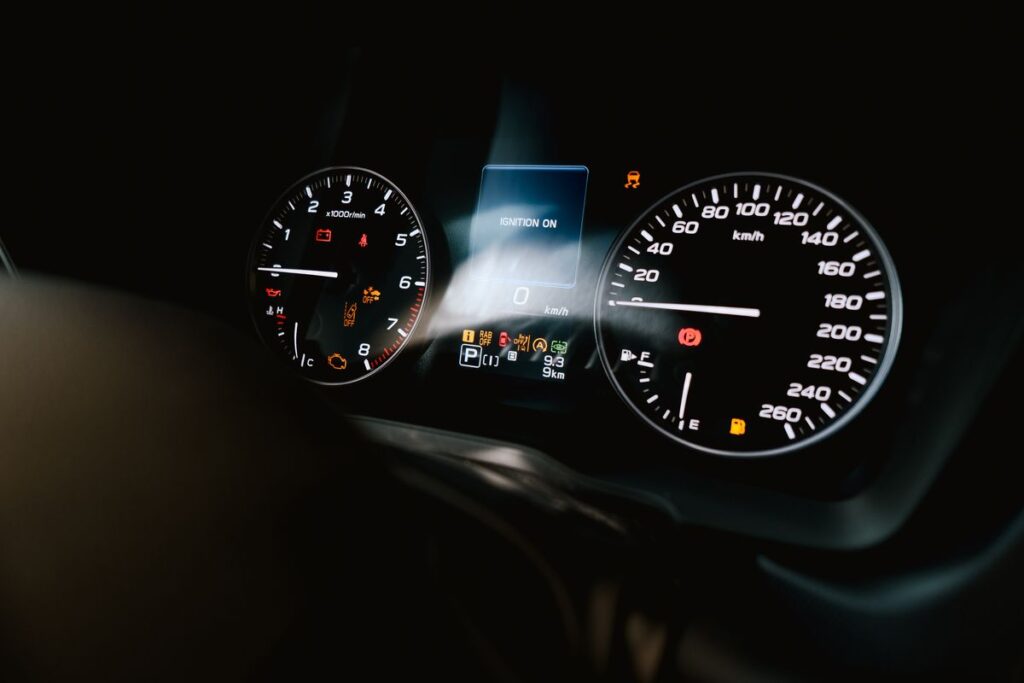
P0128 means the engine took too long to reach its normal operating temperature. A thermostat stuck partly open is the usual cause, with a faulty temperature sensor second. On many four-cylinder Audi engines, the thermostat shares a housing with the water pump, so a coolant leak nearby is worth checking too.
Our guide to Audi water pump failure symptoms explains that connection. In a West Michigan winter, a weak heater is often the first clue.
Why a Generic Code Reader Is Not Enough on an Audi
A basic reader shows the standard emissions codes stored in the engine computer. But an Audi has many more control modules, such as transmission, ABS, airbag and body electronics, and their faults often never appear on a generic tool.
Audi also uses its own fault numbers alongside the P-codes. For example, the Ross-Tech wiki lists P0016 as 16400, and P0171 commonly shows up as 16555. Audi-capable tools such as VCDS add manufacturer codes, freeze frame data and live readings like fuel trims and cam timing.

Those live readings separate a vacuum leak from a weak fuel pump, or a stretched chain from a sticking cam adjuster.
Code, Meaning and How Urgent at a Glance
Use this table as a rough guide. Treat any new symptom as a reason to move up a level.
| Code | What it usually points to | How urgent |
|---|---|---|
| P0300 to P0304 (light flashing) | Active misfire from a coil, plug, injector or carbon | High Stop driving and book a check |
| P0016 or P0011 | Cam timing off, often chain, tensioner or adjuster valve | High Book an inspection right away |
| P0300 to P0304 (light steady) | Occasional misfire, often an early coil or plug fault | Soon Get it checked within days |
| P0171 or P0174 | Vacuum or PCV leak, airflow sensor or fuel pressure | Soon Get it checked within days |
| P0299 | Boost leak, diverter valve or wastegate wear | Soon Get it checked within days |
| P0420 | Worn converter, or damage from misfires or lean running | Moderate Plan a diagnosis in the next few weeks |
| P0128 | Thermostat stuck open or a faulty temperature sensor | Moderate Plan a diagnosis in the next few weeks |
| P0441, P0455 or P0456 | Gas cap, purge valve or a vapor line leak | Low Fix at your next service visit |
A Code Is a Starting Point, Not a Diagnosis
A code tells you which test the computer failed, not why. P0420 can be a converter, a sensor or a leak. Buying parts on the code name alone often leaves you with a new part and the same light.
Clearing the code with a reader turns the light off, but it also erases the freeze frame data a technician would use. If the fault is still there, the code usually returns within a few drives. Write the code down and note how the car felt when the light came on.

If your Audi feels normal with the light on, our guide on a check engine light that is on while the car runs fine explains how to judge whether it can wait.
Getting Audi Codes Diagnosed Properly
Hendrick Hoffman, our owner and head mechanic, is Audi factory trained, with 8 years’ focus on Audi and foreign cars. Our Audi repair in Grand Rapids covers check engine lights, timing chains, electronics and factory scheduled maintenance.
For any make, our check engine light diagnostic service starts with the code and then tests the system behind it before recommending a repair.
Frequently Asked Questions
Is P0171 on an Audi always a vacuum leak?
Not always, but often. A failed PCV valve or a cracked hose is a common cause on Audis. A dirty mass airflow sensor or low fuel pressure can set the same code.
Which coil is bad if I have a P0302 code?
P0302 means a misfire in cylinder 2, but the coil is only one possible cause. A common test is to swap the coil with another cylinder and see whether the misfire follows it. If it does not, the plug or injector is the next suspect.
Can I clear an Audi fault code myself?
Yes, most readers can clear engine codes. Clearing erases the freeze frame data, though, and the code usually comes back if the fault remains. Write the code down first.
Will a generic OBD2 scanner read all the codes on my Audi?
It reads the standard engine and emissions codes. It usually cannot see faults stored in other modules such as the transmission, ABS or airbag systems, and it may not describe Audi-specific codes.
Need Audi repair in Grand Rapids? Call 456 AutoFix at 616-279-3832, Monday to Friday 8am to 5pm, or book through our contact page.
Can’t make it during the day? Use our after-hours drop-off. We’re at 456 Carrier St NE in Creston.