
As an Amazon Associate, 456 AutoFix earns from qualifying purchases. Product links below go to Amazon, where you can confirm the right part for your vehicle.
A steady hum from the back of a Hyundai Sonata that rises with speed and changes when you drift through a long curve usually points to a rear hub bearing. Look up the replacement and two names sit near the top of almost every parts list. This skf vs moog hub assembly comparison explains who stands behind each box and which one makes more sense for the car in your driveway.
To keep the comparison fair, we fix one position: the rear hub of the 2011-2014 Sonata, a part the 2011-2015 Kia Optima shares. We set SKF BR930845 against MOOG 512437 and add Timken HA590441, whose listing cross-references both numbers. If you drive something else, our guide to wheel hub assembly brands and the part numbers behind them covers far more vehicles.
Quick answer
Is SKF or MOOG the better rear hub for a Sonata?
Both are established OE-style brands, and on the 2011-2014 Sonata rear they replace the same Hyundai part. Pick SKF if you want a bearing specialist’s unit with instructions linked from the box. Pick MOOG if you want quad lip sealing and printed Hyundai and Kia model coverage. Confirm your trim and drivetrain first.
Our Quick Picks
SKF's BR930845 and MOOG's 512437 for the same 2011-2014 Sonata rear position, plus Timken's HA590441 as a closely related third pick whose listing cross-references both. All three are reviewed in full below.

SKF BR930845
A bearing specialist's rear unit with install instructions linked from the box.

MOOG 512437
A chassis brand's sealed hub with the widest printed model list of the three.
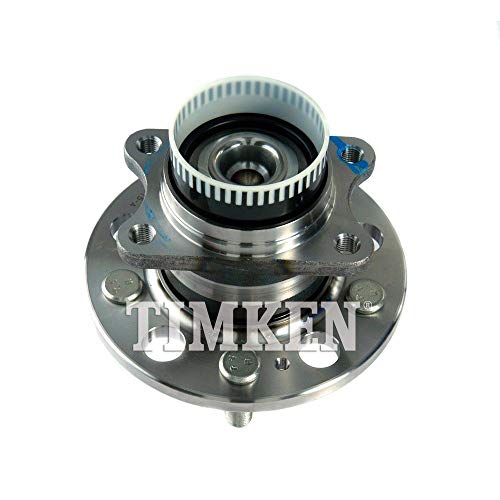
Timken HA590441
The third option whose listing ties all three part numbers together.
A Bearing Specialist Against a Chassis Parts Brand
SKF started as a Swedish ball bearing company, and its car business has recently taken a new shape. The SKF Vertevo site describes a standalone automotive bearing company spun off from SKF that traces its car work back to 1907. It says it engineers bearings alongside vehicle makers and supplies the aftermarket with replacement parts, while the hubs on Amazon still carry the familiar SKF name and BR part numbers.
MOOG approaches the job from the other end of the car. It is a DRiV brand best known for ball joints, tie rods and control arms, and its hub listings sit in that same steering and suspension catalog. The 512437 listing leans on features a mechanic can see, such as the quad lip seal, secure studs and a rust resistant hub.
Neither company promises a single country of origin for every hub. Boxes from different factories turn up under both names, so read the label when the part arrives if origin matters to you. For this rear corner, the more useful question is what each listing actually promises.
How the Sonata Rear Hub Comes Apart
On a front-drive Sonata, nothing drives the rear wheels, so the rear hub is a sealed, bolt-on unit. The bearing, the wheel flange and its five studs come as one assembly that bolts to the rear knuckle behind the brake rotor. When the bearing wears, you swap the whole unit instead of pressing a new bearing into place.
That makes the rear the friendlier end of the car for a home mechanic. You remove the wheel, caliper, bracket and rotor, then the hub bolts, and the new unit drops onto the same face. Because there is no drive axle through it, there is no axle nut to set, only hub bolts that go back to the torque figure in the service manual.
Two details deserve a look before you order. Some Hyundai and Kia rear hubs carry the wheel speed sensor in the unit and others use a separate sensor, and none of the three listings below spells out which. Hold the new hub next to the old one, check for a matching connector or sensor bore, and confirm your trim in the fit checker.
SKF vs MOOG Hub Assembly for the Sonata Rear: Three Units Compared
Each unit below is listed as a rear hub for Hyundai and Kia models that include the 2011-2014 Sonata, and Timken’s listing ties all three to Hyundai part 52730-3S200. Coverage of the Tucson, Sportage and other models varies from listing to listing, and all-wheel-drive versions may use a different hub. Enter your year, model, trim and drivetrain before you buy.
SKF BR930845: Rear Wheel Hub Bearing Assembly for Hyundai 2010-2017 and Kia 2010-2016
- Rear wheel hub bearing assembly, one complete unit
- Listed for Hyundai 2010-2017 and Kia 2010-2016
- QR code on the box links to SKF instructions
- Stated to meet or exceed OE specifications
BR930845 is SKF’s rear wheel hub bearing assembly for a group of Hyundai and Kia models, and its title gives the coverage as Hyundai 2010-2017 and Kia 2010-2016. It is the only one of the three units here that names the rear position right in its title. The Timken HA590441 listing cross-references this number to Hyundai part 52730-3S200, which places it on the back of the 2011-2014 Sonata.
SKF describes the box as holding all the components needed for a complete wheel bearing replacement, so the bearing, flange and studs arrive as one sealed unit. A QR code on the box label links to SKF’s installation instructions and more detailed technical information for the part. The listing says the hub meets or exceeds OE specifications, and it asks for installation by a knowledgeable mechanic using the correct tools and the vehicle’s own mounting instructions.
This unit suits a Sonata or Optima owner who wants a bearing maker’s part and likes having the procedure close at hand during the job. It suits less well a buyer who wants every model printed on the listing, since the API data names makes and years only. Run your exact trim and drivetrain through Amazon’s fit checker before you order.

MOOG 512437: Wheel Bearing and Hub Assembly with Quad Lip Seal for Hyundai Sonata and Kia Optima
- Lists 2010-2014 Sonata and 2011-2015 Optima
- Sealed bearing with a quad lip seal
- Secure studs and a rust resistant hub
- Also lists Tucson, Sportage, Azera, Cadenza, Rondo
The 512437 is MOOG’s wheel bearing and hub assembly for this Hyundai and Kia family. Its compatibility line names the 2010-2014 Hyundai Sonata and the 2011-2015 Kia Optima, along with the Sportage, Tucson, Azera, Cadenza and Rondo for set years. That is the longest printed model list of the three units here, and Timken’s cross-reference ties this number to the same rear Hyundai part as SKF’s BR930845.
MOOG describes a sealed bearing assembly built to run quietly, with a quad lip seal meant to keep out moisture and road debris. The hub comes with secure studs and a rust resistant finish, and MOOG pitches it as an easy install kit with extended service life. One feature bullet on the listing reads like generic text about front hubs for other makes, so rely on the compatibility line rather than that bullet when you check the position.
This hub suits a driver who sees heavy winter salt and wants the sealing described in plain terms. It also fits a shop or owner already using MOOG steering and suspension parts. It suits less well anyone with an all-wheel-drive Tucson or Sportage, which may need a different rear hub, so confirm drivetrain in the fit checker.
Timken HA590441: Preset, Pre-Greased and Pre-Sealed Rear Hub Assembly, Replaces 527303S200
- Preset, pre-greased and pre-sealed hub unit
- Replaces Hyundai/Kia 527303S200
- Cross-references SKF BR930845 and MOOG 512437
- Sold as an OE-grade replacement
HA590441 is Timken’s hub assembly for the same rear position, and it earns its place here because its title lists the interchange. It replaces Hyundai and Kia part 527303S200, SKF BR930845 and MOOG 512437, plus 101901 and H512437, so it confirms the SKF and MOOG units are built for one application. Timken calls it an OE-grade replacement. It is the least detailed listing of the three, but the most useful one for checking fitment.
The listing keeps its features brief. It describes the unit as preset, pre-greased and pre-sealed, which means the bearing arrives adjusted and lubricated, with seals in place, and needs no packing or setting. Like the other two, it is a complete assembly with the flange and studs, so on the Sonata rear it bolts onto the knuckle in one piece. The listing does not mention instructions, seal design or a printed model list.
This unit suits a buyer who works from OE part numbers and wants a third established bearing maker to compare. It suits less well someone who wants model years spelled out on the listing, because Timken leaves that to the cross-reference and Amazon’s fit checker. Confirm year, model, trim and drivetrain there before buying.
View Timken HA590441 on Amazon

What Each Listing Commits To
The table compares the three units using only what their Amazon listings state. Blank spots in a listing show up as not stated in the table, with no guesswork added.
| Point | SKF BR930845 | MOOG 512437 | Timken HA590441 |
|---|---|---|---|
| Position named | Rear, in the title | Not stated clearly | By Hyundai rear number 52730-3S200 |
| Models listed | Hyundai 2010-2017, Kia 2010-2016 | Sonata 2010-2014, Optima 2011-2015 and five more | By cross-reference only |
| Sealing detail | Not described | Quad lip seal | Pre-sealed, pre-greased |
| Install help | QR code to SKF instructions | Easy install hub kit | Not mentioned |
| Quality claim | Meets or exceeds OE specifications | Extended service life | OE-grade replacement |
No column wins outright. SKF gives the clearest position in its title plus linked instructions, MOOG lists the most models by name and explains its sealing, and Timken’s short listing is the one that proves the three parts interchange.

If you like working from printed instructions, SKF’s QR-linked install sheet is a practical bonus. If your Sonata lives on salted roads and you want the seal described in detail, MOOG’s quad lip design is the easier sell. Whichever box you choose, buy a matching unit for the other side if it hums too.
Brine, Potholes and the Back of a Midsize Sedan
Grand Rapids winters are hard on rear hubs in a way people tend to underestimate. Spray from the front tires carries brine straight into the rear knuckles, and the seal is the only thing keeping it out of the bearing. Once water gets in, the grease breaks down and the hum starts.
Spring potholes add the other half of the damage. A hard hit on a cold morning can dent a bearing race, and the noise may not appear until weeks later. Our article on how long wheel bearings last explains why mileage alone rarely predicts when a hub will fail.

Rust also shapes the repair itself. Hub bolts on a high-mileage Sonata can seize in the knuckle, and a rear hub flange can fuse to the knuckle face, so soak everything with penetrating oil the night before. That practical reality matters more in the skf vs moog hub assembly decision than any small difference in the listings.
When the Hub Job Should Go to a Shop
Make sure the noise really is a bearing before you buy anything. Cupped tires and worn rear pads can make a similar sound, and our guide to wheel bearing noise symptoms shows how to tell them apart. If the ABS or traction light came on with the hum, read our notes on an ABS light that stays on, since a failing hub can upset the speed signal.

The front wheel bearings on many cars in this class press into the knuckle rather than bolting on, and that job calls for a press or a proper tool kit. Our roundup of wheel bearing press kits for home garages explains what that work involves. If the bolts will not budge or you would rather not tackle it, our team handles wheel bearing replacement in Grand Rapids, and owner Hendrick Hoffman holds ASE and State of Michigan certification in steering and suspension.
More Buying Guides
Frequently Asked Questions
Is SKF or MOOG better for wheel hubs?
Neither brand is clearly better across the board. Both sell OE-style replacement hubs, and on the 2011-2014 Sonata rear their parts cross-reference to the same Hyundai number. Choose by which listing confirms your exact model, trim and drivetrain, and by whether you value SKF’s instructions or MOOG’s sealing details.
Who makes SKF hub assemblies now?
SKF’s automotive bearing business now operates as SKF Vertevo, a standalone company spun off from SKF. It traces its automotive work to 1907, and the replacement hubs on Amazon are still sold under the SKF name with BR part numbers.
Should I replace both rear hubs on my Sonata?
Only the noisy one has to go, but the other side has seen the same miles and the same salt. If it shows any play or roughness when you spin it by hand, replacing both now saves a second teardown later.
Do I need a press to replace a Sonata rear hub?
No, the rear hub on a front-drive Sonata is a bolt-on unit, so ordinary hand tools and a torque wrench do the job. Seized bolts or a hub rusted to the knuckle can still turn it into a longer job than expected.
Rear of the car humming louder every week on the highway? Call 456 AutoFix at 616-279-3832, Monday to Friday from 8am to 5pm, or tell us about the noise through our contact page.
Can’t leave work in time? Our after-hours drop-off at 456 Carrier St NE in Creston means the Sonata can be waiting for us when we open.