As an Amazon Associate, 456 AutoFix earns from qualifying purchases. Product links below go to Amazon, where you can confirm the right jump starter for your vehicle.
A jump pack that works fine in October can sit silent on a January morning in Grand Rapids. The best jump starter for cold weather still delivers current when the pack itself is cold, as long as you keep it charged and ready.
Below are six packs with makers’ cold ratings, lithium vs lead-acid, storage tips and safe winter jump steps.
Quick answer
What is the best jump starter for cold weather?
Pick a pack whose maker rates it well below zero. Lithium packs with a pre-heat feature, such as the GOOLOO GT4000 or HULKMAN Alpha 85S, are compact choices. A lead-acid box like the Clore Jump-N-Carry JNC660 is heavier but tough in deep cold. Store any pack indoors and keep it charged.
Our Quick Picks
Three packs for a Michigan winter: a lithium pack with pre-heat, a lead-acid jump box and a compact lithium pack.

GOOLOO GT4000 Arctic
Warms its own cells before the jump; GOOLOO rates it to -40°F.
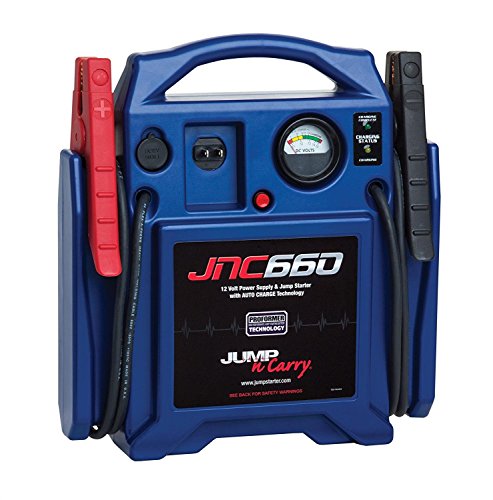
Clore Jump-N-Carry JNC660
Heavy cables and clamps; Clore says it keeps working at -30°F.

NOCO Boost GB40
Glovebox-sized pack with thermal protection, rated to -4°F.
Why Cold Weather Is Hard on Jump Starters
Every battery slows down in the cold, because the chemical reaction that makes current gets sluggish. Clore Automotive puts it simply: batteries become less powerful as the mercury drops, whether they are lead-acid or lithium. Thick, cold oil also makes the starter work harder.
Lithium packs add one more catch. Most have thermal sensors that shut them off outside a set range, and many will not recharge below freezing. Some makers add a pre-heat mode that warms the cells before the jump.
There is no common industry test for jump pack cold performance, so the temperatures below are makers’ claims, not guarantees.
Best Jump Starter for Cold Weather: The Picks in Detail
We chose these packs on battery type, published cold rating and engine coverage. Check the engine rating against your vehicle before you buy.
1. GOOLOO GT4000 Arctic: 4000A Jump Starter with -40°F Pre-Heat
- 4000A peak, up to 12L gas and 10L diesel
- Pre-heat rated by GOOLOO to -40°F
- 100W two-way USB-C fast charging
- Up to 24 months standby when fully charged
The GOOLOO GT4000 Arctic is a lithium jump starter rated at 4,000 peak amps for 12V vehicles with gas engines up to 12L and diesels up to 10L. Its main cold-weather feature is automatic pre-heating. GOOLOO says the pack warms its own cells in extreme cold and claims reliable starts down to -40°F, and it advises letting the warm-up finish before you crank.
Watch the model name when you buy. GOOLOO’s FAQ says the similar GT4000S has no pre-heat, and that pre-heating is the only difference between the two. The GT4000 also has a BOOST mode for very low batteries, ten built-in protections including spark-proof and reverse polarity, and a flashlight with SOS mode. With the included 100W car charger, GOOLOO says a full recharge takes about 1.2 hours.
A fully charged unit can sit on standby for up to 24 months, though GOOLOO suggests a recharge every six months. That suits a driver who keeps one pack for a pickup or a larger SUV through a West Michigan winter. It is bigger than a glovebox pack, and like any jump starter it should never be used on a frozen battery.
View GOOLOO GT4000 Arctic on Amazon
2. HULKMAN Alpha 85S: 2000A Jump Starter with Pre-Heat and IP65 Case

- 2000A peak, up to 8.5L gas and 6.0L diesel
- Automatic pre-heat, rated by HULKMAN to -40°F
- IP65 water and dust resistant shell
- 65W charging, 0 to 80% in about 1 hour
The HULKMAN Alpha 85S is a 2,000 peak amp lithium pack with a 74Wh (20,000mAh) battery, rated for gas engines up to 8.5L and diesels up to 6.0L. HULKMAN says its pre-heat switches on automatically below 32°F and warms the battery, and it claims jump starts down to -40°F. The listing quotes up to 60 starts on a single charge.
A 3.3-inch screen shows battery level, status and error messages, which helps when you are working with cold fingers in the dark. The shell carries an IP65 rating against rain and dust, and the pack has ten layers of protection, including spark-proof and reverse-polarity safeguards. With the included 65W wall charger, HULKMAN says it reaches 80% in about an hour and full charge in 90 minutes.
It also works as a power bank, with USB-A, USB-C and a 12V DC output, plus a five-mode flashlight. It suits most cars, crossovers and half-ton pickups. HULKMAN recommends storing the pack between 32°F and 113°F, so on a bitter Grand Rapids night it belongs in the house rather than the trunk. Larger diesels will want a pack rated for more displacement.
View HULKMAN Alpha 85S on Amazon
3. Clore Jump-N-Carry JNC660: 1700A Lead-Acid Jump Box with #2 AWG Cables
- 1700 peak amps, 425 cranking amps
- 22Ah Clore PROFORMER lead-acid battery
- 46-inch heavy-duty #2 AWG cables
- Built-in voltmeter and 12V DC outlet
The Clore Jump-N-Carry JNC660 is a classic lead-acid jump box rather than a lithium pack. It uses a 22Ah Clore PROFORMER battery built for jump starting and is rated at 1,700 peak amps and 425 cranking amps. Clore publishes the cranking figure, which is a more useful guide than peak amps alone. Clore says the JNC660 keeps working at -30°F.
The 46-inch #2 AWG cables and heavy clamps reach batteries that sit deep in an engine bay. A built-in voltmeter shows the charge level of the internal battery, and a 12V DC outlet can power accessories. It has a built-in automatic charger, so you can keep it plugged in between uses and it stays ready for the next cold morning.
At about 18 pounds it is no glovebox pack. It suits a home garage, a farm or anywhere cars get jumped often through a long winter, and it does not have the cold lockout that many lithium packs use. The tradeoff is upkeep: lead-acid loses charge in storage, so it needs regular recharging, and it should be kept topped up rather than left flat in an unheated shed.
View Clore Jump-N-Carry JNC660 on Amazon
4. NOCO Boost GB150: 3000A Lithium Jump Starter for 9.0L Gas Engines

- 3000A peak, up to 9.0L gas and 7.0L diesel
- Up to 80 starts per charge
- Spark-proof, reverse polarity protection
- IP65 housing and 500-lumen LED light
The NOCO Boost GB150 is a 3,000 peak amp lithium jump starter rated for gas engines up to 9.0L and diesels up to 7.0L. NOCO quotes up to 80 starts per charge. Cold engines with thick oil make the starter work harder, so extra capacity is useful on a large V8 or diesel on a January morning.
Like the rest of the Boost line, it uses NOCO’s UltraSafe design with spark-proof and reverse polarity protection, so a wrong connection will not spark. The housing is IP65 rated with rubber over-molding, and the 500-lumen LED has seven modes, including SOS and strobe. It doubles as a power bank for phones and recharges over USB-C in about seven hours.
There is no pre-heat. NOCO lists an operating range of -4°F to 122°F for its Boost packs, and thermal sensors stop them working outside it, while charging needs 32°F or warmer. In deep cold, warm the pack indoors or in the cab first. At 7.5 pounds it suits a truck more than a small car, and owners of compact engines can save weight with a smaller model.
View NOCO Boost GB150 on Amazon
5. NOCO Boost GB70: 2000A Lithium Jump Starter with 400-Lumen Light

- 2000A peak, up to 8.0L gas and 6.0L diesel
- Up to 40 starts per charge
- IP65 housing with rubber over-molding
- 400-lumen LED with 7 modes
The NOCO Boost GB70 sits between the compact GB40 and the GB150. It delivers 2,000 peak amps and is rated for gas engines up to 8.0L and diesels up to 6.0L, with up to 40 starts per charge. That covers most V6 and V8 SUVs, minivans and half-ton pickups, which ask more of a pack when the engine is cold.
It has NOCO’s UltraSafe spark-proof and reverse polarity protection, an IP65 rated housing with rubber over-molding, and high-conductivity clamps. The 400-lumen LED has seven modes, including SOS and strobe, which helps on a dark winter evening. It also works as a power bank for phones and tablets and recharges in about six hours.
The GB70 has no pre-heat. NOCO lists a -4°F to 122°F operating range for its Boost packs, with thermal sensors that stop them outside it, so on sub-zero mornings it works best if it spent the night indoors. At 5.0 pounds it still fits under a seat or in a door pocket of a larger vehicle. Big diesels and heavy-duty trucks are better served by the larger GB150.
View NOCO Boost GB70 on Amazon
6. NOCO Boost GB40: 1000A Compact Lithium Jump Starter
- 1000A peak, up to 6.0L gas and 3.0L diesel
- Compact 2.5 lb, glovebox size
- Spark-proof, reverse polarity protection
- IP65 housing, recharges in about 3 hours
The NOCO Boost GB40 is NOCO’s compact lithium jump starter. It delivers 1,000 peak amps for gas engines up to 6.0L and diesels up to 3.0L, with up to 20 starts per charge. At about 2.5 pounds it is sized for a glovebox or an emergency kit, which makes it easy to carry in and out of the house.
It uses NOCO’s UltraSafe spark-proof and reverse polarity protection, so clamps connected the wrong way will not spark. The housing is IP65 rated, the 100-lumen LED has seven modes, and a built-in power bank can top up a phone. NOCO says it recharges in about three hours over USB-C.
Cold is the GB40’s limit. NOCO lists an operating range of -4°F to 122°F, and thermal sensors stop the pack working outside that range, with no pre-heat to help, so it has the warmest cold limit of the packs here. It suits a sedan or small crossover if you bring it inside on bitter nights and carry it with you in the morning. It is not meant for large trucks or big diesel engines.
View NOCO Boost GB40 on Amazon
Lithium vs Lead-Acid Jump Boxes in Winter
Both types lose output in the cold. The choice is convenience against weight and staying power.
| Factor | Lithium pack | Lead-acid jump box |
|---|---|---|
| Size and weight | Fits a glovebox, a few pounds | Large, often 15 to 20 pounds |
| Deep cold | May lock out below its rated range unless it has pre-heat | Keeps working, with reduced output |
| Holding a charge | Holds charge for months | Needs regular recharging |
Keep the Pack in the House, Not the Car
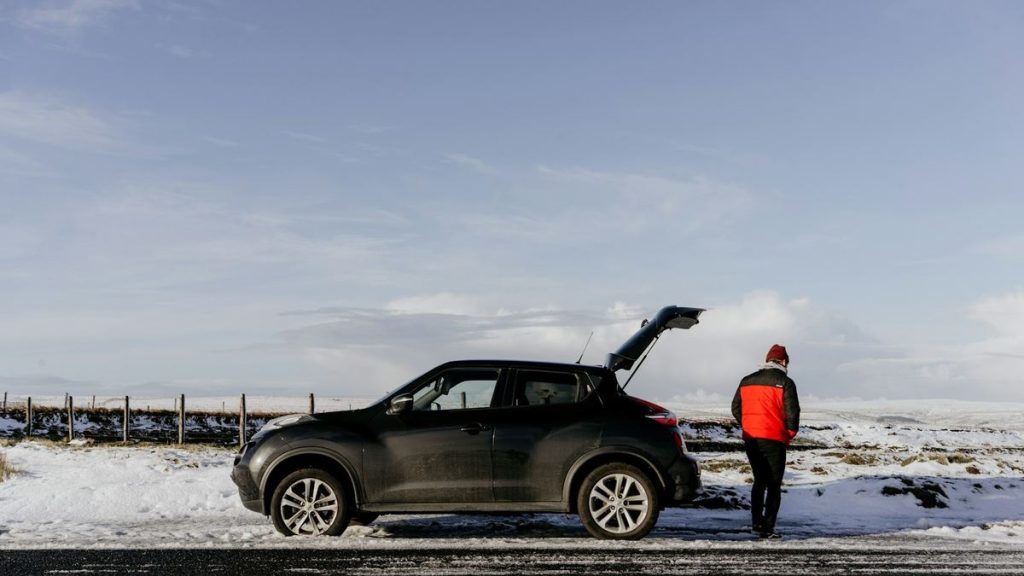
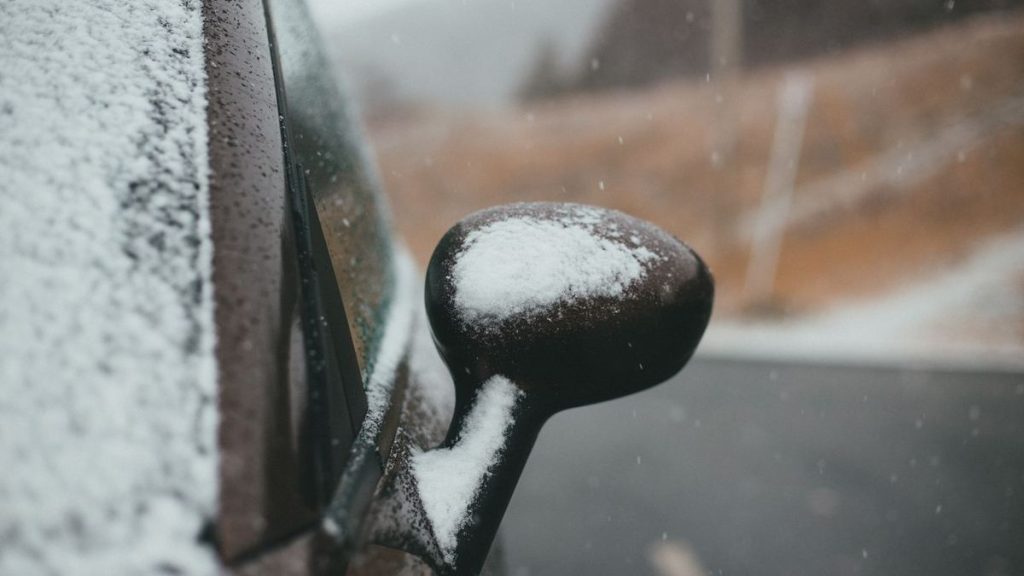
A pack left in a frozen trunk may refuse to work or recharge right when you need it. On cold nights, bring a lithium pack inside and take it with you in the morning.
Recharge it monthly and after every use, in a warm room. Better still, keep your car battery healthy in the first place with one of the picks in our guide to the best car battery charger for winter. Our winter car maintenance checklist covers the rest.
How to Jump Start Safely in the Cold
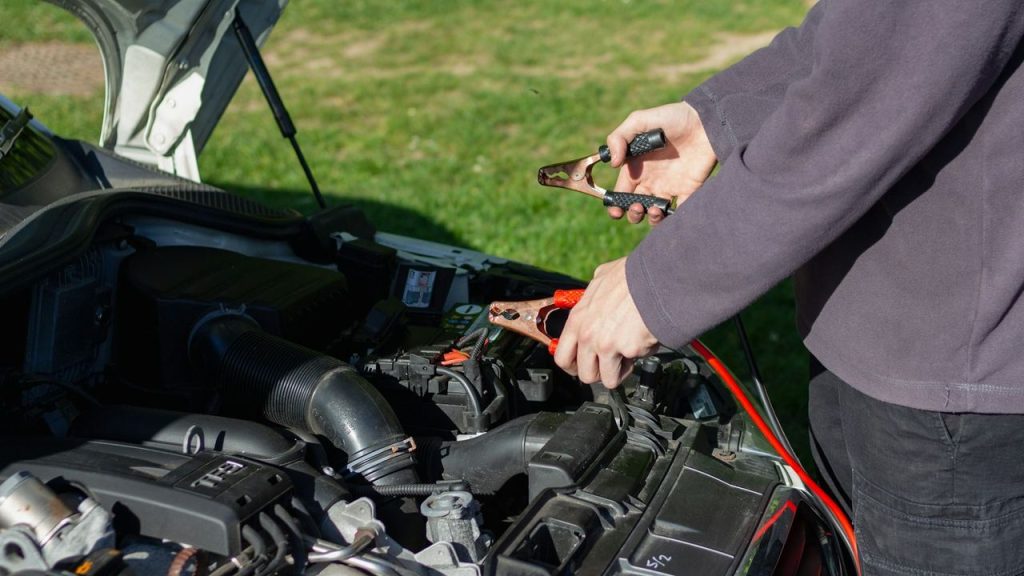
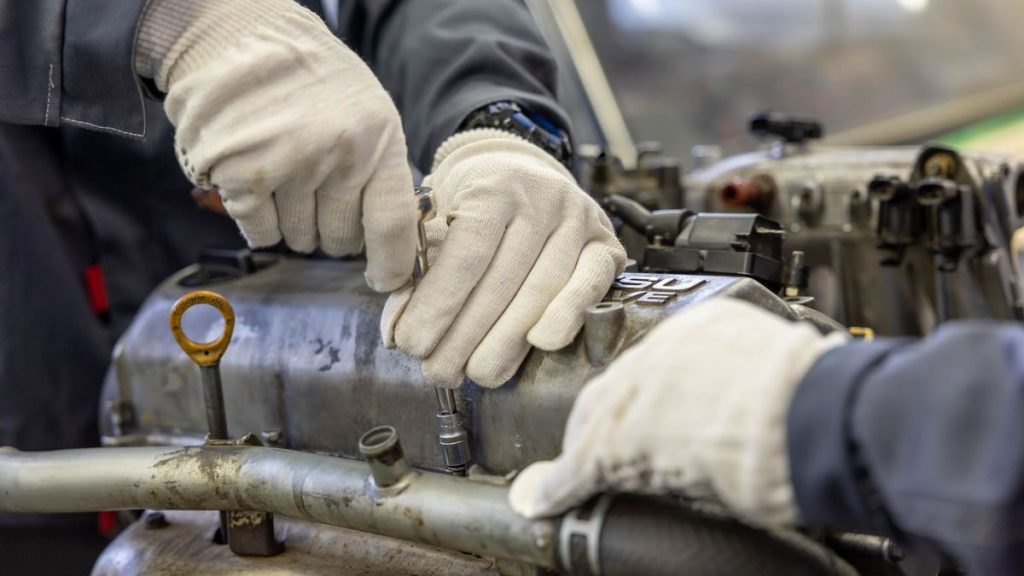
Never jump a frozen battery: it can crack or burst. If the case bulges, is cracked or shows ice, have it replaced.
- Gear up: wear safety glasses and gloves, and read the pack manual.
- Switch off: ignition, lights and blower off, pack off while connecting.
- Red first: clamp red to the battery’s positive post.
- Black to ground: clamp black to bare metal on the engine or chassis, away from the battery.
- Wait for pre-heat: turn the pack on and let any warm-up finish before you crank.
- Crank briefly: keep each attempt short and rest between tries.
- Disconnect in reverse: black first, then red, and let the engine run.
Clore also advises taking care not to short the battery posts, and watching your position if the car is near traffic.
When a Jump Is Not the Real Fix
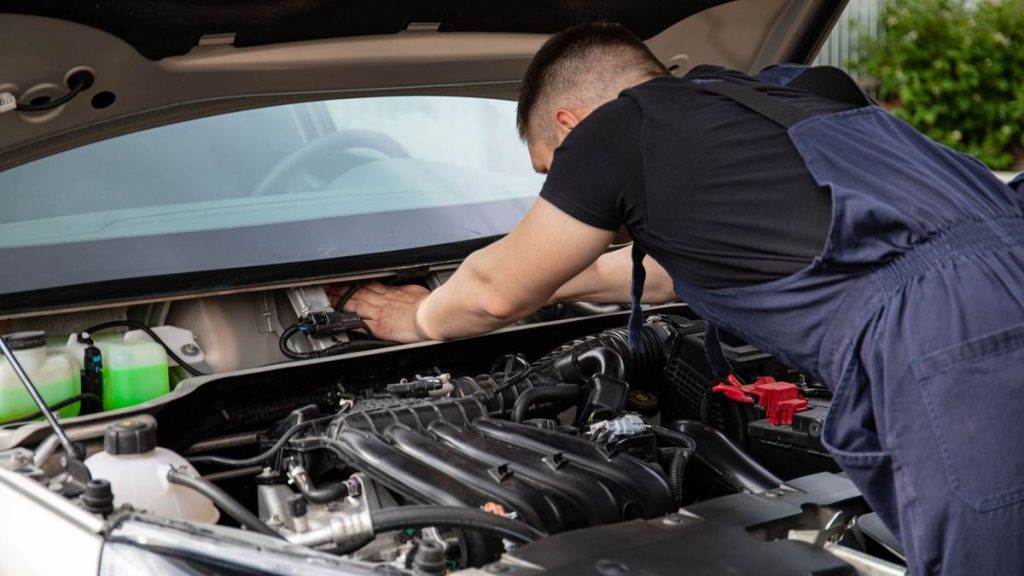
A jump gets you moving, but it does not explain why the battery went flat. AAA advises having the battery and charging system tested, especially once the battery is over three years old.
Our guide on a car not starting in cold weather walks through the common causes. A battery that is dying overnight often points to a parasitic drain. A single click with full power on the dash fits the bad starter symptoms no pack can solve.
Tracing drains and repairing wiring is beyond most driveways, so our car electrical repair in Grand Rapids handles it for foreign and domestic vehicles.
More Buying Guides
Frequently Asked Questions
Do lithium jump starters work in cold weather?
Yes, within the range the maker rates them for. Many lithium packs shut off a little below zero to protect their cells, while models with pre-heat claim to work in much deeper cold. Keeping the pack warm before use helps either way.
Can I leave a jump starter in my car in winter?
It is better not to. A pack stored in a frozen car may refuse to work or recharge, and several makers list storage limits that a Michigan winter goes past. Bring it inside on cold nights and take it with you.
Is lead-acid or lithium better for cold weather?
A lead-acid jump box keeps working in deep cold but is heavy and needs regular charging. A lithium pack is small and holds its charge, but it needs a pre-heat feature or a warm start to work well far below freezing.
Can you jump start a frozen car battery?
No. Jumping or charging a frozen battery can crack or burst it. If the case is swollen, cracked or iced, replace the battery instead.
Car still struggling to start after a jump in Grand Rapids? Call 456 AutoFix at 616-279-3832, Monday to Friday 8am to 5pm, or book a starting and charging check through our contact page.
Can’t make it during the day? Use our after-hours drop-off. We’re at 456 Carrier St NE in Creston.