
As an Amazon Associate, 456 AutoFix earns from qualifying purchases. Product links below go to Amazon, where you can confirm the right part for your vehicle.
Rusty, muddy coolant and a heater that never quite gets hot are the usual reasons people start shopping for a cooling system cleaner. The best radiator flush for your car depends on what is actually in the system: light film, heavy rust, or gelled coolant, and on whether you have a way to push clean water through it afterward.
This guide covers when a flush is worth doing, how a cleaner differs from the rinse itself, and five products that cover both jobs. Picking the coolant that goes back in is its own decision, and our coolant brand buying guide walks through the formulas.
Quick answer
Which radiator flush should you buy?
For routine cleaning before fresh coolant, Prestone AS105 Total Cooling System Cleaner is the simple choice. For a rusty older system, CRC Thermocure soaks rust loose over hours or days. Add a Prestone Flush ‘N Fill kit or a Lisle 60800 flush gun so you can rinse the system until the water runs clear.
Our Quick Picks
Three quick picks for the main flush jobs: a routine clean, a rusty older system and an easier rinse. All five are reviewed below.

Prestone AS105 Cooling System Cleaner
A straightforward cleaner to run before fresh coolant goes in.

CRC Thermocure
A long-soak treatment for rusty, brown coolant in older engines.

Prestone Flush 'N Fill Kit
Lets you backflush with a garden hose instead of pulling hoses.
When a Flush Helps, and When It Will Not
Coolant carries additives that protect metal, and those additives wear out with time and heat. Once they are spent, rust and scale start to form inside the engine block, radiator tubes and heater core. A chemical cleaner loosens that buildup so the rinse can carry it out before new coolant goes in.
A flush makes sense when the old coolant looks brown, rusty or sludgy, when the heater output has faded, or when you are switching coolant types and want the old fluid fully out. If the coolant still looks clean and the right color, a plain drain and refill with the coolant your owner’s manual calls for is often all the car needs.
A flush will not fix a failing water pump, a stuck thermostat or a cracked radiator. If the coolant looks like chocolate milk or there is a tan film under the oil cap, oil and coolant may be mixing, so read our guide to a milky substance under the oil cap before pouring anything in.
Radiator Flush or Cleaner: Two Parts of One Job
Shoppers often ask whether to buy a radiator flush or a cleaner, but the labels describe two halves of the same process. The cleaner is the chemical: a bottle of flush fluid or powder that you run through the engine to dissolve rust, scale or gel. The flush is the rinse that follows, when fresh water pushes the loosened debris and the cleaner itself out of the system.
- Chemical cleaners differ in strength and dwell time. Some run for a short drive cycle, while rust removers soak for hours.
- Flush kits add a tee fitting to a heater hose so a garden hose can backflush the system without pulling hoses each time. Prestone says its Flush ‘N Fill kit backflushes the cooling systems of most cars and light trucks.
- Flush guns mix air into a water stream to agitate deposits, which helps with a clogged heater core.
- Compatibility matters most: choose a cleaner its maker says is safe for your radiator and engine metals, and refill with the coolant type your manual names.
Best Radiator Flush Picks, Product by Product
The first three are chemical cleaners for different levels of buildup, and the last two are tools for the rinse. Read each label before use, work only on a cold engine and keep pets away from drained coolant.
1. Prestone AS105 Total Cooling System Cleaner: 22 oz Non-Acidic Radiator and Heater Core Flush
- 22 oz bottle
- 2-in-1: light flush or heavy-duty clean
- Non-toxic, non-acidic formula
- Safe for all cooling system metals
Prestone AS105 Total Cooling System Cleaner is a liquid cleaner from one of the most familiar coolant names on parts store shelves. It is meant to go in before a coolant change, loosen what has built up inside the radiator, heater core and hoses, and then be rinsed out along with that debris so the new coolant starts in a cleaner system.
The listing calls it a 2-in-1 formula: it can be used for a light flush on a system that is simply due for service, or for heavier cleaning where deposits have formed. Prestone says it draws metal oxides into the solution, which is how it lifts rust and scale off internal surfaces. The formula is described as non-toxic and non-acidic, and the maker states it is safe for all cooling system metals and for use in vehicles from all manufacturers.
This suits a driver who changes coolant on schedule and wants a mild, simple cleaner rather than a long soak. It is a single 22 oz bottle, so it does not include any rinse hardware, and you still need to drain and rinse thoroughly afterward. Badly rusted older systems may need a stronger rust remover, and gelled coolant calls for a product made for gel.
View Prestone AS105 Cooling System Cleaner on Amazon
2. CRC Thermocure: 32 oz Water-Based Rust Remover and Cooling System Flush
- Water-based, non-toxic formula
- Non-corrosive and non-flammable
- Treats systems up to 3 gallons
- Soak from 3-4 hours to several days
CRC Thermocure is a cooling system rust remover built on the same chemistry as CRC’s Evapo-Rust, a product known for lifting rust off tools and parts without scrubbing. Thermocure applies that idea to the inside of an engine, aiming at the rust that narrows radiator tubes and water jackets and leads to overheating.
The formula is water-based, non-toxic, non-corrosive and non-flammable, and one 32 oz bottle treats a cooling system of up to 3 gallons. The listing lays out the process plainly. You drain the old coolant, add Thermocure, top off with water and leave it in the car for 3 to 4 hours or as long as several days. After that you drain the system, flush it 3 to 4 times with clean water and refill with the coolant your vehicle maker recommends.
That long dwell time is the main difference from quicker cleaners, and it makes Thermocure a good fit for an older car or truck whose coolant has turned brown. Plan the job for a stretch when the vehicle can sit or be driven gently, and expect several rinse cycles. It is aimed at rust, so heavy oil contamination or gelled coolant may call for a different cleaner.

3. Rislone Hy-per Cool: 16 oz Radiator Cleaner and Super Flush for Coolant Gels
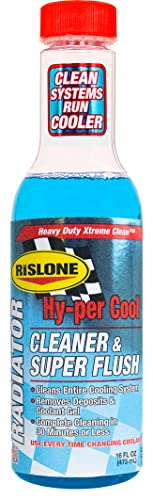
- 16 oz bottle
- Eliminates damaging coolant gels
- Neutralizes acids that cause corrosion
- Helps prevent scale and deposits
Rislone Hy-per Cool Radiator Cleaner and Super Flush comes from the Hy-per Lube line that Rislone sells for cooling systems. Its main target is coolant gel, the thick sludge that can form when incompatible coolants get mixed or when old coolant breaks down. Gel restricts flow through the small passages in a radiator and heater core, so heat output and engine cooling both suffer.
According to the listing, the formula eliminates damaging coolant gels, neutralizes acids that cause corrosion and helps prevent scale and deposits from forming. Rislone says it cleans the entire cooling system, which helps prevent overheating and corrosion and can bring operating temperatures down. It comes in a 16 oz bottle, and the label gives the dose and running time to follow before you drain and rinse.
This is the one to reach for when the coolant that came out looked thick, cloudy or jelly-like rather than simply rusty. Mixed coolant is a common cause, so the refill should match the type your owner’s manual names to keep the problem from returning. Gel can also hide other faults, and a system that keeps overheating after a clean flush needs a proper inspection, not another bottle.
View Rislone Hy-per Cool Super Flush on Amazon
4. Prestone Universal Flush and Fill Kit: Garden Hose Backflush Tee for Cars and Light Trucks
- Universal kit (Prestone AFKIT)
- Backflushes with a garden hose
- Fits most cars and light trucks
- Installs in minutes
The Prestone Universal Flush and Fill Kit is not a chemical. It is the hardware that makes the rinse part of a flush practical in a driveway. Without some way to push water through the engine, most of a cleaner’s work stays in the block, because simply opening the radiator drain leaves a large share of the old fluid behind.
Prestone describes the kit as a way to professionally backflush the cooling systems of most cars and light trucks, and says it installs in minutes. The kit is built around a tee fitting that goes into a heater hose so a garden hose can be connected there. Water then runs backward through the engine and out of the radiator, carrying loosened rust and old coolant with it. Once installed, the fitting can stay in place for future coolant changes.
This kit suits anyone who plans to flush more than once, or who is using a long-soak cleaner that calls for several rinse cycles. You still need a drain pan and a safe way to collect the dirty water, since it should not run onto the ground. Check the heater hose size on your vehicle against the kit before cutting anything, and ask a shop if the hoses are hard to reach.
View Prestone Flush 'N Fill Kit on Amazon
5. Lisle 60800: Heater Core Backflush Gun with Air Adapter and Stepped Tip

- Adjustable pressure spray gun
- Air adapter adds agitation
- Stepped tip fits 1/2, 5/8 and 3/4 in fittings
- Insulated handle for hot water
The Lisle 60800 Heater Core Backflush Tool is a radiator flush gun from a long-running American tool maker. It is aimed at one of the most stubborn parts of the cooling system, the heater core, where narrow passages clog easily and leave the cabin cold even when the engine is warm.
The tool is an adjustable-pressure industrial spray gun that attaches to a standard garden hose. An air adapter lets you add shop air to the water flow, and that mix creates agitation that helps break loose stubborn clogs. The stepped tip fits 1/2, 5/8 and 3/4 inch hose fittings, so it can seal against common heater core and radiator connections. Water pressure is controlled with one hand by squeezing the heavy-duty handle, and the handle is insulated to protect your hand when flushing with hot water.
This gun suits a driver chasing weak heat who has already run a cleaner and wants more force on the heater core than a kit can give. To use the air feature you need an air compressor, and pressure should be kept moderate on older cores. Wear eye protection, since dirty water can spray back, and if the core stays blocked after flushing, it may need replacement rather than more cleaning.
View Lisle 60800 Flush Gun on Amazon
How to Use a Radiator Flush at Home
Every cleaner has its own label, and the label wins over any general guide. Most jobs follow the same broad order, and none of it should start until the engine has cooled completely, since a hot cooling system is under pressure.
- Drain the old coolant into a clean pan through the radiator drain valve.
- Add the cleaner and top off with water, following the dose on the bottle.
- Run or soak for the time the label gives, with the heater set to hot so the heater core gets cleaned too.
- Drain and rinse with clean water until it runs clear, using a flush kit or gun if you have one.
- Refill and bleed with the correct coolant mix, then check the level again after the first few drives.

Old coolant is toxic and tastes sweet to animals, so never leave a drain pan open in the driveway. Antifreeze is treated as household hazardous waste, which means no pouring it down a drain, onto the ground or into the trash. Seal it in a labeled jug and take it to a local hazardous waste collection site.
A cooling system flush cleans the coolant passages only. Varnish in the fuel injectors is a different problem with different products, covered in our fuel system cleaner comparison, and engine oil sludge is better prevented with good oil and steady changes, as our synthetic oil picks explain.
Matching the Product to the Problem
There is no single best radiator flush brand for every car. The right pick follows what came out of the drain pan and what tools you already own.
| What you see | Product type | Examples above | Keep in mind |
|---|---|---|---|
| Coolant a little dull, due for a change | Short-cycle chemical cleaner | Prestone AS105 | Rinse well before refilling |
| Brown, rusty coolant in an older engine | Long-soak rust remover | CRC Thermocure | Plan for several rinse cycles |
| Thick or gelled coolant, weak heat | Gel and acid cleaner | Rislone Hy-per Cool | Find out why the coolant gelled |
| No easy way to rinse the system | Flush tee kit | Prestone Flush ‘N Fill | Installs in a heater hose |
| Heater core still blocked | Air and water flush gun | Lisle 60800 | Hot water calls for gloves |
For most drivers, the best radiator flush setup is one cleaner plus a way to rinse. Buying a kit or gun once makes every future coolant change easier, because the second and third rinses are where the loosened rust actually leaves the engine.

West Michigan Cold and When to Call a Mechanic
Grand Rapids winters are hard on a cooling system that has been diluted by repeated rinsing. After any flush, make sure the final coolant mix gives the freeze protection your manual calls for, since leftover rinse water in the block weakens it. Our winter antifreeze guide covers what to look for before the first hard freeze.
Some symptoms point past a flush. Sweet-smelling white smoke from the exhaust, coolant that keeps disappearing or a temperature gauge that climbs on the highway need a proper diagnosis before more chemicals go in.
If the heater blows lukewarm air even after a careful flush, our heating and A/C repair service in Grand Rapids can find where the flow stops. You can also ask us to look at the coolant and hoses when you book an oil change in Creston.
More Buying Guides
Frequently Asked Questions
What is the best radiator flush to buy for a routine coolant change?
For a system that is only due for fresh coolant, a short-cycle cleaner such as Prestone AS105 is enough. Pair it with a way to rinse, like a flush tee kit, and refill with the coolant type your owner’s manual names.
Is a radiator flush or cleaner better?
They work together. The cleaner is the chemical that loosens rust and scale, and the flush is the water rinse that carries it out. Using a cleaner without rinsing well leaves debris and cleaner in the system.
How often should you flush a radiator?
Follow the coolant service interval in your owner’s manual, which varies widely by make and coolant type. A chemical flush is usually only needed when the old coolant looks rusty, dirty or gelled, not at every coolant change.
Can a radiator flush cause a leak?
A cleaner does not create holes, but it can remove rust that was plugging a weak spot in an old radiator or heater core. Watch the coolant level and the ground under the car for a few days after flushing an older system.
Flushed the system and the gauge still climbs? Call 456 AutoFix at 616-279-3832, Monday to Friday from 8am to 5pm, or request an appointment through our contact page.
If your schedule rules out a weekday visit, our after-hours drop-off at 456 Carrier St NE, Grand Rapids, lets you leave the car whenever suits you.