
As an Amazon Associate, 456 AutoFix earns from qualifying purchases. Product links below go to Amazon, where you can confirm the right part for your vehicle.
A coolant reservoir that drops a little every week, a green or orange crust on the radiator seam, a faint sweet smell after a drive: small leaks rarely announce themselves loudly. The best radiator stop leak for that situation is a sealer matched to your cooling system’s size and coolant type, poured in before a seep turns into overheating.
Below: what a sealer can fix, how to dose it, and six options. If the coolant is old or dirty, read our radiator flush guide first, because a sealer works poorly in a sludgy system.
Quick answer
What is the best stop leak for a radiator?
For most cars with a slow seep, Bar’s Leaks Liquid Aluminum 1186 is an easy choice because it adds straight to existing coolant. K-Seal ST5501 covers small leaks across the radiator, heater core and water pump. Trucks and large systems need a heavy-duty dose such as K-Seal HD. Split hoses and big cracks need parts.
Our Quick Picks
Three sealers that cover most needs: an easy pour-in liquid for cars, a multi-purpose formula for small leaks in several parts and a heavy-duty size for trucks. Three more are reviewed below.
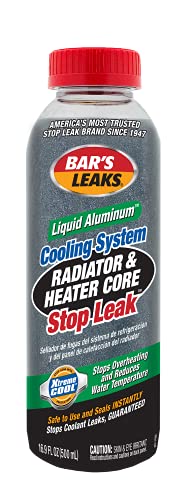
Bar's Leaks Liquid Aluminum 1186
A pour-in sealer for slow seeps that mixes with the coolant already in the car.
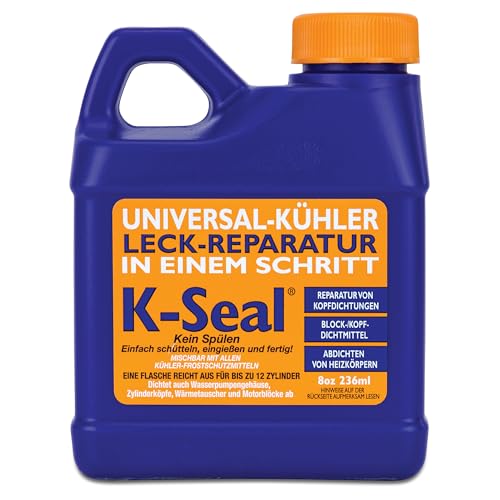
K-Seal ST5501
A one-step sealer for small leaks in several cooling system parts.

K-Seal ST5516 HD
A larger dose of the K-Seal formula for heavy-duty cooling systems.
Seep, Drip or Gush: What a Sealer Can Realistically Plug
Pour-in sealers carry fine particles or fibers through the coolant. Escaping coolant pulls them into a pinhole or hairline gap, where they lodge and build a plug. That suits small, steady seeps: a pinhole in a radiator core, a weeping end-tank seam, a sweating freeze plug or a slow heater core drip.
Even the best radiator stop leak will not fix a hose. A cracked or soft hose, a loose clamp or a split overflow tank has to be replaced. The same goes for a cracked plastic tank, a radiator damaged by road debris or a water pump leaking from its weep hole.
Coolant that disappears with no puddle may be leaking inside the engine, which points toward the head gasket and calls for diagnosis first. Our head gasket sealer guide covers that category.
Choosing the Best Radiator Stop Leak: Format, Dose and Coolant
- Dose by capacity: makers state how many quarts or gallons one bottle treats. Your owner’s manual lists your system’s capacity.
- Format: liquids pour straight in, tablets can be crumbled or pre-dissolved, and heavy-duty bottles suit big truck systems.
- Coolant compatibility: check that the label covers the coolant already in your system, such as extended life OAT or HOAT. Our guide to matching a coolant brand to your car’s spec explains those families.
- System condition: several makers say to flush a dirty system before adding a sealer.
Add any sealer with the engine cool enough to open the cap safely, then run it to operating temperature for the time on the label.
Best Radiator Stop Leak Picks, Product by Product
These six sealers cover cars, light trucks and heavy-duty systems in liquid and tablet form. Compare each dosing note with your own system capacity.
1. Bar’s Leaks Liquid Aluminum 1186: 16.9 oz Radiator and Heater Core Stop Leak
- Seals plastic, aluminum and metal radiators
- Also targets heater cores, gaskets, freeze plugs
- One bottle treats up to 4 gallons
- Adds to existing coolant, no flush needed
Bar’s Leaks Liquid Aluminum 1186 is a liquid cooling system sealer sold in a 16.9 fluid ounce bottle. The maker says it seals leaks in plastic, aluminum and metal radiators, along with heater cores, gaskets and freeze plugs. That range matters because many modern radiators pair an aluminum core with plastic end tanks, and the seam between them is a common place for a slow weep to start.
One bottle treats systems up to 4 gallons, and Bar’s Leaks says to use half a bottle in 3 and 4 cylinder engines. You shake it, pour it into the radiator with the engine cool, or into the overflow tank when the radiator has no cap, then top up and drive or idle for 15 to 20 minutes. The formula also contains Xtreme Cool, which the maker says helps lower coolant temperature.
Bar’s Leaks states that the product works with conventional and extended life coolants of any color, including OAT and HOAT types, and that it can stay in the system after the leak seals. It suits the everyday case of a car losing a little coolant each week. It is not meant for a blown head gasket, and the maker directs those cases to its dedicated head gasket products.
View Bar's Leaks Liquid Aluminum 1186 on Amazon
2. K-Seal ST5501: 8 oz Multi-Purpose One Step Coolant Leak Repair
- Ceramic microfibers and copper particles
- Radiator, heater core, water pump, block
- Mixes with all antifreeze types
- Cars and light trucks up to 12 cylinders
K-Seal ST5501 is an 8 ounce bottle of coolant leak repair built around ceramic microfibers and copper particles. According to K-Seal, those materials travel with the coolant and mesh together inside holes and cracks to plug them. The listing names the radiator, heater core, water pump, freeze plugs, block and head gasket as places it can seal small leaks in water-cooled engines.
Use is simple: shake the bottle hard and pour the whole contents into the radiator or expansion tank, avoiding pouring it directly onto the radiator core. K-Seal says it mixes with all types of antifreeze and does not require a flush, and that it can go into a cold or warm engine with care around hot coolant. The original size is meant for cars, vans and light trucks with cooling systems up to 21 quarts.
The listing adds a useful warning. If bubbles keep coming from the radiator or reservoir, or the product does not seal, the system may be over-pressurized, which can point to combustion gas getting into the coolant. That is a sign to stop and have the engine checked rather than add a second bottle. For a small external weep, it is a flexible option that suits many vehicles.

3. K-Seal ST5516 HD: 16 oz Heavy-Duty Coolant Leak Repair for Large Systems
- Same formula as the original K-Seal
- Sized for systems up to 60 quarts
- Commercial and agricultural engines
- Compatible with all antifreeze types
K-Seal ST5516 HD is the heavy-duty version of the K-Seal coolant leak repair, sold in a 16 ounce bottle. K-Seal says the formula is the same as the original, with the same ceramic microfibers and copper particles, and that the only real difference is the amount. The larger dose is meant for cooling systems that hold far more coolant than a passenger car does.
The maker positions the original bottle for systems up to 21 quarts and the HD bottle for systems up to 60 quarts, such as large trucks, tractors and other heavy equipment. The listing describes it as engineered for large engines and suitable for commercial or agricultural vehicles. It seals the same areas as the standard bottle: radiator, heater core, water pump, freeze plugs, block and head gasket, and it mixes with all antifreeze types.
Before buying, look up the cooling system capacity of your truck in the owner’s manual. Many half-ton pickups fall inside the range of the regular bottle, while bigger diesel engines and farm equipment often need the HD size. Application is the same shake and pour routine. Coolant loss in a diesel can also come from other causes, so a leak that returns after treatment needs a proper inspection.
View K-Seal ST5516 HD on Amazon
4. Bar’s Leaks 1177: 1.76 oz Radiator Stop Leak Tablets with Rust Inhibitor

- Seals leaks and seepage
- Inhibits rust and scale, controls electrolysis
- Lubricates the water pump
- One pack treats systems up to 15 quarts
Bar’s Leaks 1177 Radiator Stop Leak Tablets come in a 1.76 ounce pack and take a different route from the liquids above. Besides sealing leaks and seepage, the maker says the tablets inhibit rust and scale, neutralize pH imbalance, control electrolysis and lubricate the water pump. Bar’s Leaks describes them as the same tablets many vehicle manufacturers have used on their assembly lines.
One pack treats systems up to 15 quarts, and larger systems take one tablet for every three quarts of capacity. You can crumble the tablets or pre-dissolve them in warm tap water to get them through the radiator neck. On cars without a regular radiator cap, the directions say to remove the top hose at the radiator and place the tablets in the hose before reconnecting it, then fill and idle for 15 minutes.
The maker calls for flushing dirty or partly clogged systems first, which is good advice for any sealer. Bar’s Leaks also suggests repeating the treatment every 15,000 miles or once a year for ongoing protection. The tablets work with conventional, extended life and waterless coolants. They suit an owner who wants to seal a small seep and keep the system conditioned afterward.
View Bar's Leaks 1177 Tablets on Amazon
5. Prestone AS145: 11 oz Stop Leak Repair for Radiators, Heater Cores and Hoses

- Seals leaks up to 0.020 in x 0.5 in
- Natural and synthetic sealing components
- Boosts corrosion inhibitors
- Radiators, water pumps and heater cores
Prestone AS145 is an 11 ounce stop leak repair from a brand better known for antifreeze. Prestone says it blends natural and synthetic components to seal leaks in radiators, water pumps and heater cores, and the listing gives a specific limit: leaks up to 0.020 inch by 0.5 inch. That figure is a useful reality check, because it describes a thin seep or pinhole, not a crack you can see light through.
Alongside sealing, the formula boosts corrosion inhibitors. Prestone points out that pitting and corrosion are what cause many radiator leaks in the first place, so it aims to treat the condition as well as the hole. The maker also states that it seals without interfering with flow through the radiator or heater core, which addresses the most common worry about stop leak products.
The Amazon title mentions hoses, but no sealer can repair a split or swollen rubber hose, so inspect those separately and replace any that feel soft or cracked. The product suits older cars where corrosion has started to wear small holes in the radiator. Follow the dosing directions on the bottle, and add it with the engine cool so the cap can come off safely.
6. Liqui Moly 20132: 250 ml Radiator Stop Leak Coolant Additive

- Seals small cooling system leaks
- For cooling and heating systems
- Works with or without coolant filters
- Compact 250 ml can
Liqui Moly Radiator Stop Leak, part number 20132, is a coolant additive sold in a 250 milliliter can. Liqui Moly is a German maker of oils and additives, and this product is its answer to small leaks in the radiator and the rest of the cooling circuit. The listing says it seals such leaks quickly and that it is meant for cooling water and heating systems.
One detail sets it apart from the others here: the listing states it is suitable for systems with and without water filters. Some heavy equipment and older systems run coolant filters, and a sealer that is not intended for them could load the filter. The listing also says the product helps protect the combustion chamber from damage caused by coolant getting in, though any sign of coolant inside the engine still needs a diagnosis rather than an additive.
The can is small, which suits compact cars with modest cooling systems and makes it easy to keep in a trunk kit. Read the dosing directions on the can and compare them with your system’s capacity before use. Add it to a cool engine, run the car to operating temperature, and watch the reservoir level over the next few drives.
View Liqui Moly 20132 on Amazon
Side-by-Side: Dose, Format and Typical Use
| Sealer | Format | Stated treatment size | Good fit for |
|---|---|---|---|
| Bar’s Leaks Liquid Aluminum 1186 | Liquid, 16.9 fl oz | Up to 4 gallons; half a bottle for 3 and 4 cylinder engines | Most cars with a slow seep |
| K-Seal ST5501 | Liquid, 8 oz | Cars and light trucks, systems up to 21 quarts | Small leaks in several parts |
| K-Seal ST5516 HD | Liquid, 16 oz | Large systems up to 60 quarts | Pickups, diesels, farm equipment |
| Bar’s Leaks 1177 Tablets | Tablets, 1.76 oz | Up to 15 quarts; one tablet per 3 quarts beyond that | Seepage plus yearly conditioning |
| Prestone AS145 | Liquid, 11 oz | See label for dose | Radiator and heater core pinholes |
| Liqui Moly 20132 | Liquid, 250 ml | See label for dose | Cooling systems with or without filters |
Treatment sizes come from each maker’s label or listing. If your system holds more than one bottle treats, buy the right size instead of stretching a small one, and never mix two different sealers.

Cold Snaps, Salt and Small Leaks in West Michigan
Winter is hard on cooling systems here. Freeze-thaw cycles and cold starts make end tanks, crimped seams and gaskets expand and shrink daily, and road salt works on the radiator fins. A seep that left a few drops in October can grow by February.
A leak also drains antifreeze protection, because every top-up with plain water weakens the mix. Check the strength before the first hard freeze and top up with the correct premix, as our winter antifreeze guide explains. The Car Care Council calls cooling system failure a leading cause of vehicle breakdowns and recommends checking coolant level frequently.

Check the reservoir with the engine cold each time you fuel up, and glance under the car after it sits overnight. The best radiator stop leak works on a seep caught early, not on a leak that has been ignored all winter.
Signs the Leak Belongs on a Lift, Not in a Bottle
A sealer is a stopgap for small external leaks. Bring the car in if the temperature gauge climbs, coolant still drips after treatment, or the heater blows cold while the reservoir drops. A heater core leak can also fog the windows and wet the footwell, which our car heater repair team in Grand Rapids can trace.

Internal leaks show different signs. A milky substance under the oil cap or thick, sweet-smelling white smoke from the exhaust can mean coolant is getting into the oil or the cylinders. Stop driving and have it diagnosed, since coolant in the oil damages bearings quickly.
During an oil change at our Creston shop we can look over the coolant level, the hoses and the oil. For engine deposits rather than leaks, see our fuel system cleaner buying guide.
More Buying Guides
Frequently Asked Questions
What is the best Bar’s radiator stop leak?
For a car with a slow seep, Liquid Aluminum 1186 pours into existing coolant and treats systems up to 4 gallons. The 1177 tablets suit owners who also want rust and scale protection, and Bar’s Leaks says to flush a dirty system before using them.
What is the best truck radiator stop leak?
Choose a product dosed for the truck’s cooling capacity. K-Seal HD is made for systems up to 60 quarts, while the original K-Seal covers light trucks up to 21 quarts. Check the capacity in your owner’s manual first.
Can radiator stop leak fix a leaking hose?
No. A split, soft or swollen hose and a loose clamp need replacing, not sealing. Stop leak is meant for pinholes and seeps in metal and plastic parts such as the radiator core and heater core.
Will radiator stop leak clog my heater core?
Used at the stated dose in a clean system, the makers say their products are made not to block flow. Overdosing or adding sealer to a sludgy system raises the risk, so flush old coolant first and follow the label.
Still topping up coolant after a treatment? Call 456 AutoFix at 616-279-3832 on a weekday between 8am and 5pm, or request an appointment on our contact page.
Working during shop hours? Our after-hours drop-off at 456 Carrier St NE, Grand Rapids, lets you leave the car whenever suits you, along with a note on how much coolant it has been losing.