
As an Amazon Associate, 456 AutoFix earns from qualifying purchases. Product links below go to Amazon, where you can confirm the right part for your vehicle.
A dirty airflow sensor can make a healthy engine idle rough, stumble off the line and burn more fuel than it should. The best MAF sensor cleaner for that job is a dedicated spray that dries in seconds, leaves nothing behind and is safe on the plastic housing and the thin sensing element.
Below you will find what the sensor does, what separates one can from another, five sprays made for the job and a plain answer on carb and brake cleaner. If your engine needs more than a clean intake, our guide to the best fuel system cleaner covers injectors and combustion deposits.
Quick answer
What cleaner should you use on a MAF sensor?
Use a spray sold specifically as a mass air flow sensor cleaner. CRC 05110 is the familiar choice, Gumout 540041 is listed for gas and diesel engines, and Berryman 2211 is VOC compliant in all 50 states. Skip carb and brake cleaner, and never touch the sensing element.
Our Quick Picks
Three quick picks: the long-running CRC formula, a Gumout spray listed for gas and diesel engines, and a 50-state compliant Berryman shop pack. All five cans are reviewed below.
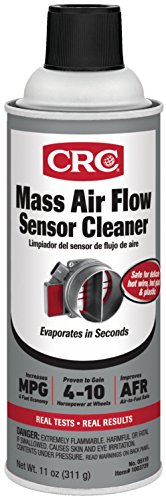
CRC MAF Sensor Cleaner 05110
The long-running CRC formula that dries in seconds without a film.

Gumout MAF Sensor Cleaner 540041
A plastic-safe spray Gumout lists for MAF sensors on gas and diesel engines.

Berryman 2211 MAF Sensor Cleaner 12 Pack
A VOC-compliant formula with an extension tube, sold as a 12-can pack.
What the Airflow Sensor Measures and Why It Gets Coated
The mass air flow sensor sits in the intake tract between the air filter box and the throttle body. As Walker Products explains on its MAF sensor page, it measures the air entering the engine and sends that reading to the engine computer, which uses it to work out how much fuel to inject.
Most sensors use a heated wire or film. Fine dust that slips past the filter, oil mist from the crankcase ventilation system and oil from an over-oiled reusable filter all build up on that element. A coated element reads less air than is really flowing, so the computer adds too little fuel and the engine runs lean.
Typical signs are a rough or hunting idle, hesitation when you press the throttle, stalling after a cold start and lean or airflow trouble codes. West Michigan adds its own grime: dusty gravel roads in summer and salty road spray in winter both load the air filter faster, and a tired filter lets more fine dirt through.
What to Look For in a MAF Sensor Cleaner Spray
Every can in this guide is made for the sensor, but they are not identical. Check four things on the label before you buy:
- Plastic safe and residue free: the sensor housing is plastic and the element is delicate, so the spray must evaporate fully and leave no film for dust to stick to.
- Fast drying: a quick flash-off means less waiting before you reinstall the sensor and start the engine.
- VOC compliance: some formulas are not legal for sale in California and other states with tighter rules, so check the listing if you live in one of them.
- Can size and nozzle: a single cleaning uses only a small part of a can, while an extension tube or a 360-degree valve helps you reach the element without touching it.
Ignore promises of big horsepower gains. A clean sensor restores an accurate reading, so the improvement you notice depends on how dirty it was to begin with.
Best MAF Sensor Cleaner: Five Sprays in Detail
All five are aerosols sold for mass air flow sensors. Read the can’s directions, because each maker spells out its own spray and drying steps.
1. CRC 05110 Mass Air Flow Sensor Cleaner: 11 oz Plastic-Safe, Fast-Drying Spray
- 11 oz aerosol made for MAF sensors
- Plastic safe, dries in seconds
- Leaves no residue on the element
- Not VOC compliant for California and OTC states
CRC’s Mass Air Flow Sensor Cleaner, item 05110, is the full-size 11 oz can of a formula that many parts counters have stocked for years. It is a single-purpose aerosol for the heated wire or film inside a MAF sensor, and the listing describes it as plastic safe and quick to dry, evaporating within seconds. CRC’s product page rates the liquid as clear and very fast to evaporate, with a carbon dioxide propellant.
The point of a spray like this is to dissolve the oil film and fine dust that make the sensor under-read airflow, then disappear without leaving anything behind for new dirt to grab. CRC says a clean sensor helps restore the air/fuel ratio and mileage, and it suggests using the spray every time you clean or change the air filter. That timing is easy to remember, and one can covers several cleanings.
The main limit is legal rather than practical. The listing states that this version is not VOC compliant for California and the OTC states, so buyers there should look at a compliant can such as the Berryman below. CRC also rates the aerosol as extremely flammable, so use it with the engine off and cool, in fresh air, and well away from any flame or spark source.
View CRC MAF Sensor Cleaner 05110 on Amazon
2. Gumout 540041 Professional Formula: 11 oz MAF Sensor Cleaner for Gas and Diesel
- 11 oz Professional Formula aerosol
- Removes dirt, oil and pollen from the sensor
- Plastic safe and non-damaging
- Listed for gasoline and diesel engines
Gumout’s 540041 is the brand’s Professional Formula Mass Air Flow Sensor Cleaner, sold in an 11 oz aerosol can. Gumout describes it as plastic safe and non-damaging, and it lists the spray for delicate MAF sensors on both gasoline and diesel engines. That wider listing makes it a practical can for a driveway where a gas car sits next to a diesel pickup.
According to the listing, the formula lifts dirt, oil and pollen from the sensing element so the sensor can measure incoming air accurately again. Gumout ties that cleaner reading to smoother idle, quicker throttle response and less hesitation or stalling, which are the symptoms a contaminated sensor usually causes. As with any MAF spray, how much difference you notice depends on how coated the element was before you started.
Use it the same way as the other cans here: unplug and remove the sensor, mist the element without touching it and let it dry completely before you put it back. It is not meant for the throttle plate or intake valves, which need a stronger cleaner. If you are already shopping Gumout for fuel system work, this keeps the intake job in the same family of products, but buy it for the sensor job alone.
View Gumout MAF Sensor Cleaner 540041 on Amazon

3. Berryman 2211 Mass Air Flow Sensor Cleaner: 12 x 11 oz, 50-State VOC Compliant
- Twelve 11 oz aerosol cans
- Extension tube for aimed spraying
- Safe for plastic housings and platinum sensors
- VOC compliant in all 50 states
Berryman’s 2211 Mass Air Flow Sensor Cleaner comes in 11 oz aerosol cans, and this listing is a case of twelve. Each can includes an extension tube, so you can aim the spray at the sensing element from a short distance instead of flooding the whole housing. Berryman says the formula was designed for compatibility with plastic sensor housings and sensitive platinum elements, and that it dries fast without residue.
The feature that sets it apart in this group is compliance. Berryman lists the formula as VOC compliant in all 50 states, which matters if you live in California or one of the OTC states where some MAF cleaners cannot be sold. It is also the obvious choice for anyone who services several vehicles, such as a small fleet, a farm with a few trucks or a family that keeps every car in the same garage.
The trade-off is quantity. Twelve cans is far more than one owner needs, because a single cleaning uses only a small part of one can, so a household with one or two cars may be better off with a single can elsewhere in this list. Store the spare cans somewhere cool and dry, away from heaters and pilot lights, since the aerosol is flammable.
View Berryman 2211 MAF Sensor Cleaner 12 Pack on Amazon
4. MPD PRO Mass Air Flow Sensor Cleaner: Residue-Free Spray with 360-Degree Valve
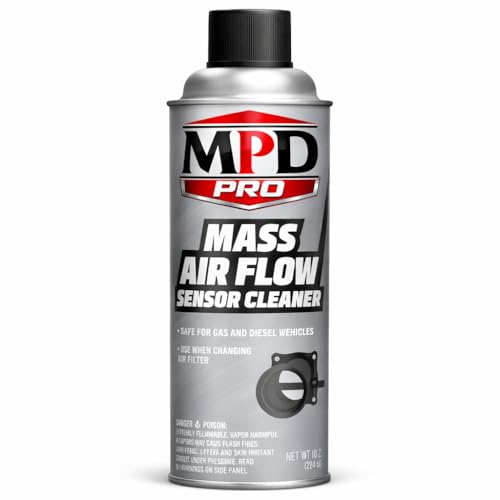
- Professional formula for MAF sensors
- Dissolves oil, dirt and contaminants
- Leaves no residue on the element
- 360-degree spray valve for awkward angles
MPD PRO’s Mass Air Flow Sensor Cleaner is a newer name on Amazon, sold as a professional formula for automotive MAF sensors. The listing says it is designed to clean the sensor without harming electronics or plastic parts, and that it dissolves the oil, dirt and other contaminants that skew airflow readings. Like the established brands, it is meant to dry quickly and leave no residue behind.
Its distinguishing feature is a 360-degree spray valve. Most aerosols only spray properly when held upright, which can be awkward when you want to mist a sensor element from below or from the side. A valve that works at any angle makes it easier to keep the nozzle a few inches away and let the spray do the work, rather than tilting the sensor or touching the element.
MPD PRO suggests using it at every air filter change or whenever performance problems show up, the same routine the bigger brands recommend. The listing does not state VOC compliance, so buyers in California and the OTC states should confirm that before ordering. It is a reasonable option if you want a dedicated MAF spray with an easy-to-aim valve, but read the can’s directions and safety warnings before you start.
View MPD PRO MAF Sensor Cleaner on Amazon

5. CRC 05610 Mass Air Flow Sensor Cleaner: 4.5 oz Compact Can

- 4.5 oz compact aerosol
- Same CRC MAF formula as the 11 oz can
- Plastic safe, leaves no residue
- Made to ease rough idle and hesitation
CRC’s item 05610 is the 4.5 oz version of the same Mass Air Flow Sensor Cleaner reviewed at the top of this list. CRC’s own product page shows the two sizes as variations of one product, with the same plastic-safe rating, very fast evaporation and carbon dioxide propellant. The listing calls it the original MAF sensor cleaner and says it safely cleans and protects the sensor without leaving residue.
The reason to choose it over the 11 oz can is simply size. A cleaning takes only a few short bursts, so an owner who treats the sensor once a year at the air filter change may never finish a full-size can. The smaller can also takes up less shelf space in a garage or a storage bin. CRC lists the same benefits as for the larger can: smoother idle, less hesitation and pinging, and better fuel mileage once the reading is accurate again.
It shares the same limits too. Check local VOC rules before buying in California and the OTC states, and treat the aerosol as extremely flammable. Because it is the same formula, the choice between the two CRC cans comes down to how many cleanings you expect to do, not to any difference in the result.
View CRC MAF Sensor Cleaner 05610 on Amazon
MAF Sensor Cleaner vs Carb Cleaner vs Brake Cleaner
Most garages already have carb cleaner and brake cleaner on the shelf, so it is tempting to grab one of those. Both are built to cut heavy deposits on metal parts, and that strength is the problem on a sensor.
| Product | Made for | On a MAF sensor |
|---|---|---|
| MAF sensor cleaner | Hot-wire and hot-film elements, plastic housings | The right tool: evaporates fully without a film |
| Carb cleaner | Varnish and gum in carburetors and chokes | Avoid: can leave a residue and attack some plastics |
| Brake cleaner | Oil and brake dust on metal brake parts | Avoid: harsh solvents, not rated for sensor elements |
| Throttle body cleaner | Carbon on the throttle plate and bore | Avoid on the sensor; use it on the throttle body only |
Is there a safe alternative cleaner for a MAF sensor? Some owners use an electronics cleaner that is labeled plastic safe and residue free, but the best MAF sensor cleaner alternative is still a dedicated MAF spray, which removes the guesswork. Our throttle body cleaner vs carb cleaner comparison explains why the intake sprays are not interchangeable either.

Keep other cleaners well away from the sensor too. An engine degreaser for the rest of the bay is fine on valve covers and brackets, but cover the intake opening and the sensor connector before you spray or rinse anything nearby.
How to Clean a MAF Sensor Without Damaging It
On most cars this is a short driveway job with basic hand tools. Work outdoors or in a well-ventilated garage, wear safety glasses, and keep the can away from sparks and flame, because these aerosols are highly flammable.
- Engine off and cool: turn the ignition off and unplug the sensor’s electrical connector.
- Remove the sensor: undo the screws or clamps and lift it out, handling it by the housing.
- Spray, don’t touch: follow the can’s directions and mist the element in short bursts, and never wipe, brush or blow on it.
- Let it dry fully: set it on a clean towel until every trace of liquid has evaporated, then reinstall and reconnect it.
- Fix the cause: replace a dirty air filter and check that the filter box seals properly.

Some older vehicles use a different airflow meter design that should not be sprayed, so check your service information if the part looks unfamiliar. Crankcase oil mist is another source of buildup, and keeping up with oil changes helps. Our guide to the best synthetic oil covers how to pick the right spec, and you can book an oil change in Creston with us.
When the Best MAF Sensor Cleaner Won’t Solve It
Cleaning helps a sensor that is dirty, not one that has failed. If the idle is still rough, the check engine light returns within a few drives or the lean codes come straight back, the fault is probably elsewhere. Common culprits include a split intake boot, a vacuum leak, a weak fuel pump or a damaged sensor element.

Those faults need live data and a smoke or pressure test rather than more spray. Our check engine light diagnostic in Grand Rapids reads the codes and the sensor data together. If carbon on the throttle plate is part of the problem, see our throttle body cleaner picks.
More Buying Guides
Frequently Asked Questions
Can I use brake cleaner on a MAF sensor?
It is not a good idea. Brake cleaner is made for metal brake parts, and its solvents are not rated for the sensing element or the plastic housing. A dedicated MAF spray costs little more and is designed to leave no film behind.
How often should I clean my MAF sensor?
Many owners clean it when they replace the engine air filter, and CRC suggests the same timing for its spray. Clean it sooner if you notice a rough idle or hesitation, or after servicing an oiled reusable filter.
Will cleaning the MAF sensor clear a check engine light?
Not by itself. If dirt caused the fault, the light may go out after the computer sees good readings for several drives, or a scan tool can clear it. If it comes back, have the system diagnosed.
Which is the best MAF sensor cleaner spray for California?
Look for a can listed as VOC compliant in all 50 states. Berryman 2211 is sold that way, while the CRC 05110 listing says it is not VOC compliant for California and OTC states.
Idle still rough after a clean sensor? Ring our Grand Rapids shop at 616-279-3832 between 8am and 5pm, Monday to Friday, or request a check engine light diagnosis on our contact page.
Our after-hours drop-off works if your day is full. Bring the car to 456 AutoFix, 456 Carrier St NE, Creston.