
As an Amazon Associate, 456 AutoFix earns from qualifying purchases. Product links below go to Amazon, where you can confirm the right part for your vehicle.
Two red-and-white aerosol cans sit on the same shelf at the parts counter, both promising to dissolve gum, varnish and carbon. The throttle body cleaner vs carb cleaner choice looks like a branding exercise until you read the fine print. One is mixed for the air side of a fuel-injected engine, where sensors and coated surfaces sit close by, and the other is mixed to strip fuel residue out of a carburetor’s jets and passages.
This guide explains what separates the two sprays, when a carb cleaner is the wrong can for a modern car, and how to clean a throttle body without creating a new idle problem. After that we compare three aerosols from Amazon: a dedicated throttle body cleaner, a carb and choke cleaner, and a crossover can that is labeled for both jobs.
Quick answer
Which spray belongs on a fuel-injected throttle body?
Use a throttle body cleaner such as CRC Throttle Body and Air Intake Cleaner on any fuel-injected car, because it is made for throttle plates and bores near sensors. Keep a carb cleaner like CRC Carb & Choke Cleaner for carburetors and small engines. Berryman B-12 0120C is labeled for both jobs.
Our Quick Picks
For the throttle body cleaner vs carb cleaner question, here is one can of each type plus the related third pick, a crossover spray labeled for carburetors, chokes and throttle bodies.
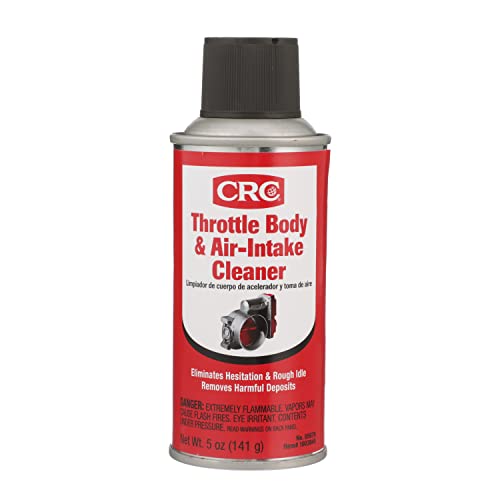
CRC Throttle Body and Air Intake Cleaner
Made for throttle plates and bores on fuel-injected engines.
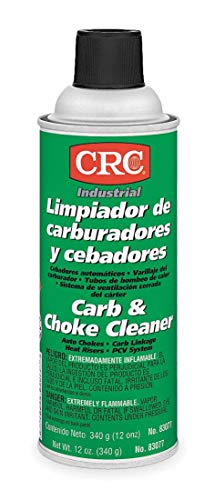
CRC Carb & Choke Cleaner
A fast solvent for gum and varnish in carburetors and chokes.

Berryman B-12 Chemtool 0120C
One can labeled for carburetors, chokes and throttle bodies.
What Each Spray Is Built to Clean
A carburetor mixes fuel and air mechanically, so its jets, float bowl, choke and linkages get coated in gum and varnish when gasoline sits and evaporates. Carb cleaner is a strong, fast solvent blend designed to cut through that fuel residue, often sprayed into passages and then blown out. Many cans are used on parts that come off the engine and sit on a bench, where a little harshness does no harm.
A throttle body on a fuel-injected engine never sees liquid fuel in most designs. Its dirt is a dark, sticky film of carbon and oil vapor that arrives through the PCV system and exhaust gas recirculation, and it builds up around the edge of the throttle plate. Throttle body cleaner is formulated to lift that film while the part stays on the car, close to the mass airflow sensor, the idle air control valve on older engines and the electronic motor on newer ones.
The chemistry overlaps more than the labels suggest, which is why crossover cans exist. The differences that matter are how aggressive the solvent is, whether it leaves any residue, and what the maker says it is safe on. Neither of the CRC cans in this guide is rated plastic-safe on its spec sheet, so both should go on metal, not on plastic housings or wiring.
| Question | Throttle body cleaner | Carb cleaner |
|---|---|---|
| Built for | Throttle plates, bores and intake parts on fuel-injected engines | Carburetor jets, chokes, linkages and float bowls |
| Typical deposit | Carbon and oil vapor film | Gum and varnish from old gasoline |
| Used where | On the car, near sensors and electronics | On the car or on a parts bench |
| Main caution | Keep it off the MAF sensor and plastic parts | Stronger solvent, not every can is meant for coated throttle bodies |
Can You Use Carb Cleaner on a Throttle Body?
Sometimes, and plenty of people do, but it is the riskier choice. Some manufacturers apply a coating to the throttle bore and plate to control airflow at idle, and a harsh solvent or a scrubbing pad can wear it away. Check the service information or the label on the throttle body before you spray anything into it, and if there is a warning against cleaning, respect it.
Sensors are the second concern. A mass airflow sensor uses a delicate heated element that carb cleaner can damage, so pull the intake duct back far enough that overspray cannot reach it, or remove the sensor as CRC suggests in its throttle body and air-intake cleaner instructions. If the sensor itself is dirty, it needs its own spray, and our guide to MAF sensor cleaners explains why.

Electronic throttle bodies add one more rule. The blade is moved by a small motor, so turn the ignition off before you push it open by hand, and never force it against the motor with the key on. Some cars also need an idle relearn after cleaning, and the procedure depends on the maker, so look it up for your vehicle before you start.
Both sprays are extremely flammable aerosols. Work on a cool engine with good ventilation, wear safety glasses and nitrile gloves, keep sparks and open flames away, and stuff a rag under the throttle body to catch runoff. Let everything flash off fully before you reconnect the intake and start the engine.
Throttle Body Cleaner vs Carb Cleaner: Three Cans Compared
Below are one can of each type plus a crossover spray. Check the label and the listing for the uses each maker approves, since formulas change over time.
CRC Throttle Body and Air Intake Cleaner: 5 oz 50-State Spray for Fuel-Injected Engines
- Cleans gum and varnish from throttle valves and the throttle body
- 50 state formula, sold as low VOC
- For fuel-injected gasoline engines, throttle body and multi-port
- Compact 5 wt oz aerosol can
This is CRC’s dedicated throttle body and air-intake cleaner in a small 5-ounce can, the side of this comparison built for fuel-injected engines. The listing describes it as a cleaner for gum and varnish on throttle valves and the throttle body, and says it helps with hesitation, rough idle and the deposits that cause them. It is sold as a 50 state formula, so it is the version to look for where VOC rules apply.
CRC lists it for fuel-injected gasoline engines with either a single throttle body or multi-port injection, and the maker page for the larger can adds direct-injection engines. The same page rates this formula as not plastic-safe and extremely flammable, which tells you how to use it. Spray the metal throttle plate and bore with the engine off, move the blade by hand with the key off, and keep the spray away from plastic housings, wiring and the MAF sensor.
The 5-ounce size suits one or two cleanings, while larger cans make more sense for several cars. It is not meant for soaking a carburetor or for cleaning the inside of fuel injectors, and it will not fix a failed throttle motor or sensor. Check your service information first if the throttle body carries a no-clean warning.
View CRC Throttle Body and Air Intake Cleaner on Amazon

CRC Carb & Choke Cleaner 03077: 12 oz Low-VOC Spray for Carburetors and Chokes
- Removes sludge, gum and varnish from carburetors
- Low VOC formula; maker states EPA and California VOC compliance
- For chokes, carburetor parts, EGR valves, PCV and intake parts
- Maker states it will not harm oxygen sensors or catalytic converters
CRC Carb & Choke Cleaner is the carburetor side of this comparison, a fast-acting aerosol for the gum, sludge and varnish that old gasoline leaves behind. The listing describes it as a low VOC formula, and CRC’s product page says it meets US EPA and California VOC requirements and will not harm oxygen sensors or catalytic converters when used as directed.
The maker lists a wide range of applications: automatic chokes, carburetor components, crankcase breather elements, EGR valves, heat risers, intake parts and the PCV system. That makes it useful on older carbureted cars, motorcycles and small engines such as mowers and snowblowers that sat with stale fuel. It works well for flushing jets and passages on a carburetor that has come off the engine, followed by compressed air to clear the passages.
Like most carb cleaners, it is a strong solvent, and CRC rates it as not plastic-safe and extremely flammable. Keep it off plastic floats, gaskets you plan to reuse, painted surfaces and wiring, and wear gloves and safety glasses. It is not the first choice for a fuel-injected throttle body near a mass airflow sensor, and some throttle bodies have coatings that a harsh solvent can harm. Use a throttle body cleaner there instead.
View CRC Carb & Choke Cleaner on Amazon
Berryman B-12 Chemtool 0120C: 20 oz Carburetor, Choke and Throttle Body Cleaner with Extension Tube
- Dissolves gum, varnish, fuel residue and carbon build-up
- Labeled for carburetors, linkages, chokes, PCV valves and throttle bodies
- Extension tube for aiming into tight spots
- 20 oz aerosol, VOC compliant in all 50 states
Berryman’s B-12 Chemtool 0120C is the related third pick, a crossover can that sits between the two categories. Its listing names carburetors, linkages, chokes, PCV valves and throttle bodies as uses, so one aerosol can cover a classic car or small engine and a fuel-injected daily driver. Berryman describes the formula as 100 percent high-energy solvent technology that dissolves gum, varnish, fuel residue and carbon.
The 20-ounce can is the largest of the three, and it comes with an extension tube for reaching into carburetor passages or around a throttle plate. It is listed as VOC compliant in all 50 states, so it is sold for use in Michigan. For readers who only want one can on the shelf, the broad label is the main appeal.
A strong solvent that cleans carburetors well still deserves care on a fuel-injected engine. Keep it away from the MAF sensor, plastic parts and wiring, and check whether your throttle body has a coating or a no-clean warning in the service information. Use it with the engine off, in good ventilation, with safety glasses and gloves. If you mostly work on modern cars, a dedicated throttle body cleaner is the more cautious choice, while this can suits a mixed garage.
View Berryman B-12 Chemtool 0120C on Amazon

Throttle Body vs Carb Cleaner: Matching the Can to the Engine
The engine decides most of this for you. Nearly every car and light truck sold in the US for decades has been fuel injected, so a throttle body cleaner is the can for routine intake cleaning on a daily driver. Carburetors are still common on lawn equipment, snowblowers, older motorcycles and classic cars, and that is where carb cleaner earns its shelf space.
| Job | Reach for | Why |
|---|---|---|
| Dirty throttle plate on a fuel-injected car | Throttle body cleaner | Made for use on the car near sensors |
| Gummed carburetor on a classic or small engine | Carb and choke cleaner | Stronger on varnish in jets and passages |
| Sticky choke or linkage | Carb and choke cleaner | Labeled for chokes and linkages |
| Garage with both kinds of engine | A crossover can, or one of each | Covers both jobs if the label allows it |
A spray in the intake only cleans what it touches. Varnish in the fuel injectors and carbon deep in the combustion chamber need a treatment that travels with the fuel, which is a separate product category. Our roundup of fuel system cleaners you pour into the tank covers that side of the job.

Neither spray is a general degreaser, either. If the outside of the intake and valve cover is caked with oily grime, a water-rinsable engine degreaser covers large areas more gently than a fast aerosol solvent. See our guide to engine degreasers for oily engine bays, and for a closer look at throttle body cans alone, our throttle body cleaner comparison reviews more options.
Winter Idle Problems and Buying a Can in Michigan
A carbon ring around the throttle plate often shows up first on a cold morning. The engine needs a precise sliver of air to idle when it is cold, and a coated plate can choke that off, so you get a low, hunting idle or a stall at the first stop sign. In Grand Rapids winters, that complaint is often what sends people looking for a can of cleaner.
Read the label for VOC compliance when you shop. Some solvent cleaners come in a standard and a 50-state version, and CRC’s spec sheet for one carb cleaner line lists Michigan among the states where its standard versions are restricted from sale. All three cans below are sold as 50-state or low-VOC formulas, according to their listings and maker pages, which is the label to look for here.

Cold weather also slows aerosols down. A can that has spent the night in an unheated garage sprays weakly and evaporates slowly, so bring it indoors to room temperature before you work. The CRC carb and choke cleaner page lists the carb and choke cleaner applications and VOC details if you want to check a can against your job.
When a Dirty Throttle Body Is Not the Whole Story
Cleaning the throttle body fixes deposits, not failures. A rough idle that returns within weeks can point to a vacuum leak, a failing throttle position sensor, a sticking PCV valve or a misfire, and a check engine light means stored codes are worth reading before you buy more spray. Our check engine light diagnostic in Grand Rapids finds the cause before parts get replaced.
Much of the gunk on a throttle plate starts as oil vapor from the crankcase, so oil condition matters. Old, broken-down oil gives off more vapor and sludge, which the PCV system routes straight into the intake. Regular oil changes at our Creston shop and a quality oil from our synthetic oil buying guide help slow that buildup.
Hendrick Hoffman, our owner and head mechanic, is ASE and State of Michigan certified in engine repair, engine tune-up and electrical systems. If you would rather leave the intake alone, we can check the throttle body, sensors and idle control as part of a diagnosis.
More Buying Guides
Frequently Asked Questions
Is throttle body cleaner the same as carb and choke cleaner?
No, though they are close relatives. Carb and choke cleaner is a stronger solvent aimed at gum and varnish inside carburetors, chokes and linkages. Throttle body cleaner is made for carbon and oil film on fuel-injected throttle bodies, which sit close to sensors. Crossover cans such as Berryman B-12 0120C are labeled for both.
Can throttle body cleaner clean a carburetor?
It can handle light deposits on the outside of a carburetor or its linkage, but heavy varnish in jets and float bowls usually needs a dedicated carb cleaner. If a small engine has sat all winter with old fuel, a carb and choke cleaner is the more effective choice.
Will carb cleaner damage my mass airflow sensor?
It can. The sensing element is delicate, and strong solvents or overspray can harm it. Disconnect or remove the sensor, or move the intake duct well away, before you spray the throttle body, and use a dedicated MAF cleaner if the sensor itself needs cleaning.
How often should a throttle body be cleaned?
There is no fixed interval for most cars. Clean it when you see a dark ring around the plate during an air filter change, or when a rough or low idle appears and codes point that way. Check your owner’s manual, since a few makers advise against cleaning coated throttle bodies at all.
Cleaned the throttle body and the idle still stumbles? Give our team a call at 616-279-3832 on any weekday from 8am to 5pm, or reach us through the contact page to book a look.
If daytime hours are hard to fit in, our after-hours drop-off at 456 Carrier St NE lets you leave the car and the keys whenever it suits you.