
As an Amazon Associate, 456 AutoFix earns from qualifying purchases. Product links below go to Amazon, where you can confirm the right part for your vehicle.
A plug-in hybrid carries a much smaller battery than a full electric car, so the charger question is different. The best EV charger for plug in hybrid owners is usually the one that matches what the car’s onboard charger can accept and the outlet already in your garage, not the biggest wall box on the shelf.
This guide covers how many amps a PHEV can really use, which outlets work, and then six J1772 chargers sized for smaller batteries. Shopping for a full EV instead? Our roundup of the best Level 2 EV charger picks covers the higher-output units.
Quick answer
What charger does a plug-in hybrid need?
Most plug-in hybrids do well with a 16 to 32 amp Level 2 charger. The Enphase HCS-40 suits a NEMA 14-50 outlet, the EVDANCE 24A plugs into a dryer outlet, and the Lectron Explorer switches between 120V and 240V. Check your owner’s manual for the onboard charger’s kW rating first.
Our Quick Picks
Three quick picks for plug-in hybrids: a 32A wall unit for a 14-50 outlet, a dual-voltage cord for 120V or 240V, and a 24A charger for a spare dryer outlet. All six are reviewed below.

Enphase HCS-40 32A Plug-In PHEV Charger
A simple, sealed Level 2 box that tops out right where many PHEV onboard chargers do.

Lectron Explorer 12/24A Dual-Voltage Cord
One cord that runs on a household outlet today and a 240V outlet later.

EVDANCE 24A NEMA 10-30 Dryer-Plug Charger
Level 2 from the three-prong dryer outlet many garages and laundry rooms already have.
How Much Charger Can a PHEV Actually Use?
A Level 2 unit does not push power into the car. It offers a maximum current, and the onboard charger inside the vehicle decides how much it will take. Many plug-in hybrids accept somewhere between about 3.3 kW and 7.7 kW, while some older or smaller models top out lower, so the rating in your owner’s manual sets the real ceiling.
That ceiling is why a 48 amp wall box rarely helps a PHEV. A 16 amp unit on 240 volts delivers roughly 3.8 kW, a 24 amp unit about 5.7 kW and a 32 amp unit about 7.7 kW. If your car accepts 3.3 kW, all three finish the job in about the same time.
Battery size matters too. The Alternative Fuels Data Center notes that current plug-in hybrids cover about 15 to 60-plus miles on electricity alone, a fraction of a full EV’s range. A pack that small often refills overnight even on a slower charger.
Which Outlet Is Already in Your Garage?
Plug-in chargers are named for the outlet they fit. A NEMA 14-50 is the four-prong range or RV style outlet, a NEMA 10-30 is the older three-prong dryer outlet, a NEMA 6-20 is a smaller 240 volt outlet, and a NEMA 5-15 is the ordinary household plug used for Level 1. Using an outlet you already have can save a new circuit.
Any new 240 volt circuit or outlet belongs to a licensed electrician working to local code, and a permit may be required. EV charging counts as a continuous load, so the circuit has to be sized above the charger’s current. Skip household extension cords and any outlet that feels warm or loose.
Best EV Charger for Plug In Hybrid Drivers: Six Picks Reviewed
All six use the J1772 connector found on most plug-in hybrids sold in the US. Amps, plugs and ratings come from each listing.
1. Enphase HCS-40: 32A NEMA 14-50 Plug-In Level 2 Charger, 25 ft Cable
- 32A at 240V, up to 7.7 kW
- NEMA 14-50 plug, 40A dedicated circuit minimum
- Sealed NEMA 4 enclosure, ETL to UL 2594
- 25 ft J1772 cable with holster and wrap
The Enphase HCS-40 is the charger ClipperCreek sold for years, now under the Enphase name. This version plugs into a NEMA 14-50 outlet through a 12 inch input cord, and the listing calls for a dedicated circuit of at least 40 amps. It delivers 32 amps at 240 volts, or 7.7 kW, through a 25 foot cable with a J1772 connector.
That 7.7 kW figure lines up with the upper end of what many plug-in hybrids accept, and the listing itself mentions plug-in hybrids and the Jeep Wrangler 4xe among suitable vehicles. Because the car sets the actual charge rate, a PHEV with a smaller onboard charger simply draws less. The enclosure is a fully sealed NEMA 4 design, the unit is ETL certified to UL 2594 and ENERGY STAR certified, and Enphase lists a 5-year limited warranty.
There is no app, screen or scheduling here, which some owners will see as a plus: you plug in and it charges. If you want timed charging for off-peak rates, use the scheduler in your car instead. The 14-50 outlet and circuit should be installed by a licensed electrician, and this model is not the hardwired version, so check the listing title before ordering.
View Enphase HCS-40 32A Plug-In PHEV Charger on Amazon
2. Lectron Explorer: 12/24A Level 1/2 Charger with 5-15 and 14-50 Plugs
- 12A at 120V or up to 24A at 240V (5.7 kW)
- Click-to-Connect NEMA 5-15 and 14-50 plugs
- IP67 rated, -22 to 122 degrees F
- 20 ft cable, UL 2594 certified
The Lectron Explorer is a portable charger that works on two voltages. It ships with interchangeable NEMA 5-15 and NEMA 14-50 plugs that Lectron calls Click-to-Connect, so the same unit can charge at 12 amps from a standard 120 volt outlet or at up to 24 amps, about 5.7 kW, from a 240 volt outlet. The cable is 20 feet long and ends in a J1772 connector.
For a plug-in hybrid, 24 amps covers the full intake of many models, and the Level 1 setting is a handy fallback at a relative’s house or a cabin. The listing names plug-in hybrids from several makers as compatible. It is rated IP67 for water and dust, lists an operating range of -22 to 122 degrees Fahrenheit, and carries UL 2594, 2251, 2231 and 817 safety certifications along with ENERGY STAR.
The trade-off is speed for a full EV: if you later add a long-range electric car, 24 amps will feel slow. For a PHEV owner who wants one cord for home and travel, it fits well. Plug the 240 volt side only into an outlet an electrician has confirmed is on a suitable circuit.
View Lectron Explorer 12/24A Dual-Voltage Cord on Amazon
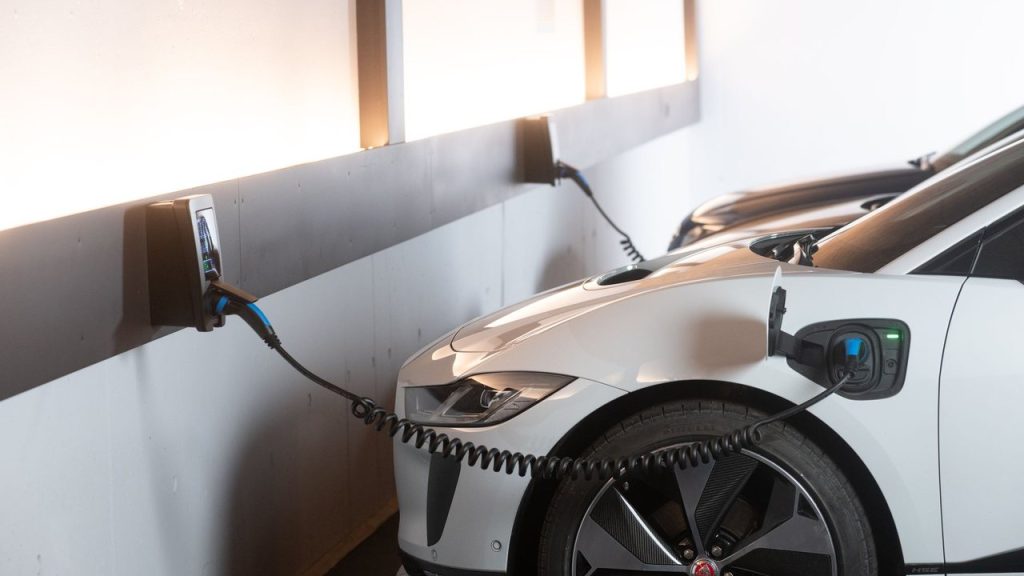
3. EVDANCE Portable Level 2: 24A Charger with NEMA 10-30 Dryer Plug
- Plugs into a NEMA 10-30 dryer outlet
- Adjustable 10A to 24A, 1-12 hour delay timer
- IP66 housing, -22 to 122 degrees F
- 25 ft total cable, ETL listed
The EVDANCE Portable Level 2 charger is built around one outlet: the three-prong NEMA 10-30 that older homes use for clothes dryers. It plugs straight in and delivers up to 24 amps at 240 volts, with current adjustable from 10 to 24 amps so you can step down on older wiring. The listing gives a total cable length of 25 feet, split between the outlet side and the car side.
For a plug-in hybrid, 24 amps is enough to reach the onboard charger limit of many models without running a new circuit, provided the outlet is in good shape. A display shows voltage, current, power and session time, and a 1 to 12 hour delay timer helps you start charging during off-peak hours. The housing is rated IP66, the listed operating range is -22 to 122 degrees Fahrenheit, and the unit is ETL listed.
The catch is the plug itself. It does not fit 14-50, 6-50 or household outlets without an adapter, and EVDANCE notes that the plug and socket connection is not waterproof. Have an electrician check an older dryer outlet before regular use, and cap the connector when it is idle.
View EVDANCE 24A NEMA 10-30 Dryer-Plug Charger on Amazon
4. Grizzl-E Mini Level 2 Portable: 7-40A Charger with Four Plug Adapters

- Adjustable 7A to 40A at 240V
- 14-50 plug plus 5-15, TT-30, 14-30 and 6-50 adapters
- NEMA 4X cast aluminum, built-in GFCI
- 24 ft cable and soft carrying case
The Grizzl-E Mini is a compact portable charger from the Canadian maker of the Grizzl-E wall units. It comes with a NEMA 14-50 plug and a 24 foot cable, plus four adapters for NEMA 5-15, TT-30, 14-30 and 6-50 outlets, all packed in a soft carrying case. Amperage is adjustable from 7 to 40 amps, and the listing says it is compatible with all EVs and PHEVs sold in North America.
That range of adapters is the reason to pick it for a plug-in hybrid. You can set the current to suit a campground TT-30 pedestal, a 14-30 dryer outlet or a household plug, and the car takes whatever its onboard charger allows. The enclosure is cast aluminum rated NEMA 4X, and the listed protections cover over current, over and under voltage, ground fault and over temperature, with a built-in GFCI.
Local smart features let you set maximum power, schedule sessions and track energy use when you are within range of the charger. For a PHEV, the 40 amp ceiling is more than the car will use, so set the current to match each outlet and its circuit, not the charger’s maximum.
View Grizzl-E Mini Portable Charger with Adapters on Amazon
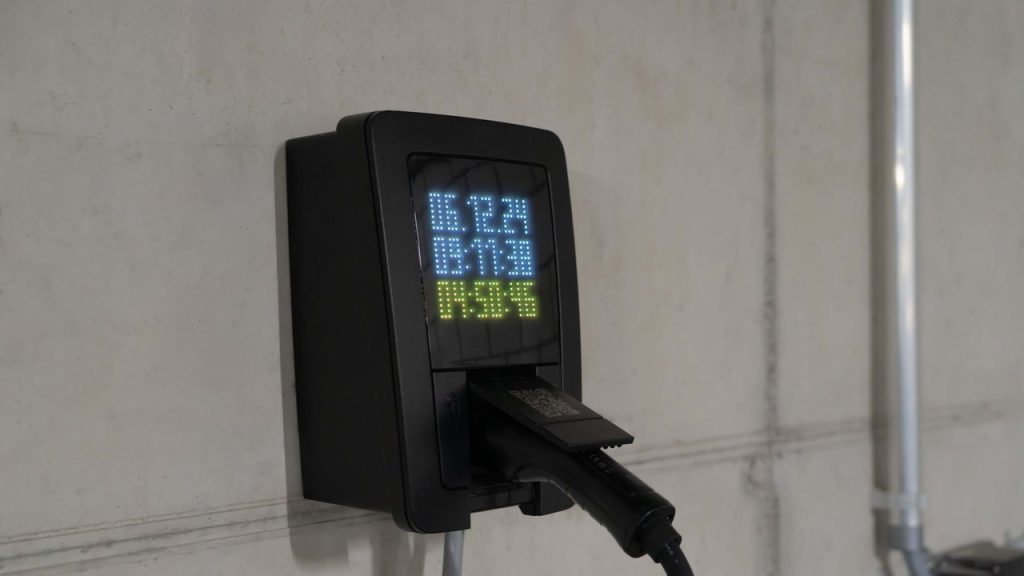
5. VEVOR Level 1 and 2: 16A J1772 Charger with NEMA 6-20P Plug
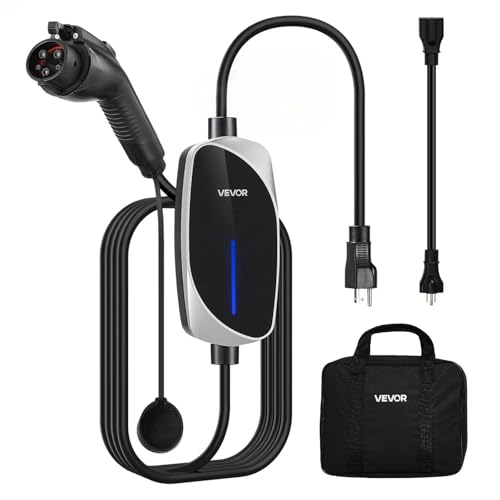
- 16A Level 1 and 2, 120V to 240V
- NEMA 6-20P plug with NEMA 5-15 adapter
- IP66 control box with LED status lights
- 25 ft cable and carrying bag
The VEVOR Level 1 and 2 charger is a 16 amp portable cord for J1772 vehicles. It plugs into a NEMA 6-20 outlet for 240 volt charging, and an included NEMA 5-15 adapter lets it run from a standard household outlet. The cable is 25 feet long, and the charger comes with a carrying bag for the trunk.
Many plug-in hybrids, especially smaller ones, accept around 3.3 kW, and a 16 amp unit on 240 volts covers that with room to spare. That makes this a sensible match when the car, not the charger, is the limit. The listing describes protection against surge, leakage, grounding faults, over and under voltage, overcurrent and overheating, and the control box is rated IP66 for outdoor conditions.
Status is shown with LED indicators rather than a screen, so there is no readout of kWh or a delay timer to plan around off-peak rates. If your PHEV accepts 6 kW or more, a 24 or 32 amp charger will shorten each session. A 6-20 outlet is less common than a 14-50, so if you need one added, have a licensed electrician install it on a dedicated circuit.
View VEVOR 16A NEMA 6-20 Level 1/2 Charger on Amazon
6. TopAutoGear Level 1 and 2: 8-16A Charger with 40 ft Cable

- Four current settings: 8, 10, 13 and 16A
- NEMA 6-20 plug with 5-15 adapter
- 40 ft cable, caps at 13A on 120V
- LED display for voltage, power and energy
The TopAutoGear portable charger stands out for its cable: 40 feet from the control box to the J1772 connector. It plugs into a NEMA 6-20 outlet for 240 volt charging and includes a NEMA 5-15 adapter for household outlets. Current is set manually at 8, 10, 13 or 16 amps, and the listing says the charger limits itself to 13 amps when it detects the 120 volt adapter.
That reach helps when a plug-in hybrid is parked in the driveway because the garage is full, or when the charge port sits on the far side of the car. Selectable current lets you go easy on an older circuit, and 16 amps at 240 volts covers PHEVs with a modest onboard charger. An LED display shows charging speed, voltage and total energy delivered, and there is no app or Wi-Fi to set up.
The control box is rated IP54, which the maker describes as splash and dust resistance, so do not leave it lying in standing water or slush. Lift the cable off the ground in winter and coil it after use. For cars that accept more than about 4 kW, a higher-amp unit charges faster.
View TopAutoGear 40 ft 16A Level 1/2 Charger on Amazon
Matching a Charger to Your Plug-In Hybrid
Start with your outlet and the onboard charger rating, then find the row that fits.
| Your setup | Plug | Max output (listing) | Pick |
|---|---|---|---|
| Range or RV outlet, wall mount wanted | NEMA 14-50 | 32A, 7.7 kW | Enphase HCS-40 |
| Household outlet now, 240V later | NEMA 5-15 and 14-50 | 24A at 240V | Lectron Explorer |
| Spare dryer outlet in the garage | NEMA 10-30 | 24A | EVDANCE 24A |
| Several outlet types, travel | 14-50 plus four adapters | 40A, adjustable from 7A | Grizzl-E Mini |
| Small 240V outlet, low intake car | NEMA 6-20 with 5-15 adapter | 16A | VEVOR Level 1 and 2 |
| Long driveway, outlet far away | NEMA 6-20 with 5-15 adapter | 16A, 40 ft cable | TopAutoGear |

On a short commute, the Level 1 cordset that came with the car may already be enough. Level 2 earns its place when you need a full battery twice in one day.
Cold Garages and Snowy Driveways in West Michigan
Cold batteries charge more slowly, and a PHEV in an unheated January garage may spend part of its charge warming the pack. The gas engine also starts more often in deep cold to help heat the cabin.

Several of these chargers list an operating range down to -22 degrees Fahrenheit and a sealed or weather-rated enclosure, which matters if the car lives in the driveway. Keep the cable off the ground so it does not freeze into slush, and cap the connector between sessions. Our guide to the EV chargers that handle cold weather goes deeper on winter ratings.

When the Car Is the Problem, Not the Charger
A plug-in hybrid still has a 12 volt battery that wakes up its computers, and a weak one can stop a charging session before it starts. If the car will not accept a charge from any cord, test that battery first; our guide to the best car battery for hybrids explains the AGM types these cars use.
Charge port faults, hybrid system warnings and charging errors that follow the car rather than the cord are body and engine electronics work. Our car electrical repair in Grand Rapids traces those faults, and a scan tool made for hybrids can read the codes before you book.
A car power inverter cannot charge a plug-in hybrid; the units in our power inverter for car guide are for laptops and small tools. For a charger that travels, see our portable EV charger picks.
More Buying Guides
Frequently Asked Questions
Do plug-in hybrids need a Level 2 charger?
Not always. A PHEV battery is small enough that many owners refill it overnight on the Level 1 cordset that came with the car. Level 2 helps when you want a full charge in a few hours or charge more than once a day.
Can a plug-in hybrid use a 40 or 48 amp charger?
Yes, as long as it has a J1772 connector. The car simply draws what its onboard charger allows, so the extra capacity goes unused. It only pays off if a full EV will share the charger later.
Can I charge a PHEV from a dryer outlet?
With a charger made for that plug, such as the EVDANCE 24A with a NEMA 10-30 plug, yes. Have an electrician check the circuit and outlet first, because an older dryer outlet may not be in shape for hours of continuous load.
What is the best EV charger for plug in hybrid cars with a small onboard charger?
A 16 amp Level 1 and 2 unit like the VEVOR or TopAutoGear covers a car that accepts around 3.3 kW, and it also works on a household outlet. Spend more only if your manual lists a higher intake.
Is the gas engine starting far more often than it used to, or does the dash flash a hybrid system warning right after you plug in? Our front desk at 616-279-3832 picks up Monday through Friday from 8am to 5pm, or you can request an electrical diagnosis online and note the charge level when it happens.
Plugged in at home all day and no time to visit while we are open? Leave the hybrid at 456 Carrier St NE in our after-hours drop-off, with the key and a quick note about which warning appeared and when.