As an Amazon Associate, 456 AutoFix earns from qualifying purchases. Product links below go to Amazon, where you can confirm the right part for your vehicle.
An E36 M3 that only commutes asks very little of its brake fluid. Take the same car to an autocross or a track day and the fluid becomes the weak link, because repeated hard stops can push it past its boiling point. Choosing the best brake fluid for E36 M3 use comes down to how hard you drive, how often you are willing to flush, and how old the hydraulic parts are.
US cars were sold from the 1995 to 1999 model years, so even the youngest is well over 25 years old. This guide focuses on high-boiling racing DOT 4 fluids. For a wider look at everyday DOT 4 options, see our guide to choosing a DOT 4 brake fluid.
Quick answer
Which brake fluid suits an E36 M3?
Use a high-boiling racing DOT 4 fluid, never silicone DOT 5. Motul RBF 700 is a DOT 4 racing fluid that Motul also lists for road use. Castrol SRF holds a much higher wet boiling point between flushes, and Wilwood EXP 600 Plus is a solid DOT 4 for budget-minded autocross drivers.
Our Quick Picks
Three starting points for an E36 M3: a racing DOT 4 that Motul allows for road use, a fluid with a high wet boiling point and a value racing DOT 4.

Motul RBF 700
High-boiling DOT 4 that Motul lists for road use as well as racing.

Castrol SRF
High wet boiling point that holds up better between flushes.
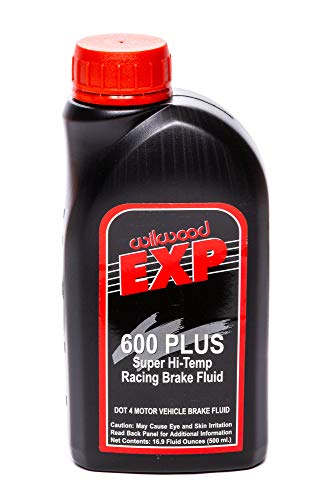
Wilwood EXP 600 Plus
Racing DOT 4 from a brake maker, a sensible fit for autocross.
Street, Autocross or Track: How Hard Does Your M3 Work?
Brake fluid has one job: carry pedal pressure to the calipers without compressing. Heat is what breaks that. When the fluid near a hot caliper boils, it forms vapor bubbles, and vapor squeezes like air, so the pedal goes long or soft.
- Street only: any fresh DOT 4 works. Old, wet fluid is the real risk.
- Autocross: short runs with cool-down time, so heat builds less than on a road course.
- Track days and HPDE: long sessions of hard stops, where a high dry boiling point matters most.
- Dedicated track car: the highest-boiling fluids, flushed on a schedule.
Pads with the wrong temperature range fade whatever fluid is in the lines. Our roundup of brake pads for daily driving covers the street side of that choice.
Reading Boiling Points and DOT Labels
Every bottle quotes two numbers. The dry boiling point applies to fresh fluid straight from a sealed container. The wet boiling point applies after the fluid has absorbed a set amount of moisture, which is closer to fluid that has been in the car for months. A strong wet figure keeps a fluid useful for longer between changes.
Compatibility is simple. DOT 3, DOT 4 and DOT 5.1 are all glycol based and can share a system, although a mix behaves like the weaker fluid, so flush completely rather than top up. DOT 5 is silicone and must never go into an E36 system built for glycol fluid.
Wilwood’s own EXP 600 Plus product page advises against mixing DOT classifications and warns that silicone DOT 5 turns to gel when it meets glycol fluid.
Best Brake Fluid for E36 M3: Six Fluids in Detail
All six are non-silicone racing or high-temperature fluids listed on Amazon US. None of them carries a BMW approval for the E36 M3, so check your owner’s manual for the specification and treat these as performance upgrades over a standard DOT 4.
1. Motul RBF 700 Factory Line: Synthetic DOT 4 Racing Fluid with 637°F Boiling Point
- 100% synthetic racing fluid, DOT 4
- Listed boiling point of 336°C / 637°F
- For hydraulic brake and clutch actuation
- Listing allows road use in performance cars
Motul RBF 700 Factory Line is the top fluid in Motul’s racing brake range. The listing describes it as a fully synthetic racing fluid that meets the DOT 4 standard, made for hydraulically actuated brake and clutch systems. That clutch mention matters on a manual E36 M3, where the clutch draws fluid from the brake reservoir.
Motul quotes a very high boiling point of 336°C, or 637°F, which is aimed at extreme temperatures on track. The listing also says the fluid works with conventional steel discs, so it suits a car on ordinary rotors rather than only carbon race brakes. It promises consistent braking power as heat builds through a session, which is the problem a fade-prone older M3 tends to show.
The detail that sets it apart from many racing fluids is the road note. Motul says RBF 700 meets the DOT 4 standard so it can be used in high-performance vehicles on the road, which suits a car that is driven to the track. The listing does not give a wet boiling point, so plan on flushing before events and at least yearly, as with any racing fluid. Owners who only drive on the street will not use what it offers.
2. Motul RBF 660 Factory Line: Synthetic DOT 4 Racing Brake Fluid, 500 ml

- 100% synthetic DOT 4 racing fluid
- Dry boiling point of about 325°C per Motul data
- Non-silicone glycol base
- 500 ml bottle, made in France
Motul RBF 660 Factory Line sits below RBF 700 in Motul’s racing range. It is a fully synthetic DOT 4 fluid on a non-silicone glycol base, so the usual DOT 4 compatibility rules apply, and it is sold in a 500 ml bottle made in France.
Motul’s product data puts the dry boiling point at about 617°F (325°C), with a wet figure of roughly 401°F (205°C). In practice that means extra headroom for fresh fluid in a car that is worked hard, such as an E36 M3 with aggressive track pads running back-to-back sessions on a hot day. The gain shows up when the fluid is new, which is how most racing teams use it.
Because the wet figure is modest next to Castrol SRF, the extra dry margin fades as the fluid absorbs water. That makes RBF 660 a better match for a car flushed after every event than for a street car that goes a year between changes. It is best treated as a track fluid for owners who bleed the calipers often, and it is more fluid than a street-only M3 needs. Check the current Motul data sheet for the latest figures before you rely on them.
3. Castrol SRF Racing Brake Fluid: 270°C Typical Wet Boiling Point, 1 Liter
- Typical wet boiling point of 270°C per the listing
- Anti-vapor-lock European formula
- Made for racing and rally conditions
- 1 liter can, part 12512
Castrol SRF Racing Brake Fluid is a European formula that the listing describes as having a very high boiling point and strong resistance to vapor lock. It is designed for hard use such as racing and rallying, and it comes in a 1 liter can, which covers a full E36 flush and the clutch line with fluid to spare.
The headline figure is the wet boiling point. The listing quotes a typical wet figure of 270°C, which is far above the wet numbers of most racing DOT 4 fluids. Since the fluid in a car spends most of its life somewhere between fresh and wet, that gives SRF a steadier margin as weeks pass after a flush.
That steadiness is why many owners who run several track weekends a season use it, as they can space their full flushes further apart while still bleeding the calipers after hard sessions. The listing does not state a DOT class, so read the can label and flush the old fluid out fully rather than topping up. It is more than a street-only car needs. It suits a driver who values consistency over squeezing out the highest dry boiling point.
4. Endless RF-650 Racing Brake Fluid: High Dry Boiling Point for Firm Pedal Feel

- Racing brake fluid used in F1, WRC and Dakar per the listing
- Designed to hold its dry boiling point
- Low compressibility for a firm pedal
- Listed for use in all vehicle types
Endless RF-650 is a racing brake fluid from the Japanese brake maker Endless. Its Amazon listing says it has been used in Formula 1, the World Rally Championship and the Dakar Rally, and it describes the fluid as able to hold its dry boiling point under hard use.
The other selling point in the listing is pedal feel. Endless says the fluid’s low compressibility gives a stiffer and more consistent pedal, which experienced drivers notice when they are trail braking at the edge of grip. The listing also says that although it is marketed as a race fluid, it can be used in all types of vehicles, so it is not restricted to competition cars the way some racing fluids are.
The listing does not give a boiling point figure, so check the maker’s data sheet or the label before you compare it with the others here. Some sellers class it as DOT 5.1 compatible, which still means a glycol fluid that mixes with DOT 4, never silicone DOT 5. It suits an E36 M3 owner who already flushes often and wants the firmest pedal possible, and it is an odd fit for a street car that sits for months. Confirm the bottle size on the listing, since some packs are sold as cases.
5. Brembo HTC 64T Racing Brake Fluid: 335°C Dry Boiling Point, 1/2 Liter

- Dry boiling point of 335°C per the listing
- High temperature fluid for extreme racing
- Listed exclusively for racing use
- 1/2 liter bottle
Brembo HTC 64T is a high-temperature racing brake fluid from the Italian brake maker. The listing compares it with typical competitor racing fluids at 310°C and gives the HTC 64T a dry boiling point of 335°C, which is the highest dry figure among the fluids in this guide.
That number is aimed at extreme racing, where the brakes see repeated stops from high speed with little time to cool. In an E36 M3 race car with upgraded pads and ducting, a very high dry boiling point helps keep the pedal consistent through a full stint. The fluid comes in a half-liter bottle, so plan on more than one for a complete flush that includes the clutch line.
The important limit is in the listing itself: Brembo says the fluid is exclusively for racing use. That makes it a poor match for a car that also drives on public roads, where you want a fluid that holds up for months between changes. Treat it as part of a race-car routine, with the system flushed or bled after every weekend. For a dual-purpose M3, the Motul or Castrol options make more sense.
6. Wilwood EXP 600 Plus Racing Brake Fluid: DOT 4 That Exceeds FMVSS 116
- Conforms to and exceeds FMVSS 116 DOT 4 per Wilwood
- Glycol fluid, not mixable with silicone DOT 5
- Made for street performance and racing
- 500 ml bottle, part 290-6209
Wilwood EXP 600 Plus is a racing brake fluid from the American brake maker, sold in a 500 ml bottle under part number 290-6209. Wilwood’s product page says it conforms to and exceeds the US FMVSS 116 DOT 4 specification, so it fits the same role as the other DOT 4 fluids in this guide.
Wilwood’s page lists boiling point figures that differ between the summary and the description, so compare the current label rather than relying on a single quoted number. The fluid is glycol based, and Wilwood warns that silicone DOT 5 will turn to gel if mixed with it. It also advises against mixing fluids of different DOT classes and says to use fresh, unopened fluid.
Wilwood is also clear on service. Its page suggests flushing a street car every year and changing the fluid after each race weekend on a track car, especially after wet sessions or any sign of boiling. That makes EXP 600 Plus a practical pick for an E36 M3 that sees autocross or the odd track day and gets a regular flush. Owners who want the longest gap between changes will find Castrol SRF a better fit.
View Wilwood EXP 600 Plus on Amazon
Which Fluid for Which Kind of Driving
The right pick also depends on how often you want to bleed the car.
| How you drive the M3 | Fluids that fit | Flush habit to plan for |
|---|---|---|
| Street with a rare track day | Motul RBF 700, Wilwood EXP 600 Plus | Before each event and at least yearly |
| Regular autocross | Castrol SRF, Wilwood EXP 600 Plus | Bleed the calipers when the pedal changes |
| Several HPDE weekends a season | Castrol SRF, Motul RBF 660, Endless RF-650 | Bleed after hard weekends, full flush yearly |
| Dedicated track car | Brembo HTC 64T, Motul RBF 660, Endless RF-650 | After each race weekend |

Flushing an E36 M3 Between Events
On manual E36 cars, the clutch hydraulics draw from the same reservoir as the brakes, through a small internal section. A full flush should include bleeding the clutch slave cylinder, or old fluid stays in that line. Keep the reservoir topped up during the job, because the clutch side can run low fast and pull in air.
For change timing, start with the schedule in your service booklet and our article on how often to change brake fluid. Wilwood suggests a yearly flush for street cars and a change after each race weekend for track cars. Many track-day tech forms also ask when the fluid was last changed, so a recent flush makes inspection easier.
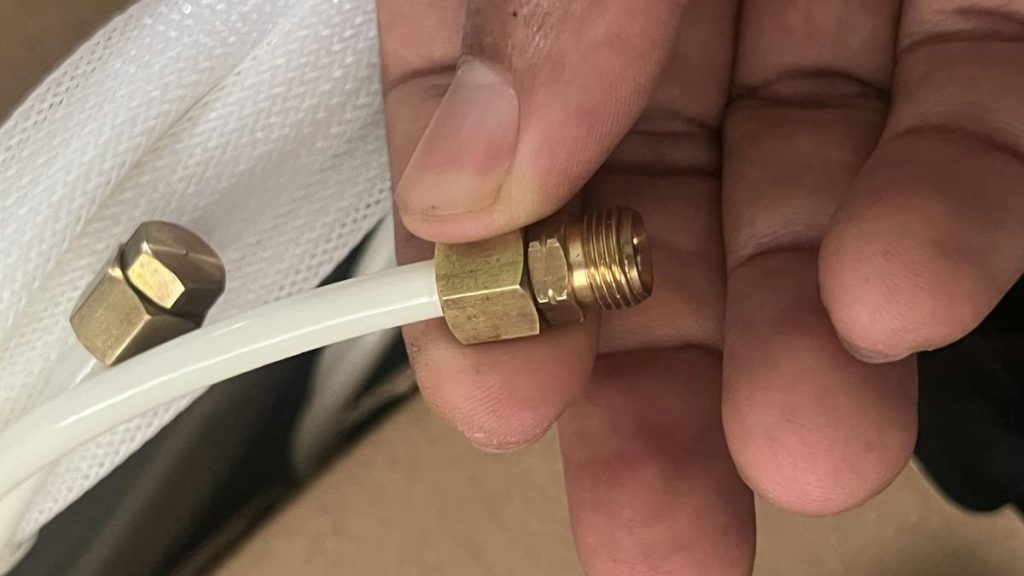
West Michigan adds its own pressure. Humid summers speed up moisture pickup, and road salt attacks old hard lines and bleed screws. A cheap tester gives a quick read, and our review of brake fluid tester pens explains what they can and can’t tell you.
When to Hand the Bleed to a Shop
Bleeding brakes is a job many owners leave to a shop, especially when a bleeder screw is seized or the ABS unit may hold trapped air. If the pedal sinks after a flush, read our guide to a brake pedal that goes to the floor and park the car until the cause is found. A lit warning lamp after brake work deserves the same caution, and our explainer on why the ABS light comes on covers the usual causes.
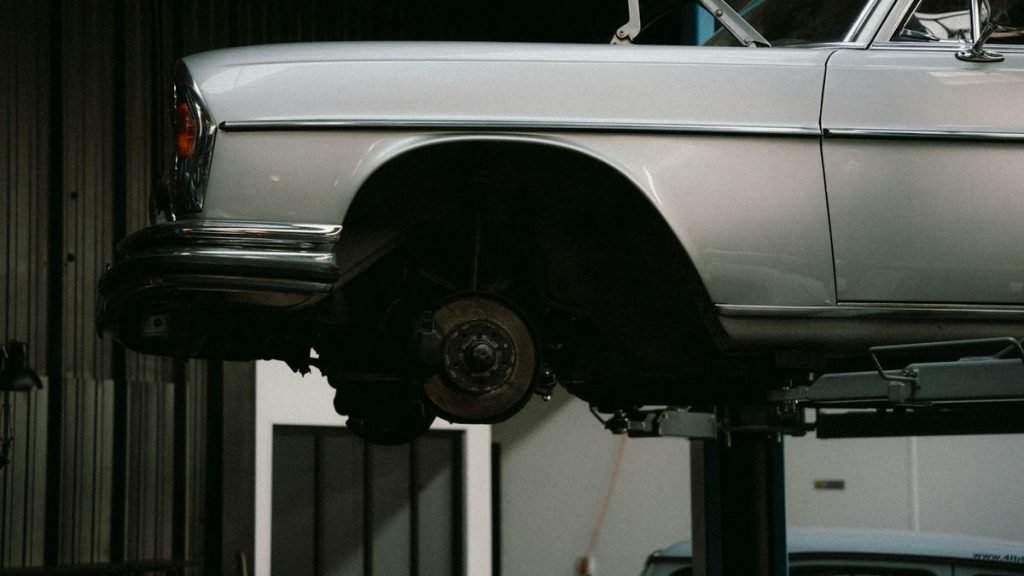
Our brake repair service in Grand Rapids handles fluid flushes, hoses, calipers and pads. Our foreign car repair team works on older European cars too. If your E36 also shows warning codes, our guide to a scan tool for older BMW 3 Series cars explains the adapters these cars need.
More Buying Guides
Frequently Asked Questions
Can I use a racing fluid in an E36 M3 driven on the street?
Yes, if the maker allows it. Motul lists RBF 700 for road use in performance cars, while Brembo says HTC 64T is for racing only. Flush a racing fluid at least yearly and before any track event.
Can I mix racing fluid with the old DOT 4 in my M3?
Glycol DOT 3, DOT 4 and DOT 5.1 fluids won’t react with each other, but a mix performs like the weaker fluid. Flush the old fluid out completely. Never add silicone DOT 5.
Do I need to bleed the clutch when I flush the brakes on an E36?
On a manual car, yes. The clutch draws fluid from the brake reservoir, so bleed the slave cylinder too or the clutch line keeps the old fluid.
What is the best brake fluid for E36 M3 track cars that rarely see the street?
A fluid with a very high dry boiling point, such as Brembo HTC 64T or Motul RBF 660, suits a car that is flushed after every race weekend. Brembo lists HTC 64T for racing use only.
Soft pedal after a track day, or a flush you would rather not do yourself? Call 456 AutoFix in Grand Rapids at 616-279-3832, Monday to Friday 8am to 5pm, or schedule a brake visit through our contact page.
Busy during our hours? Use our after-hours drop-off at 456 Carrier St NE in Creston.