As an Amazon Associate, 456 AutoFix earns from qualifying purchases. Product links below go to Amazon, where you can confirm the right part for your vehicle.
Most people start weighing fixd vs obd2 scanner the morning an amber engine symbol appears on the dash. One choice is a thumb-sized Bluetooth sensor that lives under the steering column and reports to a phone app. The other is a classic handheld reader with a cable and its own screen, which needs no phone, no account and no pairing.
Both read the same standard engine codes, since every car and light truck sold in the US since 1996 shares the same 16-pin diagnostic port and code language. They part ways on how results are explained, what might cost extra later and who in the household will actually pick the tool up. For a wider field of handhelds, tablets and dongles, see our roundup of OBD2 scanners for DIY mechanics.
Quick answer
Is FIXD a smarter buy than a regular handheld OBD2 scanner?
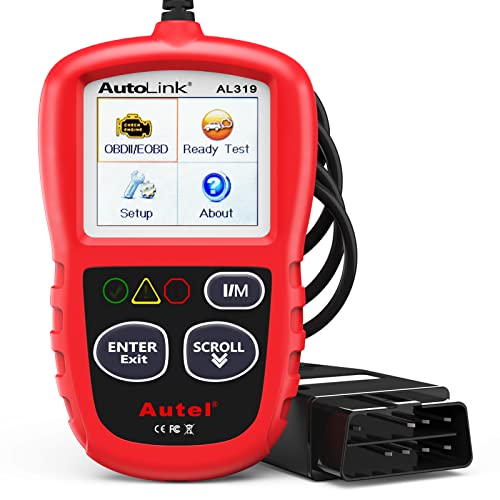
Choose FIXD if you want plain-English results, maintenance reminders and one app for every car in the family. Choose a handheld OBD2 scanner such as the Autel AL319 if you want a self-contained tool with no phone, account or subscription offer. For engine codes alone, both read and clear the same standard faults.
Our Quick Picks
FIXD and a traditional handheld OBD2 scanner, plus a closely related third pick: the Innova 1000, another phone-based sensor. All three are reviewed below.

FIXD Sensor
Plain-English alerts and maintenance reminders for every car in the house.
Autel AL319
Self-contained code reader with a one-click emissions readiness check.

Innova 1000
Phone sensor with repair guidance in the RepairSolutions2 app.
Those three cards cover the two sides of the debate plus a middle path: a second phone sensor built around a no-subscription app. Each tool gets a full section below with the features its listing states and the jobs it doesn’t suit.
What Happens When You Plug Each One In
FIXD works through your phone. You plug the sensor into the port, install the app, create an account and pair over Bluetooth, and from then on a scan is a tap away. According to the free and Premium feature table on FIXD’s FAQ page, the free app reads more than 7,000 engine codes in simple terms, clears the light, shows live data and sends maintenance and recall alerts.
A handheld does the whole job inside one box. The cable powers it from the car, so there are no batteries to charge, and a menu on the screen walks you to codes, definitions, freeze frame and readiness status. Nothing needs installing, and the tool doesn’t care whether your phone is dead, out of storage or sitting at home.
Underneath, the conversation with the car is the same. A P0420 reads as P0420 on either tool, and neither one can prove which part failed. What changes is the wrapping: FIXD rates severity and explains the fault in everyday words, while a handheld gives you the code, its definition and the raw data to dig into.
Phone Sensor and Handheld Reader, Feature by Feature
The FIXD column draws on its Amazon US listing and the maker’s FAQ, and the Autel column on its Amazon US listing. Where a source is silent, the table says so instead of filling the gap.
| Point | FIXD sensor | Autel AL319 handheld |
|---|---|---|
| Screen | Your iPhone or Android phone | Built-in color TFT display |
| Power | Draws from the OBD2 port | Draws from the OBD2 port, no batteries |
| How codes are shown | Plain-English summary with a severity rating | Code plus on-screen definition |
| Live data | Yes, in the free app | Yes |
| Emissions readiness | Emissions Precheck with Premium | One-click I/M readiness key |
| Beyond the engine | ABS codes on select makes | Not listed |
| Ongoing cost | Optional yearly Premium subscription | None listed; free lifetime updates |
| Several cars | One app stores scans by vehicle | Moves from car to car on its cable |
| Diesel coverage | 2006 and newer diesels | Not stated; listing says OBD II vehicles after 1996 |
The fixd vs obd2 scanner split is clear enough. FIXD trades a screen and buttons for convenience, family features and paid advice, while the AL319 trades those extras for independence and a one-time purchase. Neither reaches deep into airbag, transmission or body modules on most cars.
FIXD vs OBD2 Scanner: The Three Tools in Detail
All three have been covered on our site already: FIXD in our BlueDriver vs FIXD comparison, the AL319 in our used car inspection tool list and the Innova 1000 in our iPhone Bluetooth scanner picks. They return here because FIXD sells a single sensor, the AL319 is the plainest example of a handheld and the Innova is FIXD’s closest app-based rival. Features vary by make, model and year, so check your vehicle before ordering.
FIXD Sensor: Bluetooth OBD2 Code Reader with Plain-English App Alerts
- Bluetooth link to iPhone and Android
- Plain-English results with severity alerts
- Saves scans and reminders for several cars
- Gas and hybrid 1996+, diesel 2006+
The FIXD sensor is a small Bluetooth plug that turns an iPhone or Android phone into the display for your car’s diagnostic port. It is meant to stay tucked under the dash, so the next scan is ready whenever a warning light appears. The listing says it can identify more than 39,000 issues across thousands of vehicles, from basic check engine faults to enhanced codes, and it covers gas and hybrid models from 1996 plus diesels from 2006.
Its real strength is translation. Instead of a bare code, the free app gives a short explanation and a severity rating, and it can warn you about a dangerously severe problem or upcoming maintenance. Scans are saved by vehicle, mileage reminders sit in one account, and results can be shared with family or a repair shop.
The listing includes a free Premium trial that adds repair recommendations, cost estimates, vehicle value by condition and live mechanic support, and the subscription is optional after that. You need a phone, the app and an account to use it, which some buyers see as a drawback. It is not a full-system scan tool, and FIXD’s own FAQ limits ABS reading to select makes.

Autel AutoLink AL319: Corded OBD2 Code Reader with One-Click I/M Readiness
- Reads and clears codes with on-screen definitions
- Live data, freeze frame and vehicle info
- One-click I/M readiness with speaker and LEDs
- Powered by the car, no batteries or app
The Autel AutoLink AL319 is the kind of tool most people picture when they hear OBD2 scanner: a compact handheld with a color screen, a few buttons and an attached cable. It plugs into OBD II vehicles from 1996 onward, takes its power from the car and needs no batteries, app or account. The listing describes it as plug and play for owners with little repair experience.
It reads and clears trouble codes, looks up code definitions, and shows live data, freeze frame and vehicle information. A patented one-click I/M readiness key reports whether the emissions monitors have finished their self-tests, which helps after a repair or before you sell a car. A built-in speaker and LED indicators back up that result, and the menus come in seven languages.
Autel lists a 12-month warranty and free lifetime updates, so there is no ongoing cost. Because the tool works on its own, it can sit in a glovebox and move from car to car without pairing. The tradeoff is scope: the listing covers engine and emissions functions only, with no ABS, airbag or service resets, and it offers no maintenance reminders or plain-language advice.
Innova 1000: Bluetooth OBD2 Sensor with ABS and SRS Codes, No Subscription
- Bluetooth link to iPhone and Android
- Engine, ABS and SRS codes listed
- RepairSolutions2 app guidance, no subscription
- Real-time data for 1996+ vehicles
The Innova 1000 is a Bluetooth OBD2 sensor that, like FIXD, sends its results to a phone app rather than a screen of its own. It pairs with iPhone and Android devices and runs through Innova’s RepairSolutions2 app. The listing says it supports most cars, trucks and SUVs from 1996 onward, and it suggests checking Innova’s Coverage Checker before you buy because support varies by vehicle.
Where it differs from FIXD is the business model and the systems it names. Innova’s listing promises repair guidance, part recommendations and cost estimates through the app with no subscription or extra charges. It also lists engine, ABS and SRS codes along with real-time data, which takes it beyond the engine-only scope of a basic handheld reader.
The sensor is light enough to keep in a door pocket for roadside checks or before an emissions test. As with any phone-based tool, you depend on a charged phone and the app to see anything, and the first setup takes a few minutes. The listing does not mention diesel coverage, family multi-car features or service resets, so diesel truck owners and anyone needing active tests should look elsewhere.
Matching the Tool to the Driver
Settle fixd vs obd2 scanner by thinking about who will hold the tool on a cold morning, not just what it can read. A parent managing three family cars wants something different from a weekend wrencher who already owns a socket set.
| Your situation | Better fit | Why |
|---|---|---|
| Several family cars, drivers who don’t read codes | FIXD | One app, plain-English alerts, maintenance reminders |
| You want no phone, account or subscription | Autel AL319 | Self-contained reader powered by the car |
| The tool lives in the glovebox for any car | Autel AL319 | Plug in, read, unplug, done |
| You drive a 2006 or newer diesel | FIXD | Diesel support is stated in the listing |
| You want ABS and SRS codes from a phone sensor | Innova 1000 | Listing names engine, ABS and SRS codes with no subscription |
Cost of ownership deserves a moment too. The AL319 and the Innova 1000 are sold as one-off purchases, and Innova’s listing says the guidance in its RepairSolutions2 app carries no subscription. FIXD’s free tier covers reading and clearing codes, and the subscription is optional, so you can try the paid features and walk away.

If you mainly want to know whether a light is safe to drive on, FIXD’s severity rating is the most direct answer of the three. If you want to see readiness monitors before a used car purchase or watch a sensor reading while the engine warms up, the AL319 or the Innova app gives you more to look at. For more scanner match-ups, try our Autel vs Ancel comparison.
Grand Rapids Winters and Plug-In Sensors
Phone sensors such as FIXD are designed to stay in the port, which is handy until a car sits for weeks in a January driveway. Any device on the OBD2 port draws a little power, and a battery already weakened by cold starts has less margin. If a car will be parked for a long stretch, unplug the sensor or put a maintainer on the battery.
Phones dislike the cold as well. A phone that shuts down at a low charge in a frozen car can leave you without a scan right when the light comes on, which is one quiet advantage of a corded reader kept in the glovebox. Road salt also corrodes connectors, so a sudden batch of communication codes after a slushy week is worth a recheck before you blame the tool.

Cold weather can also nudge a marginal sensor into setting a code, then the fault never repeats once temperatures rise. Clear it, drive a few days and scan again. A code that keeps returning, or a light that flashes, needs attention whatever the season.
When the Code Is Only the Starting Point
Whichever side of the fixd vs obd2 scanner debate you land on, every tool here tells you where the car’s computer saw a problem, not which part to buy. The maintenance advice on FuelEconomy.gov notes that modern cars can seem to drive normally even when a repair is needed, and that a lit check engine light can mean anything from a loose gas cap to a fault that hurts mileage and emissions. Our article on a check engine light that’s on while the car runs fine explains why that light still deserves a look.

European cars add another layer, because many of their faults sit in modules a basic reader never opens. Our list of common Audi fault codes shows how often the trouble lives outside the engine computer. When your reader points somewhere but the fix isn’t obvious, our check engine light diagnostics in Grand Rapids test the circuit and the part before anything gets replaced.
More Buying Guides
Frequently Asked Questions
Is FIXD better than a regular OBD2 scanner?
Not better, just different. Both read and clear standard engine codes. FIXD adds plain-English explanations, severity ratings and multi-car tracking through a phone app, while a handheld like the Autel AL319 works on its own with no phone or account. Pick the style that suits the people using it.
Do I have to pay a subscription to use FIXD?
No. FIXD’s FAQ says the free app reads engine codes, clears the check engine light, shows live data and sends maintenance alerts. The optional Premium subscription adds repair cost estimates, the Mechanic Hotline, Emissions Precheck and other extras.
Can FIXD or a basic handheld read ABS and airbag codes?
FIXD lists ABS codes for select makes only, and the Autel AL319 listing covers engine and emissions functions. Neither lists airbag codes. The Innova 1000 listing names ABS and SRS codes, so check Innova’s Coverage Checker for your car first.
Is it safe to leave a Bluetooth OBD2 sensor plugged in?
FIXD is built to stay plugged in during normal driving. Any port device draws a small amount of power, though, so unplug it or use a battery maintainer if the car will sit for weeks, especially in cold weather.
Got a code and no clear answer? Phone 456 AutoFix on 616-279-3832, Monday through Friday from 8am to 5pm, or set up a diagnostic visit through our contact page.
If your own workday matches our hours, the after-hours drop-off at 456 Carrier St NE in Grand Rapids lets you leave the car once your shift is over.