
As an Amazon Associate, 456 AutoFix earns from qualifying purchases. Product links below go to Amazon, where you can confirm the right part for your vehicle.
A rusted bolt rarely gives up to muscle alone. Road salt packs the threads with scale, and a slipping wrench can round the head off in seconds. The best penetrating oil wicks into that seam, softens the rust bond and leaves a film behind, so the fastener turns instead of snapping.
This guide sorts the main types of penetrant, clears up the WD-40 question and then reviews six cans sold on Amazon. A good can earns its shelf space on routine jobs too: drain plugs that have not moved in years show up during an oil change in Creston, and exhaust clamps fight back on almost every older car.
Quick answer
Which penetrating oil frees a rusted bolt most reliably?
No single can wins every job. PB B’laster is a dependable all-rounder, Kroil Original suits long soaks on badly seized hardware, and CRC Freeze-Off adds a chilling shock that cracks the rust. Whichever you choose, spray, wait, tap the fastener and spray again before reaching for more leverage.
Our Quick Picks
Three starting points: a familiar all-round penetrant, a thin creeping oil for long soaks and a freeze-shock spray that cracks rust. All six cans are reviewed below.

PB B'laster 16-PB
A familiar garage penetrant for everyday seized hardware.

Kroil Original SprayTech
A thin creeping oil for badly seized fasteners.

CRC Freeze-Off
Chills the rust so the penetrant can follow into the cracks.
How a Penetrant Breaks the Rust Bond
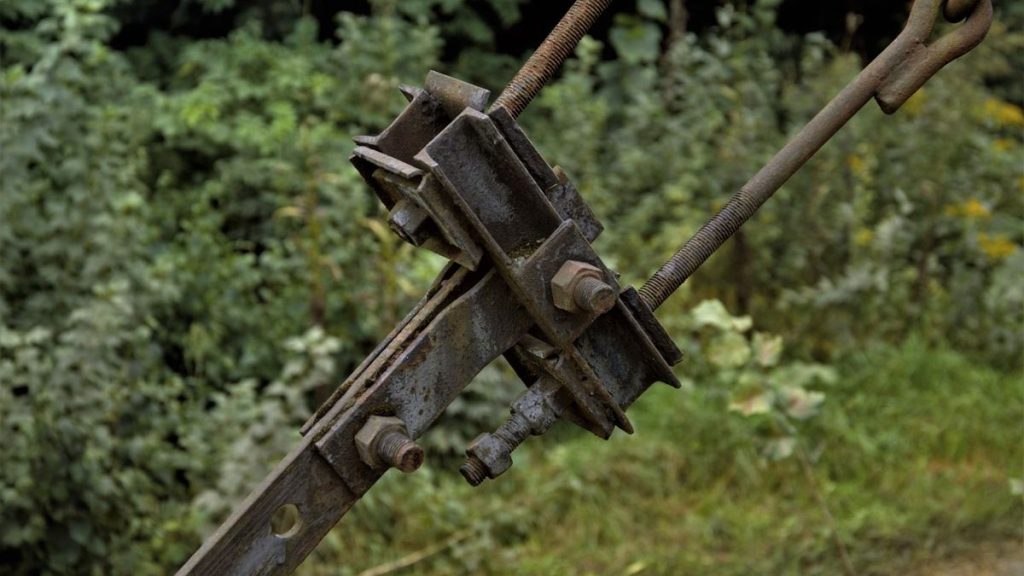
Rust takes up more room than the steel it came from, so a corroded nut and bolt end up wedged together. A penetrant is a thin, low surface tension liquid that creeps along the threads by capillary action. Once inside, it loosens the scale and lubricates the gap, which lowers the torque needed to break the fastener free.
Most products on the shelf fall into three groups:
- Creeping oils: very thin formulas built to travel deep over time. Kroil is the classic example, and the Kroil Original Penetrant page says it can reach the smallest opening, thread or crevice.
- Freeze-shock sprays: they chill the part quickly so the rust cracks, then the liquid follows into those cracks. CRC Freeze-Off works this way.
- General penetrants: fast, easy sprays such as PB B’laster, Liquid Wrench and WD-40 Specialist Penetrant that suit most garage jobs and leave a lubricating film.
Time matters more than brand, even with the best penetrating oil. Apply, wait several minutes, tap the head with a hammer to open the seam, then repeat. On stubborn hardware, an overnight soak often does what a longer breaker bar cannot.
Penetrating Oil vs WD-40 Multi-Use: Not the Same Can
The familiar WD-40 can is a multi-use product. It displaces water and lubricates lightly, but it is not formulated as a dedicated rust breaker, which is why the company sells a separate line for the job.
According to the WD-40 Specialist Penetrant product page, that formula uses capillary action to get into tight crevices, threads and seams and break the bonds that hold stuck parts. It also leaves a lubricating layer to slow new rust. So the honest answer to “penetrating oil vs WD40” is that the multi-use can is a handy helper, while a true penetrant is the tool for a seized fastener.
Neither belongs in the engine or the fuel tank. If you are shopping for something to clean injectors, see our guide to the best fuel system cleaner instead, and for crankcase protection our roundup of the best synthetic oil is the right read.
Best Penetrating Oil: Six Cans for Rusted Hardware
Each product below is sold as a penetrant for stuck or rusted parts, and together they cover the three types above. Choosing the best penetrating oil for your shelf comes down to how badly the part is seized, how long you can let it soak and whether odor or painted surfaces nearby are a concern.
1. B’laster 16-PB Penetrating Catalyst: 11 oz Aerosol for Rusted and Frozen Parts
- Breaks free rusted or frozen parts
- Leaves a non-evaporating lubricating film
- Film helps prevent further rusting
- For automotive, marine and plumbing use
The B’laster 16-PB, sold as PB B’laster Penetrating Catalyst, is the red and yellow can found in a great many home garages and repair shops. It comes in an 11 ounce aerosol, and the listing describes it simply as a product that breaks free rusted or frozen parts. That plain promise is exactly what most car owners need from a penetrant.
One feature sets it apart from a quick-drying spray. The listing says it leaves a non-evaporating lubricating film on parts, which helps prevent further rusting after the fastener comes loose. That matters on a car that will see another salty winter, since a reinstalled bolt with a light film is easier to remove next time. The maker lists automotive, industrial, marine and plumbing equipment as suitable uses.
For good results, spray the threads and the joint between nut and part, wait, tap the head and repeat. It suits exhaust clamps, rusted lug studs, suspension bolts and seized hardware on trailers or lawn equipment. Because the film stays behind, wipe any overspray off brake parts and painted trim. Owners who want a single, general can for most rusted hardware will find this a sensible first choice.
View PB B'laster 16-PB on Amazon
2. Kroil Original Penetrant KS132ST: 13 oz Aerosol with SprayTech 360 Nozzle
- Creeping oil for tight threads and crevices
- SprayTech nozzle works from any angle
- Helps remove rust and inhibit corrosion
- Displaces moisture and cleans carbon deposits
Kroil Original from Kano Laboratories is a thin creeping oil that has been sold since 1939, and this listing is the 13 ounce aerosol with the SprayTech 360 nozzle and straw. The listing says it penetrates small openings, tight threads and crevices, which is the whole point of a creeping formula on a seized bolt.
The SprayTech valve is designed to dispense from any angle, even upside down, so you can reach a bolt on top of a crossmember or behind a bracket without the can sputtering. Beyond freeing parts, the listing says Kroil penetrates and removes rust, inhibits corrosion, cleans carbon deposits and displaces moisture. Kroil also states that the formula is 50-state VOC compliant and made in the USA.
This is the can to reach for when time is on your side. Soak a badly rusted exhaust flange, a frozen sway bar link or a stuck seat bolt, leave it overnight and add a second coat before you pull. For hardware that will keep running under high heat, such as exhaust parts, Kroil points owners toward its graphite version instead. Kroil Original suits patient work on hardware that a fast spray cannot reach.
View Kroil Original SprayTech on Amazon

3. CRC Freeze-Off Super Penetrant: 11.5 oz Spray with Freeze-Shock Action
- Freeze-shock chills the treated surface
- Micro-cracks let the liquid into the rust
- Leaves a film that displaces water
- Low VOC formula with a pine-like odor
CRC Freeze-Off takes a different approach from a plain penetrating oil. The 11.5 ounce aerosol uses what CRC calls freeze-shock action: the spray rapidly drops the temperature of the treated surface, and the contraction creates microscopic cracks in the rust. The penetrating liquid then soaks into those cracks, and CRC says seized parts begin to loosen within seconds.
After the shock, the product leaves a lubricating film that displaces water and helps prevent corrosion from coming back. CRC describes the formula as low VOC with a pine-like odor, so it is less harsh to work around than some solvent sprays. The maker lists automobiles, boats, agricultural equipment, plumbing fixtures and general rusted nuts and bolts among its uses.
Freeze-shock works best on a fastener you can hit directly with the spray, such as a caliper bracket bolt, a sway bar link nut or a hitch pin. It is less suited to a long overnight soak, where a creeping oil has the edge. Keep the nozzle a short distance from the part, avoid skin contact with the chilled metal, and follow up with a second application on very stubborn hardware.
4. WD-40 Specialist Penetrant: 13.3 oz Low-Odor Spray with Smart Straw

- Frees stuck threads, nuts and bolts
- Low-odor formula
- Leaves a layer that helps stop rust reforming
- Smart Straw sprays two ways
WD-40 Specialist Penetrant is the company’s dedicated rust breaker, separate from the familiar multi-use can. This listing is the larger 13.3 ounce size, and it describes the formula as industrial strength for automotive and heavy-duty construction work. It frees stuck threads, locks, chains, nuts and bolts on contact, then leaves a protective layer that helps prevent rust from reforming.
The low-odor formula is the main practical draw. If you work in an attached garage, the lack of a harsh, lingering smell is a real benefit compared with some solvent-heavy sprays. The permanently attached Smart Straw sprays two ways, giving a narrow stream for a single bolt or a wider pattern for a cluster of hardware, and there is no loose straw to lose.
WD-40 says the penetrant is safe on most metals, plastics and rubbers when used as directed, and suggests testing a small area first if unsure. That makes it handy for door hinges, latches and fasteners near trim. It suits everyday seized hardware and owners who already trust the brand, though a creeping oil may still win on a bolt that has been rusting for many winters.
View WD-40 Specialist Penetrant on Amazon
5. Liquid Wrench L106 Penetrating Oil: 5.5 oz, Low Odor and 0% VOC

- Frees stuck nuts, bolts and locks
- Dissolves rust and cuts through grease
- Low odor and 0% VOC, 50-state compliant
- Safe on paint, plastic and PVC
Liquid Wrench has been sold for more than 75 years, and the L106 is its penetrating oil in a compact 5.5 ounce size. The listing says it frees stuck nuts, bolts and locks, while the formula dissolves rust and cuts through grease. It is made in the USA by a family-owned company based in Charlotte, North Carolina.
Two listing details set it apart from many solvent sprays. The formula is low odor and 0% VOC, and it is described as 50-state compliant, which suits owners who work in a small garage or prefer a gentler product. It is also listed as safe on painted surfaces, plastic and PVC, so a little overspray near trim or a bumper cover is less of a worry.
The maker’s top uses include rusty nuts, bolts and hinges, clamps and pipe fittings, locks and latches and frozen mechanisms. On a car, that means license plate screws, hood latches, hose clamps and light rust on accessible fasteners. The small can fits easily in a toolbox or trunk kit. For heavily scaled exhaust or suspension hardware, a longer soak or a larger can may be the better plan.
View Liquid Wrench L106 on Amazon
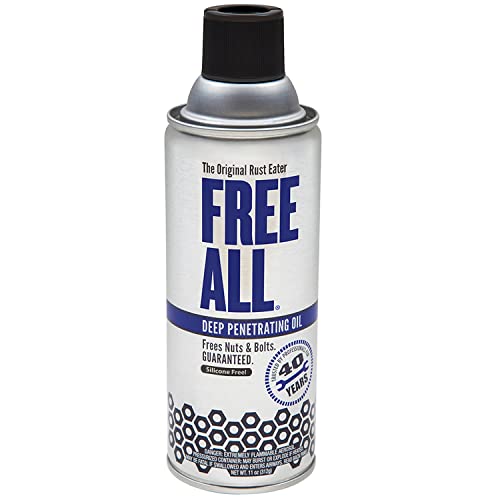
6. Free All Rust Eater Deep Penetrating Oil: 11 oz Aerosol with Precision Nozzle
- Deep penetrating formula for rusted parts
- Silicone-free, safe on paint and plastic
- Precision spray nozzle
- For cars, boats and farm equipment
Free All Rust Eater from Gasoila is a deep penetrating oil in an 11 ounce aerosol. The listing says the lubricant seeks out and dissolves the rust that binds parts together, and it names rusted pipe connections, machine screws and universal joints among its targets. The aim is to free hardware without resorting to a torch, drill or chisel.
The formula is silicone-free, which the maker presents as a benefit for body shops and painted areas, where silicone residue can cause problems for later paint work. The listing also says it will not harm plastic or delicate finishes. That makes it a reasonable pick for fasteners close to bumpers, trim or freshly painted parts, where a heavier, oily spray might be a concern.
A precision spray nozzle helps place the oil on a single bolt or into a hard-to-reach joint. Gasoila lists cars, boats, farm equipment and industrial machinery as uses, and specifically mentions rusted mufflers, tailpipes, clamps and locks. On a vehicle, that covers exhaust hangers, trailer hitch pins and seized hose clamps. As with any penetrant, apply it, give it time to soak and repeat before applying force.
View Free All Rust Eater on Amazon
Matching the Can to the Job
The best penetrating oil for a given bolt depends on where it sits on the car. Use this table as a starting point.
| Job | Good starting choice | Why it fits |
|---|---|---|
| Exhaust clamps and flange bolts | Kroil Original or PB B’laster | Long soak time on heavy scale; let the pipe cool fully first |
| Small to medium suspension and brake hardware | CRC Freeze-Off | Freeze shock cracks rust on fasteners you can reach directly |
| Work in a closed garage | WD-40 Specialist Penetrant or Liquid Wrench L106 | Both are listed as low odor |
| Parts near paint or plastic trim | Liquid Wrench L106 or Free All | Listed as safe on painted surfaces and plastics |
| Hitch pins, hinges and latches | Free All or WD-40 Specialist Penetrant | Precision nozzles reach small pivots |
Penetrant softens rust, but it cannot rebuild a rounded head. Use a six-point socket rather than a twelve-point, keep the tool square on the fastener, and pull steadily instead of jerking. A decent mechanic tool set with six-point sockets saves more bolts than any spray.

Salt Belt Habits for Stuck Fasteners
Grand Rapids roads get a heavy dose of salt and brine every winter, and the underside of a car pays for it. Exhaust hangers, brake bleeder screws, sway bar links and lug studs are the usual victims. On an older vehicle, assume anything under the car will need penetrant before it moves.
Spray the hardware the evening before a weekend job and again in the morning, so the oil has hours to creep in. For heavy scale on pipes and hangers, our guide to the best rust remover for exhaust parts covers products that dissolve rust rather than just loosen it.
Brake parts need extra care. Penetrant should never reach pads, rotors or the friction side of a caliper. If overspray lands there, clean it off with a dedicated brake cleaner before the wheel goes back on, and see our brake cleaner spray picks for options.

When a Stuck Bolt Is a Job for the Shop
Some fasteners are not worth the gamble at home. Stop and call for help if a stud has already snapped, if the bolt holds a brake line fitting, or if the only remaining option is a torch near fuel lines, brake lines or a plastic tank. Most penetrants are flammable, so heat and fresh spray never mix.
Snapped exhaust studs and rusted flange bolts are routine work for our exhaust repair in Grand Rapids. Seized caliper bolts and frozen bleeders belong with brake repair, where a stripped fitting can be dealt with properly instead of improvised.

More Buying Guides
Frequently Asked Questions
Is an ATF and acetone mix the best penetrating oil?
A 50/50 blend of automatic transmission fluid and acetone is a popular homemade penetrant, and many mechanics like it. The two liquids separate, so it must be shaken before every use, and acetone is highly flammable and evaporates fast. A sealed commercial can is simpler and safer to store.
Why do penetrating oil test results disagree?
Each test uses different bolts, rust levels and soak times, so the winner often changes from one test to the next. Maker claims come from their own lab methods. On a real car, soak time, repeat coats and a properly fitting socket matter as much as the brand.
Penetrating oil vs Krown: what is the difference?
Krown is an annual rust-proofing spray applied to the body and frame to slow corrosion. A penetrating oil is a repair product you spray on a seized fastener to free it. They solve different problems, so one does not replace the other.
Can I use penetrating oil on a hot exhaust?
No. Let the exhaust cool completely before spraying, because most penetrants are flammable. Kroil makes a graphite version called Penephite that it recommends for high-heat parts such as exhaust components once they are freed.
Bolt still refusing to budge after a weekend of soaking? Hendrick and the team at 456 AutoFix can take it from there, so call 616-279-3832 Monday to Friday, 8am to 5pm, or request a visit through our contact page.
If daytime hours don’t suit your schedule, our after-hours drop-off at 456 Carrier St NE lets you leave the car whenever it works for you.