As an Amazon Associate, 456 AutoFix earns from qualifying purchases. Product links below go to Amazon, where you can confirm the right size and color for your vehicle.
Fluid Film vs Woolwax is the question most Michigan drivers end up asking once they decide to oil-coat the underside of a car before the salt trucks come out. Both are lanolin-based coatings that stay wet, creep into seams and never harden, so on paper they look like the same product in different cans.
They are not identical. They differ in thickness, in how you put them on, and in how long each maker says they last. We compare them on what Fluid Film’s own pages and the three Amazon listings state, and we flag the points we could not confirm.
Quick answer
Should you use Fluid Film or Woolwax on a Michigan daily driver?
Pick Fluid Film if you want to spray it yourself from aerosol cans, touch up spots during the season and redo it every fall. Pick Woolwax if you have a compressor and undercoating gun and want a thicker wet film that its maker says lasts two years or more on the undercarriage.
Our Quick Picks
Three lanolin picks: Fluid Film in aerosol cans, Woolwax by the jug, and Fluid Film’s own gallon can for anyone who sprays with a gun. Each one gets a full review below.

Fluid Film Black Aerosol 6-Pack
Lanolin aerosol kit with a wand for rockers and doors, no compressor needed.

Woolwax 1-Gallon Jug
Thick lanolin undercoating sprayed with an undercoating gun at 70-90 psi.

Fluid Film Black 1-Gallon Can
The Black lanolin formula from the cans, packed in a gallon for an undercoating gun.
How Lanolin Undercoatings Work
Lanolin is the wax that sheep produce to shed water from their wool. Both products use it as the base for a soft film that clings to metal, pushes out moisture and keeps moving into tight spots such as pinch welds, frame rails and the inside of rocker panels. Because the film never dries, a stone chip or scrape tends to close back up instead of opening a path for salt.
The trade-off is that a wet film wears away. Road spray, slush and car washes slowly strip it, so any lanolin coating is a maintenance item, not a one-time treatment like a factory e-coat or a hard rubberized undercoating. That is why the reapplication interval matters as much as the brand.
One buying trap: an Amazon search for “woolwax” also shows newer woolwax products such as HARD-ON, Rugged-Wax and Creep N’ Crawl. Their listings describe a hard shell, a dry wax and a light amber cavity wax for newer vehicles, and the HARD-ON and Rugged-Wax listings tell you to use original Woolwax on rusted frames. This post compares original lanolin Woolwax, not those.
Fluid Film vs Woolwax: Specs Side by Side
The table uses Fluid Film’s technical pages and all three Amazon listings. Where a maker publishes nothing on a point, we say so rather than guess.
| Point | Fluid Film (Black aerosol) | Woolwax (1-gallon jug) | Fluid Film (1-gallon can) |
|---|---|---|---|
| Base | Wool wax plus refined petroleum oils, no solvents | Raw wool grease (lanolin), solvent free | Same Black formula, no solvent |
| Film | Wet, non-drying, never tacky | Wet, non-drying; maker says considerably thicker | Thixotropic, stays a soft gel |
| Form on our link | Six 11.75 oz aerosol cans plus extension wand | 1-gallon pour jug for an undercoating gun | 1-gallon can for an undercoating gun |
| Bulk application | Air undercoating gun at 70-90 PSI, or airless | Most undercoating guns at 70-90 psi | Air gun at 70-90 PSI |
| Maker’s stated protection | Up to a full year on a vehicle; a full season outdoors | 2 years or more on the undercarriage; enclosed areas for many years | Up to a full year on a vehicle |
| Wash-off | Will not readily wash off | More resistant to wash-off (maker claim) | Will not readily wash off |
| Coverage | About one vehicle per gallon | Not stated in the listing | About one vehicle per gallon |
| Odor | No odor claim found | “Almost no smell” (maker claim) | No odor claim found |
| Cautions | May soften some undercoatings; may swell non oil-resistant rubber | None listed | Same as the aerosol; listing says non-flammable |
Fluid Film’s figures come from its automotive applications page and its technical data sheet. Woolwax’s come from its Amazon listing only, because woolwax.com showed an “under development” page when we checked in November 2026. Neither maker publishes a side-by-side salt test, so treat the durability claims as each maker’s own.
Fluid Film vs Woolwax: The Three Picks in Detail
We linked the form each brand is most often bought in on Amazon US, Fluid Film as an aerosol kit and Woolwax as a gallon jug, then added a gallon of Fluid Film Black so gun owners can weigh like against like. The Woolwax jug also comes in straw (clear).
Fluid Film Black Aerosol 6-Pack: 11.75 oz Lanolin Rust Inhibitor with Extension Wand
- Six 11.75 oz aerosol cans plus extension wand
- Lanolin base with no solvents
- Non-drying film that will not freeze
- Rated for a full season outside
Fluid Film is a lanolin-based rust inhibitor and penetrant, and this Black kit packs six 11.75-ounce aerosol cans with a spray can extension wand. Fluid Film’s data sheet describes the Black formula as specially processed wool wax blended with highly refined petroleum oils and selected agents for corrosion control, metal wetting and water displacement. It contains no solvents, will not dry out and adds a black finish to the chassis.
The listing says the coating stays slick rather than tacky, will not freeze and will not readily wash off. Fluid Film rates it for at least a year indoors or a full season outside, and its automotive page says it migrates into hard-to-reach areas to protect seams, frame rails and rocker panels. The extension wand lets you reach inside doors and rockers through their drain holes.
For a West Michigan driver without a compressor, the aerosol kit is the simplest way to coat a car and touch up wheel wells in mid-winter. Six cans hold less than a gallon, and Fluid Film says a gallon covers about one vehicle, so a large truck needs more cans or bulk. The aerosol is extremely flammable, may soften some factory undercoatings and can swell rubber that is not oil-resistant.
View Fluid Film Black Aerosol 6-Pack on Amazon
Woolwax 1-Gallon Jug: Black Lanolin Undercoating for Undercoating Guns
- 1-gallon pour jug, black
- Raw wool grease lanolin, solvent free
- Thick wet film, almost no smell
- Maker states 2+ years of protection
Woolwax is a lanolin-based undercoating made from raw wool grease, sold here as a 1-gallon pour jug in black. The listing says it sprays on wet, never dries and forms a protective wet film over the frame, floor pans and suspension. It is solvent free and made in the USA, and the same jug also comes in a straw (clear) color.
Woolwax’s main claim is thickness: the maker says it contains more raw lanolin than any competing product, which makes it considerably thicker and more resistant to wash-off. The listing states 2 years or more of undercarriage protection and many years inside enclosed areas such as frame rails, rockers and doors. It also says the product has almost no smell and that its black color will not wash out.
You apply it with most undercoating guns at 70 to 90 psi, so you need an air compressor and a gun, ideally with a 360-degree wand for the inside of frame rails. That makes it a better fit for owners who coat a car or truck every year or two at home. It does not suit quick touch-ups without a gun, and the listing gives no coverage figure or rubber-compatibility notes.
View Woolwax 1-Gallon Jug on Amazon
Fluid Film Black 1-Gallon Can: Non-Flammable Black Lanolin for Undercoating Guns
- 1-gallon can, black
- Wool wax with refined oils, no solvent
- Non-flammable, stays a soft gel
- Sprays from an air gun at 70-90 PSI
This gallon can holds the same Fluid Film Black chemistry as the aerosol kit, minus the propellant, which makes it the bulk option for owners who already run an undercoating gun. The listing calls it a long-lasting thixotropic coating built from specially processed wool wax, highly refined petroleum oils and selected agents, and it leaves a rich black tone on the chassis or over surface rust.
Without aerosol propellant, the listing describes the coating as non-flammable, non-toxic and non-irritating, and says it remains in a permanently soft gel state. The wet barrier creeps into tight seams to guard against salts and brines. Fluid Film’s bulk spraying guide calls for 70 to 90 PSI, and the maker puts coverage at about 250 square feet per gallon for a 3-4 mil film, roughly one average vehicle.
This is the fairest match for the Woolwax jug, since both feed the same kind of gun. Choose it if you prefer Fluid Film’s thinner, more mobile film over a whole car or pickup and plan to recoat every fall. Stir or shake the can before pouring, and keep overspray off rubber that is not oil-resistant and any factory undercoating you want to keep.
View Fluid Film Black 1-Gallon Can on Amazon
Where Fluid Film and Woolwax Really Differ
Thickness and staying power
Woolwax’s whole pitch is thickness. Its listing says it uses more raw lanolin than any competing product, which makes it considerably thicker and slower to wash off. Fluid Film publishes a viscosity range for its Black formula but makes no thickness claim against rivals, and Woolwax publishes no number to compare.
A thicker coat usually leaves more material on the frame by spring, but it drips longer and holds more grime. A thinner coat creeps more easily into tight seams, which is Fluid Film’s strength.
How they handle salt and washing
Both makers say their film protects against salt and brine. Fluid Film describes a barrier against sodium and calcium chloride that “will not readily wash off”. Woolwax says its thicker film resists wash-off for longer protection.
Washing causes the most wear. Fluid Film’s removal advice is a 1,000 to 3,000 psi cold-water pressure wash or a warm detergent wash, so an underbody blast strips either one faster than driving does. Frequent winter washers should touch up wheel wells and rockers, whatever the brand.
Application: aerosol or undercoating gun
This is the most practical difference. Fluid Film’s aerosol kit includes an extension wand for doors and rockers, so you need no compressor. Six cans suit a smaller car, spot work or a top-up.
Woolwax on Amazon US comes as bulk: jugs, pails and quart bottles. You pour it into an undercoating gun, often a model with quart bottles and a 360-degree wand, and spray at 70 to 90 psi. Fluid Film’s bulk product uses the same pressure range, and it notes a 3-4 mil film covers about 250 square feet per gallon.
Odor and mess
Woolwax says it has almost no smell. Fluid Film makes no odor claim in the material we read, though forum owners often report a lanolin smell for a few days, so park outside overnight after spraying.
Both leave a wet film that attracts an initial layer of dust. Fluid Film’s FAQ says it will not get sticky or gum up, and the Woolwax listing says its black color will not wash out.
Reapplication interval
Fluid Film says its coating gives up to a full year of protection on a vehicle, and its aerosol listing says a full season outside. Woolwax’s listing claims 2 years or more on the undercarriage and many years inside enclosed areas like frame rails.
On a West Michigan daily driver, plan on a yearly inspection with either product. Woolwax compared to Fluid Film may let you skip a full coat some years and just touch up the wheel wells. Look under the car each fall, and recoat wherever you see bare or rust-colored metal.
Pick Fluid Film If, Pick Woolwax If
| Your situation | Pick | Why |
|---|---|---|
| No compressor, first time doing it yourself | Fluid Film aerosol | Cans and an extension wand, no gun needed |
| Touch-ups during the winter | Fluid Film aerosol | Quick spot work on rockers and wheel wells |
| You own a compressor and undercoating gun | Woolwax jug | Bulk, thicker film per the maker |
| You want fewer full recoats | Woolwax jug | Maker states 2 years or more |
| You own a gun but trust the Fluid Film formula | Fluid Film gallon can | Same Black coating as the cans, about one vehicle per gallon |
| Odor is a concern in an attached garage | Woolwax jug | Maker says almost no smell |
| Car has factory rubberized undercoating you want to keep | Check with the maker first | Fluid Film warns it may soften some undercoatings |
Want to see hard waxes, rubberized coatings and other oil sprays as well? Our roundup of the best undercoating for road salt covers the wider field, and our list of the best winter car accessories has the other cold-weather gear worth keeping in the car.
Applying Either One on a West Michigan Daily Driver
Timing matters more than brand. Spray in early fall, before the first brine goes down, on a dry day when the car has been parked long enough for the underside to dry out. Fluid Film notes its product thickens as it sits and should be stirred or shaken, and lanolin gets stiffer in the cold, so a can or jug kept indoors overnight sprays more evenly.
Wash the underside first and let it dry fully, then work from the front: subframe, frame rails, suspension arms, the backs of the wheel wells, rocker panels through their drain holes, and the inside of the doors. Cover the brake rotors, pads and calipers, and keep the spray off the exhaust, the belts and anything rubber that isn’t oil-resistant.
Neither coating removes rust. Fluid Film’s FAQ says it stops existing rust from spreading, and both work best on metal that is still solid. Our Michigan winter car maintenance checklist puts the undercoating step alongside wipers, battery and tires, and Fluid Film’s guide to spraying Fluid Film in bulk covers gun pressure and tip sizes.
When Rust Needs a Mechanic, Not a Spray
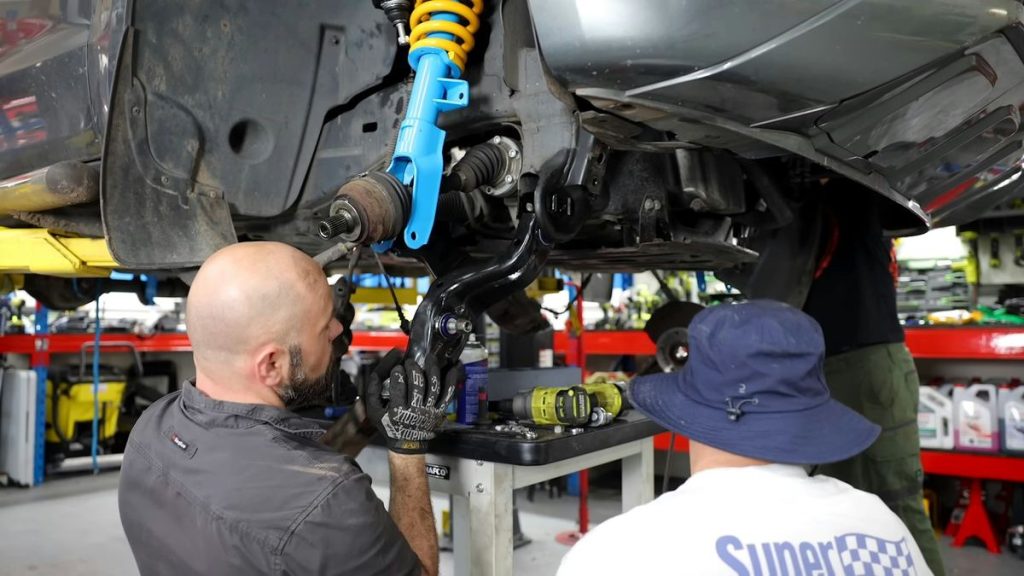
A lanolin coating protects metal that is still sound. It will not fix steel brake lines that are already flaking, a rotted exhaust hanger or a rusted-through spring seat. Our guide to road salt and brake line rust shows what to look for before you cover anything up.
If the brake pedal feels soft, you spot wet fluid near a line, or the exhaust is getting louder, have it checked before you spray. Our brake repair in Grand Rapids covers line and caliper work, and we also handle exhaust repair in Grand Rapids when salt has eaten through pipes and hangers.
More Buying Guides
Frequently Asked Questions
Is Woolwax just a thicker Fluid Film?
Both are lanolin-based, non-drying coatings, so they work the same way. Woolwax says it contains more raw lanolin than any competing product, which makes it thicker and more resistant to wash-off. Fluid Film adds refined petroleum oils and corrosion inhibitors to its wool wax.
How often should I reapply Fluid Film or Woolwax in Michigan?
Fluid Film states up to a full year of protection, so most drivers recoat every fall. Woolwax claims 2 years or more on the undercarriage. With either one, inspect the underside each fall and touch up wheel wells and rockers, which take the most spray.
Can I put Woolwax over Fluid Film?
Neither maker’s material we read addresses mixing the two. Since both are lanolin-based wet films, many owners wash off the loose old coating and spray the other over what remains. Check with the maker if you are unsure, and never spray over loose, flaking rust.
Do I need a compressor to apply Woolwax?
For the gallon jug, yes. The listing says to apply it with an undercoating gun at 70 to 90 psi, which needs an air compressor. If you don’t have one, Fluid Film aerosol cans with an extension wand are the simpler way to start.
Worried about rusty brake lines or a salt-eaten exhaust in Grand Rapids? Call 456 AutoFix at 616-279-3832, Monday to Friday 8am to 5pm, or book a brake inspection through our contact page.
Can’t make it during the day? Use our after-hours drop-off. We’re at 456 Carrier St NE in Creston.