
As an Amazon Associate, 456 AutoFix earns from qualifying purchases. Product links below go to Amazon, where you can confirm the right part for your vehicle.
White or blue-green fuzz on a battery post looks harmless, yet it can be the reason an engine cranks slowly on a cold morning. The best battery terminal cleaner is the one that matches how bad the buildup is: a foaming spray for fresh deposits, a steel brush for hardened crust, or a kit that cleans and then seals.
Below we sort the cleaner types, weigh them against baking soda and review six products. If the battery itself is near the end of its life, our guide to the best car battery brands can help you choose the replacement.
Quick answer
Which battery terminal cleaner works for most drivers?
For most drivers, a foaming spray with an acid indicator, such as the NOCO E404, plus a steel terminal brush handles nearly every job. If you want cleaning and protection in one purchase, the NOCO NCP2 M401 kit adds a brush and a sealer. Baking soda and water also works on light corrosion.
Our Quick Picks
Three ways to start: a foaming spray that shows where the acid is, a NOCO kit that cleans, scrubs and seals in one box, and a steel brush that removes what sprays leave behind. All six picks are covered below.
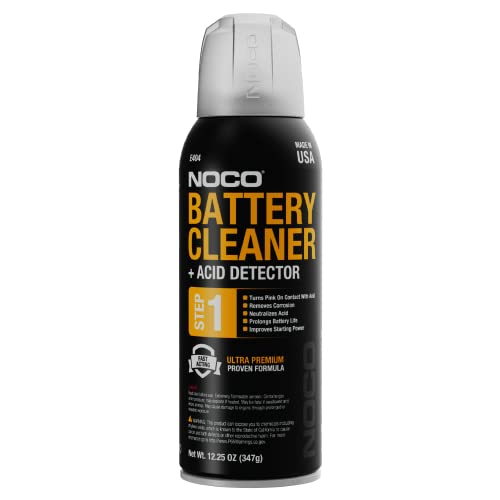
NOCO E404 Cleaner Spray
Color-changing foam that shows you exactly where the acid sits.

NOCO NCP2 M401 Kit
Everything for a full clean-and-seal job in one box.

Steelman Terminal Brush
A durable brush that scrubs posts and clamps to bare metal.
Spray, Brush or Kit: Matching the Cleaner to the Corrosion
Corrosion forms when acid vapor and moisture react with the post and clamp. A thin film raises resistance, and a thick crust can block current almost completely. Each cleaner for battery terminals attacks it differently.
- Foaming spray: neutralizes acid and softens deposits so they rinse away. Some formulas change color where acid is present, which shows you exactly where to work. Most shoppers looking for the best battery terminal cleaner spray want this type.
- Wire brush: a steel bristle tool that scrubs the post and the inside of the clamp back to bare metal. It never runs out and handles crust that sprays only loosen.
- Reaming tool: a cutter that cleans and reshapes worn posts and clamps so they seat tightly again.
- Kit: a cleaner, brush and protector sold together, so the whole routine comes in one box.
A spray and a brush together cover almost every case. Whatever you use, finish with a protector spray or a light coat of terminal grease.
Battery Terminal Cleaner vs Baking Soda: Does the Homemade Mix Work?
The classic homemade battery terminal cleaner is a spoonful of baking soda stirred into warm water. Baking soda is a mild base, so it neutralizes the acid in light corrosion, and it costs next to nothing. Brush it on, let it fizz, rinse with clean water and dry the parts with a rag.
Commercial sprays win on convenience: the foam clings instead of running off, and an acid indicator shows any missed spot. For a yearly touch-up, baking soda is a perfectly good DIY battery terminal cleaner.
Whichever you choose, treat the residue with care. The EPA notes that a lead-acid car battery can hold up to 18 pounds of lead and about a gallon of corrosive, lead-contaminated sulfuric acid. Wear gloves and eye protection, keep the rinse water away from pets and plants, and return a worn-out battery to a retailer or a household hazardous waste program rather than the trash.
The Best Battery Terminal Cleaner Options, Reviewed
The six picks cover four sprays or spray kits and two hand tools. Every detail comes from the maker’s description on the Amazon listing, so check the listing for current pack sizes before you order.
1. NOCO E404 Battery Terminal Cleaner: 12.25 oz Foaming Spray with Acid Detector
- Yellow foam turns pink where acid is present
- Listed to break down corrosion in 2 to 4 minutes
- Rinses off with plain water
- 12.25 fl oz (362 mL) aerosol can
The NOCO E404 is a foaming aerosol made for one job: finding and lifting battery corrosion. It sprays on yellow and turns pink wherever it touches battery acid, so you can see which post, clamp or cable end is affected instead of guessing from the crust. NOCO lists the 12.25 fl oz can as neutralizing acid and breaking down buildup in about 2 to 4 minutes.
Use is simple: spray the area, let the foam work, then rinse it away with water. The listing names posts, terminals, cables, hold-downs, battery boxes and carriers as places to treat, and it covers cars, trucks, motorcycles, boats, RVs, tractors, mowers and ATVs. That makes one can useful for every battery around a typical household, not just the family car.
NOCO describes the spray as step one of its battery care routine and suggests following it with its NCP2 corrosion preventative and terminal protectors. That point matters, because a cleaner removes corrosion but does not stop it coming back. Heavy, hardened deposits may still need a wire brush after the foam has softened them. The rinse step also means you need a little water and somewhere for it to drain, which suits a driveway better than a cramped parking spot.
View NOCO E404 Cleaner Spray on Amazon
2. NOCO NCP2 M401 Battery Terminal Cleaner and Protector Kit: Spray, Brush and Sealer
- Cleaner, brush and protector in one kit
- Spray-on, rinse-off corrosion cleaner
- Protector seals surfaces against acid fumes
- Made in the USA, per the listing
The NOCO NCP2 M401 bundles the three steps of terminal care into a single kit: a cleaner to dissolve corrosion, a brush to scrub the posts and a protector to seal them afterward. For someone who has never serviced a battery, that removes the guesswork of buying matching products separately.
The cleaner works the same way as other NOCO sprays: you spray it on, let it neutralize and dissolve the deposits, then rinse it off. The brush handles what the spray loosens on the post and inside the cable clamp. The protector is the part that sets this kit apart from a cleaner on its own, since NOCO says it makes treated surfaces resistant to the acid fumes that start corrosion in the first place. NOCO calls the NCP2 formula the original corrosion preventative, sold since 1914, and states that it is made in the USA.
The kit suits a driver who wants to do the job once and do it fully, especially before winter. It is more than you need if a quick wipe is all your terminals require, and it will not fix a battery that is failing internally. If corrosion returns within weeks, have the battery and charging system checked.
View NOCO NCP2 M401 Kit on Amazon

3. CRC 05023 Battery Cleaner: 11 oz Aerosol with Acid Indicator

- Acid indicator flags leaks and acid residue
- Neutralizes acid and removes corrosion
- For terminals, posts, trays and cables
- 11 oz can, made in the United States
CRC sells its 05023 Battery Cleaner as a tech-grade product aimed at fleet and vehicle maintenance, and it comes in an 11 oz aerosol can made in the United States. The key feature is the acid indicator built into the formula, which CRC says alerts you to the presence of leaks. That is useful on an older battery where you want to know whether acid is seeping from the case or simply sitting as old residue.
The listing describes three main jobs: removing corrosion so the connection carries current cleanly, neutralizing acid so it stops attacking nearby metal, and treating the wider area. CRC names terminals, posts, battery trays and cables, so the tray under the battery, which often rusts quietly, gets attention too. CRC also sells the same cleaner in a 12-can case for shops that service many vehicles.
This is a cleaner rather than a protector, so plan to add a terminal spray or grease once the parts are dry. Like other acid-neutralizing sprays, it works best when you can rinse and dry the area afterward. If the indicator keeps showing fresh acid on the case itself, the battery is likely leaking and should be replaced, not cleaned again.
View CRC Battery Cleaner on Amazon
4. Permatex 80369 Battery Cleaner: 5.75 oz Aerosol That Works in Three Minutes

- Listed to work in about three minutes
- Neutralizes acid and dissolves corrosion
- Removes dirt and grime as well
- Compact 5.75 oz net aerosol can
The Permatex 80369 is a small aerosol battery cleaner with a 5.75 oz net fill. Its method is spray it on and wash the corrosion off, and Permatex lists it as working in about three minutes. The formula is described as penetrating and removing corrosion, dirt and grime, while neutralizing acid and dissolving the white or blue-green buildup that robs a connection of power.
Permatex lists automotive, marine, farm machinery and motorcycle batteries as suggested uses, along with cables and terminal connections. It also says the cleaner handles all types of storage batteries and their attachments in emergency power supply systems, so it can serve a backup battery in a basement as well as the one under the hood. The compact can is easy to keep on a shelf or in a tool drawer.
The smaller size suits drivers who clean terminals once or twice a year rather than tending a fleet. The listing does not mention a color-changing indicator, so you will be judging the results by eye. After rinsing and drying, follow up with a terminal protector, since cleaning alone leaves bare metal that can corrode again through a wet Michigan winter.
View Permatex 80369 Cleaner on Amazon

5. Steelman Battery Post Terminal Cleaner: Steel Bristle Brush for Top and Side Terminals
- Steel bristles held tight in a wire spine
- Works on top and side terminal batteries
- Acid-resistant plastic case
- Protective cover for storage
Sprays dissolve corrosion, but a brush is what brings a post and clamp back to clean, bright metal. The Steelman battery post and terminal cleaner is a compact brush tool built from steel and high-impact plastic, with heavy-duty steel bristles that Steelman says are secured tightly in a wire spine so they do not shed with use.
The listing states it works on both top-terminal and side-terminal batteries, which covers most cars and light trucks plus marine batteries. The plastic case is described as resistant to battery acid and most cleaning solvents, so you can use it straight after a spray cleaner without damaging the tool. A protective cover slips over the bristles when you are done, which keeps them from snagging on other tools in a drawer or toolbox.
Because it needs no refills, this brush is the tool most worth keeping for years. It pairs naturally with any of the sprays above: let the foam loosen the deposits, then scrub, rinse and dry. On its own it will not neutralize acid, so wipe or rinse the area after brushing. Always disconnect the cables before scrubbing, negative side first.
View Steelman Terminal Brush on Amazon
6. Steelman 4-Way Battery Terminal Post Cleaner: Reamer, Post Cleaner and Brush

- 6-bladed tapered reamer for clamps
- Angled post cleaners reshape posts
- Brush section for loose corrosion
- Fits most top-post batteries
The Steelman 4-Way terminal and post cleaner goes a step beyond a brush. It combines a reamer, post cleaners and a brush in one tool, and Steelman lists it as able to ream terminal clamps, clean and reshape posts and brush away corrosion. That makes it useful when a clamp no longer seats firmly because the post has been scraped or deformed over years of removal.
The 6-bladed tapered reamer cuts through buildup inside the clamp, while the angled post cleaners are shaped to restore the taper of the post for full contact. Steelman says the result is better contact and less strain on the electrical system, which matters for starting on a cold morning when the battery has the least to spare. The listing says it fits most top-post automotive and marine batteries.
It is not designed for side-post batteries, so check which style your vehicle uses before buying. A reamer removes metal, so use light pressure and stop once the surface is clean; overdoing it can leave a clamp too loose to tighten. For a battery that only has light surface corrosion, a spray and a basic brush are enough.
View Steelman 4-Way Cleaner on Amazon
Side-by-Side: Which Cleaner Fits Which Job
Sizes below are as listed on Amazon.
| Product | Type | Size or format | Good fit |
|---|---|---|---|
| NOCO E404 | Foaming spray, acid detector | 12.25 oz can | Finding and lifting acid |
| NOCO NCP2 M401 | Clean and protect kit | Cleaner, brush, protector | Full job in one box |
| CRC 05023 | Aerosol, acid indicator | 11 oz can | Trays, cables and fleets |
| Permatex 80369 | Aerosol cleaner | 5.75 oz can | Occasional cleaning |
| Steelman brush | Steel bristle brush | Top and side terminals | Hardened crust |
| Steelman 4-Way | Reamer and post cleaner | Top-post batteries | Worn posts, loose clamps |
If you only buy one item, the best battery terminal cleaner brush in this list is the Steelman steel bristle tool, because it lasts for years and works with baking soda as well as any spray. Add the NOCO E404 if you want to see where the acid is. Choose the 4-Way tool only when clamps no longer grip their posts firmly.

How to Clean Battery Terminals Without Hurting Yourself or the Car
This is a fair DIY job if you follow the right order. Check your owner’s manual first, since some vehicles need a relearn procedure after the battery is disconnected.
- Gear up: put on gloves and safety glasses, and turn the engine and accessories off.
- Negative off first: loosen and remove the black negative cable, then the red positive cable, so a wrench touching metal cannot cause a short.
- Clean: apply your spray or baking soda mix, wait as directed, then scrub the posts and the inside of each clamp.
- Rinse and dry: flush with a little clean water, keep it out of the battery vents, and dry everything with a rag.
- Positive on first: reconnect red, then black, tighten both clamps snugly and finish with a protector.
Clean terminals also make jump starts safer and more effective, since the clamps bite into metal instead of crust. A good set of jumper cables for winter roadside help or a jump starter built for cold weather pairs naturally with this routine.

Road Salt, Cold Starts and When Corrosion Points to Something Bigger
West Michigan winters are hard on battery connections. Salt spray and freeze-thaw moisture reach the engine bay, while cold cuts the power a battery can deliver, so a slightly corroded clamp can mean a click instead of a start in January.
Cleaning fixes the connection, but it does not fix the cause. Corrosion that returns within weeks can point to a leaking case, overcharging or a loose clamp. A battery that keeps going flat after a clean also deserves a closer look, and our article on why a car battery dies overnight walks through the usual suspects.

If the cables themselves are swollen, green under the insulation or cracked, they need replacing rather than cleaning. If you would rather have a professional sort out whether the battery, the cables or the charging system is to blame, see our car electrical repair in Grand Rapids.
More Buying Guides
Frequently Asked Questions
What is a good battery terminal cleaner for a first-timer?
A kit that includes a cleaner, a brush and a protector, such as the NOCO NCP2 M401, takes the guesswork out of the job. If you already own a wire brush, a single can of foaming cleaner is enough.
Is there a best homemade battery terminal cleaner?
Baking soda mixed with warm water is the standard homemade option. It neutralizes acid on light corrosion, then rinses away with clean water. Avoid soda drinks and harsh household cleaners, which can leave sticky or conductive residue behind.
How often should battery terminals be cleaned?
Look at them whenever you check the oil, and clean them as soon as you see buildup. Many drivers in snowy areas give the terminals a full clean and protect each fall, before the first cold snap.
Terminals clean but the engine still cranks slowly, or the corrosion keeps creeping back? Reach 456 AutoFix at 616-279-3832 between 8am and 5pm on weekdays, or request an appointment online.
You can also bring the vehicle to 456 Carrier St NE in Grand Rapids and use our after-hours drop-off when a weekday visit does not fit your schedule.