
As an Amazon Associate, 456 AutoFix earns from qualifying purchases. Product links below go to Amazon, where you can confirm the right charger for your battery.
NOCO vs CTEK comes up every fall in Grand Rapids, usually from someone about to park a summer car or a truck that only moves on weekends. Both brands sell smart chargers that analyze the battery, charge it in stages and then hold it at full charge without cooking it. The real differences sit in the lineups, the modes each maker offers, how they deal with cold, and what each company promises if something fails.
This guide looks at the two brands as a whole, then sets three current chargers side by side: the NOCO GENIUS5, the CTEK NXT 15 and the smaller CTEK NXT 5. If you already narrowed it down to the older pairing, our NOCO Genius 10 vs CTEK MUS 4.3 comparison covers that matchup model by model.
Quick answer
Is NOCO or CTEK the smarter charger brand for your car?
Choose NOCO if you want 6-volt support, a wide spread of sizes and an IP65 housing at modest output. Choose CTEK if you only charge 12-volt batteries and want a longer stated warranty, app control on its CS ONE, or the 15-amp NXT 15 for big trucks and lithium batteries.
Our Quick Picks
NOCO's compact core model and CTEK's high-output NXT, plus the smaller CTEK NXT 5 as a like-for-like rival to the GENIUS5. All three are reviewed below.

NOCO GENIUS5
Mode-select charger and maintainer that can stay connected all winter.
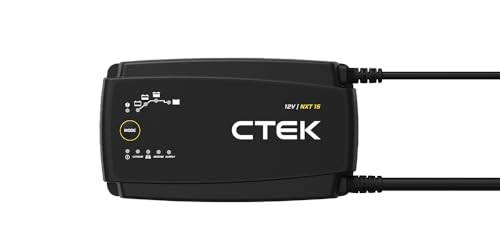
CTEK NXT 15
Automatic 12V charger with temperature compensation and a supply mode.

CTEK NXT 5
CTEK's smaller NXT, sized to go head to head with the GENIUS5.
NOCO vs CTEK Lineups: How the Ranges Compare
NOCO builds almost its whole charger family under the GENIUS name, and most of it runs on both 6-volt and 12-volt batteries. The steps go from the 1-amp GENIUS1 up through the GENIUS2, GENIUS5 and GENIUS10, then to the GENIUSPRO25 and GENIUSPRO50, which add 24-volt charging. There are also onboard and multi-bank versions for boats, fleets and collectors.
CTEK’s US store is a shorter list and almost entirely 12-volt. It runs from small maintainers like the CT5 range and the MXS 5.0 to the newer NXT 5 and NXT 15, plus the app-connected CS ONE (Gen 2), the CS FREE portable unit and a charger made only for LiFePO4 batteries. CTEK also sells a workshop line such as the PRO25S.
| Need | NOCO option | CTEK option |
|---|---|---|
| Small maintainer for a bike or mower | GENIUS1, GENIUS2 | CT5 range |
| Everyday car charger | GENIUS5, GENIUS10 | MXS 5.0, NXT 5 |
| High output for trucks and big batteries | GENIUSPRO25, GENIUSPRO50 | NXT 15, PRO25S |
| 6-volt classic or tractor battery | Most GENIUS models | Not in the US car lineup |
| App and remote monitoring | Not offered on GENIUS models | CS ONE (Gen 2) |
NOCO vs CTEK: Four Things That Separate the Brands
Charging modes and chemistries
NOCO lets you pick the mode yourself: 12V, 12V AGM, 12V lithium and 6V, with a repair mode for sulfated lead-acid batteries and Force Mode for one too flat to detect. CTEK’s newer chargers lean on fewer choices, with one standard program covering flooded, AGM, EFB and gel batteries, a separate lithium program and RECOND for deeply drained lead-acid batteries. Both makers want lithium batteries to have a built-in management system.
Temperature compensation
Older CTEK models made you choose a cold weather program, which is how the live MUS 4.3 comparison describes them. The NXT line now adjusts for temperature on its own, like NOCO’s integrated thermal sensor does. For a charger sitting in an unheated garage from December to March, automatic compensation on both sides removes a step people often forget.
App and connectivity
None of the GENIUS chargers we looked at mention an app; they rely on LEDs and a mode button. CTEK sells one app charger, the CS ONE (Gen 2), with Wi-Fi and Bluetooth monitoring, history and notifications. We could not confirm app control on the NXT 15 from CTEK’s own material, so treat it as a button-and-display charger.
Warranty as each maker states it
NOCO lists a three-year limited warranty in the GENIUS5 box contents. CTEK advertises up to five years and lists five for the NXT 15, but its warranty and returns page says the period varies by product and sits in each user manual. It also says chargers bought on Amazon go back through Amazon’s own return process first.
NOCO vs CTEK: GENIUS5, NXT 15 and NXT 5 Up Close
The GENIUS5 is NOCO’s core smart charger, the middle of the GENIUS range, and every other portable NOCO car model is already covered elsewhere on this site, so it stands in for the brand here. On the CTEK side, the NXT 15 is the newest high-output model in its US lineup and a different charger from the MUS 4.3 in our live comparison. The NXT 5 rounds out the group as the CTEK model that sits at roughly the GENIUS5’s output, so the closest pairing is covered too.
NOCO GENIUS5: 5A 6V/12V Smart Charger with Thermal Sensor and Force Mode
- 5A charging for 6V and 12V batteries
- AGM, lithium (LiFePO4) and repair modes
- Thermal sensor adjusts to garage temperature
- Force Mode for batteries down to 0V
The NOCO GENIUS5 is a 5-amp smart charger, maintainer and desulfator for 6-volt and 12-volt batteries. NOCO lists it for flooded, maintenance-free, AGM, gel, SLA and VRLA lead-acid batteries as well as 12-volt LiFePO4 lithium, and its spec sheet rates it for batteries up to 120Ah. That covers most cars, SUVs, motorcycles, mowers and ATVs, plus the 6-volt batteries in some classic cars and tractors.
Charging is mode-based, so you press a button to choose standard, AGM, lithium or 6-volt first. An integrated thermal sensor reads the air around the charger and adjusts the charge so the battery is not overcharged in summer or left short in a cold garage. NOCO says it starts on batteries as low as 1 volt, and Force Mode lets you begin charging one that reads zero. Pulse charging targets sulfation and acid stratification in neglected lead-acid batteries.
Once the battery is full, the GENIUS5 can stay connected indefinitely, which suits a car parked from November to April. The box includes a 72-inch AC cable, an 80-inch DC cable with clamps, eyelet terminals for a permanent connection, a mounting bracket and screws, backed by a three-year warranty. It is a slow choice for a deeply drained truck battery, and it has no supply mode for holding a car’s settings during a battery swap.
CTEK NXT 15: 15A 12V Charger with Lithium Program and Supply Mode
- 15A output for 12V batteries, 30-350Ah
- Lead-acid and lithium charging programs
- Automatic temperature compensation
- 13.6V supply mode at up to 15A
The CTEK NXT 15, part 40-727 in North America, is a 15-amp charger for 12-volt batteries from 30 to 350Ah. CTEK says it handles any type of 12-volt battery, with a standard program for lead-acid types including AGM, EFB and gel and a separate program for lithium. That range runs from a compact car up to large truck, RV and marine batteries, which is where the extra current makes a real difference.
Charging is fully automatic, and the listing highlights automatic temperature compensation, so the charge voltage adjusts for heat or cold without a separate winter setting. The unit is spark-free and reverse polarity protected, which helps in a dim garage. A RECOND program is there to help deeply discharged lead-acid batteries recover, and CTEK’s product sheet lists a 15.8-volt output for that step.
Supply mode delivers a steady 13.6 volts at up to 15 amps, so it can support the electrical system during a battery change or a long session with the ignition on. CTEK lists a five-year warranty for this model. It does not charge 6-volt batteries, and the 30Ah lower limit means a small motorcycle or mower battery is better served by a smaller unit. For one healthy car battery in winter storage, it is more charger than the job needs.
CTEK NXT 5: 4.3A 12V Charger with LiFePO4 Mode and Temperature Compensation
- 4.3A output for 12V batteries, about 1.2-160Ah
- Lead-acid (incl. AGM, EFB, gel) and LiFePO4
- Temperature compensation from -4°F to 122°F
- IP65 housing, Connect U-terminal included
The CTEK NXT 5, model 40-658, is the smaller sibling of the NXT 15 and the CTEK charger closest to the GENIUS5 in size and purpose. It puts out 4.3 amps for 12-volt batteries from roughly 1.2 to 160Ah. The listing names wet, maintenance-free, calcium, AGM, EFB and gel lead-acid types, along with LiFePO4 lithium, which spans a motorcycle battery at the low end and a full-size SUV battery at the top.
Operation is connect, select a mode and walk away, with the charger running its stages and dropping to maintenance by itself. Built-in sensors shift the charging voltage for heat or cold, and CTEK quotes a working range of -4°F to 122°F, enough for an unheated Creston garage in January. Desulfation and a Recond mode aim to revive deeply discharged or sulfated lead-acid batteries, and CTEK suggests running Recond about once a year.
The housing carries an IP65 rating, charging is spark-free with reverse polarity protection, and a Connect U-terminal in the box lets you leave a lead bolted to the battery. Compared with the GENIUS5, it offers no 6-volt setting and no faster recovery for a flat truck battery. Another of our guides, the battery tender roundup for BMW owners, also covers the NXT 5.
GENIUS5, NXT 15 and NXT 5 Spec Sheet
Output is the first thing to settle before you think about logos: the GENIUS5 and NXT 5 sit near 5 amps, while the NXT 15 triples that. Five amps keeps a car battery healthy and recharges a drained one overnight; fifteen amps is for large truck batteries, dual setups and anyone who wants a dead battery back quickly.
| Spec | NOCO GENIUS5 | CTEK NXT 15 | CTEK NXT 5 |
|---|---|---|---|
| Charge current | 5A | 15A | 4.3A |
| Battery voltage | 6V and 12V | 12V | 12V |
| Battery size | Up to 120Ah | 30 to 350Ah | About 1.2 to 160Ah |
| Chemistries | Lead-acid (flooded, AGM, gel) and LiFePO4 | Lead-acid (incl. AGM, EFB, gel) and lithium | Lead-acid (incl. AGM, EFB, gel) and LiFePO4 |
| Recovery | Repair mode, Force Mode from 0V | RECOND for lead-acid | Desulfation and Recond |
| Temperature | Integrated thermal sensor | Automatic compensation | Automatic, -4°F to 122°F |
| Supply mode | Not offered | 13.6V at up to 15A | Not listed |
| Warranty | 3-year limited | 5 years (CTEK) | See manual |
NOCO’s figures come from its Amazon listing and spec sheet, which also give an IP65 rating, a 75-watt maximum draw and a weight of about 1.5 pounds. CTEK’s come from the NXT 15 listing and CTEK’s product pages, which did not load reliably for us, so check the manual in the box for anything not shown here. The NXT 5 column comes from its Amazon listing alone.
Which Brand Fits Your Garage
| Your situation | Lean toward | Why |
|---|---|---|
| One car stored for the winter | NOCO GENIUS5 | Enough output, small, can stay connected |
| 6-volt classic, tractor or old motorcycle | NOCO | CTEK’s US car range is 12V |
| Diesel pickup or a plow truck battery | CTEK NXT 15 | 15A and rated up to 350Ah |
| One 12V car or bike, CTEK preferred | CTEK NXT 5 | GENIUS5-class output with Recond |
| Battery swap or long diagnostic session | CTEK NXT 15 | 13.6V supply mode |
| You want to check the charge from your phone | CTEK CS ONE (Gen 2) | The only app charger of the two brands |
West Michigan winters push both brands the same way. A car that sits in a cold detached garage loses charge faster, and short winter trips rarely put it back, so a maintainer that stays clipped on through January earns its keep. NOCO rates the GENIUS5 to work from -4°F, and both makers adjust the charge to the garage temperature without you picking a cold program.
If you need a wider field than these three, our winter battery charger and maintainer guide compares more chargers for cold storage. Truck owners weighing a bigger unit can read our battery charger guide for pickups and diesels, and the NOCO vs Battery Tender matchup covers the other common brand question.

When the Battery Is Not the Real Problem
A good charger brings a battery back to full, but it cannot fix a car that drains it again. If the battery is flat every few days after a full charge, read our guide on why a car battery dies overnight, which covers parasitic draws from modules, lights and aftermarket wiring.
A weak alternator shows up the same way, with a battery that never quite catches up between drives. Our article on bad alternator symptoms lists the warning signs. When the pattern keeps repeating, our car electrical repair in Grand Rapids can test the battery, the charging system and the draw.

Have the battery load tested before you spend money on a new charger for it. A battery with a failed cell will take a charge from either brand and still leave you stuck on the first cold morning, and no repair or RECOND mode will change that.
More Buying Guides
Frequently Asked Questions
Is NOCO or CTEK better for storing a car all winter?
Either brand works for storage, since both chargers drop into a maintenance stage once the battery is full. For one car, the 5-amp GENIUS5 or the 4.3-amp NXT 5 is plenty. Pick the CTEK side if you want a longer stated warranty or app monitoring through the CS ONE.
Do NOCO and CTEK chargers handle lithium batteries?
All three chargers compared here have a lithium program. NOCO’s GENIUS5 covers 12-volt LiFePO4 batteries with a management system, and both CTEK NXT models carry their own lithium mode. Older CTEK models such as the MUS 4.3 are lead-acid only, so check the model before you buy.
Which brand has an app?
CTEK does, on the CS ONE (Gen 2), which connects over Wi-Fi and Bluetooth for live status and notifications. The NOCO GENIUS chargers use status lights and a mode button instead. We could not confirm app support on the NXT 15.
How long are the NOCO and CTEK warranties?
NOCO lists a three-year limited warranty for the GENIUS5. CTEK lists five years for the NXT 15 and says its warranty period depends on the product, with the length printed in the user manual. Keep the receipt, because both makers start with proof of purchase.
Battery still going flat after a full charge in Grand Rapids? Call 456 AutoFix at 616-279-3832, Monday to Friday 8am to 5pm, or set up a charging system test through our contact page.
Can’t make it during the day? Use our after-hours drop-off. We’re at 456 Carrier St NE in Creston.