
As an Amazon Associate, 456 AutoFix earns from qualifying purchases. Product links below go to Amazon, where you can confirm the right part for your vehicle.
Every engine pushes a little combustion gas past its piston rings, and that blow-by carries a fine mist of oil back into the intake. On direct-injection and turbocharged engines, the mist bakes onto intake valves and coats charge piping over the miles. The best oil catch can for most drivers is a well-sealed, baffled can that sits in the PCV line and traps that oil before it reaches the intake.
This guide explains how a catch can works alongside the PCV valve, what separates a useful can from a decorative one, and then reviews five universal kits from Mishimoto, Moroso and EVIL ENERGY. If you drive an F-150, a Hemi or a Silverado, the engine-specific guides linked further down cover direct-fit kits.
Quick answer
Which oil catch can should I buy?
For most daily drivers, a sealed, baffled can with a fine filter element, such as the Mishimoto compact 2-port, is the safe choice. Pick a larger can like Mishimoto’s XL or a 750 ml unit for boosted or high-mileage engines. Measure your PCV hose first and keep the system sealed rather than vented.
Our Quick Picks
Three quick picks: Mishimoto's compact can for stock daily drivers, Moroso's clear-bottom kit for owners who want to see the oil level, and EVIL ENERGY's 300 ml kit for tighter budgets. All five cans are reviewed below; check hose size and mounting space before ordering.

Mishimoto Compact 2-Port
A small, sealed can with a fine bronze filter inside.
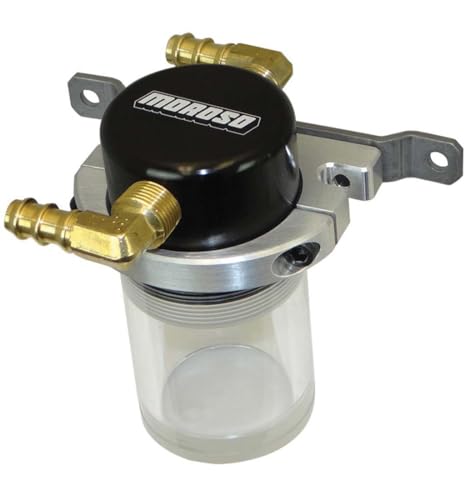
Moroso 85683
A complete universal kit with a see-through reservoir.

EVIL ENERGY 300 ml
A low-cost baffled can that ships with hose and fittings.
Oil Catch Can vs PCV: What Each Part Does
The positive crankcase ventilation (PCV) system pulls blow-by gases out of the crankcase and feeds them back into the intake to be burned. The PCV valve, or a fixed orifice on some engines, meters that flow so the crankcase stays under slight vacuum. A catch can does not replace any of this. It sits in the hose between the crankcase vent and the intake, slowing the gas down so oil droplets and moisture drop out into a reservoir.
Port-injected engines wash their intake valves with fuel, so oil mist does little harm. Direct-injection engines spray fuel straight into the cylinder, and the valves never get that wash. That is why carbon deposits are a known issue on many modern turbo engines, and why our article on Audi carbon buildup symptoms describes the rough idle and misfires that follow.
So the PCV valve still has to work, and a can only helps it send cleaner air back to the engine. If you are weighing a simple can against a larger separator that returns oil to the pan, our oil catch can vs air oil separator comparison covers the trade-offs.
What Makes a Catch Can Actually Catch Oil
An empty aluminum cylinder with two fittings looks the part but lets most of the mist pass straight through. The design inside matters more than the finish. Check these points before you compare brands:
- Baffles and filter media: internal baffles, steel balls, mesh or a sintered bronze element force the gas to change direction and shed oil.
- Capacity: small cans of around 3 to 5 oz suit stock engines that get drained at every oil change. Larger cans suit boosted, worn or hard-driven engines.
- Fittings and hose size: barbed fittings, metric threads and AN fittings all exist. The fitting must match your PCV hose inside diameter, or you create a vacuum leak.
- Draining: a drain valve or clear bottom makes checking and emptying easy.
- Sealed or vented: a sealed can keeps blow-by inside the PCV loop. A breather filter vents the crankcase to open air, which is meant for older cars without PCV.
Venting a modern PCV system to the atmosphere removes part of its emission controls. The EPA’s enforcement policy on vehicle and engine tampering explains that removing or disabling emission controls on a road vehicle breaks the Clean Air Act. Keep any can on a street car in a sealed loop.
Best Oil Catch Can Picks, Reviewed One by One
These five kits are universal, so none of them bolts on like a factory part. Measure your PCV hose, find a mounting spot away from exhaust heat, and check every listing’s hose and fitting sizes before you order.
1. Mishimoto MMBCC-CBTWO-BK: Compact 2-Port Baffled Can with Bronze Filter
- 50 micron bronze filter element
- Billet 6061 aluminum body with Viton O-rings
- 3 oz internal capacity
- Two 1/2 in barbed aluminum fittings
Mishimoto’s compact 2-port can is a small universal unit meant to sit in the PCV or crankcase ventilation line. The listing describes a billet 6061 aluminum body sealed with Viton O-rings, and a 50 micron bronze filter that strips oil particles from the vented air before it heads back to the intake.
The bronze element is the useful part. Instead of relying only on an empty chamber, the gas has to pass through fine media, which helps droplets collect and run down into the 3 oz reservoir. Two CNC-machined aluminum barbed fittings for 1/2 inch hose come in the box, and Mishimoto lists its lifetime coverage for the can. The small footprint makes it easier to find a mounting spot in a crowded engine bay.
This can suits a stock or lightly modified daily driver that gets drained at every oil change. Hose and bracket are not part of this listing, so plan to buy the right size hose and a mount if your engine needs them. A boosted or high-mileage engine may fill 3 oz quickly, especially in winter, and the XL version below gives more room. Confirm that 1/2 inch fittings match your PCV hose before ordering.
View Mishimoto Compact 2-Port on Amazon
2. Mishimoto MMBCC-CBTWO-XLBK: XL 2-Port Baffled Can with 7.5 oz Capacity

- 7.5 oz internal capacity
- 50 micron bronze filter element
- Billet 6061 aluminum body with Viton O-rings
- Two 1/2 in barbed aluminum fittings
The XL version of Mishimoto’s 2-port can keeps the design of the compact model and stretches the body to hold 7.5 oz, according to the listing. It still uses a billet 6061 aluminum housing, Viton O-ring seals and a 50 micron bronze filter that separates oil from the crankcase air passing through.
The extra capacity is the reason to choose it. Turbocharged engines, worn engines and cars that see many short trips tend to send more oil and water into the PCV line, and a larger reservoir means fewer trips under the hood to drain it. The connections are the same two CNC-machined 1/2 inch barbed fittings, so hose routing works the same way as on the smaller can, and Mishimoto lists its lifetime coverage here too.
It suits drivers who found a small can filling up between oil changes or who drive a boosted direct-injection engine. The taller body needs more vertical space, so measure your intended mounting spot first, and plan for hose, clamps and a bracket, which this listing does not include. As with any universal kit, confirm the 1/2 inch fitting size against your existing PCV hose before you buy.
View Mishimoto XL 2-Port on Amazon

3. Moroso 85683: Small Body Air/Oil Separator with Clear Bottom and Mounting Kit
- Billet aluminum body with internal baffling and mesh
- Clear bottom to see collected oil
- Brass inlet and outlet fittings
- Hose, stainless bracket and billet clamp included
Moroso has built air and oil separators for racing engines for years, and the 85683 is its universal small-body unit in black with a clear bottom. The listing describes plumbing it into the PCV system to capture crankcase vapors, oil mist and moisture before they reenter the intake tract.
Inside, the billet aluminum body uses internal baffling and mesh media to separate the oil. The clear bottom is a practical feature: you can see how much liquid has collected, and whether it looks like oil or a milky winter mix, without unscrewing anything. Moroso also includes a fuller kit than most universal cans, with heavy-duty brass inlet and outlet fittings, fuel, emission and PCV vapor hose, a stainless steel mounting bracket and a billet aluminum clamp for the body.
This kit suits owners who want a complete set of parts in one box and like checking the level during a quick look under the hood. The small body holds less than the larger cans on this list, so drain it often on a hard-driven or boosted engine. Check the fitting size and the included hose against your engine, and pick a mounting spot clear of exhaust heat.
4. EVIL ENERGY 300 ml Oil Catch Can: Baffled 2-Port Kit with Hose and Breather Filter
- 300 ml capacity
- Removable baffle with steel balls
- M16x1.5 ports with 3/8 in ID hose, 2.6 ft
- Optional breather filter included
EVIL ENERGY’s 300 ml can is one of the most common universal kits on Amazon, and it comes with more in the box than its price class suggests. The listing describes an aluminum body with M16x1.5 threaded ports, 2.6 feet of 3/8 inch inside-diameter NBR fuel hose, a fittings set and a breather filter.
Inside, a removable baffle packed with steel balls breaks up the gas flow so oil and moisture drop out. The maker states plainly that the kit is not vehicle-specific and asks buyers to measure the original hose and the mounting space first. The breather filter is for older cars without PCV; on a modern engine, run the can sealed between the PCV hoses, as the listing also allows. The listing also warns that crankcase moisture can freeze in sub-zero weather and suggests weekly cleaning or refitting the original hose.
This kit suits a driver who wants a working baffled can without spending on a premium brand. Expect to check clamps and fittings carefully, because a loose connection becomes a vacuum leak. If your hose is not 3/8 inch, choose a different size kit or adapters before installing.
View EVIL ENERGY 300 ml on Amazon

5. EVIL ENERGY 10AN Oil Catch Can: 750 ml Baffled Can with Drain Valve and 10 ft Line

- 750 ml capacity
- 10AN ports (7/8-14 UNF)
- Bottom drain valve, 3/8 NPT
- 10 ft braided CPE line included
The 10AN version from EVIL ENERGY is a much larger can, holding 750 ml according to the listing. Its ports use 10AN threads, listed as 7/8-14 UNF, and the kit includes 10 feet of 10AN fuel line made of CPE with stainless steel and nylon braid, along with a breather filter for setups that need one.
A drain valve at the bottom of the can, threaded 3/8 NPT, lets you empty it without removing the can or the lines, which matters when the can holds this much. The listing gives a working pressure of 500 PSI for the line and an operating range from minus 40 to 257 degrees Fahrenheit. Threads use O-ring gaskets, and the maker recommends lubricating them and tightening with a wrench to prevent seeps.
This kit suits modified, boosted or high-mileage engines that send a lot of oil into the PCV line, and owners already comfortable with AN plumbing. On a stock engine it is more can than you need, and the large body takes real space to mount. You will also need adapters from 10AN to your engine’s PCV connections, so plan the full hose path before ordering, and keep the system sealed on a street car.
View EVIL ENERGY 10AN 750 ml on Amazon
Oil Catch Can Comparison at a Glance
Use the table to narrow the best oil catch can choices by capacity and fitting type.
| Catch can | Capacity (per listing) | Connections | Suits |
|---|---|---|---|
| Mishimoto MMBCC-CBTWO-BK | 3 oz | Two 1/2 in barbed fittings | Stock daily drivers with a tight engine bay |
| Mishimoto MMBCC-CBTWO-XLBK | 7.5 oz | Two 1/2 in barbed fittings | Turbo and higher-mileage engines |
| Moroso 85683 | Small body, clear bottom | Brass fittings, hose and bracket included | Owners who want to see the oil level |
| EVIL ENERGY 300 ml | 300 ml | M16x1.5 ports, 3/8 in hose | Budget installs |
| EVIL ENERGY 10AN | 750 ml | 10AN ports, 3/8 NPT drain | Modified engines with heavy blow-by |
If the catch can brand matters less to you than fit, the direct-fit guides for the 3.5 EcoBoost, the 5.7 Hemi and the 5.3 Silverado list kits made for those engines, with brackets and hoses cut to length.

Oil Catch Can DIY Install and Michigan Winters
Fitting a universal can is a reasonable driveway job if you can trace your PCV hoses. Work on a cold engine with safety glasses on, because old vent hoses can be brittle and oily. Cut the hose between the PCV valve and the intake, plumb the can inlet to the crankcase side and the outlet to the intake side, then mount the can upright on a solid bracket.
- Keep the can below the ports where you can, so liquid drains into it instead of sitting in the hose.
- Use proper hose clamps on barbed fittings and start the engine to listen for hissing.
- Check the can after the first few drives, then drain it at least at every oil change.

West Michigan winters change what ends up in the can. Short trips in freezing weather never let the engine get hot enough to drive moisture out of the crankcase, so the can fills with a milky mix of water and oil. EVIL ENERGY’s own listing warns that this moisture can freeze below 32 degrees and suggests checking weekly or refitting the original hose for winter.
A frozen can blocks crankcase ventilation, and the pressure can push oil past seals. During a Grand Rapids January, drain the can more often and recycle the contents with your used oil.
Warning Signs That Need a Shop Diagnosis
Even the best oil catch can cannot fix an engine that is already making too much blow-by. A can that fills with oil within a few hundred miles, blue smoke at start-up, or oil weeping from the dipstick tube point to worn rings or a stuck PCV valve. Our guide to oil additives for burning oil explains what a bottle can and cannot do.

A poorly sealed install shows up fast as a vacuum leak, often with a lean code. If the light came on after the can went in and the car feels normal, read why a check engine light stays on while the car runs fine. A stumble when you press the pedal is covered in reasons a car hesitates when accelerating.
For a firm answer, book a check engine light diagnostic in Grand Rapids, where we read codes and fuel trims before any parts get swapped. We can also look over the PCV hoses during a routine oil change in Creston.
More Buying Guides
Frequently Asked Questions
Do oil catch cans really work?
A baffled can with filter media does trap oil and water that would otherwise reach the intake, and the liquid in the can after a few hundred miles shows it. It slows deposit buildup on direct-injection engines rather than removing deposits already there.
Is an oil catch can a DIY job?
On many engines, yes. You need to identify the PCV hose, cut or replace it, mount the can on a bracket and clamp the fittings tightly. If the hoses are buried under the intake or the engine uses an integrated separator, a shop install is easier.
What is the best budget oil catch can?
The EVIL ENERGY 300 ml kit is the lowest-cost pick on this list that still has an internal baffle and comes with hose and fittings. Measure your hose before ordering, and run it sealed between the PCV hoses rather than with the breather filter.
How often should I empty an oil catch can?
Check it after the first few drives, then drain it at least at every oil change. In freezing weather or on short-trip use, check it weekly, because water collects faster and can freeze.
Not sure your PCV system is healthy enough for a catch can? Hendrick and our team can take a look: call 616-279-3832 between 8am and 5pm, Monday to Friday, or reach us through the contact page.
Working through shop hours? Our after-hours drop-off at 456 Carrier St NE means the car can wait for us overnight.