As an Amazon Associate, 456 AutoFix earns from qualifying purchases. Product links below go to Amazon, where you can confirm the right part for your vehicle.
A dead power window, a cooling fan that never kicks on or a trailer light that stays dark all come down to one question: is power reaching the part, and is the ground good? The best power probe answers both from a single tip, so you can stop guessing and start testing.
Below we explain what these testers do and what separates one from another, then review six of them. If you only need to confirm that a fuse or wire is live, a simpler tool from our automotive test light guide may be enough.
Quick answer
Which power probe should a home mechanic buy?
For most home garages, the Power Probe 3 kit covers voltage checks, power and ground feeds and component tests. Choose the Power Probe IV if you want digital meter and signal readings in the probe, or the Autel PowerScan PS100 2.0 if you prefer a long 40 foot reach and a tone mode.
Our Quick Picks
Three good places to start: the Power Probe 3 kit for everyday power-and-ground checks, the Power Probe IV for signal work with a meter built in, and the Autel PowerScan PS100 2.0 as the alternative brand most shoppers compare. All six testers are reviewed below.

Power Probe 3 Kit (PP319FTCRED)
The familiar red Power Probe 3, packed with leads in a carry case.

Power Probe IV (PP401AS)
Puts digital meter readings and signal checks inside the probe.
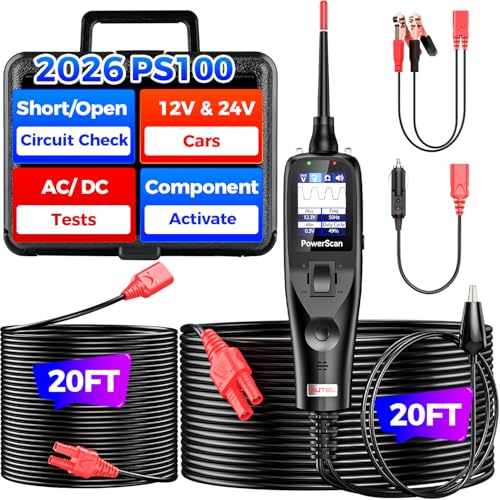
Autel PowerScan PS100 2.0
Autel's take on the power probe, with a long cable and tone mode.
What Is a Power Probe, and Why Use One?
A power probe is a handheld circuit tester that clips to the vehicle battery and turns its tip into a switchable test point. Touch the tip to a wire and it shows the voltage there. Press the switch one way and it feeds battery power to that point, press it the other way and it supplies ground.
That second trick is what sets it apart from a test light. You can unplug a fan motor and run it straight from the probe, which tells you in seconds whether the motor or the wiring feeding it is at fault. Power Probe, the company that made the name famous, now offers a PowerFlow version of the Power Probe 3 that also loads the circuit during the test to expose weak grounds and voltage drop.
How to Choose the Best Power Probe Tester for Your Work
The best power probe for you depends on the jobs you do. Lights, motors, relays and trailer plugs need only power, ground and a voltage readout, while sensor and injector circuits reward a model that reads frequency or pulse width.
- Voltage range: most listings cover 12 and 24 volt systems, which handles cars, pickups and many heavy trucks.
- Circuit protection: a resettable breaker saves fuses and frustration when you touch a shorted wire.
- Cable reach: 20 feet reaches most cars from the battery, and an extension helps on trucks with trailers.
- Display: simple LEDs and a voltmeter suit beginners, while a color screen packs in more readings.
- Accessories: back probes, piercing probes and alligator leads decide how easily you reach a connector.
Best Power Probe Picks, Reviewed One by One
These six span basic probes, meter-equipped models and full kits. Specs come from each Amazon listing or the maker’s page, so check the voltage range and accessories before you order.
1. Power Probe 3 PP319FTCRED: 12-24V Circuit Tester Kit with Case and Accessories
- Applies battery power or ground at the tip
- Works on 12 to 24 volt systems
- 20 ft power cable
- Resettable 8 amp circuit breaker
The Power Probe 3 is the tool that gave the whole category its name, and this PP319FTCRED listing packages it with accessories and a carry case. Clip it to the battery and the probe tip becomes a live test point: touch a wire to read its voltage, or press the rocker switch to send battery power or ground to whatever the tip is touching.
The listing covers 12 to 24 volt systems, a 20 foot power cable that reaches the rear of most cars, and DC voltmeter indicators that show readings as you probe. A resettable 8 amp circuit breaker trips if you power a shorted circuit, then resets instead of needing a new fuse. The same tool handles continuity checks and component testing, so you can run a power window motor or a cooling fan straight from the probe and learn whether the part itself works.
For a home garage it is the sensible starting point, since one case holds the probe and its leads. It is a power-and-ground tool with a basic voltmeter, though, not a full digital meter, so keep a multimeter nearby for precise resistance or signal readings.
View Power Probe 3 Kit (PP319FTCRED) on Amazon
2. Power Probe 3 PowerFlow PP3PFRED: Circuit Tester with Active Load Testing

- PowerFlow loads circuits during testing
- Applies battery voltage or ground
- Reads resistance from 1 ohm to 25k ohms
- 10A self-resetting breaker and power latch
PowerFlow is the newest version of the Power Probe 3, and the PP3PFRED listing is built around one idea: testing a circuit while it carries a load. A plain voltage check can show 12 volts on a wire that still cannot run a headlight, because a corroded terminal or a frayed strand passes voltage but chokes current.
Power Probe says PowerFlow actively loads positive or negative circuits, so voltage drop, weak grounds and high resistance show up during the test instead of hiding. The tool still applies battery power or ground to components, measures resistance from 1 ohm to 25k ohms according to the listing, and uses a 10 amp self-resetting circuit breaker. A built-in latch holds power on without keeping your thumb on the switch, and the maker’s page notes a 4mm banana jack on the ground lead for extensions and adapters.
That makes it a strong fit for the maddening faults: a starter that only clicks, a fan that runs some days, or a taillight that glows dimly. Owners who mostly check fuses and trailer plugs may find the original Power Probe 3 kit covers everything they need.
View Power Probe 3 PowerFlow (PP3PFRED) on Amazon

3. Power Probe IV PP401AS: Circuit Tester with Color LCD and Multimeter Functions
- Supplies power and ground to components
- Digital voltmeter and ohmmeter
- Large color LCD with menu
- AC RMS, peak to peak, frequency and pulse width
The Power Probe IV takes the same power-and-ground probe and puts a digital meter inside it. The PP401AS listing describes a large color LCD with a menu you scroll through, so readings appear on the tool in your hand instead of on a meter balanced on the fender.
Beyond supplying power and ground for functional testing, the listing covers digital volt and ohm readings plus AC RMS, AC peak to peak, frequency and pulse width. Those signal modes matter on modern cars, where many sensors and actuators communicate in pulses rather than steady voltage. Checking whether a fuel injector, solenoid or wheel speed sensor circuit is actually switching becomes possible without hooking up a separate scope for a first look.
The trade-off is complexity. There are more menus to learn than on the Power Probe 3, and a beginner who mainly tests lights, motors and fuses will use only a fraction of what it offers. For anyone who already reads wiring diagrams and chases sensor faults, it combines a probe and a meter into a single tool that lives in one pocket of the toolbox, which saves juggling leads at the car.
View Power Probe IV (PP401AS) on Amazon
4. Power Probe IV Master Combo Kit PPKIT04: PP4 Tester with ECT3000 Short Finder

- Power Probe IV circuit tester
- PPECT3000 circuit tracer for shorts and opens
- Fuel injector and driver testing
- Accessories included in one kit
For anyone hunting the best power probe kit, this is the most complete package in the Power Probe range on Amazon. The PPKIT04 Master Combo Kit bundles a Power Probe IV with the PPECT3000 circuit tracer and a set of accessories, according to the listing.
The Power Probe IV half powers up components and covers the digital meter duties, and the listing also points to fuel injector testing, open circuit checks and driver testing. The ECT3000 changes how you approach a short circuit. Instead of pulling trim panel after trim panel, you connect its transmitter to the faulty circuit and follow the signal along the harness with the handheld receiver until it stops, which narrows down where the short or break sits.
This kit suits someone who has already met a fuse that blows again the moment it is replaced, or who works on trailers, campers and older trucks with long wiring runs. It is more tool than a casual owner needs, and the separate pieces take up real space in a toolbox drawer, so a driveway mechanic with simple jobs is better served by the Power Probe 3 kit above.
View Power Probe IV Master Combo Kit (PPKIT04) on Amazon
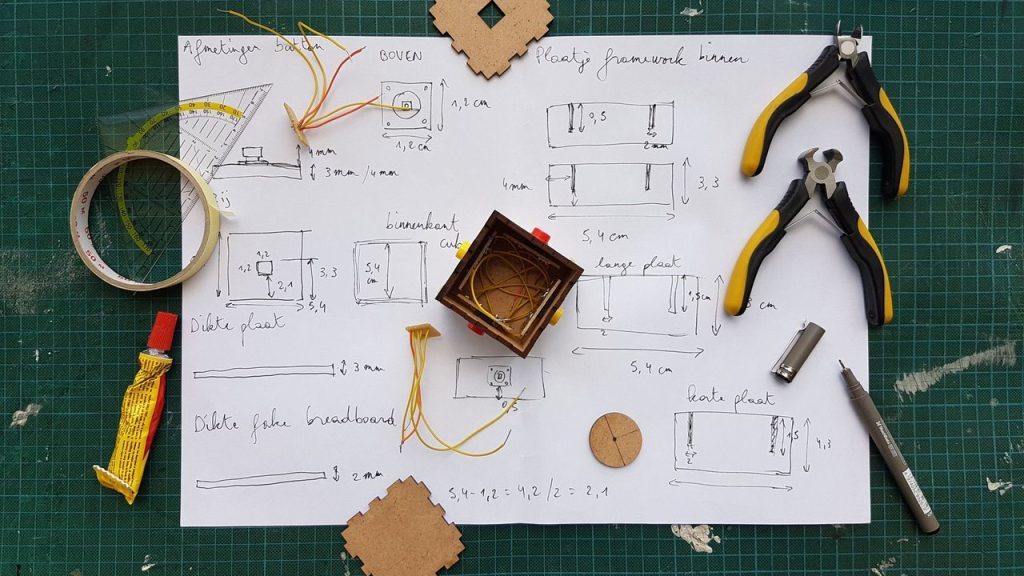
5. Autel PowerScan PS100 2.0: 12-24V Circuit Probe Tester with 40 ft Cable Reach
- Listed for 6 to 30 volt systems
- DC, AC, resistance and tone modes
- 20 ft cable plus 20 ft extension
- Red and green polarity LEDs and flashlight
Many shoppers who search power probe vs Autel end up weighing this tool. The PowerScan PS100 2.0 works the same basic way as a Power Probe: it takes power from the vehicle battery or a power outlet plug, and its tip reads voltage or sends power and ground to a component.
The listing rates it for 6 to 30 volt systems and describes four modes: DC voltage at 0.1 volt resolution, AC voltage with minimum, maximum, frequency and duty cycle, resistance, and a tone mode that changes pitch with voltage so you can work without watching the screen. A red LED marks positive and a green LED marks ground, while neither lighting points to an open. The 20 foot cable plus a 20 foot extension gives 40 feet of reach, and a built-in flashlight helps under the dash.
The listing copy compares itself loudly with the Power Probe 3 and 4, so judge it on its stated features rather than the marketing. For most home mechanics it covers the same everyday checks, while Power Probe offers a wider range of accessories designed around its own testers.
View Autel PowerScan PS100 2.0 on Amazon
6. VDIAGTOOL V200 Pro Upgrade Kit: Power Circuit Probe with Breaker Finder and 30-Piece Back Probe Set

- Probe mode with AC/DC voltage, resistance and diode
- Breaker finder mode for opens and wire tracing
- 30-piece back probe and lead set
- Runs from a 12/24V outlet or the battery
The V200 Pro Upgrade Kit pairs a power circuit probe with the accessories that usually get bought separately later. VDIAGTOOL lists 15 back probe pins in three angles, five banana plug test leads with alligator clips, five wire piercing probes and five extra alligator clips alongside the tester.
The tester switches between two modes. Mode I is the probe itself, with AC and DC voltage, resistance and diode checks, a polarity readout and component activation for lights, motors, wipers, relays and fans. Mode II turns it into a breaker finder that follows a tone along a wire to locate an open or a break, which the listing says works without damaging insulation. It draws power from a 12 or 24 volt outlet or the battery, so there are no internal batteries to replace.
Back probe pins slide into the rear of a connector and let you read a live sensor without unplugging it, which helps at injectors and weatherproof plugs. Piercing probes are another matter: every hole in the insulation lets in moisture and road salt, so seal any pierced spot or skip them on wiring under the car.
View VDIAGTOOL V200 Pro Upgrade Kit on Amazon
Power Probe vs Autel, Fluke and a Test Light
Each tool answers a different question at the wire, and the table shows whether you need one or two.
| Tool | Feeds power or ground | What it reads | Suits |
|---|---|---|---|
| Power Probe 3 | Yes | DC voltage, continuity | Lights, motors, relays, trailer plugs |
| Power Probe IV | Yes | Voltage, resistance, frequency, pulse width | Sensors, injectors, signal circuits |
| Autel PowerScan PS100 2.0 | Yes | DC and AC voltage, resistance, tone | General probing with a long reach |
| Fluke-style multimeter | No | Precise voltage, resistance, current | Parasitic draw and exact readings |
| Test light | No | Power or ground present | Quick fuse and wire checks |

The power probe vs Fluke question is really probe versus meter. A quality multimeter gives the precise numbers a probe does not, such as current draw when you chase a battery that goes flat overnight. Many owners keep both, and our roundup of multimeters for automotive use covers the meter side.
Probing Safely on Modern and Salt-Belt Wiring
Feeding battery power into the wrong wire can damage a control module or set off an airbag. Never apply power or ground to airbag, ignition or sensor reference circuits, and check a wiring diagram before you energize anything you have not identified. Wear eye protection and keep the cable clear of belts and fans.
West Michigan winters add their own problem. Road salt creeps into connectors and under insulation, so a circuit that tests fine on a dry afternoon can fail after a slushy commute. Back probe a connector from behind rather than piercing the wire, and coat cleaned terminals with a product from our dielectric grease guide before you plug them back together.

A load test helps here too. Corroded wire often shows full voltage with nothing connected, then sags once a motor or bulb pulls current, which is exactly the fault a loaded test or a voltage drop check reveals.
When a Circuit Fault Needs Our Shop
A probe finds a lot, but some faults keep coming back. A fuse that blows again right after you replace it points to a short somewhere along the harness, and our guide to why a car fuse keeps blowing walks through the usual causes. A battery that dies while parked is a separate puzzle, covered in our article on why a car battery dies overnight.

Intermittent shorts, network communication faults and module problems usually need wiring diagrams and shop equipment. Our car electrical repair in Grand Rapids covers body and engine electronics, from tracing shorts to repairing damaged harness sections.
More Buying Guides
Frequently Asked Questions
Is the Power Probe 3 still worth buying?
For most home mechanics, yes. It handles the checks that come up most often: whether a wire has voltage, whether a ground is good and whether a motor, bulb or relay works when fed power directly.
What is the best power probe brand?
Power Probe is the original brand and offers the widest range of testers and add-ons, from the Power Probe 3 to kits with the ECT3000 tracer. Autel and VDIAGTOOL sell testers with similar core functions. Pick the best power probe tester by the features you need, not the logo.
Can a power probe damage a car’s computer?
It can if you apply power or ground to the wrong circuit. Sensor reference wires, data lines, ignition circuits and airbag wiring should never be energized from a probe. Identify the wire with a diagram first, read voltage before you feed anything, and leave airbag circuits to a shop.
Do I need a power probe if I already own a multimeter?
Not always, but it speeds up many jobs. A multimeter reads values precisely, while a power probe can also run a component on the spot and show polarity at a glance. For motors, lights and trailer wiring, the best power probe saves time even with a good meter in the drawer.
Probed every wire you can reach and the fault still hides somewhere in the harness? Our phone line, 616-279-3832, is staffed 8am to 5pm Monday through Friday, or you can describe the electrical symptoms on our contact page.
Electrical gremlins rarely show up on cue, so jot down when yours appears, such as only in rain or only after a cold start, and bring those notes with the car to 456 Carrier St NE for our electrical diagnosis. Can’t make it during the day? Our after-hours drop-off is available, and leaving your symptom log with the key gives us a head start on the wiring.