
As an Amazon Associate, 456 AutoFix earns from qualifying purchases. Product links below go to Amazon, where you can confirm the details before you buy.
A rough idle with no trouble code, a hiss somewhere under the hood or a carburetor that never quite settles: these are the jobs where a simple dial still earns its place in the toolbox. The best vacuum gauge for automotive work reads manifold vacuum clearly, holds a seal on the hose and comes with the fittings your engine needs.
This guide covers what the needle can tell you, which features matter, and five gauges that range from classic dial kits to a digital readout.
Quick answer
Which vacuum gauge should a home mechanic buy?
For general engine checks, a dial kit with a tee fitting and several adapters, such as the OTC 5613 or Innova 3620, covers most cars. A long-hose kit like the SIXIWANZI suits road tests. For steadier, finer numbers on fuel-injected engines, the AUTOOL PT502 digital gauge is the step up.
Our Quick Picks
Three quick picks for the most common jobs: an all-round dial kit, a long-hose kit for road tests and a digital gauge for fine readings. All five gauges are reviewed below.
OTC 5613
A complete dial kit for general engine vacuum checks.

SIXIWANZI TU-1
A large dial on a long hose you can watch from the seat.

AUTOOL PT502
A digital gauge for steady, repeatable vacuum numbers.
What a Vacuum Reading Says About Your Engine
A gasoline engine works like an air pump. As each piston moves down on its intake stroke, it pulls air past a partly closed throttle, and that creates vacuum in the intake manifold. A gauge teed into a manifold port turns that pull into a number, usually in inches of mercury (inHg).
The number on its own matters less than how the needle behaves. A healthy stock engine at idle typically shows a steady reading somewhere in the high teens to low twenties, while a needle that drops, drifts or flutters points toward a specific kind of fault. Your service manual lists the expected figure for your engine, and an aggressive camshaft or a high-altitude drive will read lower.
That makes the gauge a fast first look before you reach for a compression tester for checking cylinder health. It will not name a failed part on its own, but it tells you whether to chase a leak, a valve, the rings or the exhaust.
Features Worth Comparing Before You Buy
- Dial size and scale: a 3.5-inch or larger face with clear inHg markings is easier to read with the engine shaking at idle. Color-coded bands help beginners.
- Hose length and quality: a short hose keeps you at the fender, while a long one lets you watch the gauge from the driver’s seat. Thin hose can collapse and skew the reading.
- Fittings: a tee connector and tapered adapters let you tap into a vacuum line without losing a sensor or accessory signal.
- Pressure scale: many kits also read low fuel pump pressure, which suits carbureted engines but not the higher pressures of fuel injection.
- Analog or digital: a dial shows needle movement at a glance, and a digital gauge gives finer, steadier numbers but needs power.
On a modern car, pair the gauge with an OBD2 scanner suited to DIY mechanics. Fuel trim and manifold pressure data from the scanner, checked against the mechanical gauge, make a vacuum leak much easier to confirm.
Best Vacuum Gauge for Automotive Testing: Five Kits in Detail
Four of these are mechanical dial kits and one is a digital gauge. Ranges, hose lengths and included parts come from each Amazon listing, so check the current listing and your engine’s ports before you order.
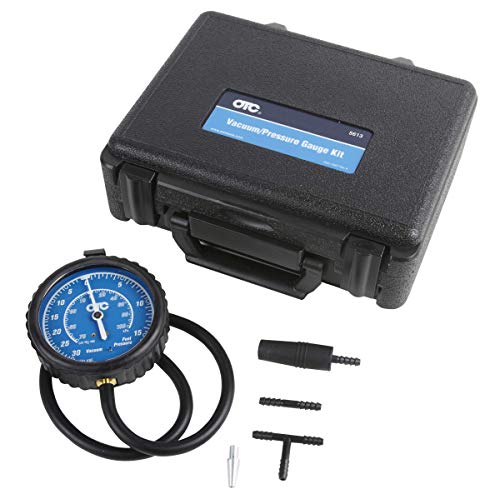
1. OTC 5613 Vacuum/Pressure Gauge Kit: Engine Vacuum and Low Fuel Pressure Testing with Storage Case
- Tests vacuum lines and vacuum components
- Reads low-pressure fuel systems
- Adapters for most applications included
- Blow-molded hard case with removable lid
The OTC 5613 is a vacuum and pressure gauge kit from a long-established maker of diagnostic shop tools. OTC describes it as a kit for testing vacuum lines and vacuum-operated components, and for checking low-pressure fuel systems. The listing also names its main diagnostic use: spotting internal engine problems such as worn rings, sticking or burned valves and leaking head gaskets through the way the needle behaves.
The kit comes with adapters that OTC says suit most applications, so you can tee into a manifold port or a vacuum hose without hunting for fittings at the parts store. Everything packs into a blow-molded hard case with a removable lid, which keeps the gauge face and hoses protected in a crowded drawer. The listing also points to finding hard-to-locate faults such as cracked lines, which is where a steady low reading usually leads you.
In practice, this is the kit to buy if you want one gauge that handles general engine vacuum checks on most cars and the low fuel pressure of an older carbureted engine. It is not a fuel injection pressure tester, since those systems run much higher pressures. The listing does not state a dial size or hose length, so check the current listing photos if those details matter for how you work.
2. Innova 3620 Vacuum/Carburetor Fuel Pressure Tester: 3.5-Inch Dual-Scale Dial with Brass Fittings

- 3 1/2-inch dual-calibrated, color-coded dial
- Heavy-duty Bourdon tube meter movement
- 24-inch oil resistant hose with brass fittings
- Universal adapter, tapered adapter and tee
The Innova 3620 is a compact vacuum and carburetor fuel pressure tester built around a 3 1/2-inch dial. Innova lists the dial as dual-calibrated and color-coded, so the vacuum scale and the low pressure scale sit on one face and are easy to tell apart. The gauge uses a heavy-duty Bourdon tube movement, a proven mechanical design that needs no batteries and responds quickly to changes in manifold vacuum.
Innova describes the tool as a way to find vacuum leaks and problems in the engine and in the vacuum-operated motors and accessories around it. The kit includes a 24-inch oil resistant rubber hose, a universal fitting adapter, a tapered adapter and a tee connector, and the listing highlights properly rated fuel hose and brass fittings for durability. The pressure side checks fuel pump pressure on vehicles equipped with carburetors.
This suits owners who want a simple, well-known dial that tucks into a toolbox and gets used a few times a year. The 24-inch hose keeps you near the engine bay, which is fine for idle and snap tests but limits road testing. Like the other dial kits, it is not meant for fuel-injected pressure checks, so pick a dedicated tester for that job.

3. HFS Fuel Pump Pressure and Vacuum Tester Kit: 28 inHg and 10 PSI on a 3.5-Inch Gauge

- Reads engine vacuum to 28 inHg
- Tests fuel pump output to 10 PSI
- 3-1/2-inch gauge with 24-inch hose
- Adapters and blow-molded storage case
The HFS Fuel Pump Pressure and Vacuum Tester Kit is a straightforward dial kit that covers the two jobs most older engines need. The listing rates the gauge to read engine vacuum up to 28 inches of mercury and fuel pump output pressure up to 10 PSI. That pressure ceiling matches the low output of mechanical and carbureted fuel systems rather than modern injection.
The kit includes a large 3-1/2-inch gauge, a 24-inch vacuum hose and a set of adapters that HFS says suit most vehicles. Everything stores in a blow-molded case with instructions included, which helps if you are reading vacuum patterns for the first time. The listing also mentions checking carburetor settings and valve adjustments, two jobs where watching the needle while you turn a screw is quicker than guessing by ear.
This kit makes most sense for classic car owners, small engine tinkerers and anyone tuning a carburetor at home. The dial is big enough to read from the fender, and the scales cover normal engine vacuum with room to spare. Because the hose is fairly short and the pressure range is low, it is not the right choice for road tests or for checking fuel-injected rails, where a longer hose or dedicated tester serves better.
View HFS Vacuum Tester on Amazon
4. SIXIWANZI TU-1 Vacuum Gauge Kit: 4-Inch Dial, 0-28 inHg with 61-Inch Hose
- 4-inch color-coded dial, 0-28 inHg
- Fuel pump pressure scale, 0-14 psi
- 61-inch vacuum hose with brass fittings
- Multiple adapters and storage case
The SIXIWANZI TU-1 is a vacuum gauge kit with a larger dial and a much longer hose than most basic testers. The listing gives the face as 4 inches across and color-coded, with a vacuum scale from 0 to 28 inHg and a fuel pump pressure scale from 0 to 14 psi. A larger face makes small needle movements, like a regular dip from a sticking valve, easier to catch.
The standout detail is the 61-inch vacuum hose with brass fittings. That length lets you route the hose out from under the hood and watch the gauge from the driver’s seat, which helps with faults that only appear under load, such as a restricted exhaust or a vacuum leak that opens as the engine moves on its mounts. The kit also includes multiple adapters for common ports and a storage case with printed instructions.
The listing suggests uses that include brake booster lines, carburetors, intake manifolds and other vacuum-operated devices. If you do take it on a road test, secure the hose well away from hot or moving parts and have a helper read the dial while you drive. The fuel pressure scale covers carbureted engines only, so pair it with a dedicated tester for fuel injection work.

5. AUTOOL PT502 Digital Vacuum Pressure Gauge: -101 to 0 kPa Readout with Temperature Compensation
- Digital readout from -101 to 0 kPa
- Automatic temperature compensation
- 12V power with reverse polarity protection
- Compact body for workshop or field use
The AUTOOL PT502 swaps the needle for a digital screen. The listing describes a digital sensor that measures vacuum from -101 kPa to 0 kPa, which spans the full range from atmospheric pressure down to near-perfect vacuum, and shows real-time readings for repeatable measurements. AUTOOL positions it for intake, exhaust and EGR diagnostics as well as monitoring negative pressure in sealed systems and hoses.
An automatic temperature compensation feature is listed to keep readings stable across ambient temperatures from about -10 to 60 degrees Celsius, which matters in an unheated Michigan garage. The gauge runs from a 12V external power source and includes reverse polarity protection, so a mixed-up clip should not damage it. The compact body is designed for routine checks in a workshop or out on the road.
This suits owners of fuel-injected cars who want to log small changes, for example a slow drop that points to a restricted converter or a leak that grows as the engine warms. The readout is in kPa, so keep a conversion handy if your service manual lists inHg. It needs a power source and shows a number rather than needle movement, so some mechanics still keep a dial gauge for reading patterns.
How to Read the Needle
Take readings with the engine fully warm, at idle first and then held steady around 2,500 rpm. Write each one down, because the pattern is what points you toward a cause. Use the table as a starting point, then confirm with the test in the last column.
| Gauge behavior | What it often suggests | Confirm with |
|---|---|---|
| Steady reading in the normal range | Sealed intake, healthy valves and rings | No further test needed |
| Steady but low at idle | Vacuum leak, late ignition timing or a big cam | Scan tool fuel trims, smoke test |
| Regular drop every few seconds | Burned or sticking valve | Compression or leak-down test |
| Fast flutter that grows with rpm | Weak valve springs or worn guides | Shop inspection |
| Falls slowly at a steady 2,500 rpm | Restricted exhaust or clogged converter | Exhaust back pressure test |
| Low and erratic, regular drop | Possible head gasket leak | Compression test, coolant check |
A snap test adds one more clue. Open the throttle quickly and let it close: the needle should dip toward zero, then swing above the idle reading before it settles. A sluggish recovery can point to worn rings or a restriction.

Hooking Up the Gauge Safely in a Michigan Garage
Connect to a manifold vacuum source below the throttle plate, such as a brake booster line or a spare port on the intake, using the tee so nothing else loses its signal. Route the hose away from the fan, belts and exhaust manifold before you start the engine. Wear eye protection and keep loose sleeves and cords clear of moving parts.
Run the engine with the garage door open or outdoors, never in a closed space. In a West Michigan winter, let the engine reach full temperature first, because a cold idle on a fast-idle program reads differently from a warm one.

Road salt and freeze-thaw cycles are hard on rubber, so cracked vacuum hoses and brittle elbows are a common cause of a low, steady reading here. If you suspect a wiring fault on a sensor while you are in there, a multimeter built for automotive use checks voltage and continuity, and a hiss you can hear near the manifold may be an exhaust leak rather than a vacuum leak.
When the Gauge Says It Is Time for a Shop
A vacuum gauge is good at narrowing the field, not at fixing anything. Readings that point to valve, ring or head gasket trouble call for compression and leak-down testing and often a teardown, which is shop work for most owners. The fueleconomy.gov guide to keeping your vehicle in shape also notes that a lit check engine light can mean anything from a loose gas cap to a problem that raises emissions and cuts fuel economy.

Regular service catches many of these problems early, from tired hoses to plugs and filters, and our factory scheduled maintenance in Grand Rapids follows your maker’s schedule. If a warning light is already on, our check engine light diagnostic service pulls the codes and tests the systems behind them.
More Buying Guides
Frequently Asked Questions
What should a vacuum gauge read at idle?
Many healthy stock engines show a steady reading in the high teens to low twenties of inHg when warm. Performance camshafts and higher altitudes read lower, so check the figure in your service manual and pay most attention to whether the needle stays steady.
Where do you connect a vacuum gauge on a car?
Use a manifold vacuum source below the throttle plate, such as the brake booster line or an unused intake port. Ported vacuum above the throttle reads near zero at idle and will give a misleading result.
Is a digital or analog vacuum gauge better?
An analog dial shows needle movement instantly, which helps when you are reading patterns like flutter or a regular drop. A digital gauge gives finer, steadier numbers and suits logging small changes, but it needs a power source.
Can a vacuum gauge test a fuel pump?
Kits with a pressure scale can check the low output of a mechanical pump on a carbureted engine. Fuel-injected systems run far higher pressures and need a dedicated fuel pressure tester with the correct fittings.
Gauge pointing at something you would rather not open up yourself? Call 456 AutoFix at 616-279-3832 on weekdays from 8am to 5pm, or request a time through our contact page.
If your schedule is full, our after-hours drop-off lets you leave the car at 456 Carrier St NE, and we will start on the engine diagnosis once it is in the shop.