
As an Amazon Associate, 456 AutoFix earns from qualifying purchases. Product links below go to Amazon, where you can confirm the right part for your vehicle.
Pull the intake hose off a high-mileage direct-injection engine and you may find a film of oil inside it. The oil catch can vs air oil separator question is really about where that oil ends up once you stop it reaching the intake. A catch can keeps it in a jar for you to empty, while an air oil separator sends it back to the crankcase on its own.
Both devices sit in the positive crankcase ventilation (PCV) line, and both aim to cut the oil mist that rides along with blow-by gases. The differences show up in upkeep, in how specific each unit is to one engine, and in how they behave through a cold winter. Below we explain both designs, then look at one catch can, one true separator and a universal unit that blurs the line between them.
Quick answer
Should you fit a catch can or an air oil separator?
Choose a catch can if you want a simple, affordable way to trap oil mist and you will check and empty it regularly. Choose an air oil separator if one is made for your exact engine and you want the oil returned to the crankcase with no draining. Either beats venting to open air.
Our Quick Picks
Here are the two designs side by side, a compact catch can and a return-type separator, plus a related third pick: a universal unit sold as an air/oil separator that collects oil like a can.

EVIL ENERGY 300ml Catch Can
A baffled can that stores oil and moisture for you to drain.

IAG Performance AOS
A heated separator that sends captured oil back to the engine.
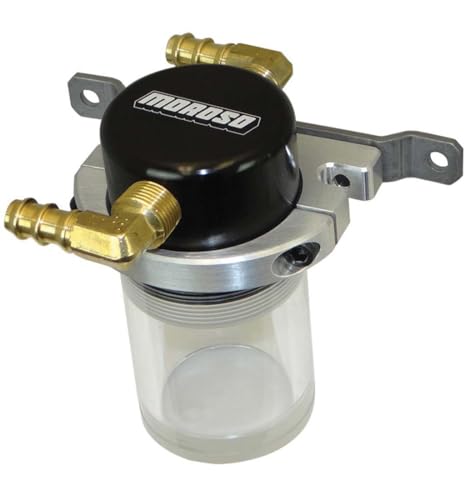
Moroso 85683 Small Body
Sold as an air/oil separator but collects oil like a can.
Where the Oil Goes: Storage Jar or Return Line
Every running engine pushes a little combustion gas past the piston rings into the crankcase. The PCV system pulls those gases back into the intake to be burned, and a fine oil mist comes with them. On a port-injected engine, fuel sprayed onto the back of the intake valves helps wash some of that residue away. On a direct-injection engine the fuel goes straight into the cylinder, so the oily film can bake onto the valves as carbon.
A catch can is a sealed canister spliced into the PCV hose. Gas enters, slows down, hits baffles or filter media, and drops its oil droplets before the cleaner air continues to the intake. The liquid stays in the can until you drain it.
An air oil separator does the same separating job, but it adds a return path so the oil drains back to the oil pan, and many designs are heated so moisture does not settle out. IAG Performance, which builds both styles of part, lays out the difference in its guide to air oil separators and catch cans.
| Point | Oil catch can | Air oil separator |
|---|---|---|
| What happens to the oil | Stored in the can until you empty it | Returned to the crankcase through a drain line |
| Routine upkeep | Check and drain on a schedule | Usually none beyond normal oil changes |
| Fitment | Many universal kits, plus vehicle kits | Mostly built for one engine family |
| Install effort | Hoses, fittings and a mount | More plumbing, sometimes coolant or oil lines |
| Cold-weather behavior | Collects water and oil sludge | Heated designs keep moisture moving |
Neither device fixes an engine that already has heavy carbon on its valves. They slow new buildup. If the valves are already coated, a cleaning service or an induction cleaner comes first, and our guide to intake valve cleaners for direct-injection engines covers the spray-in options.
What to Check Before You Buy Either One
Start with fit. A universal can needs the right hose size, a solid spot to mount, and a route that keeps hoses away from exhaust heat and moving parts. A vehicle-specific kit or separator should name your year, model and engine on the listing, and you should confirm that before ordering. Never assume a unit listed for one trim fits every engine in that model line.
Next, look at how the unit separates oil. Baffles, mesh and sintered bronze filters each slow the gas and give droplets something to cling to. Then think about upkeep honestly. A can that holds only a few ounces has to be checked often, while a separator with a return line asks almost nothing of you once it is installed.
One rule applies to both: the gases must still go back into the engine. Venting the crankcase to open air on a road vehicle raises emissions problems, and IAG’s guide says it will fail a smog check as well. Work on a cool engine, wear eye protection when you pull hoses, and take any oil you drain to a used-oil collection point rather than pouring it out.
Oil Catch Can vs Air Oil Separator: Three Units Up Close
The first unit is a universal catch can with its own hose kit, the second is a true return-type separator built for one Subaru platform, and the third is a universal part sold as an air/oil separator that works more like a can. Check each listing against your own vehicle and hose layout before you buy.
EVIL ENERGY 300ml Catch Can: 2-Port Baffled Can with Bronze Filter and 5 ft Hose Kit
- Removable baffle with low micron bronze filter
- 300 ml universal aluminum can
- 5 ft of 3/8 inch ID NBR hose included
- M16 x 1.5 inlet and outlet threads
This is the catch can side of the comparison in its most common form: a universal, two-port aluminum canister that you splice into the PCV hose between the engine and the intake. EVIL ENERGY titles it as both an oil catch can and an air oil separator, a good example of how loosely retail listings use the two names. It stores what it collects, so it works like any other can.
Inside, the listing describes a removable baffle and a low micron bronze filter that trap oil and moisture before the gases move on to the intake. The can holds 300 ml, and the kit includes 5 feet of NBR hose with a 3/8 inch inner diameter, plus fittings that thread into the M16 x 1.5 inlet and outlet ports. The maker says it suits most cars with enough room to mount it, so measure your engine bay and your factory PCV hose before ordering.
Upkeep is the trade-off. The listing itself warns that freezing weather makes the crankcase vent system produce much more moisture, and it advises cleaning the can weekly in those conditions or putting the original PCV hose back. That honest note matters for West Michigan winters. It suits owners who will keep up with draining, not anyone who wants to install a part and forget it.
View EVIL ENERGY 300ml Catch Can on Amazon

IAG Performance AOS: Heated 1-Liter Air/Oil Separator for 2015-21 Subaru WRX
- 1-liter cast aluminum swirl pot
- Fully heated housing, listed as no draining needed
- Removable -8 ORB billet hose barbs
- Listed for 2015-21 WRX and 2014-18 Forester XT
The IAG Performance unit represents the separator side: a return-type design built for specific Subaru models rather than a universal can. The Amazon title lists the 2015 to 2021 Impreza WRX and the 2014 to 2018 Forester XT, in a red powder-coated finish. Subaru offered several engines and trims across those years, so check the year, model and engine against the fitment notes before you order. Treat it as a Subaru part only.
According to the listing, the heart of the unit is a cast aluminum swirl pot of about 1 liter that spins oil out of the PCV gases before they return to the intake. The housing is fully heated, which helps keep moisture from settling, and the side carries removable -8 ORB billet hose barbs. IAG says the design keeps factory PCV function while adding capacity, works with all fuel types and standard ECU calibrations, and needs no draining or maintenance.
That no-drain design is the main reason to choose a separator over a can. Installation is more involved than splicing a canister into one hose, so read the instructions first and allow time for the extra plumbing, or have a shop handle it. Owners of other makes, and anyone looking for a universal part, will need a different unit.
View IAG Performance AOS on Amazon
Moroso 85683: Universal Small-Body Air/Oil Separator with Clear Bottom and Mount Kit
- Billet aluminum body with baffling and mesh
- Clear bottom section, black finish
- Brass inlet and outlet fittings with PCV hose
- Stainless bracket and billet clamp included
The Moroso 85683 is our related third pick because it shows how loosely the two names get used. It also appears in our hub guide to oil catch cans, and we include it here because it is the clearest case of a part sold as a separator that behaves like a can. The listing describes a unit that captures crankcase vapors, oil mist and moisture before they reach the intake, with no return line to the oil pan mentioned.
The body is billet aluminum with internal baffling and mesh media, finished in black with a clear bottom section. Where many universal cans ship with only fittings, this kit lists heavy-duty brass inlet and outlet fittings, fuel, emission and PCV vapor hose, a stainless steel mounting bracket and a billet aluminum clamp for the body. That makes a first install more straightforward when you are not sure what hardware your engine bay will need.
This unit suits owners who want a universal part with the mounting hardware included and who are happy with the routine of draining it. It is not a true return-type separator, so it will not remove the upkeep that comes with a can. Measure your PCV hose and plan the bracket location before you buy, and keep the hose run short and free of low spots.
View Moroso 85683 Small Body on Amazon

Matching the Device to the Way You Drive
The engine matters more than the brand name on the canister. A turbocharged direct-injection four-cylinder sends more oil mist through its PCV system under boost than a mild naturally aspirated engine does, and it has no fuel wash on its valves. A daily commuter with a port-injected engine may never need either device. Think about how you drive and how willing you are to keep up with maintenance before spending money.
| Your situation | Closer fit | Reason |
|---|---|---|
| DI turbo engine with a separator made for it | Air oil separator | No draining, oil stays in the engine |
| DI V6 or V8 truck, no separator offered | Vehicle-specific catch can | Bolt-in brackets and hoses for that engine |
| Older or project car, custom plumbing | Universal catch can | Flexible mounting and hose routing |
| Port-injected commuter, normal oil use | Often neither | Fuel spray already helps keep the valves clean |
If you are leaning toward a can and want more choices than the one reviewed here, our roundup of oil catch cans for every budget compares universal and vehicle-specific kits. Look at how each one drains, since a petcock or dipstick-style check makes the job far less messy.

Turbo engines are where oil in the intake tract shows up first, often as a wet film in the charge pipes and intercooler. Some of that is normal. If an engine also burns oil between changes, the PCV device is not the whole story, and our write-up on Audi 2.0T oil consumption explains how to judge what counts as normal.
Winter Short Trips and the Milky Mess in the Can
Cold weather changes the oil catch can vs air oil separator math in Grand Rapids. Short winter trips never let the engine get fully warm, so water vapor in the blow-by condenses and mixes with oil. In a catch can that turns into a tan, milky sludge, and a small can fills with it much faster in January than in July.
Check a can every week or two through the cold months until you learn how fast your engine fills it. If the can fills up, liquid can be pulled into the intake, which defeats the point. Freezing is another worry, since water sitting in a can or a low-hanging hose can turn to ice and restrict the PCV flow on a frigid morning.

Heated separators are designed to deal with this by keeping their housings warm so moisture stays in vapor form and leaves with the gas or the returned oil. Some milky residue under the oil fill cap is common in winter for the same reason. Our article on the milky substance under an oil cap explains when that film is harmless and when it can point to a coolant leak.
Symptoms That Point Past the PCV Hose
A new PCV device should not change how the engine runs. If a check engine light comes on after an install, a loose hose or cracked fitting creating a vacuum leak is the usual suspect, and lean codes are a common result. Our guide to a check engine light that comes on while the car runs fine walks through what to look at first.
Stumbling on takeoff, a rough idle or a misfire on a direct-injection engine can come from carbon that was already on the valves before any can was fitted. The article on why a car hesitates when accelerating covers the other common causes too, from ignition parts to sensors.

When codes or drivability problems persist, guessing gets expensive. Our team handles check engine light diagnostics in Grand Rapids for foreign and domestic vehicles. Hendrick Hoffman, the shop’s owner and head mechanic, has worked in automotive service since 2005 and holds ASE and State of Michigan certification covering engine repair and engine tune-up.
More Buying Guides
Frequently Asked Questions
Is an air oil separator the same thing as a catch can?
Not quite, although many listings use the names loosely. Both pull oil mist out of the PCV gases. A catch can holds that oil until you empty it, while a true air oil separator returns it to the oil pan and normally needs no draining.
How often should you empty an oil catch can?
It depends on the engine, the can size and the season. Check it every week or two at first, then set a schedule based on how quickly it fills. Expect to drain it more often in winter, when water condenses into the can along with oil.
Can a catch can or separator cause a check engine light?
The device itself should not, but a poor install can. A loose hose, a split fitting or a can mounted where a hose kinks can create a vacuum leak or restrict PCV flow, which may set lean or PCV-related codes. Recheck every connection if a light appears after fitting one.
Does a port-injected engine need either device?
Usually not for a daily driver in good health. Fuel sprayed at the intake valves helps keep them clean, so carbon buildup is far less common than on direct-injection engines. A worn engine with heavy blow-by is better served by a proper diagnosis than by a canister.
Seeing oil in your intake tubing and not sure what it means? Phone 456 AutoFix at 616-279-3832 any weekday between 8am and 5pm, or send us a note through the contact page to set up a visit.
Busy during our hours? You can leave the car with us after closing using the after-hours drop-off, and our shop is at 456 Carrier St NE, Grand Rapids.