
As an Amazon Associate, 456 AutoFix earns from qualifying purchases. Product links below go to Amazon, where you can confirm the right part for your vehicle.
Every car body is stitched together with sealer you rarely notice: the bead along a trunk gutter, the brushed line on a floor pan, the ribbon around a taillight opening. When a patch panel goes in or an old seam cracks, the best seam sealer is the one whose application method matches that original joint and that you can paint once it skins over.
This guide sorts the main sealer types, then reviews six tubes and cans by how they go on. If you are still at the rust stage, start with our rust converter buying guide and come back once the metal is clean and primed.
Quick answer
Which seam sealer should I use on a car body?
For most DIY body seams, a one-part urethane sealer in a standard caulking cartridge, such as 3M 08367 or SEM 29372, covers the widest range of joints. Use a self-leveling sealer for flat floor and trunk seams, a brushable sealer to copy factory brush marks, and paint over all of them once cured.
Our Quick Picks
Three starting points, one for each common way of laying sealer: caulk gun, budget cartridge and brush. All six products are reviewed below.
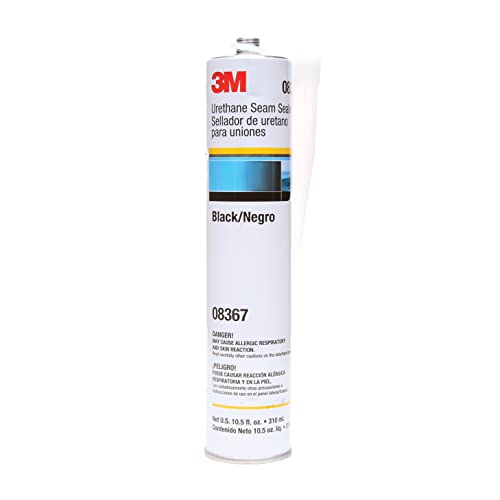
3M Urethane Seam Sealer 08367
Thick, paintable sealer that can be beaded, featheredged or brushed.
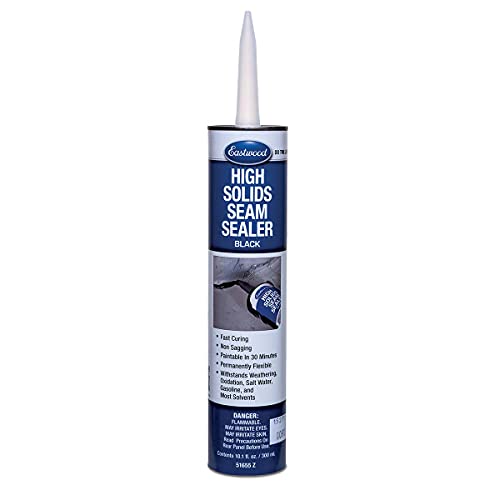
Eastwood Black Seam Sealer
Flexible sealer aimed at firewalls, floor pans and trunk seams.

Evercoat Brushable Seam Sealer
Brush-applied sealer that copies factory brush-mark seams.
What Seam Sealer Actually Does on a Car Body
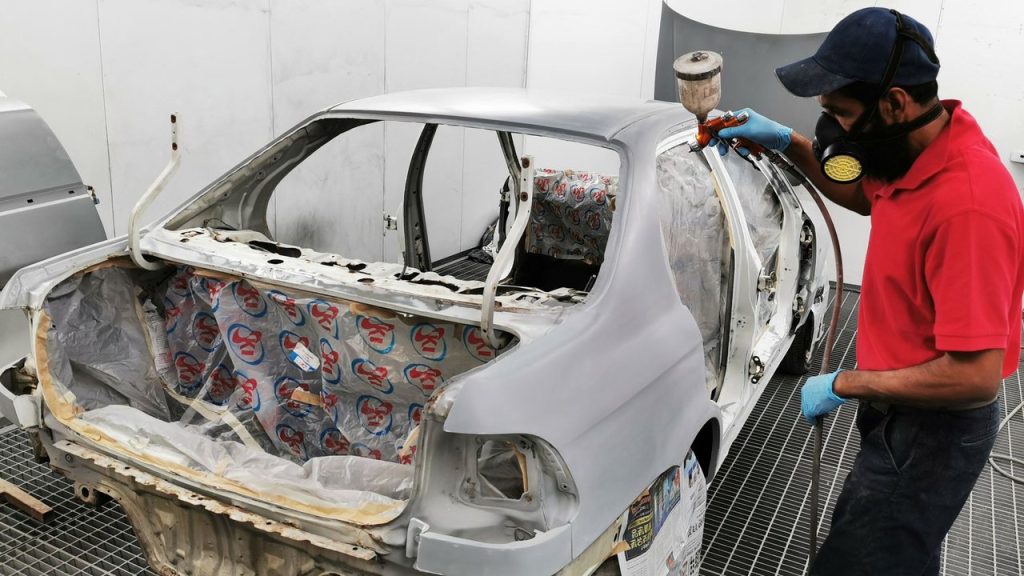
Where two panels overlap or meet at a spot-welded flange, the factory lays a flexible sealer over the joint. It keeps water, salt slush and exhaust fumes out of the gap, cuts down on rattles, and lets the metal move a little without the paint cracking. Without it, moisture wicks into the overlap and rust starts from the inside of the joint, where you cannot see it.
It is not body filler or a structural adhesive. The best seam sealer goes on after welding, over primer and before color, then stays soft enough to flex for years.
What Seam Sealer to Use: Four Types and Where Each Belongs
The label matters less than the way the product flows. Match the sealer to the seam you are repairing:
- One-part cartridge (urethane or similar): fits a normal caulking gun and cures from moisture in the air. It handles vertical and horizontal seams and can be tooled flat or left as a bead.
- Two-part cartridge (epoxy or urethane): mixes in a static nozzle as you squeeze, cures quickly and holds a crisp OEM profile. It needs a dual-cartridge applicator gun and the maker’s own mixing tips.
- Self-leveling: flows out flat into a horizontal joint such as a floor pan, trunk floor or roof ditch. It runs off a vertical seam, so keep it on level work.
- Brushable: comes in a can and goes on with a stiff acid brush, leaving the brush-mark texture many trunks and engine bays had from the factory.
Check each product’s paint time and listed surfaces. Most want primed or painted metal, and some also accept bare steel.
Best Seam Sealer Picks, Tube by Tube
The six products below are grouped by application method, starting with caulk-gun cartridges and ending with a two-part epoxy for those who already own a dual applicator.
1. 3M Urethane Seam Sealer 08367: One-Part Black Cartridge, Paintable in 30-45 Minutes
- Single-component, moisture-curing urethane
- Bonds to bare, primed and painted metal
- Non-shrinking and stays flexible
- Paintable after 30 to 45 minutes
The 3M 08367 is a one-part urethane seam sealer in a 310 mL (10.5 fl oz) black cartridge, sized for an ordinary caulking gun. It cures by drawing moisture from the air, and 3M notes that it holds up well in high heat and humidity, which suits a garage that swings between muggy summers and damp autumns.
The listing says it adheres to bare metal, primed metal and painted surfaces, so it covers most of the joints a DIY repair turns up. The formula is thick enough to fill larger voids, yet it can be smoothed down to a featheredge or worked with a brush when you want a flatter, factory-style finish. 3M describes it as non-shrinking and non-cracking, staying flexible after cure, which is what you want on a panel that flexes over bumps and potholes.
Paint can go on after 30 to 45 minutes, so a seam laid in the morning can be topcoated the same session. The same sealer is sold in gray, white and beige if you need to match an original seam color under clear or light paint. It does not suit wide horizontal gaps that need to flow level on their own.
View 3M Urethane Seam Sealer 08367 on Amazon
2. SEM 29372 Gray Seam Sealer: 10.1 oz Single-Component Cartridge with No Isocyanates

- Single-component formula
- Interior or exterior seams, joints and voids
- Flexible, non-sag bead
- Contains no isocyanates
SEM’s 29372 is a single-component seam sealer in a 10.1 fl oz gray cartridge. SEM describes it as a versatile product for sealing interior or exterior seams, joints and voids, so the same tube can work along a trunk gutter, behind a door skin edge or around an inner fender flange.
The formula is flexible and non-sag. Non-sag matters on vertical work such as a quarter panel joint or a firewall seam, where a runny product would slump before it skins over. A flexible cure means the bead can follow the small movements of the body without cracking away from the metal, which is how old factory sealer often fails on cars that have seen many Michigan winters.
The detail that sets it apart is that SEM states it contains no isocyanates. That is worth knowing if you work in a home garage, though you should still ventilate, wear gloves and read the label before you start. The gray color sits well under most primers and is easy to see while tooling. SEM also makes it in black, white and beige under other part numbers.
View SEM 29372 Seam Sealer on Amazon
3. Eastwood Black Seam Sealer Cartridge: Flexible, Waterproof and Insulating for Floors and Trunks
- Seals cracks, crevices and body seams
- Stays flexible and resists cracking
- Waterproofs and insulates
- Fits a standard caulking gun
Eastwood sells this black seam sealer as a single cartridge, with two, four and twelve packs listed separately for bigger projects. It is aimed at restoration and patch-panel work, and the listing names the areas it is meant for: firewalls, floor pans, trunk seams, fender extensions and taillight openings. Those are the spots where a car built for salted roads tends to need fresh sealer after rust repair.
According to the listing, it seals cracks, crevices and body seams while also waterproofing and insulating the joint. It stays flexible and is described as resistant to cracking, so it can ride out the temperature swings of an unheated garage and the flex of a floor pan under load. Black is a practical color under undercoating or on the underside of a car, where the seam will rarely be seen.
It applies with a standard caulking gun. For a full floor replacement, the multi-packs save repeated orders, but check how much seam length you have before buying more than you need, since an opened cartridge has a limited life. Eastwood’s listing does not give a paint time, so test a small area before you topcoat over it.
View Eastwood Black Seam Sealer on Amazon
4. SEM 39387 Self Leveling Seam Sealer: 7 oz Flowable Sealer for Flat Seams

- Self-leveling flow into crevices
- Bare metal or primed surfaces
- Will not shrink, harden or crack
- Permanently flexible
The SEM 39387 is a self-leveling seam sealer in a 7 oz package, meant for joints that lie flat. Instead of holding a raised bead, it flows out and settles level, filling the low point of the seam and running into crevices that a thick product would bridge over. That behavior suits trunk floors, floor pan overlaps, roof ditches and other horizontal seams where a smooth, flat line looks closest to the original.
SEM lists it for use on bare metal or primed surfaces, which gives some flexibility in how you prepare the repair. Once cured, the listing says it will not shrink, harden or crack, and that it stays permanently flexible. A seam that stays soft is less likely to open up after a few winters of cold soaks and thaw, which is when old, brittle sealer tends to let water in.
The trade-off is that self-leveling sealer is a poor choice for vertical work. On a door seam or a quarter panel it will run before it sets, so keep a non-sag cartridge on hand for those joints. Lay it with the car or panel sitting level, and mask both sides if you want a clean edge after it flows.
View SEM 39387 Self Leveling Seam Sealer on Amazon
5. Evercoat Brushable Seam Sealer: 32 oz Can for Spot-Welded, Riveted and Bolted Seams
- Brush-on application for factory texture
- Adheres to bare metal and painted surfaces
- Paintable in about 1 hour
- Steel, aluminum and fiberglass
Evercoat’s brushable seam sealer comes in a 32 fl oz can and goes on with a brush rather than a gun. Many factory seams in trunks, engine bays and wheel wells were applied this way, with visible brush marks, and a brushable product is the easiest way to copy that look on a restoration or a repair you want to blend in. A stiff acid brush is all you need.
Evercoat lists it for spot-welded, riveted and bolted seams and joints, and states that it adheres well to bare metal and painted surfaces. The listing also covers steel, aluminum and fiberglass, so the same can may serve on a mix of materials in one project. It is described as flexible and durable, and it dries to a paintable surface in about one hour.
A quart is a large amount for one small repair, so it suits a project with several seams to treat or a full trunk or floor to finish. Keep the lid sealed tightly between sessions, since an opened can will start to skin. Brushed sealer leaves a thinner film than a gun bead, so it is not the choice for filling a wide gap.
View Evercoat Brushable Seam Sealer on Amazon
6. 3M Heavy-Bodied Seam Sealer 08308: Two-Part Epoxy Cartridge with Metered Self-Mixing

- Two-part epoxy for vertical and horizontal seams
- Dual syringe cartridge mixes on the way out
- Heavy, non-flowing body for tooling
- Non-sag on vertical joints
The 3M 08308 is a two-part epoxy seam sealer in a 200 mL (6.75 fl oz) dual syringe cartridge. The two components are metered and mixed as they pass through the nozzle, so you get a consistent blend without measuring or stirring by hand. 3M designs it to seal vertical and horizontal seams with a bead that matches OEM seals.
The body is heavy and non-flowing, which lets you shape and tool the bead to copy an original seam rather than leaving a rounded blob. It is also non-sag, so it stays where you put it on a vertical panel while it cures. The listing describes a quick cure, which helps when you want to move on to primer or paint without a long wait.
This is the most demanding product on the list. It needs a dual-cartridge applicator gun and matching mixing tips rather than a standard caulking gun, and the listing marks it for industrial or occupational use, not consumer use. It makes sense for someone with body-shop experience who already owns the applicator. For a first seam repair, a one-part cartridge is simpler and more forgiving.
View 3M Heavy-Bodied Seam Sealer 08308 on Amazon
Seam Sealer vs RTV, Silicone and Caulk
These all come in tubes, but the wrong one on a body seam means peeling paint or a joint that lets water in.
| Product | Made for | Paintable? | Use on body seams? |
|---|---|---|---|
| Automotive seam sealer | Panel joints, flanges, floor and trunk seams | Yes, per the label’s paint time | Yes, this is its job |
| RTV gasket maker | Engine covers, pans and housings that see oil and heat | Generally no | No |
| Household silicone | Bathrooms, windows, general sealing | No, paint will not stick | No, it can also contaminate nearby paintwork |
| Household caulk | Building trim and gaps | Some are | No, not made for road salt, heat or flex |
RTV is the right tube under a valve cover, not along a quarter panel; our RTV gasket maker comparison covers that side. Keep silicone away from bodywork, because its residue causes fisheyes in fresh paint. Shopping for the best seam sealer for an RV roof? Check the RV manual, since RV makers usually specify their own lap sealant.
How to Apply Seam Sealer So It Lasts
- Get to clean metal: grind or blast out rust, treat what is left, and prime as the sealer’s maker suggests.
- Degrease: wipe the seam with a wax and grease remover and let it flash off.
- Mask the edges: tape both sides for a straight line.
- Cut the nozzle small: a narrow bead tools more easily than a fat one.
- Tool or brush it: smooth with a gloved finger, a plastic spreader or an acid brush within the working time on the label.
- Paint on time: topcoat within the window the maker gives, so the paint bonds and covers the sealer from UV and salt.
On the question of the best seam sealer gun, a one-part cartridge only needs a good drip-free caulking gun with a smooth thrust rod, while two-part cartridges need the dual applicator their maker lists. Work in a ventilated space and wear nitrile gloves and eye protection. Many urethane products are built on isocyanate chemistry, and OSHA’s isocyanates overview lists skin and breathing irritation and occupational asthma among the effects, so follow the label on respirators too.

Once the seam is painted, an underbody coating keeps winter brine off the repair; see our guide to undercoating for road salt compares the options. Grinding chips nearby can be blended with a car scratch remover once everything cures.
Rust Behind the Seam: When It Is More Than a Sealing Job
West Michigan winters are hard on seams. Salt slush packs into trunk gutters, rocker pinch welds and wheel-well lips, then freeze-thaw cycles open hairline cracks in old sealer. Bubbling paint or pinholes under a cracked bead mean sealing over it only hides the problem for a season.

Rust that has eaten through a structural panel needs cutting and welding at a body shop. If you are shopping for a used car with suspect seams, book a pre-purchase inspection in Grand Rapids before you hand over any money. Rotted exhaust pipes and hangers near those seams are ours to fix too, and our exhaust rust remover picks help with lighter surface rust in the meantime.
More Buying Guides
Frequently Asked Questions
What is the best seam sealer for cars?
It depends on the seam. A one-part urethane cartridge like 3M 08367 suits most joints, SEM 39387 self-leveling suits flat floor and trunk seams, and Evercoat’s brushable sealer copies factory brush marks. All of them should be painted after curing.
Can I use silicone instead of seam sealer?
Not on a car body. Paint will not bond to silicone, and silicone residue on nearby panels can cause fisheyes in fresh paint. Use an automotive seam sealer that lists the surfaces you are working on.
Should seam sealer go on before or after primer?
Usually after. Most makers want the seam cleaned and primed first, then sealed, then painted. Some sealers also accept bare metal, so read the label and data sheet for the product you bought.
Do I need a special seam sealer gun?
Only for two-part cartridges, which need the dual applicator and mixing tips their maker specifies. One-part cartridges fit a standard caulking gun, and brushable sealers need nothing more than an acid brush.
Found more rust than sealer when you opened up that seam? Ring 456 AutoFix on 616-279-3832 any weekday from 8am to 5pm, or set up a visit on our contact page.
Short on daytime hours? Our after-hours drop-off at 456 Carrier St NE in Grand Rapids lets you leave the car whenever suits you, with a note pointing us to the seams that worry you.