As an Amazon Associate, 456 AutoFix earns from qualifying purchases. Product links below go to Amazon, where you can confirm the right part for your vehicle.
Orange bloom on a frame rail and a crusty bracket sitting on the workbench look like the same problem, yet they call for different bottles. The rust converter vs rust remover question comes down to one choice: leave the rust where it is and change it chemically, or take it off the steel completely. Both approaches work, and each one fails when it is used on the wrong job.
This comparison sets one product of each type side by side, plus a brush-on gel that covers the awkward middle ground of rusty spots still bolted to the car. We look at how each one works, which parts of a vehicle suit it, and what has to happen afterward so the rust does not come straight back after a Grand Rapids winter.
Quick answer
Should you convert the rust or remove it?
Convert it when the rusty steel stays on the vehicle and only has surface rust, such as a frame rail or floor pan you plan to paint. Remove it when the part comes off and fits in a tub, like bolts and brackets. A brush-on gel suits small spots you can rinse in place.
Our Quick Picks
For the rust converter vs rust remover choice, here is one product of each compared type plus a related third pick, a brush-on remover gel for rusty spots you cannot take off the car.
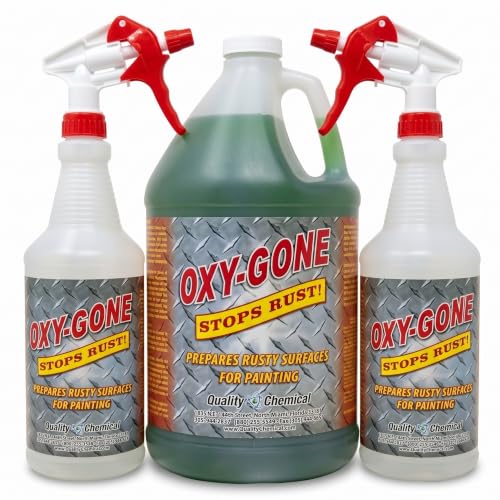
Oxy-Gone Rust Converter
Turns brushed rust into a hard black primer layer.

Metal Rescue Rust Remover
Lifts rust off parts you can drop into a plastic tub.

Permatex Rust Dissolver Gel
A remover you can brush onto rust that stays on the car.
Two Chemistries, Two Different Results
Rust is iron oxide, and it forms because steel is not stable in wet, salty air. The NASA Kennedy corrosion lab’s guide to corrosion fundamentals explains that iron is refined from ore and always tends to revert to that mineral form. Every rust product is a way of interrupting that process, and the two families do it in opposite ways.
A converter is painted or sprayed over rust that has been brushed down to a firm layer. Its active ingredients react with the iron oxide and leave a dark, hard film that acts as a primer, so the rust stays on the part but is no longer loose and open to moisture. A remover does the reverse: it dissolves or lifts the oxide so you end up looking at clean, gray steel that has no protection at all until you coat it.
| Question | Rust converter | Rust remover |
|---|---|---|
| What happens to the rust? | Stays on the metal, turned into a dark primer layer | Taken off, leaving bare steel |
| Where does it work? | On the vehicle, any angle, large areas | Soak: parts that come off. Gel: small spots |
| Surface afterward | Ready for a topcoat once dry, per the label | Unprotected, needs primer or oil quickly |
| Weak spot | Cannot fix flaking scale or metal that is gone | Hard to use on big panels still on the car |
Neither type rebuilds steel. If a screwdriver pushes through the metal, the rust has already taken material away, and a chemical only makes the hole look tidier. That limit matters more on a car than on a garden gate, because some of the rustiest parts underneath are also the parts that hold the car together.
Read the Rust Before You Buy Anything
Most of the rust converter vs rust remover decision is made with a flashlight and a scraper. Sort what you see into three stages.
Surface rust is a thin orange stain that wipes or brushes off to reveal sound metal underneath. Scale is thicker, layered rust that lifts in flakes and leaves pits. Perforation means the steel has holes or crumbles under a pick.
- Surface rust on parts that stay put: a converter after a wire brushing is usually the quickest route.
- Scale on any part: knock off every loose flake first, then convert what remains, or soak the part if it unbolts.
- Removable hardware: a soak remover cleans threads and corners that no brush can reach.
- Perforation: no product here is the repair. The metal needs replacing or professional assessment.
Ask a second question: does this piece come off easily? A seized fastener may need help first, and our guide to penetrating oil for rusted bolts covers how to free one without snapping it. Once a bracket, clamp or bolt is on the bench, the remover side of this comparison becomes the easy choice.
Paint is the third clue. Small bubbles under paint on a fender or tailgate are a body problem as much as a rust problem, and converters are designed for bare or brushed metal, not for spraying over intact paint. For light marks that have not broken through the clear coat, a polish from our car scratch remover guide may be all the panel needs.
Rust Converter vs Rust Remover: Three Products Up Close
We chose one brush-or-spray converter, one soak-style remover and one brush-on remover gel, so each kind of rust job has a match. For a wider look at converters alone, our rust converter roundup reviews more brands and sizes. Every claim below comes from the maker’s Amazon listing.
Quality Chemical Oxy-Gone: 128 oz Brush or Spray Rust Converter and Metal Primer
- 1 gallon (128 oz) converter and metal primer
- Converts iron oxide into black iron phosphate
- Brush or spray on, then paint once dry
- Combo includes 2 empty quart bottles and 2 trigger sprayers
Oxy-Gone from Quality Chemical is the converter in this comparison. The listing says it chemically changes iron oxide into iron phosphate, a hard, inert black surface that oxygen and moisture cannot attack, so rust stops spreading from that spot. Quality Chemical calls it a primer rather than a paint, which is the honest way to think about any converter.
It comes as a water-thin liquid in a one-gallon jug, and this combo adds two empty quart bottles with trigger sprayers. That lets you decant a small amount, spray it into the back of a frame rail or a floor seam and brush the rest onto flat areas. The maker lists rusted steel, new bare metal and galvanized surfaces, and names vehicle frames among its uses. The routine is simple: take off loose rust and scale, apply, let it dry, then topcoat.
A gallon is more than most single repairs need, so it suits owners who treat a whole underbody, a trailer and garden equipment from the same supply. It cannot rebuild metal that has rusted through, and it still needs paint or undercoating on top in salt country. Wear gloves and eye protection, keep the area ventilated, and read the label for dry time before painting.
View Oxy-Gone Rust Converter on Amazon
Workshop Hero Metal Rescue WH290487: 1 Gallon Soak Rust Remover With No Acids
- 1 gallon soak-style rust remover
- Soak time of 5 minutes to 24 hours depending on rust
- Listed as free of acids and caustics
- No scrubbing, dipping or agitation required
Metal Rescue from Workshop Hero represents the remover side, and it works by soaking rather than brushing. You pour it into a plastic container, drop the rusty part in and leave it for anywhere from 5 minutes to 24 hours, depending on how bad the rust is. The listing stresses that no scrubbing, dipping or other agitation is needed while it works.
Workshop Hero describes the formula as free of acids and caustics, non-toxic and safe on skin, and says it does not change the mechanical properties or function of the metal. That makes it a good fit for threaded fasteners, hose clamps, brackets, hand tools and other parts where you want every thread and corner cleaned without wearing away good steel. The gallon gives enough depth for a batch of small parts. The maker also calls it safe for drains and sewer systems but asks you to check local rules before pouring it out.
The limit is the tub. A soak cannot treat a frame rail, a rocker panel or anything still bolted to the car, and parts come out as bare steel with no protection. Rinse and dry them, then prime, paint or oil them promptly so humid garage air does not bring a fresh coat of orange back overnight.
View Metal Rescue Rust Remover on Amazon
Permatex 81756 Rust Dissolver Gel: 8 oz Brush-On Remover for Iron and Steel
- 8 oz brush-on rust dissolver gel
- Dissolves rust from iron and steel surfaces
- Brush on, then wipe the rust away with a cloth
- Listed for cars, trucks and motorcycles
Permatex 81756 sits between the other two picks. It is a remover, so it takes rust off rather than converting it, but it comes as a red gel in an 8 oz container that you brush onto the rusty area. Because a gel clings instead of running, it works on vertical or overhead surfaces, which is exactly where a soak cannot go.
Permatex says the gel chemically dissolves rust on iron and steel and replaces much of the sanding and scraping you would otherwise do by hand. Once it has worked, you wash the rust away with a cloth, as the listing describes. The maker names cars, trucks and motorcycles as suggested uses, which covers jobs like a rusty hood hinge, a battery tray lip or a license plate bracket that you would rather not unbolt.
It is a spot treatment, not a product for a whole frame or a large panel, and the small container reflects that. Follow the label for dwell time and rinsing, wear gloves and safety glasses, and keep it away from paint you want to keep. Like any remover, it leaves bare steel behind, so plan to prime or paint the cleaned area the same day.
View Permatex Rust Dissolver Gel on Amazon
Which Bottle Goes With Which Part
Most rust jobs on a daily driver fall into a handful of patterns. The table below pairs the common ones with the product type that fits, based on whether the part comes off and how deep the rust goes. Treat it as a starting point, then read the label on whatever you buy for temperature, dry time and topcoat rules.
| Rust job | Closer fit | Why |
|---|---|---|
| Surface rust on a frame rail or crossmember | Oxy-Gone Rust Converter | Brushes or sprays on in place and leaves a primer to paint over |
| Bolts, brackets, clamps and small hardware | Metal Rescue soak | Reaches threads and corners with no scrubbing |
| A rusty spot on a part you cannot unbolt easily | Permatex Rust Dissolver Gel | Clings where you brush it and wipes off with a cloth |
| Rust holes, crumbling seams or brake lines | A mechanic or body shop | Missing or weakened metal needs replacement |
The two types also work well in sequence, so rust converter vs rust remover is not always an either-or choice. On a big job, many owners soak the removable hardware clean, convert the rust left on the frame or floor, and then paint everything at once. Just keep them apart on the same patch of steel: a remover would strip the iron oxide a converter needs to react with, so let the label of each product guide the order and cleanup.

Whichever route you take, wear what the labels ask for. Converters and remover gels call for gloves and safety glasses, and anything you spray adds a respirator and a ventilated space to that list. Support the vehicle on jack stands rated for its weight before working underneath, and never under a jack alone.
Keeping Treated Steel Sound Through a Salt Season
Treating rust is only half of the job in West Michigan. Brine and rock salt hit the underside of every car from late fall into spring, and freeze-thaw cycles keep that salty water moving into seams. A converted surface or a freshly stripped part needs a proper coating on top, or it will look the same again by March.
Bare steel is the most urgent case. Metal fresh out of a remover can show a light orange haze within a day in humid air, so plan to prime, paint or oil it soon after it dries. Converted areas can usually wait for a topcoat for the time the label states, but they still need one for lasting protection.

For the underbody as a whole, an oil-based or wax-based undercoating keeps salt water off the steel you just treated. Our guide to undercoating for road salt compares the main products, and the Fluid Film vs Woolwax comparison helps if you are torn between the two most common sprays. A rinse of the underside after a salty stretch, especially in wheel wells and along frame rails, slows everything down too.
When Rust Is a Repair, Not a Weekend Project
Some rust spots are safety items. Corroded steel brake lines can swell and leak without warning, and our article on brake line rust explains what to look for. Lines in that state get replaced, not painted, and our team handles brake repair in Grand Rapids for foreign and domestic vehicles.

Exhaust parts are another common case. A rusty pipe can be cleaned up for a closer look, and our rust remover guide for exhaust parts covers products that cope with heat. Once a hanger snaps or a pipe leaks, though, it is a job for exhaust repair at our Grand Rapids shop, since leaking exhaust can let fumes reach the cabin.
Shopping for a used car is the other moment to look hard underneath. Fresh black paint on an older frame can hide converted scale or worse, so a pre-purchase inspection is worth booking before you hand over money. Hendrick Hoffman, our owner and head mechanic, carries ASE and State of Michigan certification in brakes and in steering and suspension.
More Buying Guides
Frequently Asked Questions
Do you have to remove rust before using a rust converter?
No, and removing all of it defeats the purpose, because the converter needs some iron oxide to react with. You do need to take off loose flakes, dirt and grease with a wire brush or scraper, so the product reaches firm rust. Then apply it as the label directs.
Can you use a rust remover and a rust converter together?
Yes, on different parts of the same project. Soak removable hardware clean and convert the rust left on panels or frame sections that stay on the vehicle. Avoid putting both on the same spot, since a remover strips the rust a converter is meant to transform.
Is a rust converter a permanent fix?
It is a durable primer, not a finished coating. Converted rust still needs a topcoat, and on the underside of a Michigan car it benefits from undercoating as well. Check the area each spring, because chips and new salt exposure can let corrosion start again at the edges.
Which is better for a car frame, rust converter or rust remover?
For surface rust on a frame that stays on the vehicle, a converter is usually more practical, since you cannot soak a frame rail. Brush off the loose scale first. If the frame is flaking in layers, pitted deeply or has holes, have it inspected before spending money on any product.
Found rust on a brake line, an exhaust hanger or a frame rail and not sure a bottle is the answer? Phone 456 AutoFix on 616-279-3832 between 8am and 5pm, Monday to Friday, or ask for an underbody inspection on our contact page.
The shop sits in northeast Grand Rapids at 456 Carrier St NE, Grand Rapids, MI 49505. If work keeps you busy until after we lock up, the after-hours drop-off is there, and a short note on which corner of the underbody has you worried gives us a head start.